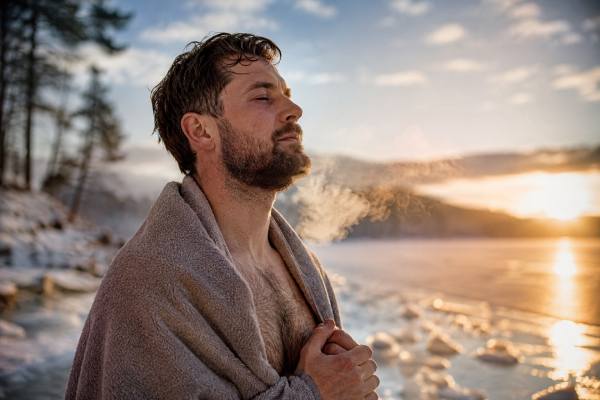
The Wim Hof Method attracts attention because it promises something people deeply want: a way to influence stress, resilience, and even immunity without a pill or device. Its core elements are simple on paper but demanding in practice: repeated breathing cycles, intentional cold exposure, and a focused mental component. The scientific question is not whether the method feels intense. It is whether those practices reliably change immune function in ways that matter for health.
That distinction is important. A brief rise in stress hormones, a drop in inflammatory markers in a lab study, and a lower real-world risk of getting sick are not the same outcome. The strongest research on the Wim Hof Method suggests that people can influence parts of the stress response and inflammatory signaling. What remains far less certain is whether the method prevents infections, improves immune resilience over time, or is appropriate for everyone. This article separates the intriguing findings from the unanswered questions.
Quick Facts
- The best-known evidence shows that Wim Hof-style training can acutely alter stress hormones and inflammatory signaling in controlled settings.
- Breathing and cold exposure may improve perceived stress and cold tolerance, but these outcomes are not the same as proven protection from illness.
- Current studies are small, short, and often involve healthy adults, so broad claims about immune benefits are premature.
- Hyperventilation and cold exposure can be risky for people with cardiovascular, respiratory, neurologic, or panic-related conditions.
- A safer way to apply the method is to start with brief, supervised cold exposure on land and never practice the breathing method in water or while driving.
Table of Contents
- What the Wim Hof Method Includes
- How It Might Affect Immunity
- What the Best Study Actually Showed
- What Cold and Breathing Seem to Help
- What Is Still Unproven
- Who Should Be Cautious
- How to Use It More Safely
What the Wim Hof Method Includes
The Wim Hof Method is usually described as a three-part practice: breathing exercises, cold exposure, and a mental focus or commitment component. In real life, most people mean the combination of repeated deep breathing cycles with breath holds, followed by cold showers, ice baths, or other deliberate exposure to cold. The mental component is harder to define, but it generally includes attention, tolerance of discomfort, and a belief that the method can train the body to handle stress better.
That combination matters because it is not a single intervention. If someone feels calmer, more energized, or more resilient after several weeks, it is difficult to know which part did the work. Was it the breathing? The cold? The mental training? The structured routine? Or the fact that the person started paying closer attention to sleep, movement, and recovery at the same time? This is one reason the research is interesting but not always easy to interpret.
The breathing component usually involves rounds of forceful or deep breaths, followed by a breath hold after exhalation, and then a recovery breath. This can temporarily lower carbon dioxide and create tingling, lightheadedness, or a feeling of alertness. That altered breathing state is part of the appeal for many people, but it is also where some of the safety concerns begin.
Cold exposure works through a different pathway. Cold water or cold air activates the sympathetic nervous system, raises catecholamines such as adrenaline, and creates a short-term stress challenge. In theory, repeated brief exposure may help people become more comfortable with discomfort and may train aspects of autonomic control. That idea overlaps with broader conversations about cold exposure and immunity, but the important point is that the method adds breathing and mindset on top of cold, making it more than a standard cold shower routine.
People are often drawn to the method because it sounds like a shortcut to “stronger immunity.” A better way to frame it is through stress adaptation. The method appears designed to create a controlled burst of physiological stress rather than a direct nutrient-like support for immune cells. That is very different from interventions with clearer mechanisms, such as sleep, vaccination, or correcting deficiency states. It may still matter, but it should not be confused with a guaranteed immune benefit.
A useful comparison is immune resilience. The most charitable scientific reading of the Wim Hof Method is not that it magically boosts immunity, but that it may influence how the body responds to challenge. Whether that translates into meaningful health outcomes is the central question, and it is where the evidence becomes much more limited than many popular accounts suggest.
How It Might Affect Immunity
To understand why the Wim Hof Method is even discussed in immune health, it helps to start with the stress response. The immune system does not act in isolation. It is tightly linked to the nervous system and endocrine system. When adrenaline rises and breathing patterns change, immune signaling can change too. That does not mean the body is becoming “better defended” in every situation. It means the immune response may shift.
The most plausible mechanism involves acute activation of the sympathetic nervous system. Cold exposure and forceful breathing can raise circulating catecholamines, especially epinephrine. Epinephrine can influence inflammatory signaling, including the balance between pro-inflammatory cytokines and anti-inflammatory cytokines. In simple terms, it may nudge the body toward a different inflammatory profile for a short period.
That is why some researchers became interested in whether trained participants could blunt an excessive inflammatory response during experimental challenge. This is a narrower question than most headlines imply. It asks whether a person can alter parts of the innate immune response under controlled conditions, not whether they can stop colds, prevent flu, or make the immune system “stronger” in a broad sense.
There is also interest in how breathing itself affects physiology. Hyperventilation followed by breath holding changes carbon dioxide, blood pH, and oxygen dynamics. These shifts can influence sensation, autonomic tone, and stress hormone release. Some people experience the method as calming afterward, even though the practice itself is physiologically activating. This paradox is part of why it is often grouped with breathwork and immunity. The question is whether repeated exposure to controlled breathing stress helps the body regulate itself more effectively over time.
Cold exposure adds another layer. Short exposures to cold can increase alertness and activate stress pathways that may, in some contexts, have hormetic effects. Hormesis refers to the idea that a manageable dose of stress can stimulate adaptation. That theory is appealing, but it is also easy to oversell. A hormetic stressor is only potentially helpful when the dose is appropriate, the person is a suitable candidate, and recovery is adequate. Too much stress, too often, can push the body in the opposite direction.
There is also a psychological pathway. A person who becomes more comfortable with discomfort may perceive stress differently, and perceived stress can shape immune function. Chronic stress is linked to poorer immune regulation, which is why any intervention that genuinely reduces daily stress load could matter. But again, that would be an indirect pathway. It would not prove that the method directly prevents infection.
The most scientifically accurate summary is that the Wim Hof Method may affect immunity by changing autonomic activation, catecholamine release, inflammatory signaling, and stress perception. Those are credible biological pathways. What remains uncertain is whether the size and duration of those effects are large enough to produce reliable clinical benefits outside small, controlled experiments.
What the Best Study Actually Showed
The study most often cited in discussions of the Wim Hof Method and immunity is the human endotoxemia trial. In that experiment, healthy volunteers were trained in meditation, breathing techniques, and cold exposure, then exposed to a standardized inflammatory challenge using bacterial endotoxin. Compared with controls, the trained group showed higher epinephrine, faster rises in the anti-inflammatory cytokine IL-10, lower levels of several pro-inflammatory cytokines, and fewer flu-like symptoms during the experiment.
This is an important study because it moved the conversation beyond anecdotes. It showed that, under controlled conditions, people could learn a training protocol that changed measurable immune-related physiology. That is a genuine finding, and it deserves to be taken seriously. It helps explain why the method received so much attention in the first place.
But the same study also has limits that are often glossed over. The sample was small. The participants were healthy volunteers, not people with recurrent infections or chronic inflammatory disease. The outcome was an acute experimental inflammatory response, not real-world infection prevention. Most importantly, the training package combined multiple elements, so the study did not isolate breathing from cold exposure from mindset. It showed that the package changed the response, not which component mattered most.
This is where public enthusiasm tends to outrun the evidence. A reduced inflammatory response during experimental endotoxemia is not the same as better immunity in everyday life. In some contexts, a lower inflammatory response may be useful. In others, inflammation is part of effective defense. The immune system needs balance, not simply less activity. That is one reason broad claims that the method “strengthens” immunity are too vague to be medically useful.
Later reviews of the Wim Hof literature generally support a cautious version of the same message. There is a signal that the method may influence inflammatory markers and stress physiology. There is also a pattern of low study quality, very small samples, mixed outcomes, and short follow-up. Researchers themselves tend to describe the evidence as promising but preliminary, which is a much more restrained conclusion than the promotional language surrounding the method.
It is also worth separating immune modulation from stress and performance outcomes. Some trials report changes in mood, perceived stress, vitality, or autonomic measures after short-term practice. Those findings are interesting, but they do not automatically validate claims about immune resilience or illness prevention. Many interventions can improve how people feel without changing their infection risk in a meaningful way.
The best current reading of the evidence is this: the Wim Hof Method has one notable proof-of-concept immune study and a small supporting literature suggesting real physiological effects. That is enough to justify interest. It is not enough to treat the method as a proven immune intervention on the same level as established preventive measures.
What Cold and Breathing Seem to Help
If the evidence for direct immune protection remains limited, what does the Wim Hof Method seem more likely to help? The clearest current answers are stress perception, autonomic arousal, cold tolerance, and subjective well-being in some people. That may sound less dramatic than “better immunity,” but it is still meaningful.
Several recent studies and reviews suggest that the method, or pieces of it, may reduce perceived stress. That matters because chronic stress can worsen sleep, recovery, health behaviors, and inflammatory balance. An intervention that helps someone feel more resilient may indirectly support immune health over time, especially if it reduces the sort of chronic, background stress burden that wears people down. This fits well with broader evidence on stress and immunity.
The cold exposure component may also improve tolerance to cold and shape autonomic responses. Some people report feeling more alert, more capable of handling discomfort, and less reactive to minor daily stressors. Short-term trials have also explored cardiovascular and psychological changes, with some favorable signals, though the studies are still small and often limited to healthy participants. These outcomes are more about adaptation and perception than infection control.
The breathing component may help some people feel focused or energized. For others, it functions more like a deliberate stress drill than a relaxation exercise. That distinction matters because the Wim Hof breathing pattern is not the same as slow diaphragmatic breathing used to reduce arousal. It is intentionally activating. Some people feel calmer afterward because of the rebound state, not because the exercise itself is gentle.
What it does not clearly prove is that the method lowers the number of colds you get each year, shortens every respiratory infection, or offers dependable protection during high-exposure seasons. Evidence that regular exercise, sleep, vaccination, and nutrition support immune health is much stronger and much more directly connected to real-world outcomes. If someone is choosing where to put their effort, the Wim Hof Method should sit behind those basics, not in front of them.
There is also a risk of substitution. A person may feel so energized by cold showers and breathing drills that they assume they have covered their immune health bases, even while sleeping too little, drinking heavily, or missing more reliable prevention tools. That is the wrong trade. The method may be a useful adjunct for some people, but it should not replace fundamentals such as sleep and immunity, diet quality, movement, and practical infection prevention.
The most grounded takeaway is that breathing and cold exposure may help some people feel more stress-resilient and more physiologically adaptable. Those are plausible benefits. They are simply narrower, and less proven, than the broad immune claims often attached to the method.
What Is Still Unproven
The largest gap in the evidence is simple: we do not yet know whether the Wim Hof Method meaningfully reduces real-world infection risk. That is the question many readers care about most, and it remains unanswered. There are no large, long-term trials showing that people who practice the method get fewer viral illnesses, recover faster from common infections, or have measurably better immune protection across daily life.
We also do not know which component drives the effects. Reviews repeatedly note that most studies examine a package of breathing, cold, and mental commitment together. That means the method can look more impressive than the evidence for its individual parts. It is possible that cold exposure matters most, or the breathing matters most, or that the benefit is largely behavioral because people feel more engaged with their health. Right now, that is still unsettled.
Another unknown is dose. How much cold? How many breathing rounds? How often per week? For how many months? The available studies use varying protocols, and the method practiced online is often looser than the method used in research. That makes it hard to turn current findings into reliable public guidance. An intervention is much easier to recommend confidently when the dose-response relationship is clearer.
Population differences also matter. Most studies focus on relatively healthy adults. We know far less about people with asthma, cardiovascular disease, panic disorder, autoimmune disease, chronic fatigue, pregnancy, or older age. In those groups, the method may be less effective, less tolerable, or less safe. Lack of evidence is especially important in immune health because people seeking help are often the very people who may need more caution.
There is also a problem of outcome inflation. Lower perceived stress, improved vitality, and transient shifts in cytokines can all be real findings without justifying broad therapeutic claims. This is a familiar pattern in wellness culture: plausible physiology gets translated into a much bigger promise than the actual data support. The same caution applies here. People can experience benefits without the method being proven for immunity in the way many assume.
A more balanced framing is that the Wim Hof Method is an interesting stress-conditioning practice with early evidence of physiological effects. It may influence inflammatory responses in controlled conditions. It may help some people feel less stressed. But it is still far from established as a frontline immune strategy. If someone is dealing with repeated respiratory infections, fatigue after illness, or concern about weak defenses, the more evidence-based next step is often to review sleep, diet, vaccines, and whether there are signs that warrant immune testing rather than assuming a breathing and cold protocol is the answer.
Who Should Be Cautious
The Wim Hof Method is often marketed with an adventurous tone, but from a health perspective it is not a casual fit for everyone. The breathing component can cause lightheadedness, tingling, visual changes, and faintness. The cold component can sharply activate the cardiovascular system. That combination may be inappropriate, or outright risky, for some people.
Anyone with a history of fainting, cardiac arrhythmia, coronary disease, uncontrolled high blood pressure, seizure disorder, severe panic symptoms, or significant respiratory disease should approach with caution and preferably medical guidance. Sudden cold exposure can trigger a strong sympathetic surge. Rapid breathing and breath holding can shift carbon dioxide and create distressing sensations that may be misread as either danger or progress. For susceptible people, those sensations can trigger panic, dizziness, or risky decision-making.
Water adds a special hazard. People have drowned after practicing hyperventilation-style breathing in pools, cold plunges, bathtubs, or open water. This is one of the clearest and most important safety points: the breathing exercises should never be done in water, while driving, cycling, standing at heights, or in any setting where loss of consciousness or impaired judgment would be dangerous. The method’s own physiological effects create that risk.
People with autoimmune or chronic inflammatory illness should also avoid assuming that “immune modulation” automatically means benefit. The immune system is complex, and less inflammation is not always the same as better health. Someone dealing with flare-prone disease may respond differently than a healthy volunteer in a short trial. The same caution applies to pregnancy and to children, where evidence is too thin to support casual experimentation with intense protocols.
There is also a less obvious risk: overdoing it. Some people who enjoy cold and challenge have a personality style that pushes them to escalate quickly. But immune and autonomic adaptation are not improved by proving toughness every day. Excessive cold exposure, under-recovery, poor sleep, and constant sympathetic activation can work against the very resilience a person is trying to build. This is similar to the problem seen in overtraining and immunity, where too much stress stops being adaptive.
The safest mindset is not “more is better.” It is “dose matters.” A person who tolerates a short cool shower and feels steady afterward may be getting all the useful training effect they need. A person pushing to the point of breathlessness, chest discomfort, panic, or post-session exhaustion is likely overshooting.
Because the method can feel powerful, it is easy to mistake intensity for evidence. Safety requires the opposite approach: respect the physiology, keep the dose modest, and treat symptoms as information rather than as weakness to override.
How to Use It More Safely
For people who still want to try the Wim Hof Method, the safest path is to treat it as an optional stress-exposure practice rather than a medical treatment. That shift in mindset leads to better decisions. You are not trying to force a health result. You are testing whether a structured practice fits your body and life without creating unnecessary risk.
Start with the cold component conservatively. A brief cool finish to a warm shower is a more reasonable entry point than an ice bath. Aim for exposure that feels challenging but controlled, not overwhelming. Stop if you feel chest pain, marked breathlessness, severe shivering, or lingering exhaustion afterward. Land-based cold exposure is preferable at the start because it avoids the water-related risk that makes the breathing method especially dangerous.
Treat the breathing component with care. Practice seated or lying down in a safe place, never in water, never in a car, and never while responsible for anyone else’s safety. If you have a history of panic, fainting, seizures, or unstable heart symptoms, skip it unless a qualified clinician says otherwise. For many people, gentler approaches to autonomic regulation may be a better fit, including slower breathing patterns, meditation, and regular exercise.
It also helps to keep the method in perspective. If you are sleeping five hours a night, eating poorly, or drinking heavily on weekends, cold showers are not the missing piece. More reliable immune support still comes from basics such as evidence-based immune habits, adequate protein, regular movement, and practical measures like ventilation and vaccination when appropriate. The Wim Hof Method may sit on top of those foundations, but it cannot replace them.
A simple way to decide whether the method is helping is to track function rather than chasing dramatic sensations. Ask whether you are sleeping better, recovering well, feeling steadier under stress, and staying consistent without dread. If the practice leaves you wiped out, anxious, obsessed with intensity, or less able to recover, it is not serving its purpose.
It is also reasonable to separate the pieces. Some people may benefit from modest cold exposure without the hyperventilation-style breathing. Others may do better with nonactivating breathwork and skip cold entirely. The package does not have to be accepted whole to be useful.
The strongest conclusion right now is practical rather than promotional. If you choose to use the Wim Hof Method, use it cautiously, keep expectations modest, and judge it by overall well-being rather than by a promise of “better immunity.” In that form, it may be a helpful practice for some people. It is just not a proven immune shortcut.
References
- Does the Wim Hof Method have a beneficial impact on physiological and psychological outcomes in healthy and non-healthy participants? A systematic review 2024 (Systematic Review)
- Effects of cold-water immersion on health and wellbeing: A systematic review and meta-analysis 2025 (Systematic Review)
- The effectiveness of the Wim Hof method on cardiac autonomic function, blood pressure, arterial compliance, and different psychological parameters 2023 (Randomized Trial)
- The positive effects of combined breathing techniques and cold exposure on perceived stress: a randomised trial 2022 (Randomized Trial)
- Voluntary activation of the sympathetic nervous system and attenuation of the innate immune response in humans 2014 (Seminal Controlled Trial)
Disclaimer
This article is for educational purposes only and is not medical advice, diagnosis, or treatment. The Wim Hof Method can trigger dizziness, fainting, hyperventilation-related symptoms, and dangerous reactions during water exposure or in people with certain medical conditions. If you have heart disease, uncontrolled blood pressure, asthma, a seizure disorder, panic symptoms, pregnancy, or any chronic illness, speak with a qualified clinician before trying it. Seek urgent care for chest pain, loss of consciousness, severe shortness of breath, or symptoms that feel unsafe during or after practice.
If you found this article useful, please share it on Facebook, X, or another platform where thoughtful health information can help someone else.