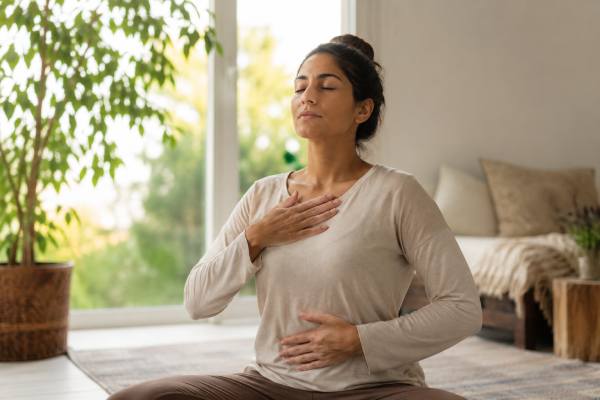
Breathwork is easy to underestimate because it looks almost too simple to matter. There is no prescription, no device, and no dramatic ritual. Yet breathing is one of the few body functions that sits at the border of automatic biology and conscious control, which is exactly why it interests researchers studying stress, resilience, and immune health. When stress stays high for too long, immune signaling, inflammation, sleep, and recovery can all become less stable. That does not mean a breathing exercise can “boost” the immune system on demand. It does mean that calming the stress response may support the conditions in which immune function works better.
That distinction is the heart of this topic. Breathwork is most believable as an indirect tool: something that may reduce stress load, improve autonomic balance, and possibly influence inflammatory signaling in useful ways. It is not a substitute for sleep, nutrition, vaccination, medical care, or treatment of underlying disease. But used well, it may be one of the simplest low-cost habits that helps the body recover a steadier rhythm.
Key Facts
- Slow, controlled breathing can reduce perceived stress and may improve autonomic balance in ways that support overall immune resilience.
- The evidence is stronger for stress reduction, mood, and physiological calming than for directly preventing infections.
- Some studies suggest breathing practices may influence inflammatory and stress-related biomarkers, but the evidence is still early and mixed.
- Gentle slow breathing is usually the safest place to start, while intense fast breathing or long breath holds can be a poor fit for some people.
- A practical starting point is 5 to 10 minutes of slow breathing once or twice daily, especially during high-stress periods.
Table of Contents
- How stress shapes immune health
- How breathwork might help
- What the research actually shows
- Best breathing styles for most people
- How to build a useful routine
- Risks, limits, and who should be careful
- Where breathwork fits in a bigger plan
How stress shapes immune health
To understand whether breathwork can support immune health, it helps to start with the problem it is most likely to influence: chronic stress. Short bursts of stress are not always harmful. In fact, brief stress can sometimes sharpen alertness and temporarily mobilize certain immune responses. The bigger issue is repeated or unrelenting stress that keeps the body in a more defensive, high-output state than it was designed to sustain.
When stress becomes chronic, two major systems are especially relevant: the sympathetic nervous system and the hypothalamic-pituitary-adrenal axis. Together, they influence heart rate, blood pressure, cortisol, sleep quality, inflammatory signaling, and immune cell behavior. Over time, that can push the body away from flexible regulation and toward a pattern of wear and tear. People may not notice that shift as “immune dysfunction” at first. They notice it as poor sleep, feeling wired but tired, slower recovery from illness, more tension, digestive disruption, or a sense that minor stressors hit harder than they used to.
This is one reason the link between stress and immune defenses gets so much attention. The concern is not that stress flips immunity off like a switch. It is that prolonged stress can distort immune balance. It may promote higher inflammatory tone in some settings while also weakening certain protective responses in others. That mixed picture helps explain why people under ongoing stress sometimes feel inflamed, run down, and more vulnerable at the same time.
Behavior also matters. Stress rarely arrives alone. It often travels with poorer sleep, less movement, more alcohol, more processed food, less time outdoors, and a reduced ability to recover from daily strain. These are not side notes; they are part of the mechanism. A stressed person may skip meals, sleep later, doom-scroll at midnight, and stop exercising, all of which can compound immune strain. That is why the everyday habits that weaken immune resilience matter as much as the physiology itself.
Breathwork enters the picture here, not as a cure for every stressor, but as a way to influence one part of the stress-response loop in real time. Because breathing affects arousal, heart rate patterns, and internal perception of safety, it offers a small but meaningful point of control. That does not mean every breathing technique will meaningfully change immunity. It means the pathway is plausible. If breathing can lower stress load often enough and reliably enough, it may support the internal environment in which immune function operates more steadily.
That is the key frame for the rest of the article. Breathwork is not best understood as direct immune medicine. It is better understood as a stress-modulating practice that may create more favorable conditions for immune health over time.
How breathwork might help
Breathwork affects the body through timing, depth, rhythm, and attention. That sounds abstract until you notice what happens when breathing shifts during stress. Under tension, many people breathe faster, shallower, and higher in the chest. Exhalations shorten. Shoulders tighten. The body receives signals consistent with mobilization and vigilance. Slowing the breath, especially with softer inhalations and longer exhalations, can push in the other direction.
One of the main theories is that slow, deliberate breathing increases parasympathetic influence, often discussed in everyday language as “rest and digest” activity. That does not mean the body becomes passive. It means the nervous system may move toward a more regulated state with less sympathetic overdrive. Heart rate variability often enters this conversation because it reflects, in part, how flexibly the heart responds to changing demands. While HRV is not a magic health score, it has become a useful marker in the study of stress regulation and recovery. This is why some people interested in HRV and early immune stress signals also experiment with slow breathing.
A second possible mechanism involves inflammation. Some breathing practices appear to influence stress hormones and, in certain studies, inflammatory markers. The findings are not uniform, and they should not be overstated. But the underlying idea is coherent: if a practice reliably reduces stress reactivity, it may also shift some downstream inflammatory processes. That matters because chronic low-grade inflammation is part of the wider terrain of immune health, even when it is not the same thing as infection resistance. It fits with the broader conversation around how chronic inflammation builds and how it may be lowered.
A third mechanism is behavioral. Breathwork may improve self-regulation in the moment, making it easier to pause before escalating into panic, rumination, anger, or catastrophic thinking. That does not sound like immunology, but it matters. Someone who uses a five-minute breathing practice to settle before sleep may sleep better. Someone who uses it before a stressful meeting may avoid spiraling into a tense afternoon of shallow breathing, skipped lunch, and poor recovery. Small shifts like that accumulate.
Attention is part of the mechanism too. Breathing exercises give the mind a simple, repeatable anchor. That can reduce mental fragmentation and help people step out of “threat scanning” mode. Unlike more elaborate mindfulness practices, breathing routines can feel concrete and immediate, which is why some people stick with them more easily.
Still, plausibility is not proof. A mechanism can make sense without producing large real-world effects. That is why breathwork should be seen as supportive, not transformative by default. It may help the body spend less time stuck in a stress pattern that is unfriendly to immune resilience. That is meaningful. It is just not the same thing as saying breathwork can reliably stop infections, raise antibodies on demand, or repair major immune dysfunction.
What the research actually shows
The research on breathwork is promising, but it is strongest in some areas and much weaker in others. The clearest finding is that regulated breathing can reduce perceived stress, anxiety, and physiological arousal in many people. Systematic reviews and meta-analyses suggest that breathwork, especially slow-paced forms, can produce modest improvements in stress-related outcomes. Daily brief practices have also shown encouraging results in mood and anxiety reduction, sometimes with only a few minutes per day.
That matters because stress reduction is the most credible route by which breathwork could support immune health. If a practice lowers chronic stress burden, improves autonomic balance, and helps people recover more effectively, that is already a meaningful health effect. But the jump from that to “breathwork strengthens immunity” needs caution. Direct evidence for fewer infections, faster healing, or clearly improved immune competence in otherwise healthy adults remains limited.
Where immune-related evidence does exist, it often involves biomarkers rather than clinical outcomes. Some trials and reviews suggest certain breathing-based or yoga-related practices may influence cortisol, interleukin-6, tumor necrosis factor-alpha, or other inflammatory measures. A few studies also point toward shifts in physiological patterns consistent with reduced stress load. That is interesting and worth following, but it is not yet the same thing as a robust clinical proof that breathwork prevents illness.
This is where the language of immune resilience is more useful than the language of immune boosting. Breathwork may support resilience by improving regulation, not by turning the immune system “up.” That distinction protects people from disappointment and keeps the claims close to the evidence.
The research also has limits that matter. Studies use different breathing styles, different session lengths, different outcomes, and different populations. Some examine healthy adults, others people with anxiety, long COVID, hypertension, or inflammatory conditions. Some include breathwork alone, while others package breathing with yoga, meditation, or psychotherapy. That makes it harder to isolate what breathing alone is doing.
Another issue is hype. Breathwork has become fashionable, which can lead people to treat preliminary evidence as settled fact. The more honest reading is this: the evidence supports breathwork as a potentially useful stress-management tool with plausible downstream benefits for immune health, especially through stress and inflammatory pathways. It does not yet prove that breathwork can meaningfully reduce infection risk in everyday life. That is a narrower, more defensible claim, and it is closer to what the science can currently carry.
This measured view also fits the wider lesson in sorting real immune support from marketing language. Breathwork deserves interest, but it also deserves restraint. It is worth trying because it is low-cost, accessible, and physiologically plausible. It is not worth turning into a miracle practice that promises more than the evidence supports.
Best breathing styles for most people
Not all breathwork is equally suitable for immune-related goals. If the main aim is stress reduction and steadier recovery, the best place to start is usually gentle, slow breathing rather than intense fast-breathing methods. The strongest practical case is for techniques that reduce respiratory rate, soften effort, and often extend the exhale.
A simple example is slow diaphragmatic breathing. This does not require dramatic belly expansion or exaggerated inhalations. It means breathing low and comfortably, with less neck and shoulder tension and a slower overall rhythm. Many people do well around 4 to 6 breaths per minute, though there is no universal perfect number. The breathing should feel calm and sustainable, not forced.
Another useful style is extended-exhale breathing. This might look like inhaling for four seconds and exhaling for six seconds, or inhaling for three and exhaling for five. The longer exhale seems to be especially helpful for calming arousal. For people who feel mentally keyed up, this can be easier than rigid counting schemes because it feels more like a gentle settling than a performance task.
Box breathing is widely popular, but it is not always the best first choice for stress-sensitive people. Equal counts for inhale, hold, exhale, and hold can feel centering for some and constricting for others. Breath holds add intensity, and that is not always what an already stressed nervous system needs. In many cases, simple slow breathing without holds works better.
Intense methods deserve extra caution. Fast, forceful, or hyperventilation-style practices can create tingling, lightheadedness, chest sensations, and emotional intensity. Some people find them energizing; others find them unsettling. They are not the obvious first-line choice if the goal is a steadier, lower-stress physiology. This is part of why breathing practices often work best when paired with the same moderation used in exercise that supports immunity without overshooting.
The same caution applies to trendy protocols that combine rapid breathing, long retention, cold exposure, and performance language. Those practices may have a place for some people, but they are not equivalent to gentle stress-reduction breathwork. Anyone curious about that style should separate it from the calmer, more evidence-grounded approach discussed here and recognize that the claims around intense breathing and cold-based methods often travel ahead of the evidence.
For most readers, the most useful breathwork is boring in the best possible way: slow, quiet, repeatable, and easy to do every day. A practice you can actually sustain matters more than a dramatic method you try twice and abandon. If the breathing leaves you calmer, less tense, and more able to sleep or reset, it is already doing something valuable.
How to build a useful routine
Breathwork works best when it becomes a small, dependable habit rather than a rescue-only technique you remember after stress has already peaked. That does not mean it has to be formal or time-consuming. In fact, people often do better with shorter practices they actually repeat.
A strong starting routine is 5 minutes once or twice daily. Morning can help set the tone for the day, while evening can help signal a shift out of work mode. If stress tends to spike predictably, a third short session before a known trigger can be useful. The goal is not to chase a mystical state. It is to give the nervous system a regular rehearsal of lower arousal.
One practical pattern looks like this:
- Sit upright or lie down comfortably.
- Relax the jaw, shoulders, and upper chest.
- Inhale quietly through the nose for about 4 seconds.
- Exhale softly for about 5 to 6 seconds.
- Continue for 5 minutes without straining.
If counting is distracting, use a visual pacer or simply aim for slower, quieter breathing with an unhurried exhale. Comfort matters. Forcing the breath too deeply can make some people more tense, not less.
Consistency is more important than intensity. A daily five-minute practice can be more useful than a forty-minute session once a week. Short routines are also easier to link with existing habits: after brushing teeth, before lunch, after work, or before bed. That matters because breathwork is not only about the minutes you spend practicing. It is about whether those minutes help the rest of the day feel less jagged.
Nighttime is especially relevant. People dealing with stress-driven sleep disruption may find breathwork more useful as a sleep support tool than as a stand-alone immune practice. Better sleep is one of the most reliable ways to support resilience, which is why even a simple breathing routine can complement the broader issues behind poor sleep and getting sick more often. Timing also matters more than people think, since stress, light exposure, and daily rhythm all influence recovery. In that sense, breathwork fits naturally with a more stable circadian routine for immune health.
It also helps to track effects honestly. After one week, ask simple questions: Am I calmer afterward? Am I sleeping any better? Do I recover from stress faster? Do I feel more grounded before meetings or at bedtime? These are better markers than waiting for dramatic immune changes that may never be obvious.
Breathwork becomes most useful when it is treated like brushing your teeth for the nervous system: not glamorous, not complicated, but reliable enough that the benefits accumulate quietly over time.
Risks, limits, and who should be careful
Breathwork is often presented as universally safe because it is natural and free. That is mostly true for gentle slow breathing, but it is not true for every technique, every person, or every setting. Safety depends on the kind of breathing, the intensity, the person’s health, and whether the practice creates calm or pushes the body into distress.
The most common issue is simple overeffort. People new to breathwork often inhale too deeply, breathe too forcefully, or become overly focused on “doing it right.” That can cause dizziness, chest tightness, tingling, air hunger, or a sensation of not getting enough breath. These responses do not always mean something is medically wrong. Sometimes they mean the technique is too intense, too effortful, or simply not a good fit in that moment.
Fast-breathing methods and long breath holds deserve extra caution. These can provoke lightheadedness, panic-like sensations, or strong autonomic responses. They are a poor choice while driving, in water, standing up, or anywhere loss of awareness would be dangerous. They may also be a bad match for people with panic disorder, uncontrolled cardiovascular disease, respiratory instability, or a history of feeling triggered by body-focused practices.
Even slow breathing is not a cure-all. If someone is living with severe burnout, depression, trauma, untreated anxiety, or a genuine medical cause of fatigue and recurrent illness, breathwork may help at the margins without addressing the main issue. It should not become a way of explaining away symptoms that deserve evaluation. That is especially important if the picture starts sounding more like possible warning signs of immune problems or a broader pattern of immune deficiency symptoms rather than ordinary stress.
There is also the limitation of expectation. A useful breathing practice may leave you calmer and sleeping better, yet do little for your number of colds that year. That does not mean it failed. It means breathwork works most clearly in the stress-regulation lane. If someone expects it to replace sleep, nutrition, exercise, treatment adherence, or medical care, disappointment is likely.
The safest rule is simple: start gentle, stay seated, stop if you feel worse, and choose calm over intensity. If a technique increases distress, it is not the right tool for that moment. Breathwork should create more steadiness, not more drama. That may sound less exciting than the language used in some wellness circles, but it is much closer to what a health-supportive practice should look like.
Where breathwork fits in a bigger plan
The most honest answer to the article’s main question is yes, but indirectly and modestly. Stress-reduction breathing may support immune health by improving the conditions that immune function depends on: calmer stress physiology, better recovery, less chronic tension, and in some people better sleep and lower inflammatory strain. That is worthwhile. It is just not the same as a stand-alone immune intervention.
Breathwork works best as part of a broader resilience plan. Think of it as a connector habit rather than a headline habit. It pairs well with sleep regularity, physical activity, nourishing food, hydration, time outdoors, and sensible illness prevention. In fact, one of its strengths is that it can make those other habits easier. A person who uses slow breathing to unwind after work may be less likely to stress-eat, skip a walk, or carry tension into the night.
That is why it belongs more naturally beside evidence-based immune habits than beside dramatic supplement claims. It can also sit comfortably alongside an anti-inflammatory eating pattern, not because the two create some special stack, but because both support a more regulated baseline.
It is also worth emphasizing what breathwork does not replace. It does not compensate for severe sleep loss, heavy drinking, overtraining, major nutritional gaps, untreated chronic disease, or high-risk exposure during infectious outbreaks. It does not replace vaccines, prescribed medication, or medical care. It is not a reason to ignore persistent symptoms. The right role is supportive, not heroic.
Still, supportive does not mean trivial. A practice that lowers stress several times a day, reduces reactivity, and helps preserve recovery can matter more than it first appears. Many people do not need one more complicated protocol. They need one reliable tool that helps their body downshift. Breathwork can be that tool because it is portable, free, and available in the exact moment stress starts rising.
If you want the simplest possible takeaway, use this: breathwork is unlikely to transform immune health on its own, but it may help create a body that is less chronically strained and therefore better positioned to recover, adapt, and stay resilient. That is a meaningful benefit, and it is enough. It does not need grander promises to be worth practicing.
References
- Immunology of Stress: A Review Article 2024 (Review)
- Breathing Practices for Stress and Anxiety Reduction: Conceptual Framework of Implementation Guidelines Based on a Systematic Review of the Published Literature 2023 (Systematic Review)
- Effect of breathwork on stress and mental health: A meta-analysis of randomised-controlled trials 2023 (Meta-Analysis)
- Neurobiological and Anti‐Inflammatory Effects of a Deep Diaphragmatic Breathing Technique Based on Neofunctional Psychotherapy: A Pilot RCT 2024 (RCT)
- Yoga, Meditation, Breathing Exercises, and Inflammatory Biomarkers with Possible Implications in COVID-19: A Systematic Review and Meta-Analysis of Randomized Controlled Trials 2022 (Systematic Review and Meta-Analysis)
Disclaimer
This article is for educational purposes only and is not medical advice, diagnosis, or treatment. Breathwork may help with stress regulation and recovery, but it is not a substitute for medical care, treatment of respiratory or mental health conditions, or evaluation of recurrent infections, severe fatigue, chest pain, dizziness, or trouble breathing. People with significant anxiety, panic symptoms, cardiovascular disease, respiratory illness, pregnancy-related concerns, or a history of fainting should be cautious with intense breathing practices and discuss questions with a qualified clinician.
If this article was useful, please share it on Facebook, X, or another platform where it may help someone else approach breathwork and immune health with better clarity and fewer exaggerated expectations.