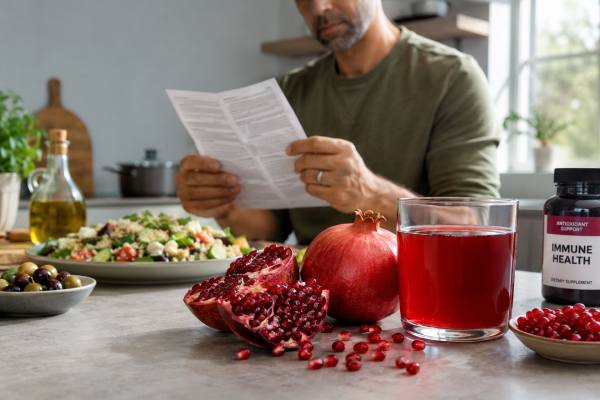
Pomegranate has a reputation that feels almost tailor-made for immune health: deep red color, sharp flavor, and a long history as a “healthy” fruit. But the real question is not whether it sounds impressive. It is whether pomegranate meaningfully supports the immune system, how strong the evidence is, and when it may create problems for people taking medications.
The short answer is that pomegranate is promising, but not magical. Its value comes mostly from polyphenols that may help lower oxidative stress and calm inflammatory signaling, both of which matter for immune resilience. At the same time, the evidence is stronger for improving certain biomarkers than for directly preventing colds or other infections in generally healthy adults. And because pomegranate juice and extracts may affect drug metabolism, “natural” does not always mean “risk-free.”
Core Points
- Pomegranate may support immune health mainly by helping reduce oxidative stress and inflammatory signaling, not by “boosting” immunity in a direct or dramatic way.
- The strongest human evidence points to modest improvements in markers such as C-reactive protein and other inflammation-related measures.
- Whole pomegranate arils offer both polyphenols and fiber, while juice is more convenient but easier to overconsume.
- Drug interactions matter most for people taking warfarin and possibly other medicines affected by CYP enzymes, blood pressure treatment, or glucose-lowering therapy.
- A practical approach is regular, moderate intake as part of a varied diet rather than using pomegranate as a rescue remedy when you already feel sick.
Table of Contents
- What pomegranate can and cannot do
- The polyphenols that make it interesting
- What human studies actually show
- Drug interactions and safety cautions
- Best ways to use pomegranate
- Who might benefit most
What pomegranate can and cannot do
Pomegranate belongs in the “helpful food” category, not the “immune fix” category. That distinction matters. The immune system does not work best when it is pushed harder. It works best when it is well regulated: ready to respond to pathogens, able to calm down when the threat passes, and less likely to stay stuck in a low-grade inflammatory state. Pomegranate appears most useful in that regulatory space.
Its likely benefits come through three overlapping effects. First, it provides polyphenols with antioxidant activity, which may help limit oxidative damage that can strain immune cells and surrounding tissues. Second, it appears to influence inflammatory pathways, especially in people who already have higher inflammatory burden. Third, whole pomegranate contributes fiber, which can support gut microbial activity, and the gut is deeply involved in immune signaling.
That does not mean pomegranate prevents every winter infection or shortens illness on demand. It is not a stand-in for sleep, protein intake, vaccination, hand hygiene, managing chronic disease, or treating an infection when medical care is needed. In practical terms, pomegranate is best viewed as one part of a broader pattern of immune resilience, not as proof of immune boosting.
This also helps explain why some people feel disappointed by the research. They expect a visible effect, like “I ate this and stopped getting sick.” Nutrition rarely works that way. Foods usually have smaller, cumulative effects that show up in patterns: better diet quality, lower inflammatory markers, steadier blood sugar, healthier blood pressure, and a more favorable gut environment. Those changes can matter for immune health even if they do not translate into an immediate, obvious symptom change.
There is another limit worth keeping in mind. Pomegranate products vary a lot. Whole arils, fresh juice, shelf-stable juice blends, extracts made from peel, and capsules standardized for certain polyphenols are not nutritionally identical. Some products are rich in polyphenols. Others are mostly sweet juice with a “superfruit” label. So when people say pomegranate “works” or “doesn’t work,” they may be talking about very different things.
A realistic takeaway is this: pomegranate is worth considering if you want a food-based way to support a lower-inflammatory dietary pattern, but it is not strong evidence for a dedicated infection-prevention strategy in the average healthy adult.
The polyphenols that make it interesting
The most interesting part of pomegranate is not its vitamin content. It is its polyphenol profile. In particular, pomegranate is known for ellagitannins, especially punicalagins, along with anthocyanins and ellagic acid. These compounds help explain why pomegranate repeatedly shows up in discussions about oxidative stress, inflammation, vascular health, and cellular signaling.
Punicalagins are especially important because they are large, potent antioxidant polyphenols found in high amounts in pomegranate. They are more concentrated in some extracts, especially those that include peel-derived compounds, than in the juicy arils alone. That helps explain why extracts can look stronger in some studies than fresh fruit. But it also means extracts are not simply “the same as fruit, only more.” They can be more concentrated, less balanced, and sometimes more likely to raise interaction questions.
Another reason pomegranate is biologically interesting is what happens after you eat it. The body does not absorb every polyphenol in its original form. Gut microbes transform some of these compounds into metabolites called urolithins. That means the effect of pomegranate may partly depend on the state of your gut microbiome. Two people can eat the same fruit and produce different metabolites in different amounts. This is one reason responses to polyphenol-rich foods are often uneven.
That gut angle matters for immune health. A large share of immune activity is coordinated through the gut and its barrier tissues, and diet shapes that environment over time. This is where pomegranate fits naturally alongside other polyphenol-rich foods and the broader role of fiber and gut-linked immunity. Whole arils bring both polyphenols and fiber, which is one reason they are often the best first choice.
Pomegranate also appears to influence cell signaling pathways tied to inflammation and oxidative stress. That sounds technical, but the practical point is simple: its compounds may help shift the internal environment in a direction that is less damaging and less inflammatory. For immune health, that matters most when inflammation is already elevated, as in aging, metabolic dysfunction, kidney disease, or recovery from physical stress.
Still, there are limits to how much we should infer from mechanisms alone. A food can look impressive in cell studies and still have modest real-world effects in humans. Polyphenols are a good example. The lab story is usually stronger than the day-to-day clinical story. So the biochemistry of pomegranate is a reason to be interested, not a reason to exaggerate.
The best way to think about pomegranate’s polyphenols is that they are biologically plausible helpers. They may create a healthier immune terrain, especially when eaten regularly and in the context of an overall good diet, but they are not a stand-alone therapy.
What human studies actually show
Human research on pomegranate is encouraging, but it is more nuanced than many headlines suggest. Across clinical trials and meta-analyses, pomegranate products have shown modest improvements in inflammatory and oxidative stress markers in adults. That includes changes in measures such as C-reactive protein, interleukin-6, tumor necrosis factor alpha, malondialdehyde, and total antioxidant capacity. In plain language, that means pomegranate may help shift the body away from a more inflamed and oxidatively stressed state.
That is relevant for immune health because chronic inflammation can distort immune responses. When the baseline inflammatory load is high, the body may be less efficient at maintaining balanced defenses. In that sense, pomegranate may help support the conditions under which the immune system works better.
But there are important caveats.
First, most studies look at biomarkers, not hard immune outcomes. They do not usually ask whether healthy adults get fewer colds, recover faster from common viral infections, or need fewer antibiotics. The evidence is stronger for “pomegranate may improve certain markers linked to immune and inflammatory balance” than for “pomegranate prevents infections.”
Second, study populations matter. Some of the more positive findings come from people with higher cardiometabolic risk, older adults, people on hemodialysis, or groups with established inflammation. Those are not the same as healthy younger adults shopping for a simple immune food. Benefits may be more noticeable when there is more inflammation to lower.
Third, the form and dose vary widely. Studies have used juice, concentrated juice, peel extract, whole-fruit extracts, and capsules. Durations also vary from a few weeks to several months. That makes it hard to define a single “best dose” or best form for immune health. It also helps explain why results are not perfectly consistent.
Even so, the pattern is meaningful. Pomegranate is not empty hype. It appears capable of modest, measurable biological effects in humans, especially around inflammation, oxidative stress, and sometimes blood pressure or vascular markers. Those effects fit well with an anti-inflammatory diet and the broader gut-immune connection.
What the evidence does not support is using pomegranate as a rescue treatment after symptoms start. There is no strong basis for expecting it to act like an antiviral medicine, an antibiotic, or a rapid immune stimulant. It also should not be treated as a substitute for more established nutrition basics such as adequate protein, micronutrient sufficiency, and overall diet quality.
So the honest summary is this: pomegranate has real but modest evidence. It is better supported as a steady, food-based contributor to lower inflammation than as a direct, proven shield against everyday infections.
Drug interactions and safety cautions
This is where pomegranate deserves more respect than it usually gets. People often assume fruit is automatically safe in any amount, but pomegranate juice and concentrated extracts can raise real interaction questions.
The main concern is drug metabolism. Pomegranate has been studied for possible effects on enzymes such as CYP3A4 and CYP2C9, which help process many medications. The science here is mixed. Preclinical findings and case reports suggest interaction potential, especially with repeated use or concentrated products, while some human studies have not found clinically meaningful effects with usual dietary intake. That means the safest message is not “pomegranate definitely interacts with everything,” but also not “there is nothing to worry about.”
Warfarin is the clearest practical example. Case reports and interaction reviews have raised concern that pomegranate juice may intensify warfarin effects in some people, increasing bleeding risk. Anyone taking warfarin should treat pomegranate intake cautiously and discuss it with the prescribing clinician or pharmacist before adding juice or supplements regularly.
Other groups who should be careful include people taking:
- medicines with narrow safety margins that are metabolized through CYP pathways
- blood pressure medicines, especially if they already run low
- glucose-lowering medicines, if they use sweetened juice or notice changes in glucose control
- statins or other drugs where altered metabolism could matter
- anticoagulants or antiplatelet drugs in general
Risk may be higher with extracts and concentrated products than with a modest serving of whole fruit. That is because concentration changes exposure. A food-level serving of arils is not the same as a capsule or a daily large glass of concentrated juice.
Side effects are usually mild when they happen. The most common problems reported in clinical use are gastrointestinal, such as stomach upset or diarrhea. Allergic reactions are uncommon but possible. Juice can also be a poor fit for people who are sensitive to acidic foods or who get reflux symptoms.
Sugar content is another practical issue. Whole pomegranate contains natural sugar too, but it comes packaged with fiber and chewing slows intake. Juice is faster to drink, easier to overconsume, and more likely to affect glucose if portions get large. For people with diabetes, insulin resistance, or appetite regulation issues, the form matters as much as the fruit itself.
If you want a simple rule, use this one: before taking pomegranate extract or drinking pomegranate juice daily, run it through the same lens you would use for any supplement. A quick medication interaction check is often more important than the health claim on the label.
Best ways to use pomegranate
For most people, the best way to use pomegranate is as food first. That usually means choosing whole arils when they are practical, using 100 percent juice more selectively, and treating extracts as optional rather than automatic.
Whole arils are often the strongest starting point because they combine polyphenols with fiber, water, and slower eating. That combination tends to make them more filling and metabolically gentler than juice. A practical serving is about one-half to one cup of arils added to yogurt, oatmeal, salads, grain bowls, or cottage cheese. They also freeze well, which makes regular use easier outside peak season.
Juice can still be useful, especially for people who do not want to prep the fruit or who struggle with chewing seeds. The key is choosing unsweetened 100 percent pomegranate juice rather than juice cocktails. A modest portion, such as four to eight ounces with a meal, is usually a more sensible routine than a large bottle on an empty stomach. Pairing it with food may also reduce the tendency to treat it like a sugary beverage.
Extracts make the most sense in narrower situations, such as people who want a standardized product and have already ruled out medication issues. If you go that route, product quality matters. Look for standardized, clearly labeled supplements from companies that disclose polyphenol content and use third-party testing. More is not always better. A concentrated extract is not a shortcut around diet quality.
Pomegranate also works best when it is part of a pattern, not a solo act. You get more value from combining it with other immune-supportive foods than from turning it into a one-food strategy. In real life, that might look like:
- plain yogurt topped with pomegranate and nuts
- oats with pomegranate, cinnamon, and chia
- a lentil or farro salad with herbs, olive oil, and arils
- a small glass of pomegranate juice alongside a protein-rich breakfast
- a snack plate with kefir, berries, and pomegranate
This is one reason pomegranate fits especially well inside a Mediterranean-style eating pattern. It complements legumes, olive oil, fermented dairy, herbs, nuts, and other colorful plant foods that also support inflammatory balance.
One more practical tip: do not wait until you are already run down to start using it. Like most nutrition tools, pomegranate is likely to work best through regular exposure over time. Think in weeks and months, not in hours. A few servings per week is a reasonable, realistic target for people who enjoy it and tolerate it well.
Who might benefit most
Pomegranate is most likely to be useful for people who want food-based support in situations where inflammation, oxidative stress, or diet quality are already concerns. That includes older adults, people with low fruit and polyphenol intake, and those trying to build a more consistent anti-inflammatory eating pattern. It may also be appealing to people who prefer foods over pills and want something that feels practical rather than highly medicalized.
The people who may notice the most value are not always the people with the strongest immune systems to begin with. They are often the people with more room for improvement: diets low in plant foods, higher cardiometabolic risk, or periods of elevated stress. In those settings, pomegranate can be one useful input among many.
But it is not the right fit for everyone.
You may need a more cautious approach if you:
- take warfarin or other medicines where interaction risks matter
- are on a tight fluid, potassium, or sugar plan directed by your clinician
- notice reflux, stomach upset, or loose stools with acidic juices
- are hoping for a supplement to replace sleep, meals, or medical care
- tend to buy concentrated products without checking what is actually in them
This is also where pomegranate can get oversold. It is easy to take a food with decent biomarker data and turn it into a broad wellness claim. That is the same pattern seen with many immune support supplements: some plausible mechanisms, some encouraging studies, and then a much bigger marketing message than the data really justify.
A better standard is to ask three questions. Does it fit your diet? Does it fit your medications? Does it help you eat better overall? If the answer to those is yes, pomegranate can be a smart addition. If not, it is not essential.
The bottom line is refreshingly ordinary. Pomegranate is a worthwhile fruit, not an immune miracle. Its best case is as a regular source of polyphenols, flavor, and dietary variety that may help lower inflammatory burden over time. Its main caution is that concentrated forms can behave more like a supplement than a simple food. If you keep both sides in view, pomegranate can earn a reasonable place in an immune-supportive diet without being asked to do more than the evidence supports.
References
- The effects of pomegranate consumption on inflammatory and oxidative stress biomarkers in adults: a systematic review and meta-analysis 2023 (Systematic Review and Meta-Analysis). ([Springer][1])
- The effect of pomegranate juice supplementation on C-reactive protein levels: GRADE-assessed systematic review and dose-response updated meta-analysis of data from randomized controlled trials 2024 (Systematic Review and Meta-Analysis). ([PubMed][2])
- Impact of Pomegranate Juice on the Pharmacokinetics of CYP3A4- and CYP2C9-Mediated Drugs Metabolism: A Preclinical and Clinical Review 2023 (Review). ([PMC][3])
- Reporting of adverse effects of pomegranate in clinical studies: a systematic review 2023 (Systematic Review). ([PubMed][4])
- One year of pomegranate juice intake decreases oxidative stress, inflammation, and incidence of infections in hemodialysis patients: a randomized placebo-controlled trial 2012 (RCT). ([PubMed][5])
Disclaimer
This article is for educational purposes only and is not medical advice. Pomegranate, pomegranate juice, and pomegranate extracts can interact with some medications and may not be appropriate for everyone, especially people taking warfarin or other medicines with narrow safety margins. If you have a chronic medical condition, are pregnant, are managing kidney disease or diabetes, or take prescription medication, check with a qualified clinician or pharmacist before using pomegranate extract or making large, regular changes to your intake.
If you found this article helpful, please consider sharing it on Facebook, X, or another platform you use so others can find it too.