The hygiene hypothesis is one of those ideas people think they understand until they try to explain it. At first glance, it sounds simple: modern life is too clean, children meet too few microbes, and allergies rise as a result. But the real story is more precise, and more interesting, than “kids need more dirt.” Researchers now see the issue less as ordinary cleanliness and more as a mismatch between the immune system we evolved with and the microbial world many modern children actually encounter. Smaller families, urban living, less time outdoors, altered gut microbes, antibiotic exposure, dietary shifts, and damaged barrier tissues may all shape how immune tolerance develops. That helps explain why allergies can rise even in places that are not especially “clean” in the everyday sense. This article explains what the hygiene hypothesis really means, how it evolved into newer ideas about biodiversity and old microbial partners, what the strongest evidence shows, and what practical lessons do and do not follow from it.
Core Points
- The hygiene hypothesis does not mean cleanliness is bad; it means early immune development may suffer when microbial exposure becomes too narrow and less diverse.
- Allergy risk appears to be shaped by early-life factors such as urbanization, antibiotics, altered gut microbes, reduced biodiversity exposure, and barrier disruption.
- The strongest modern versions of the theory focus on microbial diversity, immune tolerance, and the “old friends” and biodiversity hypotheses rather than simple dirt exposure.
- Letting children eat dirt, skipping vaccines, or avoiding handwashing is not a safe or evidence-based way to reduce allergy risk.
- Practical steps are more likely to involve outdoor time, dietary diversity, careful antibiotic use, smoke avoidance, and a less over-sanitized home environment.
Table of Contents
- What the Hypothesis Actually Says
- How the Idea Has Evolved
- Why Allergies Keep Rising
- What Evidence Looks Strongest
- What It Does Not Mean
- Practical Ways to Support Tolerance
What the Hypothesis Actually Says
The hygiene hypothesis began as an attempt to explain an odd pattern: children from larger families seemed less likely to develop hay fever than children from smaller families. The early idea was that more contact with siblings meant more infections and more immune training, while smaller families and cleaner households might reduce those early exposures and leave the immune system more likely to react to harmless substances such as pollen, dust mites, or foods.
That original idea was influential, but it was always easier to summarize than to use well. Over time, people turned it into a slogan: modern life is too clean. That slogan is catchy, but it is incomplete. The hygiene hypothesis was never really an argument against washing hands, clean water, sewage systems, or safe food handling. Those things prevent life-threatening infections and remain essential. The more accurate point is that immune development appears to depend on the right kinds of early exposures, especially the microbial exposures that help build immune tolerance and keep inflammatory responses from becoming too reactive.
This matters because allergies are not simply a sign of “too much immune system.” They are a sign of immune responses being aimed poorly. The immune system mistakes harmless exposures for threats and creates inflammation where tolerance would be more useful. That is why this topic belongs alongside bigger questions about how the immune system works and why allergies are not the same as weak immunity.
The phrase “dirt is good” also misses the mark. The immune system is not trained by random grime in a simple dose-response way. It develops through repeated contact with microbes from other people, animals, plants, soil, food, and the body’s own colonizing bacteria. Many of those exposures happen at the gut, skin, and airway surfaces, where tolerance has to be built without losing the ability to fight real pathogens. That is one reason researchers increasingly focus on the microbiome and on barrier health in the gut, skin, and airways.
So what does the hygiene hypothesis really say today? In plain language, it says this: when early life includes fewer or narrower microbial signals than the immune system evolved to expect, immune regulation may be less stable, and the risk of allergic disease may rise. That is not a call to abandon hygiene. It is a call to understand that immune education depends on more than just avoiding germs. It depends on living in a world that still gives the body enough safe, diverse microbial contact to learn what not to attack.
How the Idea Has Evolved
The original hygiene hypothesis helped launch an important conversation, but researchers now use more precise ideas to explain the same broad trend. Two of the most important refinements are the old friends hypothesis and the biodiversity hypothesis.
The old friends hypothesis argues that the immune system did not evolve merely around childhood infections. It evolved alongside a much broader set of microbes that were regular features of human life over long stretches of history. These include environmental organisms, commensal microbes, and other long-term microbial partners that help shape immune regulation. The core problem, then, may not be “too few childhood colds.” It may be too little contact with the kinds of microbes that help the immune system learn restraint.
The biodiversity hypothesis pushes that idea outward. It suggests that contact with diverse natural environments may help enrich the microbes that live on and in us, which in turn supports immune balance and lowers the risk of allergy and inflammatory disease. This is why discussions about allergy risk increasingly mention green spaces, farm environments, microbial diversity, and the ecological shift that comes with urban life.
At the same time, another model has gained influence: the epithelial barrier view. This emphasizes the lining of the skin, gut, and airways. If those barriers are damaged by pollutants, detergents, smoke, poor diet, chronic inflammation, or other modern exposures, the immune system may be exposed to allergens and irritants in abnormal ways. In that framework, rising allergy is not only about missing helpful microbes. It is also about barrier disruption that lets inflammatory signals through too easily. That overlaps with broader thinking about epithelial barrier dysfunction and the way mucosal immunity in the nose, mouth, and gut depends on healthy surfaces.
This evolution in thinking matters because it corrects several common misunderstandings. First, the newer models are less focused on simple household tidiness and more focused on microbial diversity, timing, and context. Second, they help explain why allergies can rise in urban areas that are not especially hygienic by everyday standards. Third, they fit better with the observation that allergy risk may be shaped by birth mode, early antibiotics, diet, indoor air, pet and farm exposure, and time spent in nature.
In other words, the field has moved from a narrow “cleanliness causes allergy” story to a broader “modern environments may undertrain immune tolerance while also stressing the body’s barriers” story. That makes the topic more complicated, but also more useful. The newer models explain more of the real world, and they give more practical clues than the old slogan ever could.
Why Allergies Keep Rising
There is no single reason allergies are rising. The more convincing explanation is that several modern shifts are pushing in the same direction, especially during pregnancy, infancy, and childhood, when immune tolerance is still being set.
One major factor is urbanization. Urban environments usually bring less contact with animals, soil, plants, and outdoor microbial diversity. They also bring more time indoors, more exposure to traffic-related pollution, less vegetation, and more processed living environments. That may change both the environmental microbiome around us and the human microbiome within us. It is one reason allergy patterns often track with air pollution and inflammatory burden rather than with household cleanliness alone.
Another factor is the early-life microbiome. The first months and years of life are a critical period for immune training. Birth mode, feeding patterns, antibiotic exposure, infections, household contacts, pets, and diet all affect which microbes colonize the gut and airways. If those microbial communities develop in a less diverse or less stable way, the immune system may be more likely to build allergic responses instead of tolerance. That helps explain why topics such as gut health and immune balance and early microbial disruption keep showing up in allergy research.
Then there is dietary change. Modern diets often contain less fiber, fewer fermented foods, fewer whole plants, and more ultra-processed products. That matters because the gut microbiome depends heavily on dietary inputs. A diet that does not support microbial diversity may also fail to support the short-chain fatty acids and other signals that promote immune regulation.
Antibiotics are another piece. They save lives and remain essential when truly needed, but early and repeated antibiotic exposure can disturb microbial communities at a time when immune calibration is still underway. The problem is not antibiotics as such. The problem is unnecessary or repeated disruption in sensitive windows, which connects naturally with what happens to the gut and immunity after antibiotics.
Modern homes may also change immune experience in subtler ways. Smaller family size, less outdoor play, more screen time, less contact with animals, more climate-controlled indoor time, and fewer day-to-day encounters with natural environments may all narrow the range of microbial signals children receive. Add in smoke, cleaning chemicals, barrier-damaging irritants, and changing lifestyles, and it becomes easier to see why allergy rates can climb without any one factor being solely responsible.
So why are allergies rising? Probably because modern life changes the microbial world, the body’s barriers, and the timing of early immune education all at once. The result is not simply a cleaner child. It is a child growing up in a biologically narrower environment.
What Evidence Looks Strongest
The evidence behind the hygiene hypothesis is strongest when it is framed carefully and weakest when it is turned into a cartoon. The more nuanced the question, the better the science tends to fit.
One of the most consistent observations is the farm effect. Children who grow up on traditional farms, especially with early-life exposure to animals and farm environments, often show lower rates of allergic sensitization and asthma than children in more urban settings. This pattern has shown up often enough to be influential, although the exact protective ingredients are still being sorted out. It may be the microbial richness of the setting, the timing of exposure, the food environment, the overall lifestyle, or some combination of these.
Another recurring pattern involves siblings, child care, and broader social contact. These exposures may increase microbial sharing early in life, though the findings are not perfectly uniform. The message is not that more infection is always better. It is that isolation from ordinary microbial exchange may narrow immune training. That is part of why people keep asking whether being around other children changes immune development, even though the real answer is more about context than about “getting germs.”
The evidence is also fairly strong that the gut microbiome and early-life dysbiosis matter. Researchers have repeatedly linked certain microbial patterns in infancy with later allergy and asthma risk. But the details are complicated. It is not just about having more bacteria. It is about which microbes are present, when they appear, what they are fed, and how they interact with the host immune system.
Where the evidence becomes more mixed is in the broader idea that “more biodiversity is always better.” Reviews of environmental and inner-body biodiversity show some protective trends, especially for outer environmental exposure, but results are heterogeneous. That means the direction of the effect is not identical across every study, body site, and outcome. Some exposures that look protective in one setting may look neutral or uncertain in another. That is normal in a field where measurement methods, timing, and environments differ widely.
Evidence is also weak for simplistic solutions. Commercial probiotics have not consistently reproduced the protective effect seen in farm or nature-associated settings. Randomly increasing exposure to dirt does not have solid evidence behind it. And the claim that ordinary home hygiene is the main driver of allergies remains too simple for what the current evidence actually shows.
The most evidence-based way to summarize the field is this:
- early-life microbial and environmental exposures matter
- farm and nature-linked exposures often look protective
- gut and airway microbial development appear important
- urbanization and modern lifestyle likely contribute
- the exact mechanisms are still being worked out
- simple slogans explain less than people think
That makes the field more cautious than social media, but also more trustworthy. The hygiene hypothesis survives best when it is treated as a starting point, not a finished answer.
What It Does Not Mean
This topic creates confusion because people often draw the wrong practical lessons from it. If the hygiene hypothesis is explained badly, it can sound like a warning against modern sanitation. That is not what the evidence supports.
First, it does not mean you should stop washing hands. Handwashing prevents real infections, especially after using the toilet, before eating, after diaper changes, and during illness outbreaks. It remains one of the most useful public health habits we have. The same applies to safe drinking water, sewage systems, food hygiene, and routine infection control. These are not optional extras. They are part of why childhood mortality fell so sharply in many parts of the world.
Second, it does not mean children should be encouraged to eat dirt, play with animal waste, or skip basic wound care. Random exposure to harmful microbes is not a smart substitute for the kind of microbial diversity discussed in research. “Microbes” is a broad category. Some are helpful, some are neutral, and some can cause serious disease. The goal is not reckless exposure. It is a healthier relationship with ordinary environmental life.
Third, it does not mean vaccines are a problem. Vaccines train the immune system safely against specific pathogens. They do not replace the microbiome, but they do not sabotage it either. Trying to use the hygiene hypothesis as an argument against vaccination is a basic misunderstanding of what the theory is about.
Fourth, it does not mean all cleaning products are harmful or that every clean home raises allergy risk. The concern is more about overuse of harsh chemicals, chronic indoor irritants, and environments that combine low biodiversity with barrier stress. This is quite different from saying homes should be dirty. There is a meaningful middle ground between sterile obsession and careless hygiene.
Fifth, it does not prove that allergies are caused by weak immunity. Allergies are better thought of as misdirected or poorly regulated immune responses. That is why they often fit better with the idea of immune imbalance than with classic immune deficiency. If symptoms are mainly sneezing, wheezing, eczema, or food reactions, that is a different pattern from the one described in true immune deficiency.
The most helpful correction is this: the hygiene hypothesis is not really about cleanliness versus dirt. It is about which exposures support immune tolerance, which exposures damage barriers, and what modern living has changed about both. Once you see that, the false choices disappear. You do not have to choose between healthy hygiene and healthy immune education. A good life can include both.
Practical Ways to Support Tolerance
There is no guaranteed recipe for preventing allergies, and no parent can engineer a perfect microbiome. But the practical lessons from this field are more sensible than the headlines suggest. They mostly point toward diversity, moderation, and avoiding unnecessary disruption.
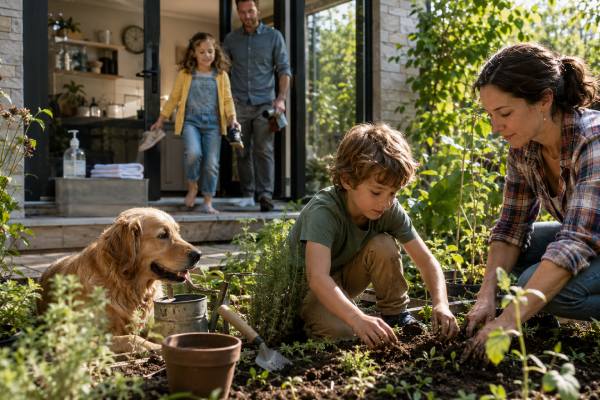
One useful principle is to create a life that includes ordinary contact with the natural world. Outdoor play, time in green spaces, gardening, and contact with varied environments may be more aligned with immune education than a life spent almost entirely indoors. That does not mean chasing “dirt exposure” as a treatment. It means not overdesigning childhood away from nature.
Diet is another powerful lever. A wider range of plant foods tends to support a wider range of gut microbes. That is one reason practical approaches such as increasing microbiome diversity through food and habits or aiming for more plant variety each week fit naturally into this conversation. These approaches are slower and less glamorous than supplements, but often more biologically plausible.
Antibiotics deserve care, not fear. Use them when they are truly needed, but not as a reflex for every mild illness. Protecting the microbiome does not mean rejecting antibiotics. It means avoiding unnecessary disruption during sensitive stages of development.
Homes also do not need to feel sterile. Routine cleaning is fine, but constant disinfection of every surface without a clear reason is usually unnecessary outside specific infection settings. Fresh air, reducing smoke exposure, addressing dampness and mold, and lowering irritant load may matter more than endless chemical wiping. That is part of why cleaner indoor air and better ventilation can be more useful than a mindset of total microbial eradication.
Other sensible steps include:
- avoid tobacco smoke and heavy indoor pollutants
- support breastfeeding when possible and appropriate
- allow ordinary social contact, outdoor play, and interaction with everyday environments
- avoid overreacting to every ordinary germ exposure
- be careful with harsh products that may irritate skin or airways
- focus on long-term resilience rather than quick fixes
The bigger lesson is not that children need a wilder life in every way. It is that immune tolerance seems to grow best in environments that are microbially varied, less overly processed, less polluted, and less biologically narrow. That is a quieter message than “let kids get dirty,” but it is also closer to what the science actually supports.
References
- The hygiene hypothesis for allergy – conception and evolution 2022 (Review)
- The Hygiene Hypothesis and New Perspectives—Current Challenges Meeting an Old Postulate 2021 (Review)
- The influence of modern living conditions on the human microbiome and potential therapeutic opportunities for allergy prevention 2024 (Review)
- The Role of Biodiversity in the Development of Asthma and Allergic Sensitization: A State-of-the-Science Review 2024 (Review)
- Early-life microbiota-immune homeostasis 2023 (Review)
Disclaimer
This article is for educational purposes only and is not a substitute for medical advice, diagnosis, or treatment. Allergy risk is shaped by genetics, environment, early-life exposures, and many other factors, and no single theory explains every case. This article does not recommend avoiding vaccines, stopping handwashing, or exposing children to unsafe environments. Parents and caregivers who have concerns about eczema, wheezing, food reactions, or recurrent allergy symptoms should speak with a qualified clinician.
If you found this article helpful, please consider sharing it on Facebook, X, or another platform you prefer.