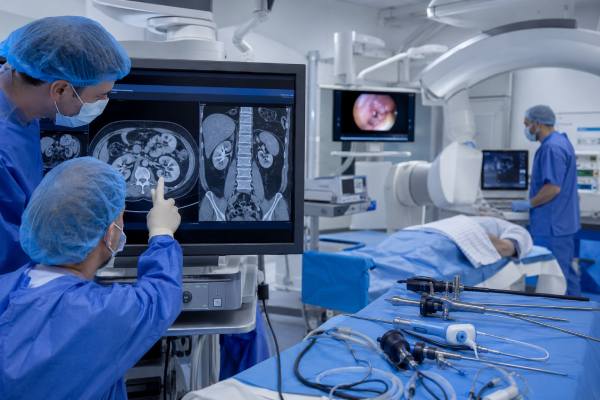
Kidney stone surgery is not one single operation. The right option changes with the stone’s size, location, hardness, shape, infection risk, and how quickly it needs to come out. A small stone in the upper kidney is a very different problem from a large staghorn stone filling part of the kidney, and the best treatment for one person is not always the best treatment for another.
The three main procedures are shock wave lithotripsy, ureteroscopy, and percutaneous nephrolithotomy, usually called PCNL. Shock wave lithotripsy breaks the stone from outside the body. Ureteroscopy treats the stone from inside the urinary tract using a tiny scope. PCNL removes larger or more complex stones through a small opening in the back.
This guide compares how the procedures work, who they fit best, what recovery feels like, and what questions to ask before choosing.
Table of Contents
- Quick Comparison: SWL vs Ureteroscopy vs PCNL
- How Doctors Choose the Best Kidney Stone Procedure
- Shock Wave Lithotripsy: Best for Smaller, Easier-to-Break Stones
- Ureteroscopy: Best When the Stone Needs Direct Treatment
- PCNL: Best for Large, Dense, or Complex Kidney Stones
- Recovery, Stents, Pain, and Side Effects
- Questions to Ask Before Choosing Surgery
- After Surgery: Follow-Up and Prevention
Quick Comparison: SWL vs Ureteroscopy vs PCNL
The simplest way to compare these procedures is to look at the tradeoff between invasiveness and stone clearance. Shock wave lithotripsy is the least invasive, but it leaves the body to pass stone fragments. Ureteroscopy is more direct and usually clears the stone faster, but it uses a scope and often a temporary stent. PCNL is the most invasive of the three, but it is also the strongest option for large stone burden.
| Procedure | How it works | Best fit | Main advantage | Main drawback |
|---|---|---|---|---|
| Shock wave lithotripsy (SWL) | Sound-like shock waves break the stone from outside the body | Smaller kidney stones or some upper ureter stones that are easy to target | No scope or incision | Fragments still need to pass, and repeat treatment is sometimes needed |
| Ureteroscopy (URS) | A small scope passes through the urethra and bladder into the ureter or kidney | Ureter stones, harder stones, lower-pole stones, and stones less suitable for SWL | Direct treatment with a high chance of clearing the stone in one procedure | A ureteral stent is common and often causes temporary urinary symptoms |
| Percutaneous nephrolithotomy (PCNL) | The surgeon reaches the kidney through a small opening in the back | Large stones, staghorn stones, dense stones, or complex kidney stones | Highest clearing power for large stone burden | More invasive, with higher bleeding and hospital-stay considerations |
A practical rule helps: smaller and simpler stones often start with SWL or ureteroscopy; stones larger than about 20 mm, staghorn stones, and heavy stone burden usually push the decision toward PCNL. Stones between 10 and 20 mm sit in the middle. For those, the best choice comes from the stone’s location, density, anatomy, and the patient’s priorities.
“Stone-free” also needs a plain-language explanation. It usually means no stone or no meaningful leftover fragment on follow-up imaging. A tiny dust-like fragment is different from a 6 mm piece that can grow, move, or block the ureter later. When comparing procedures, ask whether the quoted success rate means stone-free after one treatment, after repeat treatments, or after follow-up procedures.
How Doctors Choose the Best Kidney Stone Procedure
A CT scan gives much of the information that drives the surgical plan. It shows the stone’s size, exact location, density, number of stones, and whether the kidney is swollen from blockage. Ultrasound and X-ray also have roles, especially for follow-up and for people who should avoid radiation, but CT gives the most detailed map for many adults. A clear comparison of kidney ultrasound and CT scan differences helps explain why the same stone looks clearer on one test than another.
Stone size is the first major factor. Very small stones, especially under 5 mm, often pass without surgery if pain is controlled and there is no infection or kidney-risk situation. Stones under 10 mm are often candidates for SWL or ureteroscopy. Stones from 10 to 20 mm need a closer look at location and hardness. Stones over 20 mm are much more likely to need PCNL because breaking a large stone into passable fragments creates a higher risk of leftover pieces and blockage.
Location matters almost as much as size. A stone in the ureter has a narrow path and often causes severe colic. Ureteroscopy works well here because the surgeon reaches the stone directly. A stone in the lower pole of the kidney is trickier. Even when SWL breaks it, gravity and the angle of the lower kidney pocket can keep fragments from draining. Lower-pole stones often shift the discussion toward ureteroscopy or mini-PCNL, especially as size increases.
Density is another key detail. CT reports sometimes list Hounsfield units, or HU, which estimate how dense the stone is. A dense stone, especially above about 1,000 HU, often breaks less easily with shock waves. Certain stone types, including cystine, brushite, and calcium oxalate monohydrate stones, are also harder to fragment. If you have passed stones before, stone analysis from a previous episode helps the surgeon predict whether SWL is likely to work. The basics of kidney stone types become useful here because stone composition affects both treatment and prevention.
Body habitus and anatomy also change the plan. Shock waves must be aimed accurately through the body, so a long skin-to-stone distance makes SWL less reliable. A narrow ureter, unusual kidney anatomy, horseshoe kidney, urinary diversion, or a tight lower-pole angle also changes the technical choice. In severe obesity, ureteroscopy is often more predictable than SWL because the scope reaches the stone directly.
Urgency can override the usual elective decision. Fever, chills, infected urine, sepsis, a blocked solitary kidney, kidney failure, or uncontrolled pain changes the priority from “which procedure clears the stone best?” to “how do we drain the kidney safely now?” In those cases, doctors often place a ureteral stent or nephrostomy tube first, treat infection, and remove the stone later.
Shock Wave Lithotripsy: Best for Smaller, Easier-to-Break Stones
Shock wave lithotripsy, often shortened to SWL or ESWL, treats the stone without putting a scope into the urinary tract. The machine focuses shock waves through the skin toward the stone. The goal is to crack the stone into small pieces that pass in the urine over days to weeks.
SWL fits best when the stone is small enough, visible enough to target, not too dense, and located where fragments can drain. It is often considered for kidney stones under 10 mm and selected stones up to 20 mm, especially outside the lower pole. It is also used for some upper ureter stones.
During the procedure, you lie on a treatment table while imaging helps aim the shock waves. Pain control varies by center and by machine. Some people receive sedation; others receive stronger anesthesia. Good pain control is not just for comfort. It also limits movement and helps the machine stay focused on the stone.
The main appeal is that SWL is noninvasive. There is no incision, no internal cutting, and often no ureteral stent. Many people go home the same day. Normal activity usually returns quickly, although passing fragments can cause waves of pain, urinary urgency, burning, or blood in the urine.
The weak point is that SWL is a breaking procedure, not a removal procedure. The body still has to clear the pieces. A person can feel better right after treatment and still have fragments left behind. Larger fragments can lodge in the ureter, causing pain or blockage. A chain of fragments in the ureter is sometimes called steinstrasse, which means “stone street.”
SWL is less attractive when:
- The stone is dense or known to be shock-wave resistant.
- The stone sits in the lower pole and fragments are unlikely to drain.
- The stone is large enough that many fragments would need to pass.
- The stone cannot be clearly targeted on imaging.
- There is pregnancy, untreated urinary infection, certain bleeding risks, or an anatomic blockage below the stone.
SWL is often a good choice for someone who strongly wants the least invasive treatment and accepts a higher chance of needing repeat treatment. It is less ideal for someone who needs the highest chance of being stone-free after one procedure, has a hard stone, or cannot tolerate another painful episode from passing fragments.
Ureteroscopy: Best When the Stone Needs Direct Treatment
Ureteroscopy treats the stone from inside the urinary tract. The surgeon passes a thin scope through the urethra into the bladder, then into the ureter and sometimes up into the kidney. No skin incision is needed. Once the scope reaches the stone, the surgeon removes it with a tiny basket or breaks it with a laser.
This approach is especially useful for ureteral stones because the scope follows the same pathway the stone is blocking. It is also commonly used for kidney stones that are not good SWL candidates, including lower-pole stones, dense stones, and stones in people where shock waves are hard to target.
Flexible ureteroscopy can reach much of the kidney’s collecting system. Rigid or semi-rigid ureteroscopy is often used for ureter stones. The surgeon chooses the scope based on where the stone sits. Laser lithotripsy then breaks the stone into dust-like material or basketable pieces. Some surgeons aim to “dust” the stone into tiny fragments; others actively basket fragments out. The strategy changes with stone size, anatomy, equipment, and surgeon preference.
Ureteroscopy usually offers a higher chance of early stone clearance than SWL, especially when the stone is in the ureter or when one-session success matters. It also avoids the need for the patient to pass all fragments after external shock-wave treatment. That said, tiny fragments still remain after some ureteroscopy cases, especially after dusting.
The biggest day-to-day downside is the ureteral stent. A stent is a soft tube placed between the kidney and bladder to keep urine draining while swelling settles. Not everyone needs one, but stents are common after ureteroscopy. They are temporary, but they can be annoying.
Common stent symptoms include:
- Urinary urgency or frequency
- Burning with urination
- Bladder pressure
- Flank discomfort during or after urination
- Blood in the urine that comes and goes
- A pulling or cramping feeling with movement
These symptoms are expected, but severe pain, fever, inability to urinate, or heavy bleeding needs urgent medical advice. A focused guide to stent symptoms after kidney stone removal is useful before surgery because stent discomfort surprises many people more than the operation itself.
Ureteroscopy is usually done under general anesthesia. Many people go home the same day. Recovery is often short, but the first few days can include urinary burning, spasms, blood in urine, and stent discomfort. If the ureter is too narrow to safely reach the stone, the surgeon may place a stent and return for a second procedure after the ureter relaxes.
Ureteroscopy is a strong choice when the stone needs direct action, when SWL has already failed, when the stone is hard or poorly positioned, or when quick stone clearance is the priority. It is not the best fit for every large kidney stone, because treating a heavy stone burden through a narrow scope can take a long time and require staged procedures.
PCNL: Best for Large, Dense, or Complex Kidney Stones
Percutaneous nephrolithotomy is the heavy-duty option for kidney stones. The surgeon creates a small channel through the skin of the back into the kidney, then uses instruments to break and remove the stone. The word “percutaneous” means through the skin, and “nephrolithotomy” means removing a kidney stone.
PCNL is usually the preferred option for stones larger than about 20 mm, staghorn stones, large lower-pole stones, and complex stones that are unlikely to clear well with SWL or ureteroscopy. It is also considered when a patient has many stones in the kidney or when the surgeon wants to remove a large amount of stone material in one session.
The key advantage is efficiency. Instead of asking the body to pass fragments or trying to remove many pieces through a long ureteroscope, PCNL gives the surgeon a direct route into the kidney. That direct access is why PCNL often has the highest stone-free rate for large stones.
The tradeoff is invasiveness. PCNL has higher bleeding considerations than SWL or ureteroscopy because the kidney is entered through a tract. Hospitals manage this risk with careful imaging, urine testing, blood work, and surgical planning. Some people need a nephrostomy tube after the procedure; others have a tubeless or totally tubeless PCNL when the case is uncomplicated. A nephrostomy tube drains urine from the kidney to a bag outside the body for a short time.
Mini-PCNL uses smaller instruments than standard PCNL. It often reduces blood loss and may shorten recovery in selected cases, though it can take longer. Mini-PCNL is not automatically better for every stone. A very large or complex staghorn stone may still need standard PCNL, more than one access tract, or more than one procedure.
PCNL is more likely than the other options to involve a hospital stay. Some centers perform selected PCNL cases as same-day or short-stay surgery, but large or infected stones need closer monitoring. Recovery often includes soreness in the back, fatigue, blood in urine, and temporary lifting limits. People with physically demanding jobs usually need more time away from work than they would after SWL or straightforward ureteroscopy.
PCNL is the right conversation when the stone is too large for a realistic SWL plan, when ureteroscopy would require several staged procedures, or when leaving fragments behind would create a high risk of repeat infection or obstruction. It is also the procedure most associated with staghorn stones, which can fill part of the kidney’s collecting system and often relate to infection.
Recovery, Stents, Pain, and Side Effects
Recovery feels different because the procedures solve the stone problem in different ways. SWL recovery is often easy on the day of treatment but uncomfortable later if fragments move. Ureteroscopy recovery often centers on stent symptoms. PCNL recovery feels more like recovering from surgery because of the back access tract and higher tissue impact.
After SWL, expect blood-tinged urine for a short time, soreness where shock waves entered, and passage of sand-like particles or small fragments. Pain can come in waves as pieces travel down the ureter. The care team may provide a strainer so you can catch fragments for analysis. Drinking enough fluid helps keep urine moving, but forcing extreme amounts of water does not push a blocked stone through and can make nausea worse.
After ureteroscopy, burning with urination and bladder urgency are common for a few days. If a stent is in place, symptoms often last until removal. Some stents have a string for office or home removal; others require a quick cystoscopy in the office. The stent removal plan should be clear before you leave the surgery center.
After PCNL, back soreness and fatigue are expected. Blood in urine often improves over several days, but activity can make it darker again. Heavy lifting and strenuous exercise are usually restricted until the surgeon confirms healing. If a nephrostomy tube is present, the care team should explain how to keep it secured, how to empty the bag, and which drainage changes need a call.
Pain after stone procedures should gradually improve. Pain that becomes severe, especially with fever or vomiting, needs prompt medical attention. A separate guide to kidney stone pain and ER warning signs is helpful because post-procedure pain can overlap with pain from a blocked fragment, infection, or stent irritation.
Call urgently or seek emergency care for:
- Fever, chills, or feeling seriously ill
- Pain that does not improve with prescribed medication
- Inability to urinate
- Heavy bleeding or large clots
- Persistent vomiting or inability to keep fluids down
- Worsening weakness, dizziness, or fainting
- Severe pain in a person with one kidney
- Pregnancy with stone symptoms or post-procedure pain
Antibiotics are not automatic for every procedure. They are used when urine testing, infection risk, stone type, or surgical findings call for them. If a urine culture is ordered before surgery, complete it on time. An untreated infection behind a blocked stone is dangerous and changes the surgical plan.
Questions to Ask Before Choosing Surgery
The best surgical choice is easier when the discussion moves from “Which procedure is best?” to “Which procedure is best for this stone and this situation?” Bring a short list of questions to the urology visit. Specific answers are more useful than general success rates.
Ask these questions:
- What is the stone size in millimeters, and is that one stone or total stone burden?
A single 12 mm stone is different from several stones adding up to 12 mm. Total burden affects whether one procedure is realistic. - Where exactly is the stone?
Ureter, renal pelvis, upper pole, middle calyx, and lower pole stones behave differently. Lower-pole fragments often clear less easily after SWL. - What is the stone density on CT?
A dense stone is less likely to break well with shock waves. If the CT report lists HU, ask how that number affects the plan. - What is the chance I will be stone-free after one procedure?
Ask for the one-procedure estimate, not only the success rate after repeat sessions. - What happens if the first treatment fails?
A reasonable plan might be SWL first, ureteroscopy if fragments remain. For another person, starting with ureteroscopy or PCNL avoids weeks of repeat procedures. - Will I need a stent or nephrostomy tube?
Ask how likely it is, how long it will stay in, how it is removed, and what symptoms to expect. - How soon do I need treatment?
Ongoing pain, obstruction, infection risk, work travel, pregnancy plans, or a single kidney can change timing. - What imaging will confirm the result?
Follow-up imaging is not just a formality. It checks for residual fragments, blockage, and silent swelling. - Should the stone be analyzed?
Stone analysis helps prevent recurrence. If fragments are removed or passed, ask how they will be tested. - What prevention plan starts after surgery?
Removing the current stone does not explain why it formed. Recurrent stone formers often need urine and blood testing.
Cost and access also matter. SWL equipment is not available everywhere, and some centers have more experience with one procedure than another. Surgeon experience affects outcomes, especially for flexible ureteroscopy and PCNL. It is reasonable to ask how often the urologist performs the recommended procedure and whether another approach is also appropriate.
A second opinion is worth considering when the stone is large, complex, recurrent, in an unusual kidney, or when one surgeon recommends multiple staged procedures and another option might clear the stone more efficiently. Second opinions are common in stone surgery and do not mean you distrust the first doctor.
After Surgery: Follow-Up and Prevention
Stone surgery ends the current blockage or stone burden, but it does not end stone disease. Many people who form one kidney stone form another unless the cause is identified and addressed. Prevention starts with knowing what the stone was made of and what the urine chemistry looks like.
Ask for stone analysis whenever a stone or fragment is available. Calcium oxalate, uric acid, struvite, cystine, and brushite stones point to different prevention plans. A person with uric acid stones may need urine alkalinization. A person with calcium oxalate stones may need changes in sodium intake, calcium timing, oxalate load, citrate level, or urine volume. A person with struvite stones needs careful infection management and complete stone clearance because leftover infected fragments can regrow.
Follow-up imaging should match the situation. After SWL, imaging checks whether fragments passed. After ureteroscopy, it checks for residual fragments and swelling. After PCNL, it confirms clearance, especially with large or branching stones. CT is the most sensitive test, but ultrasound or X-ray may be chosen to reduce radiation, depending on the stone type and clinical picture.
A 24-hour urine test is often useful after recurrent stones, large stones, high-risk stone types, stones in children, stones with a strong family history, or stones in people with one kidney. The test measures urine volume, calcium, oxalate, citrate, uric acid, sodium, pH, and other factors. A practical explanation of the 24-hour urine test for kidney stones can make the collection less confusing and more accurate.
Prevention usually starts with a few core habits, then becomes more specific after testing:
- Drink enough fluid to keep urine pale most of the day, unless a clinician has restricted fluids.
- Spread fluids through the day instead of drinking most of them at night.
- Reduce excess sodium, because high sodium can raise urine calcium.
- Keep normal dietary calcium with meals unless told otherwise.
- Avoid high-dose vitamin C supplements if prone to calcium oxalate stones.
- Match protein intake to health needs, especially if uric acid or calcium stones recur.
- Review supplements with a clinician, because some increase stone risk.
Diet advice should match the stone type. A low-oxalate diet is not the answer for every stone former. Cutting calcium too low can backfire by allowing more oxalate absorption. Drinking lemon water helps some people raise citrate intake, but it does not replace potassium citrate when a clinician prescribes it for low urine citrate or uric acid stone prevention. A broader guide to kidney stone prevention can help connect surgery results with a long-term plan.
The best procedure removes the stone safely. The best overall care also explains why the stone formed, confirms that the kidney is draining, and gives the patient a clear plan to reduce the next one.
References
- Surgical Management of Kidney and Ureteral Stones: AUA Guideline (2026). Part II: Evaluation and Treatment of Patients With Kidney and/or Ureteral Stones 2026 (Guideline)
- EAU Guidelines on Urolithiasis – GUIDELINES 2025 (Guideline)
- Renal and ureteric stones: assessment and management 2019 (Guideline)
- Updated Systematic Review and Meta-analysis of Extracorporeal Shock Wave Lithotripsy, Flexible Ureterorenoscopy, and Percutaneous Nephrolithotomy for Lower Pole Renal Stones 2025 (Systematic Review)
- People who undergo ureteroscopy for the treatment of stones achieve a higher stone-free rate, but have more complications and longer hospital stay 2022 (Systematic Review)
- Clinical and cost-effectiveness of percutaneous nephrolithotomy, flexible ureterorenoscopy and extracorporeal shockwave lithotripsy for lower pole stones: the PUrE RCTs 2025 (RCT)
Disclaimer
This article is for education and does not replace care from a urologist, emergency clinician, or other qualified medical professional. Kidney stone treatment decisions require personal review of imaging, urine results, infection risk, kidney function, medications, pregnancy status, and anesthesia risk. Seek urgent care for fever, uncontrolled pain, vomiting, inability to urinate, or symptoms with a single kidney.