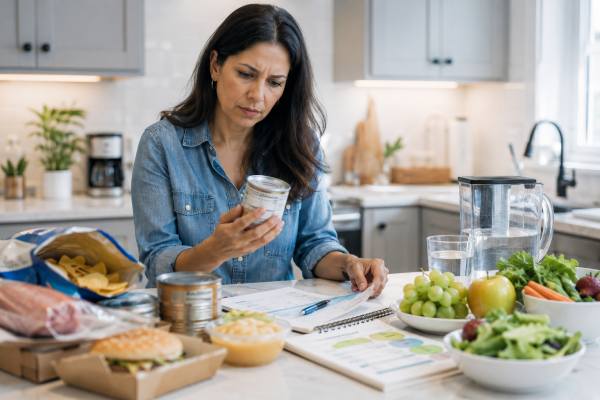
Salt matters for kidney stones because sodium changes the chemistry of urine. When you eat a high-sodium diet, your kidneys usually send more calcium into the urine. That extra urine calcium raises the chance that calcium will join with oxalate or phosphate and form crystals. Over time, those crystals grow into calcium stones.
This does not mean calcium-rich foods are the enemy. In fact, cutting dietary calcium too low often backfires, especially for calcium oxalate stones. The more useful target is usually sodium: less fast food, fewer salty packaged foods, smarter label reading, and meals that keep normal calcium intake while lowering salt. This article explains how sodium raises urine calcium, how much sodium to aim for, where hidden sodium comes from, and how to tell whether your changes are working.
Table of Contents
- Why Sodium Matters for Kidney Stones
- How Salt Raises Urine Calcium
- What High Urine Calcium Does to Stone Risk
- How Much Sodium to Aim For
- Where Hidden Sodium Comes From
- How to Lower Sodium Without Cutting Calcium
- How to Check Whether Sodium Changes Are Working
- When Salt Reduction Is Not Enough
Why Sodium Matters for Kidney Stones
Most kidney stones contain calcium, usually calcium oxalate or calcium phosphate. The key problem is not simply “too much calcium” in the body. The problem is the mix of substances in the urine: how concentrated the urine is, how much calcium it carries, how much oxalate or phosphate is present, and whether protective substances such as citrate are high enough.
Sodium affects that mix directly. A salty meal gives the kidneys extra sodium to clear. As sodium excretion rises, calcium excretion often rises with it. This is why a person with calcium stones can eat the same amount of calcium on two different days but release more calcium in the urine on the higher-sodium day.
This is especially relevant for people with hypercalciuria, which means high calcium in the urine. Hypercalciuria is common among calcium stone formers. It is also easy to miss without urine testing because blood calcium can look normal while urine calcium is high.
High sodium also creates a practical trap. Many salty foods are low in water, low in potassium-rich fruits and vegetables, and high in animal protein or refined carbohydrates. A day built around pizza, deli meat, chips, instant noodles, fast-food sandwiches, and restaurant meals often raises several stone risks at once: more sodium, more urine calcium, less citrate, and more concentrated urine if fluid intake is low.
For a broader prevention plan, sodium is only one piece. Hydration, dietary calcium, oxalate, citrate, protein intake, and stone type all matter. A useful starting point is a complete kidney stone prevention plan that connects diet changes to urine chemistry instead of treating each food rule separately.
How Salt Raises Urine Calcium
The kidneys filter blood and then reclaim what the body still needs. Sodium and calcium are both handled inside the kidney tubules, the tiny channels that adjust urine before it leaves the body. When sodium intake is high, the kidneys allow more sodium to leave in urine. That shift reduces some calcium reabsorption, so more calcium leaves in urine too.
Think of it as a shared traffic pattern. Sodium is the heavy traffic. When the kidneys move a lot of sodium toward the urine, calcium is more likely to move in the same direction. The result is higher urine calcium even when food calcium stays steady.
This is one reason salt reduction is often recommended before or alongside medication for recurrent calcium stones. Lowering sodium reduces the pressure that pushes calcium into urine. It also makes some stone medicines work better, especially thiazide-type diuretics used for high urine calcium. A high-sodium diet works against those medicines because the kidneys still have to clear excess sodium.
Sodium can also lower citrate
Citrate is one of urine’s natural stone blockers. It binds calcium and helps keep it from joining with oxalate or phosphate. Higher sodium intake is linked with less favorable urine chemistry partly because it can reduce urinary citrate in some people.
Low citrate matters because calcium becomes more available for crystal formation. A person with high urine calcium and low citrate has two problems at once: more calcium available and less natural protection against crystals. This is why clinicians often look at the whole 24-hour urine report, not just one number.
Salt affects both calcium oxalate and calcium phosphate risk
Calcium oxalate stones are the most common type. Extra urine calcium gives oxalate more opportunity to form calcium oxalate crystals. For people working on oxalate control, lowering sodium is just as practical as avoiding very high-oxalate foods, because less urine calcium means less calcium available to bind oxalate in the urinary tract.
Calcium phosphate stones also respond to urine calcium. These stones are more likely when urine calcium is high and urine pH is relatively alkaline. Salt reduction does not solve every calcium phosphate risk, but it lowers one major ingredient in the crystal-forming mix.
What High Urine Calcium Does to Stone Risk
High urine calcium raises stone risk by increasing supersaturation. Supersaturation means the urine contains more stone-forming material than it can comfortably hold in dissolved form. Once urine becomes supersaturated, tiny crystals form more easily. If crystals stick, grow, and avoid being flushed out, a stone develops.
A simple kitchen comparison helps: sugar dissolves in hot tea up to a point. Add too much, and sugar collects at the bottom. Urine works differently, but the idea is similar. When calcium, oxalate, phosphate, uric acid, or cystine exceed what the urine can keep dissolved, crystals form.
High urine calcium does not always cause symptoms before a stone appears. You do not feel calcium leaving through the urine. You usually find out because a stone passes, imaging shows stones, or a 24-hour urine test reports high calcium.
Calcium oxalate stones often form when high urine calcium meets too much oxalate, low urine volume, or low citrate. More detail on this stone type is covered in calcium oxalate stone prevention. For these stones, the goal is not to remove calcium from the diet. The better strategy is to keep normal calcium with meals, reduce sodium, drink enough fluid, and avoid the biggest oxalate loads when urine oxalate is high.
Calcium phosphate stones need a slightly different lens. High urine calcium still matters, but urine pH becomes more important. Some people with calcium phosphate stones also have conditions such as renal tubular acidosis, hyperparathyroidism, or medication effects that need medical evaluation. In that setting, lowering sodium helps reduce urine calcium, but the rest of the urine profile guides the plan.
The main point is straightforward: sodium reduction lowers one of the major raw materials for calcium stones. It is not glamorous, but it is one of the most practical changes because it affects daily meals rather than rare foods.
How Much Sodium to Aim For
A common target for adults is less than 2,300 mg of sodium per day. For people with recurrent calcium stones or high urine sodium, clinicians often recommend a tighter range, roughly 1,500 to 2,000 mg per day, when it is safe and realistic. European urology guidance frames the target as 4 to 5 grams of salt per day, which equals about 1,600 to 2,000 mg of sodium.
Salt and sodium are not the same number. Table salt is sodium chloride. Sodium is only part of that compound. One teaspoon of table salt contains about 2,300 mg of sodium, which is already a full day’s general limit for many adults.
| Amount | Approximate sodium | What it means in practice |
|---|---|---|
| 1/4 teaspoon table salt | 575 mg sodium | A meaningful amount if added several times a day |
| 1/2 teaspoon table salt | 1,150 mg sodium | About half of a 2,300 mg daily limit |
| 1 teaspoon table salt | 2,300 mg sodium | About a full day’s general sodium limit |
| 4–5 grams salt | 1,600–2,000 mg sodium | A common stone-prevention target range |
The best target is the one that lowers urine sodium and urine calcium without making eating miserable. A strict plan that lasts five days is less useful than a moderate plan the person keeps for years. The first goal is usually to find the biggest sodium sources and remove the easy excess: salty snacks, deli meats, canned soups, frozen meals, fast food, restaurant sauces, and oversized portions of bread, cheese, and processed meats.
People with chronic kidney disease, heart failure, low blood pressure, heavy sweating, endurance exercise, adrenal disorders, or medication-related sodium problems should use a clinician’s target rather than copying a general number. Kidney stone prevention must fit the rest of the person’s health. For general sodium planning in kidney health, a practical low-sodium diet guide helps translate milligrams into food choices.
Where Hidden Sodium Comes From
Most sodium does not come from the salt shaker. It comes from foods that were salted before they reached the plate. Bread, tortillas, cheese, deli meats, sauces, condiments, canned foods, frozen meals, restaurant meals, and seasoned snack foods add up quickly even when the food does not taste extremely salty.
A sandwich is a good example. Two slices of bread, turkey slices, cheese, mustard, pickles, and a side of chips can reach more than 1,500 mg of sodium before dinner. The problem is not one ingredient. It is the stack.
Restaurant meals are another major source. Sauces, marinades, spice blends, broths, dressings, and fried coatings often contain large amounts of sodium. A “healthy” grilled chicken salad can still be high sodium if it includes seasoned chicken, cheese, croutons, olives, bacon bits, and a salty dressing.
Label rules that actually help
The Nutrition Facts label is more useful than front-of-package claims. Check sodium per serving first, then check how many servings you actually eat. A soup can that lists 700 mg sodium per serving may contain two servings, turning the can into 1,400 mg.
Use these quick label clues:
- 5% Daily Value or less for sodium is low.
- 20% Daily Value or more is high.
- “Reduced sodium” means lower than the original product, not necessarily low.
- “No salt added” means no salt was added during processing, but the food can still contain natural sodium.
- “Low sodium” is usually more useful than “lightly salted.”
Also check ingredient lists for sodium-containing ingredients such as sodium bicarbonate, monosodium glutamate, sodium phosphate, sodium nitrate, sodium nitrite, disodium phosphate, and sodium alginate. These are not all “bad” ingredients in every context, but they signal that sodium is built into the product.
Common high-sodium foods worth checking first
The highest-impact changes usually come from foods eaten often. Replacing a daily processed lunch helps more than avoiding one salty dinner each month.
Start with these categories:
- Deli turkey, ham, salami, bacon, sausage, hot dogs, and jerky
- Pizza, burgers, fried chicken, tacos, burritos, and fast-food breakfast sandwiches
- Canned soups, ramen, boxed rice mixes, stuffing mixes, and instant noodles
- Frozen dinners, frozen pizza, breaded chicken, and frozen appetizers
- Pickles, olives, sauerkraut, soy sauce, fish sauce, teriyaki sauce, and bottled dressings
- Chips, pretzels, crackers, salted nuts, popcorn, and cheese snacks
- Restaurant salads with salty toppings and dressings
For stone prevention, this does not mean every salty food is banned forever. It means daily patterns matter. A planned restaurant meal is less of a problem when the rest of the day is built around lower-sodium foods and plenty of fluid.
How to Lower Sodium Without Cutting Calcium
A common mistake is trying to prevent calcium stones by cutting calcium. That sounds logical, but it often raises risk for calcium oxalate stones. Calcium in food binds oxalate in the gut, especially when eaten at the same meal. When calcium is too low, more oxalate gets absorbed and later enters the urine.
The better plan is normal calcium, lower sodium. Most adults need about 1,000 to 1,200 mg of calcium per day from food unless a clinician gives a different target. Food sources include milk, yogurt, calcium-set tofu, fortified plant milks, fortified cereals, canned salmon with bones, and some lower-oxalate greens. The meal timing matters: calcium works best for oxalate control when eaten with meals that contain oxalate.
This is why “low salt” should not become “low calcium.” A useful meal might be plain yogurt with fruit and oats, a low-sodium bean bowl with a calcium-fortified drink, or chicken with rice, vegetables, and a yogurt-based sauce. The sodium is controlled, but calcium is still present.
For people with calcium oxalate stones, pairing calcium with meals is a core strategy. The practical details are explained in using calcium with meals for oxalates.
Build lower-sodium meals that still taste good
Salt reduction fails when food becomes bland. The goal is not punishment. The goal is replacing salt-heavy flavor with acid, herbs, spices, aromatics, and texture.
Try these swaps:
- Use lemon juice, lime juice, vinegar, garlic, onion, pepper, paprika, cumin, dill, basil, parsley, ginger, or chili flakes instead of relying only on salt.
- Choose plain rice, potatoes, oats, pasta, or unsalted grains instead of seasoned packets.
- Buy no-salt-added canned beans or rinse regular canned beans under water.
- Use fresh poultry, fish, eggs, tofu, or beans more often than deli meats and cured meats.
- Choose unsalted nuts instead of salted nuts.
- Use smaller amounts of strong salty ingredients, such as feta or olives, instead of making them the base of the meal.
- Ask for sauces and dressings on the side when eating out.
Taste adjusts. After a few weeks of lower sodium, heavily salted foods often taste harsher than before. That shift makes the habit easier to maintain.
Do not forget animal protein and fluids
Sodium is important, but it does not work alone. Large portions of animal protein can raise acid load, lower citrate, and raise uric acid in urine. That does not mean everyone needs to become vegetarian. It means portions matter. A practical target is often a palm-size portion of meat, poultry, or fish at a meal instead of a plate built around a large steak or multiple processed meats. The link between animal protein and stone risk is especially relevant for people with high urine uric acid, low citrate, or uric acid stones.
Fluid intake is the other major lever. More urine volume dilutes calcium, oxalate, uric acid, and other stone-forming substances. Water is the default choice. Citrus drinks can add citrate, but sugar-sweetened drinks and cola are poor tradeoffs for many stone formers. A guide to the best drinks for kidney stone prevention helps separate useful hydration from drinks that add sugar, sodium, or other problems.
How to Check Whether Sodium Changes Are Working
The most useful way to check sodium’s effect is a 24-hour urine test. This test measures what leaves the body in urine over a full day, including urine volume, calcium, sodium, oxalate, citrate, uric acid, pH, and other markers depending on the lab. For sodium and stones, the key question is simple: did urine sodium fall, and did urine calcium improve?
A single blood test usually does not answer that. Blood sodium is tightly controlled by the body and often looks normal even when sodium intake is high. Urine sodium is a better clue to actual intake because extra dietary sodium has to leave the body.
A 24-hour urine test is most useful when the collection reflects a normal day. If someone eats unusually “perfectly” only during the test, the results will not show their real pattern. The better approach is to collect urine while eating normal meals, then use the report to decide what needs changing.
A repeat test is often done after diet changes or medication changes. If sodium intake drops and urine calcium drops too, the result gives real feedback that the plan is working. If urine sodium remains high, hidden sodium is still getting in. If urine sodium improves but urine calcium stays high, other causes need attention.
For preparation details, collection mistakes, and what the numbers mean, see this guide to the 24-hour urine test for kidney stones.
What to look for in the results
The exact reference ranges vary by lab and clinical situation, so results should be reviewed with a urologist, nephrologist, or dietitian familiar with stones. Still, several patterns are common:
- High urine sodium with high urine calcium: sodium reduction is a high-priority step.
- High urine calcium with normal urine sodium: sodium still matters, but genetics, hormones, calcium handling, vitamin D, parathyroid hormone, or medication effects need review.
- Low urine volume: hydration needs more attention, even if sodium improves.
- Low citrate: more fruits and vegetables, less excess animal protein, and sometimes citrate therapy are considered.
- High oxalate: calcium timing, oxalate sources, gut conditions, and supplement use need review.
- High urine pH with calcium phosphate stones: avoid guessing with alkalinizing supplements unless a clinician recommends them.
The test also prevents over-focusing on one food rule. A person can lower sodium perfectly but still form stones if urine volume remains low or citrate is very low. Another person may need only a few targeted changes because sodium is the main abnormality.
When Salt Reduction Is Not Enough
Salt reduction is powerful, but it is not a complete treatment for every stone former. Recurrent stones, stones in both kidneys, stones starting in childhood or young adulthood, calcium phosphate stones, cystine stones, uric acid stones, infection stones, kidney disease, bowel disease, bariatric surgery history, and abnormal blood calcium all deserve a more complete evaluation.
Some people keep high urine calcium even after lowering sodium. In that case, clinicians look for causes such as primary hyperparathyroidism, high vitamin D exposure, sarcoidosis, renal tubular disorders, or idiopathic hypercalciuria. Idiopathic hypercalciuria means urine calcium is high without a single obvious cause on routine testing. It is common, but it still needs a plan.
Medication is sometimes added when diet and fluids do not normalize risk. Thiazide-type diuretics reduce urine calcium in some patients, though recent research has made clinicians more careful about who benefits and what dose makes sense. Potassium citrate is used when citrate is low or urine pH needs adjustment for certain stone types. It is not a casual supplement for everyone because raising urine pH can be unhelpful for some calcium phosphate stone formers. More detail is available in this guide to potassium citrate for kidney stones.
When to seek care sooner
Diet changes are for prevention, not for treating an emergency. Get urgent medical care for fever with flank pain, chills, vomiting that prevents fluids, severe pain that does not improve, a stone with one kidney, pregnancy with stone symptoms, trouble urinating, or signs of infection. A blocked infected kidney is urgent because pressure and infection together can damage kidney function quickly.
Also seek follow-up after passing a stone. Stone analysis matters because “kidney stone” is not one disease. Calcium oxalate, calcium phosphate, uric acid, struvite, and cystine stones each point to different causes and prevention steps.
For everyday prevention, the practical sequence is clear: drink enough to make pale urine through the day, keep normal dietary calcium with meals, lower sodium from packaged and restaurant foods, moderate animal protein, and use testing to confirm the plan. Salt reduction is not a small detail. For many calcium stone formers, it is one of the clearest ways to lower urine calcium and make the rest of prevention work better.
References
- EAU Guidelines on Urolithiasis 2025 (Guideline)
- Prevention of Recurrent Nephrolithiasis in Adults and Children: A Systematic Review 2026 (Systematic Review)
- Prevention of Recurrent Kidney Stones: A CARI Guidelines Summary 2026 (Guideline)
- Kidney Stone Pathophysiology, Evaluation and Management: Core Curriculum 2023 2023 (Review)
- Impact of diet on renal stone formation 2024 (Review)
- Effects of a low-salt diet on idiopathic hypercalciuria in calcium-oxalate stone formers: a 3-mo randomized controlled trial 2010 (RCT)
Disclaimer
This article is educational and is not a diagnosis or personal treatment plan. Kidney stone prevention should be based on stone type, medical history, medications, blood tests, and 24-hour urine results. Ask a urologist, nephrologist, or registered dietitian for individualized sodium, calcium, fluid, and medication guidance, especially if you have kidney disease, heart disease, high blood pressure, recurrent stones, or abnormal lab results.