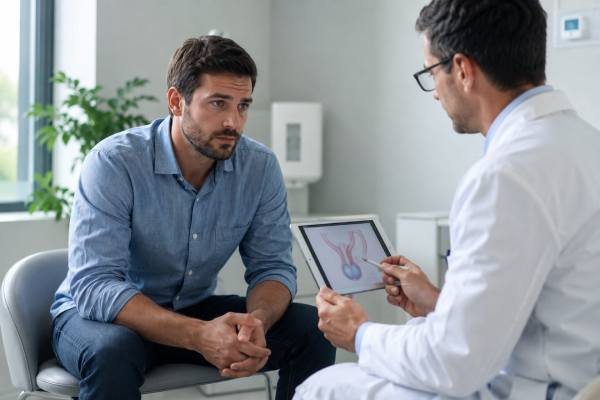
A spermatocele is a fluid-filled cyst that forms in the epididymis, the small coiled tube behind and above each testicle where sperm mature and travel. It is usually benign, painless, and found during a self-check, a physical exam, or a scrotal ultrasound done for another reason. Many men first notice a spermatocele as a soft lump near the top or back of the testicle and worry that it could be cancer. In most cases, it is not cancer and does not need treatment.
The main reasons to get checked are to confirm where the lump is, rule out urgent causes of scrotal pain or swelling, and decide whether monitoring is enough. Treatment is usually observation unless the cyst causes pain, heaviness, bothersome size changes, or uncertainty about the diagnosis.
Table of Contents
- What a Spermatocele Is
- Symptoms and How It Feels
- Causes and Risk Factors
- When a Scrotal Lump Needs Urgent Care
- How Doctors Diagnose It
- Treatment Options
- Fertility, Sex, and Daily Life
- Surgery Recovery and Follow-Up
What a Spermatocele Is
A spermatocele is a cyst in or near the epididymis. The epididymis sits along the back of the testicle and acts like a storage and transport tube for sperm. When a small section of this tube system becomes blocked or stretched, fluid can collect and form a round or oval sac.
The fluid inside a spermatocele is often clear or milky and may contain sperm. That is why it is sometimes called a spermatic cyst. An epididymal cyst is very similar, but the fluid usually does not contain sperm. In everyday care, the two terms are often used together because they feel similar, appear in the same area, and are managed in much the same way.
A spermatocele is usually:
- Benign, meaning noncancerous
- Separate from the testicle itself
- Smooth, soft, or slightly firm
- Painless or only mildly uncomfortable
- Slow-growing or stable over time
The location matters. A lump that is clearly above or behind the testicle is more likely to be from the epididymis. A lump that feels like it is inside the testicle needs prompt medical evaluation because testicular growths are handled differently. A careful exam and ultrasound can usually tell the difference.
Spermatoceles can be tiny, about the size of a pea, or larger. Some men have one cyst; others have several. They can happen on one side or both sides. A small cyst may never cause symptoms. A larger one can make the scrotum feel full, uneven, or heavy.
A spermatocele is not the same as a hydrocele, varicocele, infection, hernia, or testicular cancer. These conditions can all cause scrotal swelling or a lump, which is why a new finding should not be guessed at from touch alone. For a broader look at what a lump might be, see common causes of a testicular lump.
Symptoms and How It Feels
Most spermatoceles cause no symptoms. A man may notice one while showering, during sex, after exercise, or while doing a testicular self-check. Others are found when a clinician examines the scrotum for an unrelated reason.
The typical feeling is a small, smooth lump near the top or back of the testicle. It may feel separate from the testicle when you gently roll the area between your fingers. It can feel like a tiny grape, bead, or soft marble.
Common symptoms include:
- A painless lump above or behind the testicle
- A sense of fullness in one side of the scrotum
- Mild heaviness after standing, walking, or exercise
- Dull discomfort if the cyst is large
- A feeling that one testicle sits differently than before
- Anxiety after finding a new scrotal change
Pain is not the usual symptom. When pain is present, it is often mild and dull rather than sharp. The discomfort may come from stretching of nearby tissues, pressure from a larger cyst, or another condition in the same area.
Some men describe the discomfort as “dragging,” “pressure,” or “awareness” rather than true pain. It may be more noticeable in tight clothing, during long runs, after heavy lifting, or when sitting in certain positions.
A spermatocele usually does not cause:
- Burning with urination
- Penile discharge
- Fever
- Severe testicular tenderness
- Blood in the urine
- Erectile dysfunction
- Low testosterone symptoms
Those symptoms point toward other causes, such as infection, urinary problems, inflammation, injury, or a separate genital condition. For example, epididymitis often causes tenderness, swelling, and sometimes urinary symptoms or STI-related discharge. A cyst may be found at the same time, but it may not be the reason for the pain.
Monthly self-checks can help you notice changes early. The goal is not to diagnose yourself, but to learn what is normal for your body so a new lump, swelling, or firm area stands out. A step-by-step approach is covered in how to do a testicular self-exam.
Causes and Risk Factors
The exact cause of many spermatoceles is not clear. The most likely explanation is a blockage or weakness in one of the small ducts that carry sperm through the epididymis. Fluid then collects behind the blockage and forms a cyst.
Possible contributors include:
- Blocked epididymal ducts
- Prior inflammation in the epididymis
- Previous scrotal injury
- Prior surgery in the scrotal or groin area
- Vasectomy or other procedures that change sperm flow
- Natural age-related changes in the epididymis
Many men with a spermatocele have no obvious trigger. It may simply appear without an injury, infection, or known event.
A spermatocele is not caused by poor hygiene, masturbation, sexual activity, or not ejaculating often enough. It is also not contagious. You cannot pass it to a partner, and a partner cannot cause it.
Some cysts are found after a vasectomy. After vasectomy, sperm are still made in the testicles, but the pathway out is blocked. Pressure and changes in the epididymal ducts may contribute to small cysts or sperm granulomas in some men. These findings are usually benign, but a new lump after any procedure should still be examined.
Infection and inflammation can sometimes affect the epididymis, but infection is not the same as a spermatocele. Epididymitis is inflammation of the epididymis, often from bacteria, STIs, or urinary tract organisms depending on age and risk factors. It usually causes pain or tenderness rather than a quiet, smooth lump. Men with scrotal pain, swelling, urinary burning, or discharge should be evaluated for epididymitis symptoms and treatment options rather than assuming a cyst is the cause.
Age can matter, but spermatoceles are not limited to older men. They are often found in adults and can occur in teens or younger men as well. In children and adolescents, epididymal cysts are usually managed conservatively unless they grow, cause symptoms, or create diagnostic uncertainty.
When a Scrotal Lump Needs Urgent Care
A painless, stable lump near the epididymis can often be checked with a routine appointment. Sudden pain, rapid swelling, fever, or a hard testicular mass should not wait.
Seek urgent care or emergency evaluation if you have:
- Sudden severe testicular pain
- Pain with nausea or vomiting
- A testicle that sits higher than usual
- Rapid scrotal swelling
- Red, hot, or very tender scrotal skin
- Fever with scrotal pain
- Pain after significant injury
- A firm lump that seems to be inside the testicle
- New swelling with inability to pass urine
- Severe groin or scrotal pain with a bulge that will not go back in
The most time-sensitive concern is testicular torsion. This happens when the spermatic cord twists and cuts off blood flow to the testicle. It can threaten the testicle within hours. Torsion is more common in teens and young men, but it can happen at other ages. Any sudden, severe one-sided testicular pain should be treated as an emergency until proven otherwise. More detail is available in testicular torsion warning signs.
A hard lump in the testicle itself also needs prompt evaluation. Testicular cancer is often painless at first. It may feel like a firm spot, swelling, or change in testicle shape. Many scrotal lumps are benign, but a testicular mass should be checked quickly because early diagnosis matters. Learn the warning signs in testicular cancer symptoms.
The difference between “routine” and “urgent” is often the speed and severity of symptoms. A small lump that has been unchanged for months is different from pain that started suddenly this morning. When the story is unclear, it is safer to be examined.
| Condition | Typical clues | Usual urgency |
|---|---|---|
| Spermatocele or epididymal cyst | Smooth lump above or behind the testicle, often painless | Routine visit unless painful, growing, or uncertain |
| Hydrocele | Fluid swelling around the testicle, often larger and more diffuse | Routine unless sudden, painful, or linked to injury |
| Varicocele | “Bag of worms” feeling, often left-sided, may ache after standing | Routine, especially if pain or fertility concerns |
| Epididymitis | Tender epididymis, swelling, urinary symptoms, discharge, or fever | Same-day care if moderate to severe |
| Testicular torsion | Sudden severe pain, nausea, high-riding testicle | Emergency |
| Testicular cancer | Firm lump in the testicle, swelling, heaviness, sometimes painless | Prompt medical evaluation |
How Doctors Diagnose It
Diagnosis usually starts with a scrotal exam. The clinician checks the testicles, epididymis, spermatic cord, groin, and sometimes the abdomen. They look for the exact location of the lump, whether it is tender, whether it feels cystic or solid, and whether it is separate from the testicle.
A scrotal ultrasound is the main test when the diagnosis is not obvious. Ultrasound uses sound waves, not radiation, and can show whether a lump is fluid-filled or solid. It can also show whether the lump is outside the testicle, which is reassuring for a spermatocele or epididymal cyst.
Ultrasound can help distinguish:
- Spermatocele or epididymal cyst
- Hydrocele
- Varicocele
- Testicular tumor
- Inflammation
- Signs that raise concern for torsion in painful cases
A small light may be used during the exam to see whether the swelling transilluminates, meaning light passes through fluid. This can suggest a fluid-filled structure, but it does not replace ultrasound when the diagnosis is uncertain.
Urine tests are not always needed for a painless cyst. They become more useful when there is pain, burning, urgency, fever, discharge, or STI risk. In those cases, urine testing, urine culture, and STI testing may help identify infection. Men with urinary symptoms may also need evaluation for prostate or bladder issues, depending on age and symptoms.
Blood tests are not routine for a simple spermatocele. Tumor markers or other tests may be ordered if ultrasound raises concern for a testicular tumor, but that is a different situation from a typical epididymal cyst.
Aspiration, where fluid is removed with a needle, is not usually used just to make the diagnosis. It can introduce infection, the fluid often comes back, and it may injure nearby reproductive structures. Ultrasound is usually safer and more informative.
A urologist may be involved if the lump is large, painful, changing, hard to classify, or causing fertility concerns. A routine urology visit is also reasonable if the diagnosis has been made but the cyst keeps bothering you. For broader guidance, see when men should see a urologist.
Treatment Options
Most spermatoceles do not need treatment. If the cyst is small, painless, and clearly benign on exam or ultrasound, observation is usually enough. That means you monitor for changes and return if symptoms develop.
Observation is often the best choice when:
- The cyst is not painful
- It is not growing quickly
- Ultrasound confirms a benign cyst outside the testicle
- It does not interfere with exercise, sex, or daily comfort
- You may want future fertility
- The anxiety improves after a clear diagnosis
Simple comfort measures can help if the area feels heavy or mildly sore. Supportive underwear, an athletic supporter during workouts, brief cold packs, and avoiding activities that aggravate symptoms may reduce discomfort. Over-the-counter pain relievers may help some men, but they are not safe for everyone. Men with kidney disease, stomach ulcers, blood thinners, liver disease, or certain heart conditions should ask a clinician before using common pain medicines regularly.
Antibiotics do not shrink a spermatocele. They are used only when there is evidence of infection, such as epididymitis or a urinary tract infection. Creams, supplements, “detox” products, and testicle massage do not remove the cyst and may irritate the area.
Surgery is considered when the cyst causes symptoms that are worth the tradeoff. The usual operation is spermatocelectomy, which removes the cyst through a small incision in the scrotum or groin area. It is often done as an outpatient procedure, meaning you go home the same day.
Surgery may be reasonable when:
- The cyst causes ongoing pain or pressure
- The size interferes with walking, cycling, work, or sex
- The swelling is large enough to be bothersome
- The cyst keeps enlarging
- The diagnosis remains uncertain
- Conservative steps have not helped
Aspiration drains the fluid with a needle. It may sound simpler than surgery, but the cyst often refills. Because of that, aspiration is not usually a curative treatment. Sclerotherapy, where a chemical is injected after drainage to reduce recurrence, is used less commonly and may carry risks to the epididymis. These options are generally reserved for select patients who are not good surgical candidates or who understand the higher chance of recurrence.
A common mistake is choosing treatment based on size alone. A large cyst that causes no symptoms may not need removal. A smaller cyst that causes repeated discomfort may deserve discussion. The choice depends on symptoms, exam findings, fertility goals, and personal priorities.
Fertility, Sex, and Daily Life
A spermatocele usually does not reduce testosterone, sex drive, erections, orgasm, or ejaculation. It also does not turn into cancer. Most men can have sex, exercise, work, and lift normally once serious causes of pain have been ruled out.
Fertility is usually not affected by the cyst itself, especially when it is one-sided and small. The bigger fertility issue is treatment. The epididymis is part of the sperm transport system. Surgery near it can scar, block, or injure the tube. Damage on one side may not matter if the other testicle and epididymis work normally, but bilateral surgery or prior fertility problems make the discussion more important.
Before surgery, tell the urologist if you may want children in the future. Depending on your situation, the discussion may include semen analysis, sperm banking, delaying surgery, or choosing a microsurgical approach. Men who are already trying to conceive and also have a spermatocele may benefit from male fertility testing, especially if pregnancy has not happened after the usual trying period.
Sex is generally safe with a spermatocele unless it causes pain. If the cyst aches during sex, changing position, wearing supportive underwear afterward, or avoiding pressure on the scrotum may help. Painful ejaculation, burning, discharge, or pelvic pain is not typical for a simple cyst and should be evaluated for other causes.
Exercise is also usually safe. Running, cycling, weight training, and sports do not usually make a spermatocele dangerous. They may make symptoms more noticeable if the cyst is large or if the scrotum is unsupported. Supportive underwear during impact activities can reduce pulling and friction. If cycling causes numbness or genital pressure, saddle fit and riding posture may also need attention.
After a diagnosis, it is reasonable to keep an eye on:
- Size changes
- New pain
- New firmness in the testicle
- Changes on the other side
- Swelling after injury
- Urinary or sexual symptoms
A spermatocele can create anxiety even when it is harmless. That is understandable. The scrotum is a sensitive area, and finding a lump can be alarming. Once ultrasound confirms a benign cyst, repeated checking several times a day can make soreness and worry worse. A monthly self-check is usually enough unless your clinician gives different advice.
Surgery Recovery and Follow-Up
Spermatocelectomy is usually planned, not rushed. Before surgery, the urologist should explain what will be removed, where the incision will be, what type of anesthesia may be used, and how the procedure could affect the epididymis.
A typical recovery includes swelling, bruising, and soreness for several days. Many men are advised to rest, use scrotal support, apply cold packs as directed, and avoid heavy lifting or intense exercise at first. The exact timeline depends on the size of the cyst, the surgical approach, your job, and your surgeon’s instructions.
A common recovery pattern looks like this:
| Timeframe | What is common | What to avoid or watch |
|---|---|---|
| First 24–48 hours | Rest, swelling, bruising, mild bleeding at the dressing, soreness | Avoid heavy lifting, intense activity, and soaking the incision |
| First week | Gradual improvement, continued support, light walking | Call if fever, worsening redness, pus, severe pain, or expanding swelling occurs |
| Weeks 2–4 | Many men return to normal daily activity | Resume sex, workouts, and lifting only when cleared |
| After 1 month | Swelling often keeps improving, but firmness can linger | Report persistent or worsening pain, a new lump, or major size change |
Some swelling can take longer to settle than expected. The testicle or epididymal area may feel thicker or “bulkier” after surgery because of healing tissue. That does not always mean the cyst came back. Follow-up exam or ultrasound can help if there is doubt.
Possible risks of surgery include:
- Bleeding or hematoma
- Infection
- Recurrence of the cyst
- Chronic scrotal pain
- Injury to the epididymis or vas deferens
- Scarring or firmness
- Fertility impact, especially if both sides are involved
- Need for another procedure
Recurrence can happen if cyst tissue remains or if nearby epididymal ducts form another cyst. Some surgeons may discuss removing part or all of the epididymis in select men who do not want future fertility, especially when recurrence risk or epididymal pain is a major issue. That approach may reduce recurrence in some cases, but it creates sperm transport blockage on that side and is not a casual choice.
Call your clinician after surgery if pain suddenly worsens, swelling rapidly expands, you develop fever, the incision drains pus, the scrotum becomes very red or hot, or you cannot urinate. Mild bruising is common; severe or worsening symptoms need attention.
Long-term follow-up is usually simple. If symptoms are gone and the exam is reassuring, no intensive monitoring may be needed. If you still feel a lump, have ongoing pain, or are unsure whether the swelling is new or old, a repeat exam can clarify what is healing tissue, recurrence, or another condition.
References
- Spermatocele – Symptoms & causes – Mayo Clinic 2022 (Review)
- Spermatocele – Diagnosis & treatment – Mayo Clinic 2022 (Review)
- Epididymitis – STI Treatment Guidelines 2021 (Guideline)
- Epididymal cysts in children: frequency, clinical characteristics, and management strategies 2024 (Review)
- Spermatocelectomy with and without epididymectomy: retrospective experience at a single institution in patients not interested in fertility preservation 2025 (Study)
- Removal of an Epididymal Cyst 2024 (Patient Leaflet)
Disclaimer
This article is for education only and is not a diagnosis or personal treatment plan. Any new scrotal lump, testicular change, sudden pain, swelling, fever, or urinary symptom should be assessed by a qualified healthcare professional. Treatment choices for a spermatocele should be made with a clinician who can review your exam, ultrasound findings, fertility goals, and overall health.