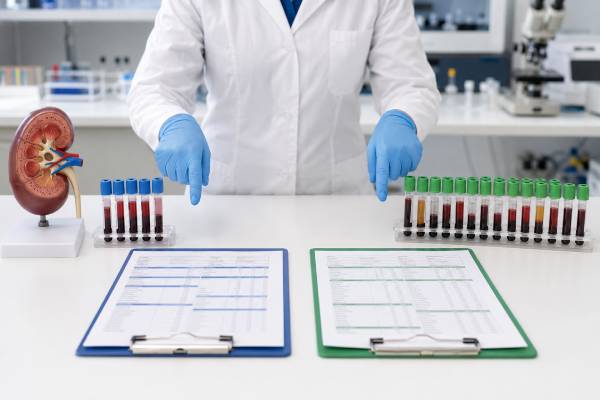
A kidney function panel and a comprehensive metabolic panel (CMP) can look similar on a lab report because both include several of the same blood markers, especially creatinine, BUN, and electrolytes. The difference is the purpose of the panel. A kidney function panel, often called a renal function panel, focuses on kidney filtration, fluid balance, electrolyte control, and mineral balance. A CMP is broader. It checks kidney-related markers too, but it also includes liver enzymes, bilirubin, total protein, albumin, calcium, glucose, and electrolytes.
That difference matters when the test is being used for follow-up. A CMP may be enough for a routine checkup or a broad health screen, while a kidney function panel may be more useful when kidney disease, medication effects, abnormal electrolytes, or phosphorus problems need closer monitoring. The best panel depends on the clinical reason for testing, not on which one sounds more complete.
- A kidney function panel focuses on creatinine, eGFR, BUN, electrolytes, albumin, calcium, and phosphorus; exact components vary by lab.
- A CMP usually includes 14 tests: glucose, calcium, sodium, potassium, chloride, CO2, BUN, creatinine, albumin, total protein, ALP, ALT, AST, and bilirubin.
- The kidney panel often includes phosphorus, which the CMP usually does not include.
- The CMP includes liver enzymes and bilirubin, which the kidney panel usually does not include.
- Neither panel usually replaces a urine albumin-creatinine ratio, which is often needed to check for kidney damage.
- Abnormal kidney or CMP results should be interpreted as patterns over time, not as a diagnosis from one number.
Table of Contents
- Main Difference Between a Kidney Function Panel and CMP
- What Each Panel Includes
- When Each Test Is Ordered
- How Results Are Interpreted
- eGFR, Urine Albumin, and Follow-Up Testing
- Preparation and Timing
- Common Mistakes When Comparing the Panels
- When to Call a Clinician
Main Difference Between a Kidney Function Panel and CMP
A kidney function panel is a focused kidney and electrolyte blood test. A CMP is a broader chemistry panel that checks kidney markers, liver markers, glucose, proteins, and electrolytes in one blood draw.
The names can be confusing because a CMP does include several kidney-related results. If your CMP shows creatinine, BUN, sodium, potassium, chloride, and CO2, it is giving useful information about kidney filtration and fluid balance. That does not make it the same as a kidney function panel, though. A kidney-focused panel usually adds phosphorus and may organize the results around kidney monitoring rather than broad metabolic screening.
A helpful way to think about the difference is this:
| Feature | Kidney Function Panel | Comprehensive Metabolic Panel |
|---|---|---|
| Main purpose | Kidney function, electrolytes, acid-base balance, and mineral balance | Broad metabolic, kidney, liver, glucose, protein, and electrolyte screening |
| Also called | Renal function panel, renal panel, kidney panel | CMP, chem 14, chemistry panel |
| Kidney markers | Usually creatinine, eGFR, BUN, and sometimes BUN/creatinine ratio | Usually creatinine, eGFR if reported by the lab, BUN, and sometimes BUN/creatinine ratio |
| Electrolytes | Usually sodium, potassium, chloride, and CO2/bicarbonate | Usually sodium, potassium, chloride, and CO2/bicarbonate |
| Phosphorus | Usually included | Usually not included |
| Liver enzymes | Usually not included | Included: ALP, ALT, AST, and bilirubin |
| Best fit | Kidney disease monitoring, dialysis-related review, electrolyte follow-up, phosphorus problems | Routine checkups, broad screening, liver monitoring, diabetes-related chemistry review |
A CMP is often chosen when a clinician wants a wide snapshot. It can show high glucose, low sodium, high potassium, reduced kidney filtration, high liver enzymes, low albumin, high bilirubin, or other patterns that point toward different body systems. A comprehensive metabolic panel is especially common in routine care because it gives a broad view without requiring many separate orders.
A kidney function panel is usually chosen when the question is narrower. It looks more closely at markers that change with kidney filtration, kidney-related fluid balance, and kidney-related mineral handling. A renal function panel is often more relevant when phosphorus, albumin, bicarbonate, potassium, and eGFR trends need to be followed together.
What Each Panel Includes
The exact ingredients of a kidney function panel can vary by laboratory and ordering system. The CMP is more standardized, although some labs add calculated values such as eGFR or anion gap on the report.
Typical kidney function panel markers
A kidney function panel commonly includes:
- Creatinine
- Estimated glomerular filtration rate, or eGFR, calculated from creatinine and patient factors
- Blood urea nitrogen, or BUN
- BUN/creatinine ratio, depending on the lab
- Sodium
- Potassium
- Chloride
- Carbon dioxide, often used as a bicarbonate estimate
- Calcium
- Phosphorus
- Albumin
- Glucose, depending on the lab
Creatinine and eGFR are often the most recognized kidney filtration markers. Creatinine is a waste product related to muscle metabolism. The kidneys filter it from the blood. eGFR uses creatinine with age and sex to estimate how much blood the kidneys filter each minute, standardized to body surface area. For a deeper kidney-marker comparison, creatinine and eGFR should usually be read together rather than separately.
BUN measures urea nitrogen, a waste product made when the body breaks down protein. BUN rises for many reasons, including dehydration, high protein intake, gastrointestinal bleeding, reduced kidney filtration, and some medications. This is why BUN and creatinine are more useful as a pattern than as isolated numbers.
Phosphorus is one of the major reasons a kidney function panel may be chosen over a CMP. The kidneys help remove extra phosphorus. When kidney function declines, phosphorus may rise, especially in more advanced chronic kidney disease. Phosphorus also interacts with calcium, vitamin D, and parathyroid hormone, so it can help show mineral-bone balance in kidney disease.
Albumin on a kidney function panel is a blood protein measurement. It can help interpret calcium and general nutritional or inflammatory patterns, and it may fall with liver disease, inflammation, protein loss, or severe illness. It is not the same as urine albumin, which checks for protein leakage through the kidney filters.
Typical CMP markers
A CMP commonly includes these 14 blood tests:
| Group | Markers | What they help assess |
|---|---|---|
| Glucose and minerals | Glucose, calcium | Blood sugar status, calcium balance, some endocrine or kidney-related patterns |
| Electrolytes and acid-base balance | Sodium, potassium, chloride, CO2/bicarbonate | Fluid balance, electrolyte balance, acid-base patterns |
| Kidney-related waste markers | BUN, creatinine, often eGFR as a calculated result | Kidney filtration and waste clearance patterns |
| Proteins | Albumin, total protein | Liver protein production, nutrition, inflammation, protein loss, dehydration patterns |
| Liver and bile markers | ALP, ALT, AST, bilirubin | Liver cell injury, bile duct obstruction patterns, bilirubin processing |
The CMP overlaps with a basic metabolic panel, but it adds liver enzymes, bilirubin, total protein, and albumin. That is why clinicians often order a CMP when symptoms are nonspecific, when several organ systems could be involved, or when medication monitoring needs both liver and kidney information.
The CMP usually does not include phosphorus. It also does not include magnesium, cystatin C, parathyroid hormone, urine albumin-creatinine ratio, or a complete blood count unless those are ordered separately.
When Each Test Is Ordered
A clinician may order either panel during a routine visit, before surgery, during medication monitoring, or while evaluating symptoms such as fatigue, swelling, nausea, weakness, abnormal urination, confusion, high blood pressure, or dehydration. The choice depends on the clinical situation.
When a kidney function panel may be preferred
A kidney function panel is often preferred when kidney monitoring is the central reason for testing. Common situations include:
- Known chronic kidney disease
- Follow-up after an abnormal creatinine, eGFR, BUN, potassium, or bicarbonate result
- Monitoring after acute kidney injury
- Checking electrolytes after medication changes
- Monitoring people taking diuretics, ACE inhibitors, ARBs, mineralocorticoid receptor antagonists, lithium, tacrolimus, or other kidney-relevant drugs
- Evaluating abnormal phosphorus, calcium, or albumin patterns
- Following kidney-related mineral balance in more advanced kidney disease
- Checking kidney function before or after contrast imaging, depending on risk
A kidney function panel may be more informative than a CMP when phosphorus is important. For example, a person with stage 4 chronic kidney disease may need phosphorus, calcium, bicarbonate, potassium, albumin, creatinine, and eGFR followed over time. A CMP would check several of those markers but would usually miss phosphorus.
Potassium is another major reason for focused kidney follow-up. Kidney function, medications, hydration, acid-base status, and diet can all influence potassium. If creatinine is rising and potassium is high, the pattern can be more urgent than either result alone. The relationship between potassium and creatinine is especially important because potassium affects heart rhythm.
When a CMP may be preferred
A CMP is often preferred when the clinician wants a broad chemistry screen rather than a kidney-focused panel. Common reasons include:
- Annual or routine health testing
- General symptoms such as fatigue, nausea, weakness, weight loss, or poor appetite
- Diabetes or prediabetes monitoring
- Medication monitoring when both kidney and liver effects are possible
- Checking dehydration, electrolyte imbalance, or abnormal blood sugar
- Evaluating possible liver or bile duct problems
- Preoperative testing when a broad chemistry review is needed
A CMP can be more efficient when the problem is unclear. For example, fatigue could come from high glucose, kidney dysfunction, liver inflammation, low sodium, high calcium, low albumin, or many non-chemistry causes. A CMP does not diagnose the cause by itself, but it can identify a direction for follow-up.
If liver markers are part of the concern, the CMP is usually more appropriate than a kidney panel. ALT and AST can rise with liver cell injury. ALP and bilirubin can rise in bile duct or liver processing problems. For a liver-focused review, liver function tests may be ordered along with or instead of a CMP, depending on what needs to be measured.
How Results Are Interpreted
Kidney function panel and CMP results are interpreted by looking at patterns, trends, symptoms, medications, hydration status, and previous lab values. A single abnormal result may be important, but it rarely tells the whole story.
Reference ranges also vary by lab. The ranges below are common adult examples, not universal cutoffs.
| Marker | Common adult reference range | Interpretation notes |
|---|---|---|
| Creatinine | About 0.6–1.3 mg/dL | Depends strongly on muscle mass, age, sex, diet, pregnancy, and medications |
| eGFR | Often 90 or higher is considered normal if no kidney damage is present | Values below 60 for 3 months or longer can support chronic kidney disease diagnosis |
| BUN | About 7–20 mg/dL | Can rise with dehydration, high protein intake, kidney impairment, bleeding in the gut, or catabolic illness |
| Sodium | About 135–145 mmol/L | Reflects water balance more than sodium intake alone |
| Potassium | About 3.5–5.0 mmol/L | High or low levels can affect heart rhythm, especially when severe or rapidly changing |
| CO2/bicarbonate | About 22–29 mmol/L | Helps assess acid-base balance; low values can occur with metabolic acidosis |
| Calcium | About 8.5–10.5 mg/dL | Should be interpreted with albumin, symptoms, kidney function, vitamin D, and PTH when relevant |
| Phosphorus | About 2.5–4.5 mg/dL | Often included in kidney panels; may rise as kidney function declines |
| Albumin | About 3.5–5.0 g/dL | Can reflect liver production, inflammation, nutrition, protein loss, hydration, and illness severity |
| ALT and AST | Ranges vary widely by lab | Included in CMP; mainly used to assess liver cell injury patterns |
Creatinine can look “normal” even when kidney function is not ideal for that person. A small older adult with low muscle mass may have a creatinine that looks modest while eGFR is reduced. A very muscular person may have a higher creatinine with normal kidney filtration. This is why eGFR is usually more helpful than creatinine alone, although eGFR is still an estimate.
BUN can mislead when read by itself. A high BUN with a stable creatinine may point toward dehydration, high protein intake, recent gastrointestinal bleeding, or steroid use. A high BUN with a rising creatinine may raise more concern for reduced kidney filtration. The BUN/creatinine ratio can help, but it is not a stand-alone diagnosis. A BUN/creatinine ratio pattern works best when it is matched with the person’s symptoms, fluid status, and trend.
Electrolytes deserve special attention because abnormal values can become urgent even when kidney markers are only mildly abnormal. High potassium can occur with reduced kidney function, some blood pressure medicines, potassium supplements, adrenal hormone problems, acidosis, or a blood sample problem called hemolysis. Low potassium can occur with vomiting, diarrhea, diuretics, low magnesium, or hormone-related causes.
CO2 on a CMP or kidney panel is usually a rough measure of bicarbonate. Low CO2 can suggest metabolic acidosis, which may occur with kidney disease, diabetic ketoacidosis, severe diarrhea, lactic acidosis, or certain toxins. High CO2 can suggest metabolic alkalosis or compensation for chronic respiratory problems. When the pattern is complex, bicarbonate and anion gap can help sort acid-base disorders.
Calcium and phosphorus are especially relevant in kidney disease because the kidneys help regulate mineral balance. In chronic kidney disease, phosphorus can rise, vitamin D activation may fall, and parathyroid hormone can increase. This is one reason the kidney panel may be chosen over the CMP when kidney-mineral balance is being followed. More detailed evaluation may include calcium, phosphorus, and PTH together.
eGFR, Urine Albumin, and Follow-Up Testing
A kidney function panel or CMP can estimate filtration, but neither panel usually tells the full kidney story. Kidney disease can affect filtration, urine protein leakage, urine sediment, blood pressure, imaging findings, and electrolyte balance.
eGFR is one of the most important kidney numbers. It estimates glomerular filtration rate, which is how well the kidney filters waste from the blood. In many adults, an eGFR of 90 or higher is considered normal when there are no other signs of kidney damage. An eGFR of 60–89 may be mildly reduced, but it does not automatically mean chronic kidney disease unless other evidence of kidney damage is present. An eGFR below 60 for at least 3 months can support a diagnosis of chronic kidney disease. An eGFR near or below 15 is often described as kidney failure.
The trend matters. A stable eGFR of 58 over several years in an older adult may carry a different meaning than an eGFR that falls from 95 to 58 in a few weeks. Sudden changes raise concern for acute kidney injury, medication effects, obstruction, dehydration, infection, or other causes that may need prompt evaluation.
Urine albumin-creatinine ratio, often called uACR, is a separate urine test. It checks whether albumin is leaking into the urine. This can show kidney filter damage even when eGFR is still above 60. A common uACR interpretation is:
- Lower than 30 mg/g: normal to mildly increased
- 30–299 mg/g: moderately increased
- 300 mg/g or higher: severely increased
Temporary albumin in the urine can occur after intense exercise, fever, urinary tract infection, high blood sugar, high blood pressure, or acute illness. For that reason, abnormal uACR results are often repeated before long-term conclusions are made.
Other follow-up tests may include urinalysis, urine protein-creatinine ratio, cystatin C, magnesium, parathyroid hormone, vitamin D, complete blood count, iron studies, kidney ultrasound, or medication levels. The follow-up depends on the abnormal pattern. For example, high creatinine plus high potassium prompts a different workup than normal creatinine plus high liver enzymes, low albumin, and high bilirubin.
Preparation and Timing
Many kidney function panels and CMPs are simple blood tests drawn from a vein in the arm. The blood draw usually takes only a few minutes. Results may be available the same day or within a day, depending on the lab and setting.
Fasting depends on the reason for testing and the lab’s instructions. A CMP may require fasting if the clinician wants a fasting glucose result. Some renal panels are also ordered fasting, especially when glucose is included or when the lab has a standard fasting requirement. In many real-world settings, kidney markers and electrolytes can still be useful when drawn nonfasting, but the glucose result may be harder to interpret as a fasting value.
Before testing, it helps to ask whether you should:
- Fast, and for how many hours
- Drink water normally
- Avoid intense exercise for 24 hours
- Delay creatine supplements or high-meat meals if the clinician says they could affect creatinine interpretation
- Take medications as usual
- Time the test around a medication dose, if drug monitoring is involved
Do not stop prescribed medications just to “improve” a lab result unless the prescribing clinician tells you to. Blood pressure medicines, diuretics, diabetes medicines, lithium, transplant medicines, antibiotics, anti-inflammatory drugs, and supplements can all affect kidney-related labs, but stopping them without guidance can be unsafe.
Hydration also affects interpretation. Dehydration can raise BUN and sometimes creatinine, concentrate sodium patterns, and worsen kidney stress. Overhydration can dilute sodium and shift other values. Normal water intake before routine testing is usually reasonable unless the clinician gives different instructions.
Timing is especially important after medication changes. For example, after starting or increasing an ACE inhibitor, ARB, diuretic, or mineralocorticoid receptor antagonist, clinicians may recheck creatinine and potassium to make sure kidney function and potassium remain in a safe range. After acute illness, vomiting, diarrhea, surgery, contrast imaging, or hospitalization, repeat testing may be used to confirm recovery or detect worsening.
Common Mistakes When Comparing the Panels
The most common mistake is assuming that “comprehensive” means better for every situation. A CMP is broader, but broader is not always better. If the main concern is kidney disease with phosphorus monitoring, a kidney function panel may answer the question more directly.
Another mistake is thinking a kidney function panel always includes every kidney test. It does not. Most kidney panels are blood panels. They usually do not include urine albumin, urinalysis, kidney imaging, cystatin C, or measured GFR. A person can have a normal or near-normal blood kidney panel and still have albumin in the urine.
A third mistake is confusing blood albumin with urine albumin. Blood albumin is measured in both a CMP and many kidney panels. It reflects protein status in the blood and can change with liver disease, inflammation, nutrition, protein loss, kidney disease, and hydration. Urine albumin is a different test that checks whether albumin is leaking through the kidney filters.
It is also easy to overreact to one mildly abnormal number. Mildly high BUN after a hard workout, dehydration, or high-protein meal may normalize. A slightly low CO2 may need repeat testing and context. A mildly abnormal liver enzyme on a CMP may not be related to kidney function at all. Trends, symptoms, and repeat values often clarify whether the result is temporary or persistent.
The opposite mistake is ignoring a pattern because each individual result is only “a little off.” A mildly low eGFR, rising creatinine, high-normal potassium, low bicarbonate, and rising phosphorus together can be more meaningful than any one value alone. Pattern recognition is one of the main reasons clinicians compare current results with prior labs.
A final mistake is assuming that normal creatinine rules out kidney disease. Creatinine depends on muscle mass. eGFR improves interpretation, but urine albumin testing may still be needed for people with diabetes, high blood pressure, cardiovascular disease, family history of kidney failure, or previous kidney problems.
When to Call a Clinician
Call the ordering clinician when kidney function panel or CMP results are abnormal and you do not understand the next step. Many abnormalities are not emergencies, but they should still be explained in context.
More urgent follow-up may be needed when abnormal results come with symptoms such as:
- Chest pain, fainting, severe weakness, or irregular heartbeat
- Confusion, severe drowsiness, or new severe fatigue
- Shortness of breath or new swelling in the legs, face, or abdomen
- Very low urine output or inability to urinate
- Severe vomiting, diarrhea, or dehydration
- Muscle paralysis, severe cramps, or profound weakness
- Severe abdominal pain or yellowing of the skin or eyes
- High blood sugar with vomiting, deep breathing, confusion, or ketones
Potassium deserves special caution. Very high potassium can trigger dangerous heart rhythm problems, especially when kidney function is reduced or when medications that raise potassium are involved. Very low potassium can also affect rhythm and muscle function. A lab may call the clinician directly if potassium is critically abnormal, but you should not wait for routine follow-up if severe symptoms are present.
A sudden creatinine rise or sharp eGFR drop may suggest acute kidney injury. Causes can include dehydration, obstruction, infection, medication effects, contrast exposure, low blood pressure, heart failure, or inflammatory kidney disease. Rapid changes usually need more attention than a stable long-term result.
For non-urgent abnormalities, good follow-up questions include:
- Which result is most important in my situation?
- Is this new or has it been present before?
- Should the test be repeated, and when?
- Do I need urine albumin-creatinine ratio or urinalysis?
- Could any medication, supplement, diet change, exercise, or illness explain the result?
- Should I see a kidney specialist, liver specialist, or another clinician?
- Are there symptoms that should make me seek urgent care?
A kidney function panel and a CMP are both useful tests, but they answer different questions. The kidney panel is usually better for focused kidney, electrolyte, phosphorus, and albumin monitoring. The CMP is usually better for broad chemistry screening that includes liver markers and total protein. The most useful result is not the panel name itself; it is the pattern of numbers, how they compare with prior results, and how they fit the person’s health situation.
References
- Comprehensive Metabolic Panel (CMP) 2023 (Official Medical Test Page)
- Renal Function Panel 2026 (Test Catalog)
- KDIGO 2024 Clinical Practice Guideline for the Evaluation and Management of Chronic Kidney Disease 2024 (Guideline)
- Estimated Glomerular Filtration Rate (eGFR) 2026 (Official Patient Education)
- Urine albumin-creatinine ratio (uACR) 2023 (Official Patient Education)
- Chronic Kidney Disease Tests & Diagnosis 2016 (Official Patient Education)
Disclaimer
Kidney function panel and CMP results should be reviewed with a qualified healthcare professional who can interpret them with your symptoms, medications, medical history, and prior lab trends. Seek urgent medical care for severe weakness, chest pain, fainting, confusion, shortness of breath, very low urine output, or symptoms that occur with a critical potassium, creatinine, glucose, calcium, or liver-related result.