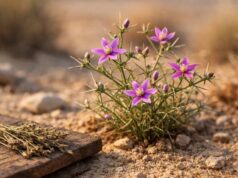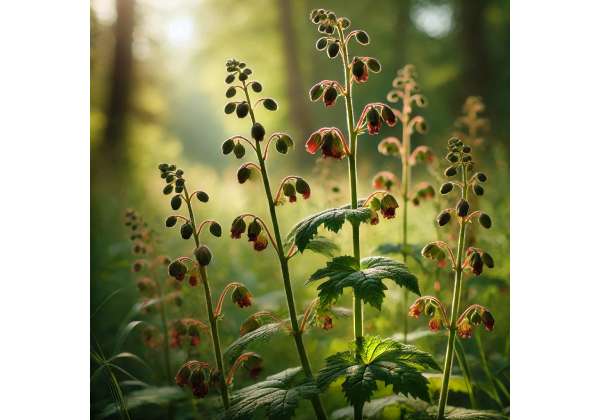
Figwort, or Scrophularia nodosa, is a long-used European herb best known in traditional herbal medicine for chronic skin complaints, itching, mild constipation, and what older texts described as “swollen glands” or sluggish lymphatic congestion. It is a tall, square-stemmed perennial with a knotted rhizome, and both its aerial parts and root have appeared in older herbal practice. Modern interest in figwort centers on its iridoid glycosides, phenylethanoid glycosides, and flavonoids—compounds that help explain why the plant is repeatedly studied for anti-inflammatory, wound-related, and antioxidant activity.
At the same time, figwort is a good example of a herb whose reputation is stronger than its human clinical evidence. Laboratory and preclinical studies are promising, especially for skin-relevant and inflammation-related actions, but direct trials in people are sparse. That makes figwort more useful as a carefully chosen traditional support herb than as a proven treatment. When used well, it belongs in a measured, evidence-aware approach: realistic expectations, modest dosing, and extra caution during pregnancy, breastfeeding, or when heart disease or prescription medicines are involved.
Quick Summary
- Figwort is traditionally used for chronic itchy skin conditions, mild constipation, and fluid-moving or gland-supportive formulas.
- Its most important constituents include iridoid glycosides such as harpagoside, aucubin, and catalpol-related compounds.
- Traditional oral use is often listed at 0.2 to 8 g of dried aerial parts per day.
- Avoid medicinal use during pregnancy, breastfeeding, or with heart disease unless a qualified clinician advises otherwise.
Table of Contents
- What is figwort
- Key compounds and medicinal properties
- Does figwort help skin and itching
- Traditional uses for glands and inflammation
- How figwort is used and prepared
- How much should you take
- Safety, side effects, and interactions
- What the evidence actually says
What is figwort
Figwort is a perennial herb in the Scrophulariaceae family, native across much of Europe and extending into western and central Asia. It usually grows in damp hedgerows, woodland edges, streamsides, and other moist ground. The plant is easy to recognize once flowering begins: it has a square stem, opposite toothed leaves, and small maroon-green flowers arranged in branched clusters. Its Latin species name, nodosa, points to the knotted rhizome, a feature that also shaped its traditional use and folklore.
Common names include common figwort, knotted figwort, throatwort, carpenter’s square, and scrofula plant. Those names hint at the herb’s older role in treating swollen nodes, chronic skin eruptions, throat irritation, and stubborn inflammatory complaints. In European herbal practice, figwort was often used when a condition was not acute but slow, congested, and lingering. That made it a classic choice for eczema-like eruptions, itching, psoriasis-style scaling, mild constipation, and “lumpy” tissue states that older herbalists linked with impaired drainage.
Both the aerial parts and the root appear in the historical literature, but modern monographs often focus on the dried herb top. That matters because commercial products may differ in part used, potency, and traditional intent. A root tincture, a dried aerial-part tea, and a homeopathic mother tincture are not interchangeable. If a product label is vague about the plant part, it is harder to predict how closely it reflects traditional use.
One reason figwort still attracts interest is that it sits at the border between skin support and deeper systemic support. Herbalists rarely treated it as a beauty herb or a simple rash remedy. Instead, it was usually framed as an alterative-style plant for stubborn patterns that seemed to involve the skin, bowels, and glands together. That broader view explains why it is sometimes discussed alongside burdock in traditional skin-support formulas, especially when the goal is steady internal support rather than quick symptom suppression.
In modern terms, figwort is best thought of as a specialized herb with a long tradition and a modest research base. It is not a mainstream daily tonic, and it is not a first-line self-care herb for most people. Its value lies in careful, pattern-based use rather than general popularity. That makes proper identification, realistic expectations, and attention to the plant part all more important than they might be with simpler kitchen herbs.
Key compounds and medicinal properties
The most important compounds in figwort are iridoid glycosides and phenylethanoid glycosides. These are the chemical families that show up again and again in reviews of the Scrophularia genus and help explain why the plant has been studied for anti-inflammatory, wound-related, and antioxidant activity. Among the better-known figwort constituents are harpagoside, aucubin, catalpol-related compounds, harpagide derivatives, and a range of scrophulosides and related acylated iridoids. Figwort also contains phenylethanoid compounds such as verbascoside-like molecules and several flavonoids and phenolic acids.
That chemistry matters because iridoid-rich herbs often have a distinct medicinal profile. They tend to be associated with anti-inflammatory signaling, tissue protection, and broader modulatory effects rather than a single dramatic action. In figwort, this creates a plausible bridge between the traditional and modern views of the herb. Older herbalists described it as cooling, resolving, alterative, and useful for stubborn inflammatory skin states. Modern phytochemistry cannot fully prove those terms, but it does show that the plant contains compounds known for meaningful biological activity.
The main medicinal properties usually discussed for figwort are:
- Anti-inflammatory potential.
- Wound-supportive or tissue-repair activity.
- Mild analgesic or soothing action.
- Gentle laxative and diuretic traditional use.
- Antioxidant and possible antimicrobial effects.
These properties should still be interpreted carefully. Most of the evidence comes from chemistry studies, cell work, and animal or ex vivo models. That means the plant looks active, but the size of any real benefit in people remains uncertain. It is better to say that figwort has a credible anti-inflammatory phytochemical profile than to claim it treats inflammatory disease.
Another useful point is that different compounds may dominate in different parts of the plant. Some studies have found notable levels of harpagoside, aucubin, and catalpol-related constituents in aerial parts or cultured tissues, while other work has isolated wound-relevant acylated iridoid glycosides from seed pods. That diversity helps explain why older herbal sources were not always rigid about which part mattered most. Still, current products are rarely standardized, so the chemical profile can vary more than labels suggest.
For readers comparing herbal chemistry, figwort shares some mechanistic language with devil’s claw and other harpagoside-associated herbs, but the plants are not interchangeable. Figwort’s traditional emphasis is more skin-oriented and gland-oriented, while devil’s claw is far better known for musculoskeletal use.
The most honest summary is this: figwort contains compounds that make its traditional uses chemically plausible, especially for inflammation-related support, but its medicinal profile is broader than its clinical proof. Its chemistry is a reason for interest, not a reason for overpromising.
Does figwort help skin and itching
Skin support is the most recognizable traditional use of figwort, and it is also the area where the herb makes the most practical sense today. Older herbal monographs repeatedly mention chronic cutaneous disease, eczema, psoriasis-like scaling, and pruritus. Modern official monograph language still reflects that tradition, even though strong human trials are lacking. In real use, that means figwort is best thought of as a historically skin-focused herb with promising but incomplete evidence.
What kind of skin picture was figwort traditionally used for? Usually not an acute burn, a rapidly spreading infection, or a dramatic allergic emergency. It was more often chosen for chronic, lingering, itchy, irritated, or thickened skin states—especially when the condition seemed tied to sluggish elimination or mild constipation. This older framework is not the same as a dermatology diagnosis, but it does capture the sort of situations in which figwort was most often used.
There are a few reasons this use remains plausible:
- Anti-inflammatory iridoids may help calm inflammatory signaling.
- Some figwort constituents have shown wound-related activity in preclinical work.
- The herb has a long record of use for itching and chronic irritation.
- Its mild laxative and diuretic reputation fit older whole-body skin protocols.
That does not mean figwort is a proven eczema or psoriasis treatment. No one should assume it matches prescription therapy or structured dermatologic care. Instead, it may serve as a modest supportive herb when the goal is to soothe stubborn skin patterns over time, especially as part of a broader routine that addresses triggers, barrier repair, irritants, and bowel health.
Topical and internal use can both appear in the traditional record. Internally, figwort tea or tincture was often taken for weeks rather than days. Externally, compresses, washes, or ointment-style preparations were used for irritated patches, swollen tissue, and itchy eruptions. That dual approach reflects the old idea that chronic skin problems often need more than surface treatment alone.
Readers looking at other skin-supportive herbs often compare figwort with calendula for gentler topical skin soothing. The difference is useful. Calendula is more obviously a surface-healing herb with wider acceptance in topical care. Figwort is more traditionally internal, more specific to chronic irritated patterns, and much less clinically developed.
So does figwort help skin and itching? It may, especially in the kinds of chronic, stubborn, mildly inflammatory skin states for which it was historically chosen. But the herb works best when expectations stay grounded. It is a support herb with traditional credibility, not a stand-alone dermatology treatment. Persistent rash, broken skin, infection, bleeding, or changing lesions still call for proper medical assessment rather than herbal guesswork.
Traditional uses for glands and inflammation
Beyond the skin, figwort has a long reputation as a herb for swollen glands, lingering inflammatory states, and what older practitioners described as congestion or obstruction. This is one of the reasons it was so often considered an “alterative” herb in older Western herbalism. The idea was not that figwort targeted one organ, but that it gradually improved the body’s handling of slow, stubborn inflammatory problems.
The term “glands” in old herbal writing can be tricky. It might refer to enlarged lymph nodes, lumpy tissue, inflamed tonsillar areas, or other palpable swellings. Modern readers should not map those descriptions directly onto a specific diagnosis. Still, the pattern is clear: figwort was used when tissue seemed chronically irritated, enlarged, or slow to settle. This includes old references to throat complaints, pharyngitis, neuritis, constipation, and swelling.
From a current perspective, the anti-inflammatory and immunomodulatory language around figwort is still mostly mechanistic and preclinical. Iridoids such as harpagoside and related compounds have been discussed for effects on inflammatory pathways, and broader reviews of Scrophularia species describe antioxidant, analgesic, and tissue-modulating actions. But it is important not to turn that into a claim that figwort has proven clinical benefit for swollen nodes, autoimmune disease, or chronic pain.
A more realistic summary of this traditional use would be:
- It was chosen for slow, nonacute inflammatory states.
- It often appeared when skin and gland complaints occurred together.
- It was sometimes used when bowels were sluggish or tissue felt “boggy.”
- It was not traditionally framed as a quick-relief herb.
This helps explain why figwort sometimes appears in formulas that aim to “move” fluid, calm inflammatory tissue, or support long-standing skin complaints with an underlying congestive feel. In broader traditional comparisons, it may be discussed beside red clover in older skin and gland-support traditions, though the two herbs have different chemistry and very different evidence profiles.
There is also an important limit here. Swollen glands are not a casual symptom. A lymph node that is hard, rapidly enlarging, painful, fixed, or accompanied by fever, weight loss, night sweats, or ongoing throat symptoms should be medically evaluated. Figwort belongs, if at all, in supportive care around nonurgent patterns, not in the place of diagnosis.
The herb’s inflammation story is credible enough to justify interest, but not broad enough to justify confident claims. Figwort may still deserve respect as a traditional plant for chronic inflammatory patterns, especially when skin irritation and tissue congestion overlap. It does not deserve hype as a proven lymphatic cure or a substitute for investigating persistent swelling.
How figwort is used and prepared
Figwort is used in several forms, but most modern oral products are based on dried aerial parts rather than elaborate root preparations. Traditional use includes infusion, decoction, tincture, fluid extract, and powdered herb. External use has included washes, ointments, poultices, and compresses for irritated skin or localized swelling. In practice, tinctures and teas are the most realistic forms for people using figwort today.
The common preparations are:
- Dried herb infusion.
- Tincture.
- Powder or capsule.
- Fluid extract.
- External wash or compress.
- Salve or ointment in blended topical products.
Tea is a reasonable starting point when the goal is traditional internal support. It is simple, slower acting, and closer to the plant’s historical role than a highly marketed proprietary capsule. Tincture is often chosen when a person wants a portable and measurable preparation, though formulas vary widely and are rarely standardized to a single marker compound. This is one of the reasons figwort should be bought from suppliers who clearly identify the species and the plant part.
External use tends to make the most sense for localized skin discomfort. A strong infusion can be cooled and used as a wash or compress. A blended cream or salve may be easier to tolerate than a homemade paste. Still, topical figwort is not as standardized or as well studied as herbs more widely used for external care, such as witch hazel in everyday topical soothing. That means patch testing and careful observation matter.
A practical way to think about figwort use is:
- Choose the form that matches the goal.
- Keep internal use modest and time-limited at first.
- Use one figwort product at a time, not several.
- Reassess whether it is clearly helping after a defined interval.
One common mistake is to treat figwort as a detox-all herb without a clear symptom target. Its historical uses are more specific than that. Another mistake is to use it long term because a label suggests it is “blood purifying” or “lymphatic.” Those older phrases are broad and do not guarantee benefit. Figwort is better used with one or two clear goals, such as support for chronic itchy skin or a traditional constipation-and-skin pattern, rather than as a general cure.
Preparation style also matters. A tea made from dried herb tops may fit official traditional monograph dosing, while a root-heavy extract may reflect a different lineage of use. If the product label does not tell you the part used, extraction style, and daily amount, it is hard to use the herb confidently or compare it with the literature.
How much should you take
Figwort does not have a clinically established dose based on modern human trials. The best dosage information available comes from traditional monographs and historical herbal references, not from large contemporary clinical studies. That distinction is important because it means the dose range is customary rather than proven.
A commonly cited traditional oral range is:
- 0.2 to 8 g of dried herb top per day.
That is a wide range, and it tells you two things right away. First, figwort has been used in many forms, from modest teas to more concentrated preparations. Second, product strength and preparation method matter a great deal. A cup of mild infusion made from a small amount of herb is not the same as a dense extract or tincture taken several times a day.
In practice, a conservative approach is usually best:
- Start near the low end of the product’s labeled dose.
- Use one preparation only.
- Give it a defined trial period rather than taking it indefinitely.
- Stop if you notice irritation, digestive upset, palpitations, rash, or any worsening symptoms.
If you are using figwort as a tea, think in terms of mild daily support rather than aggressive dosing. If you are using a tincture, follow the manufacturer’s instructions carefully because extract strengths differ substantially. Non-standardized extracts make it difficult to translate one brand’s dropperful into another brand’s dose.
Duration also matters. Traditional monographs note that use for diuretic purposes should be occasional rather than continuous. That is a good general principle for figwort overall. It is not a herb that invites casual long-term use without a reason. A short, purposeful trial is more sensible than months of vague daily intake.
The goal should shape the dose. Someone using a mild tea for itchy skin support may do well with a lower daily amount, while someone using a commercial extract may need a more measured and comparable serving schedule. But in every case, “more” is not automatically better. With herbs like figwort, pushing dose often increases uncertainty faster than benefit.
One more point is worth keeping in mind: topical use is not easily converted from oral dose. If you are using a wash or compress, there is no single standard amount that maps neatly to the oral range. External preparations are typically guided by tolerability, product instructions, and skin response rather than gram-per-day calculations.
The safest dosing summary is simple: use figwort conservatively, respect the wide variability among products, and treat traditional ranges as rough guides rather than evidence-based guarantees.
Safety, side effects, and interactions
Figwort is not among the best-studied herbs for safety, so caution matters more than confidence. Traditional monographs and herbal references generally treat it as usable in adults, but they also call for extra care in pregnancy, breastfeeding, and heart disease. That alone suggests figwort should be handled as a specialist herb rather than a casual wellness supplement.
The available safety picture points to a few practical concerns:
- Limited direct human safety data.
- Possible digestive effects from its mild laxative and diuretic tradition.
- Historical references to circulatory or heart-related activity.
- Variation by plant part and preparation.
- Sparse modern interaction research.
Most people who try figwort in modest tea or tincture amounts are more likely to encounter lack of benefit than a dramatic side effect, but that should not create false reassurance. Because the herb has both diuretic and traditional circulatory associations, it makes sense to be more cautious if you have heart disease, take diuretics, or use medicines for blood pressure or rhythm control. The evidence for a specific interaction is limited, but the precaution is sensible.
Who should avoid self-treatment or seek professional advice first:
- Pregnant people.
- Breastfeeding people.
- Anyone with heart disease.
- People using multiple cardiovascular medicines.
- Those with unexplained swollen glands.
- Anyone with persistent or worsening skin disease.
Topical figwort also deserves care. Even though it is traditionally applied to irritated skin, damaged or reactive skin can respond unpredictably to herbs. Patch testing is wise, especially if the product includes alcohol, essential oils, or additional botanicals. A homemade strong wash may be too irritating for already compromised skin.
A second safety issue is misapplication. Figwort’s older reputation for lumps, glands, and chronic skin problems can tempt people to use it where medical evaluation is more important than herbal experimentation. A persistent swollen lymph node, an ulcerating skin lesion, or intense widespread itching deserves diagnosis, not just a tincture.
Compared with more routine skin herbs, figwort is narrower and less forgiving. Someone wanting a gentler first step often turns to marshmallow and other milder soothing herbs before reaching for a more specialized plant like figwort. That does not mean figwort is unsafe by default. It means the balance of uncertainty is higher.
The best safety mindset is to treat figwort as a traditional herb with plausible activity and limited modern clinical reassurance. Use it deliberately, avoid it in higher-risk groups, and stop if anything feels off rather than assuming the reaction is part of the process.
What the evidence actually says
This is where figwort needs the most honesty. The herb has a meaningful traditional history and a respectable phytochemical profile, but modern clinical evidence in humans is very limited. Reviews of iridoid-rich medicinal plants and of the Scrophularia genus repeatedly describe promising anti-inflammatory, antioxidant, and wound-related actions. At the same time, recent review literature also notes that clinical data specifically for Scrophularia nodosa are not available.
What the evidence supports reasonably well:
- Figwort contains multiple active iridoid glycosides and phenylethanoid glycosides.
- Preclinical work supports anti-inflammatory and tissue-related activity.
- Some isolated figwort compounds have shown wound-healing activity in experimental models.
- Traditional uses for skin irritation, itching, and mild bowel-moving support are well documented in monographs.
What the evidence does not support strongly:
- Proven effectiveness for eczema or psoriasis in modern clinical practice.
- Reliable benefit for swollen glands or lymphatic congestion in diagnosed patients.
- Long-term use for chronic inflammatory disorders.
- Clear, standardized dosing for distinct conditions.
That gap matters. It means figwort should not be sold or used as though its benefits are already established in people. Its strongest role today is as a carefully selected traditional support herb, especially when a practitioner is using old Western herbal patterns rather than disease-treatment claims.
The wound-healing research is often the most intriguing piece because it links specific figwort iridoids to tissue-repair activity. Still, that kind of finding does not automatically translate into a daily human skin remedy. Likewise, spasmolytic, antimicrobial, analgesic, and antioxidant findings are interesting, but they remain mostly preclinical. They help explain why the plant earned its reputation, not why every reputation should be accepted at face value.
So where does that leave figwort? In a sensible middle ground. It is more than folklore because its chemistry and experimental literature are real. But it is less than an evidence-based front-line herb because the human data are too thin. For readers who value both tradition and restraint, that is actually useful. It tells you figwort may be worth considering for selected supportive goals, but not worth treating as a proven answer.
The final takeaway is simple: figwort is credible as a traditional herb, promising in the lab, and underdeveloped clinically. That is enough reason to respect it, but not enough reason to oversell it.
References
- Targeting Inflammation with Natural Products: A Mechanistic Review of Iridoids from Bulgarian Medicinal Plants 2025 (Review)
- The genus Scrophularia: a source of iridoids and terpenoids with a diverse biological activity 2017 (Review)
- Wound healing activity of acylated iridoid glycosides from Scrophularia nodosa 2002
- Occurrence of iridoid glycosides in in vitro cultures and intact plants of Scrophularia nodosa L 2007
- FIGWORT – SCROPHULARIA NODOSA 2018 (Monograph)
Disclaimer
This article is for educational purposes only and is not a substitute for medical advice, diagnosis, or treatment. Figwort has a long traditional history, but modern human research is limited and product preparations vary widely. Seek guidance from a qualified health professional before using it for chronic skin disease, swollen glands, bowel complaints, heart-related conditions, or during pregnancy and breastfeeding.
If this article was helpful, please share it on Facebook, X, or your preferred platform.