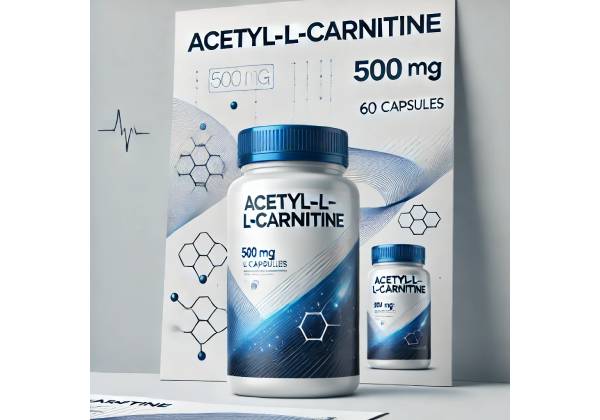
Acetyl-L-Carnitine is often grouped with “brain supplements,” but that label only tells part of the story. It is a carnitine-derived compound involved in cellular energy production, and it appears to matter most in tissues with high energy demands, including the brain and nervous system. That is why it keeps coming up in conversations about memory, mental fatigue, low mood, and age-related cognitive changes. At the same time, it is not a magic fix, and the research is more nuanced than many supplement labels suggest. Some findings are encouraging, especially in areas such as depressive symptoms, mental energy, and selected cognitive measures, while other claims are still ahead of the evidence. This guide explains how Acetyl-L-Carnitine works, where it may help, who it may suit, how it is typically dosed, and what safety issues deserve real attention before trying it.
Table of Contents
- How Acetyl-L-Carnitine Supports the Brain
- Mood, Fatigue, and Mental Clarity
- Cognition, Aging, and Nerve Support
- Who May Consider Acetyl-L-Carnitine
- Dosage, Timing, and Product Quality
- Safety, Side Effects, and Precautions
How Acetyl-L-Carnitine Supports the Brain
Acetyl-L-Carnitine, often shortened to ALCAR, is the acetylated form of L-carnitine. That extra acetyl group matters because it gives the molecule a different role in the body and helps explain why it is discussed more often for brain health than plain carnitine. While L-carnitine is best known for helping shuttle fatty acids into mitochondria so cells can produce energy, Acetyl-L-Carnitine appears to do more than energy transport alone. It may also donate acetyl groups, influence mitochondrial function, and support pathways tied to neurotransmitters and brain-cell resilience.
The brain is especially sensitive to energy supply. It consumes a large share of the body’s energy at rest, and even modest inefficiencies in mitochondrial function can show up as mental fatigue, slower processing, reduced stress tolerance, or that vague “foggy” feeling many people notice when they are run down. That is one reason Acetyl-L-Carnitine has attracted interest: it may help the brain use fuel more efficiently, especially in situations where energy metabolism is under strain.
Researchers also study Acetyl-L-Carnitine for its relationship to:
- mitochondrial energy production
- acetylcholine synthesis, which is relevant to memory and attention
- oxidative stress regulation
- neuroplasticity and cellular signaling
- mood-related changes tied to stress and inflammation
That combination makes it more interesting than a simple stimulant. It does not work like caffeine, and it should not be expected to produce an instant surge in alertness. Instead, the appeal is more structural. People use it in hopes of supporting the conditions that help the brain function well over time: steadier energy, healthier signaling, and better resilience under physical or psychological stress.
It also has a more brain-focused profile than standard carnitine. Plain L-carnitine plays a major role in whole-body metabolism, especially muscle and fat metabolism. Acetyl-L-Carnitine is usually discussed when the target is the nervous system, cognition, or mood. That does not mean it is automatically superior. It means the question is different. Someone looking for workout recovery may choose a different carnitine form, while someone focused on attention, cognitive aging, or low mental energy may be more interested in Acetyl-L-Carnitine.
This distinction is part of why it often appears in conversations about how neuroplasticity can improve. The most credible case for ALCAR is not that it “boosts the brain” in a vague marketing sense, but that it may support energy-dependent brain processes that influence memory, mood, and mental stamina.
Mood, Fatigue, and Mental Clarity
One of the most compelling reasons people look into Acetyl-L-Carnitine is the overlap between low mood and low mental energy. Many people do not describe their problem as sadness first. They describe flatness, reduced motivation, slower thinking, or the sense that ordinary tasks feel unusually effortful. That is where Acetyl-L-Carnitine stands out. Its promise is not limited to “feeling better.” It may be more relevant to the energy side of mental wellness than many other supplements.
The clinical picture here is promising but not simple. A systematic review and meta-analysis found that Acetyl-L-Carnitine may reduce depressive symptoms, and some studies suggest it may act relatively quickly in certain groups. At the same time, the research base is still smaller than what exists for standard depression treatments, and the study populations have varied widely. That means the signal is worth paying attention to, but it should not be overstated.
The people most likely to be interested in this area are often dealing with symptoms such as:
- low mood with mental sluggishness
- poor stress tolerance
- reduced motivation
- mental fatigue during the day
- loss of cognitive sharpness under chronic strain
These symptoms can show up in depression, but they can also appear with sleep disruption, chronic stress, inflammation, burnout, medication effects, or long periods of overload. That is why Acetyl-L-Carnitine should be viewed as a support tool, not as a shortcut to diagnosis. If someone has persistent symptoms that resemble depression and impaired coping, a supplement should not replace proper evaluation.
Its effects on mental clarity may come from more than one route. If a person’s brain is functioning better energetically, concentration can improve. If stress-related inflammation or mitochondrial inefficiency is part of the picture, improving those processes may reduce that “mentally heavy” feeling some people struggle to name. This is also why Acetyl-L-Carnitine gets described in terms of motivation or drive rather than just mood. For some users, the main change is not feeling happier in a dramatic sense. It is feeling more able to think, start, and follow through.
Still, expectations need to stay grounded. Acetyl-L-Carnitine is not established as a first-line treatment for major depressive disorder, and it is not the right tool for urgent or severe symptoms. It may be most useful in milder presentations, in older adults, or in people whose mood problems strongly overlap with fatigue and cognitive slowing.
A fair summary is that Acetyl-L-Carnitine may be most relevant when mood and mental energy decline together. That does not make it a cure, but it does make it a supplement with a more specific and plausible role than many products sold for “wellness.”
Cognition, Aging, and Nerve Support
Acetyl-L-Carnitine has long been studied in cognitive aging, but this is the area where the evidence needs the most careful interpretation. It is easy to find claims that it improves memory, prevents dementia, or reverses brain aging. The research does not support those sweeping promises. What it does support is a more limited, more practical idea: Acetyl-L-Carnitine may help certain aspects of cognition in selected groups, especially where mitochondrial function, vascular burden, or nervous-system stress are part of the problem.
In older studies, Acetyl-L-Carnitine was tested in dementia and age-related cognitive decline with mixed results. Some trials found modest benefits, while others did not show strong effects across major endpoints. More recent interest has focused on narrower outcomes, such as attention, processing, and mental performance in people with specific types of cognitive impairment rather than broad claims about “brain rejuvenation.”
This matters because cognition is not one thing. Memory, verbal fluency, processing speed, attention, and executive function do not always change together. A supplement can help a limited domain without being a general cognitive enhancer. In one trial involving people with dementia associated with cerebrovascular disease, Acetyl-L-Carnitine improved Montreal Cognitive Assessment scores, with notable changes in attention and language subdomains. That is encouraging, but it is not enough to say the supplement broadly treats dementia.
There is also legitimate interest in its role beyond the brain alone. Acetyl-L-Carnitine has been studied for nerve-related conditions and may be relevant when cognitive symptoms overlap with fatigue, neuropathic discomfort, or systemic energy problems. That makes it especially interesting in real-life cases where brain fog does not exist in isolation. An older adult, for example, may be dealing with slower recall, lower stamina, less motivation, and nerve-related symptoms at the same time.
Potential areas where Acetyl-L-Carnitine may be relevant include:
- age-related mental slowing
- selected mild cognitive impairment patterns
- attention problems linked to vascular or metabolic strain
- nerve-related discomfort that coexists with cognitive fatigue
The main limit is that it should not be confused with prevention. Supporting cognition in someone already experiencing decline is different from proving that a supplement can prevent future neurodegenerative disease. For long-term protection, basics such as sleep, exercise, blood-pressure control, social connection, and a more evidence-based approach to brain-health habits for cognitive decline prevention matter more than any single capsule.
The best way to view Acetyl-L-Carnitine in this area is as a potentially useful adjunct. It may support mental performance in certain contexts, especially where energy metabolism is part of the problem, but it is not a stand-alone strategy for aging well or preserving cognition over decades.
Who May Consider Acetyl-L-Carnitine
Acetyl-L-Carnitine is not for everyone, but there are a few situations where it makes more sense than others. The best candidates are usually not people chasing a dramatic “brain boost.” They are people with a fairly clear target: mental fatigue, mild low mood with low energy, stress-related cognitive dullness, or age-related slowing that has already been medically assessed.
A reasonable short-list of potential users includes:
- adults with low mental energy and reduced cognitive stamina
- older adults concerned about mild slowing rather than severe decline
- people whose mood symptoms are tied closely to fatigue and sluggish thinking
- people seeking nervous-system support as part of a broader plan
It may be especially appealing when someone says, “I do not just feel down. I feel mentally drained.” That pattern is important. Acetyl-L-Carnitine often draws interest when motivation, concentration, and mood all sag together.
Still, context matters. Many symptoms that lead people to ALCAR have more than one possible cause. Brain fog can come from poor sleep, medication effects, alcohol use, thyroid issues, low iron, overtraining, anxiety, or depression. Before treating a vague symptom cluster with supplements, it helps to think through the broader causes of brain fog and how to clear it. Otherwise, even a decent supplement trial can end up solving the wrong problem.
Acetyl-L-Carnitine is less appropriate as a self-directed experiment when symptoms are severe or confusing. It is not the right first move for:
- suicidal thoughts
- rapidly worsening memory
- new neurological symptoms
- bipolar symptoms or agitation
- major functional decline
- substance-related withdrawal or medical instability
It is also a poor substitute for core treatment. Someone with major depression, cognitive decline, neuropathy, or a chronic medical condition may end up using Acetyl-L-Carnitine as one piece of a larger plan, but it should not crowd out therapy, medication review, sleep treatment, substance-use treatment, or medical workup where those are needed.
This is also a supplement that tends to work best when the person using it can track change carefully. That means choosing one main goal, such as better mental stamina by midafternoon or less mentally effortful task-switching, and then judging it honestly. People who take several new supplements at once often cannot tell whether Acetyl-L-Carnitine is helping, overstimulating them, or doing nothing at all.
In short, Acetyl-L-Carnitine is most suitable for thoughtful users with a defined target and realistic expectations. The more complex the symptoms, the more important professional guidance becomes.
Dosage, Timing, and Product Quality
Acetyl-L-Carnitine dosing is one of the areas where moderation pays off. It is tempting to assume that more will produce more mental energy, but that is not how most people experience it. In practice, the goal is to find the lowest effective dose that improves mental stamina or clarity without causing restlessness, nausea, or sleep disruption.
Common supplemental ranges often fall between 500 mg and 2,000 mg per day. Some people start at 500 mg once daily, while others use 1,000 mg per day in one or two divided doses. Research has also used higher amounts in certain clinical settings, but for self-directed use, a cautious start makes more sense.
A practical approach often looks like this:
- Start with 500 mg once daily.
- Take it earlier in the day, especially the first time you try it.
- Increase only if the effect is unclear and side effects are minimal.
- Split the dose if using 1,000 mg or more.
- Reassess after 2 to 6 weeks instead of assuming immediate results.
Timing matters. Acetyl-L-Carnitine can feel mildly energizing to some people, so morning or early afternoon is often a better fit than bedtime. That does not mean it acts like a stimulant, but it can still be a poor evening choice for someone already sensitive to sleep disruption. If late-day dosing worsens sleep, the answer is not always to stop the supplement entirely. Sometimes it is simply to move it earlier and pay closer attention to overall sleep, memory, focus, and mood patterns.
Food can also matter. Some people tolerate it well on an empty stomach, while others find that taking it with breakfast reduces nausea. There is no single rule that works for everyone, but consistency helps. If you take it under different conditions every day, it becomes harder to tell how it affects you.
Product quality deserves more attention than it gets. Choose a product that lists the exact Acetyl-L-Carnitine amount per capsule or tablet, avoids oversized proprietary blends, and ideally uses third-party testing or a manufacturer with transparent quality controls. The market is crowded with “brain formulas” that bury Acetyl-L-Carnitine alongside caffeine, adaptogens, choline compounds, or multiple nootropics. That can make the product feel stronger, but it also makes it much harder to assess tolerance and benefit.
One more practical note: a 2025 metabolism study suggests acetylcarnitine supplementation may have lower bioavailability than many people assume, and a substantial portion may be converted in ways that complicate the simple “more is better” idea. That makes thoughtful dosing even more important. Bigger doses are not always smarter doses.
Safety, Side Effects, and Precautions
Acetyl-L-Carnitine is generally considered well tolerated, but “well tolerated” is not the same as risk-free. Most side effects are not dramatic, yet they are common enough to matter in real use. The most frequent problems are gastrointestinal or activating rather than dangerous emergencies.
Possible side effects include:
- nausea or stomach discomfort
- diarrhea or loose stools
- headache
- restlessness or feeling overstimulated
- trouble sleeping if taken too late
- a fishy body odor at higher carnitine intake levels
These effects often improve when the dose is lowered or moved earlier in the day. People who start aggressively are more likely to decide the supplement “does not agree with them” when the real problem is that they skipped the low-dose phase.
There are also some situations where caution matters more. People with a history of bipolar disorder or marked agitation should be especially careful with anything that can increase activation or change mood in an unpredictable way. Anyone with a seizure disorder should speak with a clinician before using carnitine supplements, because higher carnitine exposure may not be appropriate in that setting. People with thyroid disease, kidney disease, or those taking multiple medications should also avoid assuming that a supplement is automatically safe just because it is sold over the counter.
Medication review matters. Even when a supplement does not have a long list of famous interactions, it can still complicate treatment by changing symptoms, sleep, or tolerance. That is particularly relevant for people taking psychiatric medication, anticoagulants, thyroid medication, or complex multi-drug regimens. The safest approach is simple: if your medication list is long or medically important, review Acetyl-L-Carnitine before adding it.
Another point that deserves honest attention is uncertainty around long-term metabolic effects. A newer study found low bioavailability and substantial conversion to trimethylamine N-oxide, or TMAO. That does not prove clinical harm from ordinary use, but it does challenge the idea that Acetyl-L-Carnitine is metabolically neutral. For most healthy people, this is a reason for moderation, not panic. Still, it supports a more measured approach to chronic high-dose use.
Avoid self-prescribing Acetyl-L-Carnitine during pregnancy or breastfeeding unless a clinician specifically advises it. The same caution applies to children and adolescents unless there is a clear medical reason and supervision.
The bottom line is balanced: Acetyl-L-Carnitine is not one of the riskiest supplements on the shelf, but it is active enough to deserve respect. Used thoughtfully, it may offer a meaningful benefit. Used casually, especially at high doses or alongside complex health issues, it can create side effects, confusion, or false confidence.
References
- L-Carnitine in the Treatment of Psychiatric and Neurological Manifestations: A Systematic Review 2024 (Systematic Review)
- The neuropsychopharmacology of acetyl-L-carnitine (LAC): basic, translational and therapeutic implications 2024 (Review)
- Low Bioavailability and High TMAO Production: Novel Insights Into Acetylcarnitine and Carnitine Metabolism 2025 (Human Metabolism Study)
- Acetyl-L-Carnitine Supplementation and the Treatment of Depressive Symptoms: A Systematic Review and Meta-Analysis 2018 (Systematic Review and Meta-Analysis)
- A Multicenter, Randomized, Double-blind, Placebo-controlled Clinical Trial for Efficacy of Acetyl-L-carnitine in Patients with Dementia Associated with Cerebrovascular Disease 2018 (RCT)
Disclaimer
This article is for educational purposes only and is not medical advice. Acetyl-L-Carnitine may affect energy, mood, sleep, and nervous-system function, and it may not be appropriate for everyone. It should not replace professional care for depression, cognitive decline, neurological symptoms, substance-related problems, or any condition that needs diagnosis or treatment. Talk with a qualified clinician before using Acetyl-L-Carnitine if you take prescription medications, have bipolar disorder, a seizure disorder, thyroid or kidney disease, are pregnant or breastfeeding, or are considering long-term high-dose use.
If this article helped you, please share it on Facebook, X, or your preferred platform so others can find clear, balanced information on Acetyl-L-Carnitine.