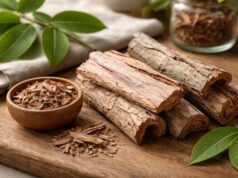
American ginseng (Panax quinquefolius) is a slow-growing woodland plant native to North America and valued for its root. In modern wellness, it’s best known as a “steadying” adaptogen—often described as less stimulating than some other ginseng species—used to support energy, stress resilience, mental clarity, and immune balance. Its signature compounds, called ginsenosides, appear to influence inflammatory signaling, glucose handling, and stress-related pathways, which helps explain why American ginseng is studied for fatigue, cognition, and metabolic markers.
At the same time, American ginseng is not a one-size-fits-all supplement. Different products can contain very different ginsenoside profiles, and the safest choice depends on your goals, timing, medications, and sensitivity to stimulants. This guide clarifies what American ginseng is, what’s inside it, what benefits are realistic, how to use it effectively, what doses are commonly used, and which safety issues deserve the most attention—so you can decide whether it fits your routine without guesswork.
Key Takeaways
- American ginseng may support mental fatigue and attention during demanding weeks when taken consistently.
- Some people see modest improvements in fasting glucose or post-meal glucose patterns with food-timed dosing.
- Typical ranges are 200–400 mg/day of a standardized extract or 1–3 g/day of dried root powder, depending on the product.
- Sleep disruption can occur; avoid late-day dosing until you know your response.
- People using warfarin, diabetes medications, or with hormone-sensitive conditions should avoid self-prescribing.
Table of Contents
- What is American ginseng?
- Key ingredients and actions
- What does it help with?
- How to use it
- How much American ginseng per day?
- Side effects, interactions, and who should avoid it
- What the evidence actually says
What is American ginseng?
American ginseng is the root of Panax quinquefolius, a member of the Araliaceae family. It grows slowly in cool, shaded forests and can take years to mature, which is one reason it has a long history of high value and careful trade. In traditional use—especially among practitioners who emphasize “tonic” herbs—American ginseng is often framed as supportive for people who feel worn down, mentally taxed, or “overheated” by stress. In modern terms, it is typically used to support stamina, focus, and recovery from prolonged stress rather than to create an immediate stimulant effect.
American ginseng versus other adaptogens
American ginseng is commonly compared with other adaptogens, but its “feel” is not guaranteed. Two people can take the same capsule and report different experiences because extract methods and ginsenoside profiles vary. In general, American ginseng is often chosen when someone wants support that feels steadier and less “pushy.” If you want a useful comparison to a non-ginseng adaptogen often used for stamina and stress tolerance, see eleuthero’s typical uses and dosing patterns and note how both emphasize consistency and cycling rather than constant escalation.
Parts used and product types
Most supplements use the root (whole, powdered, or extracted). You may see:
- Whole root slices for tea or simmered decoctions
- Root powder in capsules
- Standardized extracts that list ginsenosides or “ginseng saponins”
- Proprietary extracts used in research for immune or metabolic endpoints
The label should clearly state Panax quinquefolius and the plant part. “Ginseng” alone is not enough, because different species can behave differently, and some products blend multiple species without telling you how much of each is present.
Sourcing and sustainability matters
Because American ginseng has been heavily harvested in the wild, responsible sourcing is not just ethical—it can be a quality issue. Cultivated and forest-farmed roots are generally more consistent and reduce pressure on wild populations. If a product’s marketing emphasizes “wild” ginseng, treat that as a cue to look harder at traceability and compliance rather than assuming it is superior.
American ginseng is best treated as a long-game herb: it tends to work through steady support, not quick intensity, and it rewards careful product selection more than heroic dosing.
Key ingredients and actions
American ginseng’s main bioactive compounds are ginsenosides (also called ginseng saponins). These compounds vary by species, growing conditions, root age, and processing. That variability is not a minor detail—it’s one of the biggest reasons “ginseng worked for my friend” doesn’t reliably predict your experience.
Ginsenosides and why profiles matter
American ginseng is often described as having a ginsenoside balance that can feel less stimulating than some other Panax species. One practical takeaway is that American ginseng products commonly emphasize ginsenosides associated with steadier, more “grounded” effects in traditional and research discussions. Some extracts are richer in certain ginsenosides (often discussed as Rb-type and Re), while others contain a broader mix. Because these compounds can influence neurotransmitter signaling, inflammation pathways, and metabolic enzymes, the profile can change whether a product feels calming, neutral, or unexpectedly activating.
Polysaccharides and immune signaling
Beyond ginsenosides, American ginseng contains polysaccharides that may contribute to immune effects. In practical terms, polysaccharides are often discussed in relation to:
- Supporting healthy immune responsiveness (not “boosting” indiscriminately)
- Influencing mucosal defenses (mouth, throat, and gut barrier)
- Modulating inflammatory messaging that shapes how the body responds to stressors
This is one reason some research focuses on proprietary extracts rather than generic powders: polysaccharide yield can differ substantially with different extraction methods.
Peptides, polyacetylenes, and supportive phytochemicals
American ginseng also contains smaller amounts of other compounds—such as peptides and polyacetylenes—that may play supporting roles. You do not need to memorize these. The practical implication is simpler: whole-root products can feel different from purified fractions, and alcohol extracts can feel different from water extracts.
What these actions mean in everyday use
Most real-world use clusters around three themes:
- Stress physiology support: helping you stay steadier under prolonged demand
- Cognitive and mental fatigue support: improving attention quality and “mental stamina” for some people
- Metabolic support: modest improvements in glucose handling in some contexts, especially when timed with meals
If your main goal is cognition, it can help to compare how other cognition-oriented botanicals are described at the compound level. For example, bacopa’s active compounds and cognitive uses show how specific chemical profiles guide dosing and expectations—an approach that also applies to American ginseng.
The big picture: American ginseng is not one ingredient but a pattern of compounds. Products that state the species, plant part, and standardization give you the best odds of a predictable result.
What does it help with?
American ginseng is most often used for stress resilience, energy that feels steadier, mental performance, and—in some cases—blood sugar support. The benefits are usually subtle at first and become clearer when the herb is used consistently and matched to the right person and timing.
Stress, resilience, and “wired-tired” patterns
Many people consider American ginseng when they feel run down but dislike stimulants. In that situation, the goal is not to “rev up,” but to support steadier output and recovery. Realistic outcomes may include:
- Less mental fatigue during long workdays
- Better perceived stamina without a strong stimulant peak
- Improved sense of resilience during high-demand weeks
If your stress pattern includes anxious tension, rumination, or sleep disruption, American ginseng may or may not be ideal. Some people do better with adaptogens that are more explicitly calming. A good comparison point is ashwagandha’s common stress and sleep uses, which are often framed around relaxation and sleep quality rather than daytime cognitive endurance.
Cognition, attention, and mental fatigue
American ginseng is frequently used for:
- Sustaining attention during cognitively demanding tasks
- Reducing “brain fog” linked to fatigue or stress load
- Supporting working memory and accuracy under pressure
These effects are not guaranteed, and they depend heavily on dose and product type. People sometimes notice benefits within hours in acute testing contexts, but more commonly they describe a steadier baseline after several days to a few weeks of consistent use.
Immune balance and seasonal routines
American ginseng is used in some seasonal protocols to support immune function, particularly in people who feel they “catch everything” during stressful periods. The most grounded expectation is not “never get sick,” but:
- Fewer days of feeling run down during seasonal challenges
- Better recovery consistency when sleep and nutrition are also addressed
If you are immunocompromised or taking immunosuppressive therapy, this is not a self-experiment category; immune-modulating herbs can be inappropriate or unpredictable in those contexts.
Glucose and cardiometabolic support
American ginseng has been studied for glucose handling, often using meal-timed dosing. In practice, people consider it when they want:
- Lower post-meal glucose spikes
- Modest improvements in fasting glucose over time
- Support for metabolic resilience alongside diet and activity changes
It’s not a substitute for diabetes care, but it may be a supportive tool when your plan already includes consistent meals, fiber, movement, and medication monitoring if applicable.
Overall, American ginseng is best viewed as a “capacity” herb: it may help you meet demands and recover better, especially when your foundation—sleep, nutrition, hydration, and stress management—is already moving in the right direction.
How to use it
Using American ginseng well is mostly about three choices: the form you take, the time of day you take it, and whether you treat it as a short experiment or a long-term habit. Many disappointing experiences come from taking a strong extract at the wrong time, stacking it with caffeine, or using it inconsistently.
Choosing a form that fits your goal
Common options and what they’re best for:
- Whole root tea/decoction: Gentle, traditional, and easier to adjust; effects can be mild and variable.
- Root powder capsules: Convenient, often affordable, but can cause GI discomfort at higher doses.
- Standardized extracts: Best when you want more predictable dosing and a clearer trial.
- Proprietary extracts: Often used in research; useful when the label specifies a clear extract name and dose.
If your goal is cognitive performance, a standardized extract tends to be easier to trial than tea because you can repeat the same dose daily and evaluate response.
Timing and “feel” strategies
- Start in the morning or early afternoon. Until you know your response, avoid evening dosing.
- Pair with food if you’re sensitive. Taking it with breakfast or lunch can reduce nausea and jittery feelings.
- Avoid stacking with strong stimulants at first. Caffeine plus ginseng can feel great—or overstimulating—depending on your sensitivity.
If your priority is calm focus rather than raw drive, consider separating your tools: use American ginseng earlier in the day and reserve calming compounds for later. For example, L-theanine’s timing for calm focus and sleep support is often framed as a gentler lever that can complement a daytime performance routine without pushing stimulation.
How long to trial it
A practical evaluation window depends on your goal:
- Acute mental fatigue: 3–7 days of consistent use can be enough to notice a pattern.
- Stress resilience and stamina: 2–6 weeks is a more realistic trial.
- Metabolic goals (glucose): 8–12 weeks is more appropriate, with monitoring.
Cycling and breaks
Many people do best with cycling:
- Use it 5 days on, 2 days off, or
- Use it for 6–8 weeks, then take 1–2 weeks off
Cycling is not mandatory, but it can help you notice whether benefits persist, prevent “dose creep,” and reduce the risk of sleep disruption.
The most important rule is also the simplest: treat American ginseng like a structured experiment—single product, consistent dose, clear timeline, and a plan to stop if side effects show up.
How much American ginseng per day?
Dosage depends on the form—powder, whole root, or extract—and on whether the product is standardized. Two capsules labeled “500 mg ginseng” can be very different if one is plain powder and the other is a concentrated extract. Use the label as your anchor, then adjust conservatively.
Common dose ranges by form
These ranges reflect typical supplemental use and how clinical dosing is often structured:
- Dried root powder (capsules): 1–3 g/day, often divided into 1–2 doses.
- Standardized extract: 200–400 mg/day is a common starting range when the product lists ginsenosides or “ginseng saponins.”
- Whole root tea/decoction: the effective dose is harder to standardize; start with a mild brew and build slowly based on tolerance.
For glucose-focused protocols, some studies have used higher, meal-timed amounts of extract. In real-world use, the safest pattern is to start within the moderate ranges above and only increase if you can clearly track benefits and tolerate the change.
Timing for different goals
- Energy and mental performance: morning (and optionally early afternoon).
- Stress resilience during demanding weeks: morning daily, with a short cycle (for example, 4–8 weeks).
- Glucose support: split dosing with meals can be more relevant than once-daily dosing.
Duration and tracking
Match your expectations to a measurable outcome:
- If you’re using it for focus, track productivity markers (error rate, afternoon slump, mental stamina).
- If you’re using it for fatigue, track how often fatigue interrupts your day and whether sleep needs change.
- If you’re using it for glucose, monitor home readings if appropriate and recheck labs on a defined schedule.
If you’re considering American ginseng primarily for blood sugar, keep your plan simple and avoid stacking multiple glucose-lowering supplements at once. A useful comparison point is berberine’s typical dosing and medication cautions, which highlights why combining multiple glucose-active tools can increase hypoglycemia risk for some people.
Signs your dose is too high
Reduce the dose or stop if you notice:
- New insomnia or restless sleep
- Racing thoughts or irritability
- Palpitations or persistent anxiety
- Nausea or diarrhea that doesn’t resolve after a few days
- Shakiness or “low blood sugar” sensations, especially if you use glucose-lowering medications
A good dose is the smallest dose that reliably helps, taken early enough in the day to protect sleep, and used for a clear time window rather than indefinitely.
Side effects, interactions, and who should avoid it
American ginseng is often well tolerated, but “well tolerated” does not mean “risk free.” Side effects are typically dose-related and become more likely when people combine ginseng with stimulants, multiple adaptogens, or medications that affect blood sugar and blood clotting.
Possible side effects
The most common issues include:
- Sleep disruption: trouble falling asleep or lighter sleep, especially with late dosing
- Headache or jitteriness: more likely at higher doses or with caffeine
- Digestive upset: nausea, loose stools, or stomach discomfort
- Mood changes: irritability or feeling “amped,” particularly in sensitive individuals
If side effects are mild, reducing the dose and moving the timing earlier often helps. If side effects are strong or persistent, stop and reassess the product and your plan.
Key interactions to take seriously
- Warfarin and other anticoagulants: American ginseng has documented interaction risk with warfarin. This is not a “monitor casually” scenario—talk with the clinician managing your anticoagulation before using it.
- Diabetes medications and insulin: Because American ginseng may influence glucose handling, combining it with glucose-lowering therapy can increase hypoglycemia risk.
- Stimulants and high caffeine: Can increase the risk of agitation, palpitations, and insomnia.
- MAOIs and certain psychiatric medications: Caution is appropriate because herbs that influence neurotransmitter pathways can behave unpredictably when combined with psychiatric meds.
- Immunosuppressant therapy: Avoid self-prescribing immune-modulating herbs without oncology or transplant-team guidance.
If you are taking warfarin, food and supplement consistency matters because clotting control is sensitive to multiple variables. While ginseng is not vitamin K, the broader lesson is that anticoagulation requires stable routines. For a clear explanation of why consistency is so important, see vitamin K dosing and safety and apply the same “avoid sudden changes” mindset to supplements.
Who should avoid American ginseng unless supervised
- Pregnancy and breastfeeding: Avoid concentrated extracts due to limited safety data.
- Children: Avoid routine use unless a qualified clinician guides dosing.
- Bleeding disorders or upcoming surgery: Avoid because of anticoagulant interaction concerns and the need for stable clotting control.
- Bipolar disorder or history of mania: Avoid self-experimentation; activating effects can be destabilizing for some.
- Complex medication regimens: Especially involving anticoagulants, glucose-lowering drugs, or psychiatric medications.
A practical rule: if you cannot clearly identify your product’s species (Panax quinquefolius), plant part (root), and dose form (powder vs. standardized extract), it’s safer not to use it—because you can’t reliably predict either benefits or interactions.
What the evidence actually says
American ginseng has real clinical research behind it, but the evidence is uneven because studies use different extracts, doses, durations, and populations. The most dependable way to interpret the research is to look for patterns that repeat across well-designed trials and to treat “miracle claims” as a sign that someone is oversimplifying.
Areas with the most consistent support
- Mental fatigue and cognitive performance: Controlled trials and reviews suggest that certain American ginseng extracts can improve aspects of attention, working memory, and perceived mental fatigue—especially during demanding tasks. Effects may be dose-dependent and may show up more reliably with standardized extracts than with casual teas.
- Glucose handling: American ginseng has been studied for post-meal glucose control and broader cardiometabolic markers. Results vary, but a recurring theme is that timing with meals and consistent use matter. People with higher baseline glucose often show clearer shifts than those with normal metabolic markers.
- Fatigue in specific contexts: Broader ginseng research (across Panax species and formulas) includes fatigue outcomes, but effect sizes are often modest and study quality varies. American ginseng appears most plausible as a supportive tool rather than a stand-alone fatigue treatment.
Where evidence is promising but less settled
- Immune outcomes: Some proprietary extracts have been used in immune-related trials, but results can depend on the population (healthy adults vs. high-stress groups) and on the specific extract. “Immune boosting” language is rarely precise enough to match what trials actually measure.
- Vascular function and blood pressure: Meta-analyses across ginseng studies suggest possible improvements in certain vascular function measures, but the data are heterogeneous, and results can shift depending on the subset of trials included.
Why results can look conflicting
Three issues drive most contradictions:
- Different ginsenoside profiles: Two “American ginseng” products may not behave the same.
- Short trials: Many studies are weeks long; long-term durability is less clear.
- Outcome selection: Some trials measure subjective fatigue, others measure performance tests, others measure labs—these do not always move together.
How to use evidence in a real decision
A reasonable evidence-based plan looks like this:
- Choose a product with clear species identification and standardization.
- Use a conservative dose for 1 week to confirm tolerance.
- Continue for 4–8 weeks if your goal is stress resilience or cognitive stamina.
- If your goal is metabolic, use a longer window (8–12 weeks) with monitoring.
- Stop if sleep worsens, mood destabilizes, or medication effects become harder to manage.
In short, American ginseng is supported enough to justify a structured trial, but not proven enough to justify casual, indefinite use—especially for people with medication and interaction risks.
References
- Effects of American ginseng (Panax quinquefolius) extract on human neurocognitive function: a review 2025 (Review)
- Ginseng and Ginseng Herbal Formulas for Symptomatic Management of Fatigue: A Systematic Review and Meta-Analysis 2023 (Systematic Review and Meta-Analysis)
- The Efficacy of Ginseng (Panax) on Human Prediabetes and Type 2 Diabetes Mellitus: A Systematic Review and Meta-Analysis 2022 (Systematic Review and Meta-Analysis)
- Ginseng supplementation and vascular function: a systematic review and meta-analysis of clinical trials 2025 (Systematic Review and Meta-Analysis)
- Brief communication: American ginseng reduces warfarin’s effect in healthy patients: a randomized, controlled Trial 2004 (RCT)
Disclaimer
This article is for educational purposes only and does not provide medical advice. Herbal products can vary widely in potency and composition, and American ginseng may interact with medications—especially warfarin and other anticoagulants, diabetes medications, and certain psychiatric drugs. Do not use American ginseng as a substitute for professional diagnosis or treatment. If you are pregnant, breastfeeding, managing a chronic medical condition, or taking prescription medications, consult a qualified clinician before starting American ginseng or changing your routine.
If you found this guide helpful, please share it on Facebook, X (formerly Twitter), or your preferred platform so others can make safer, more informed choices.