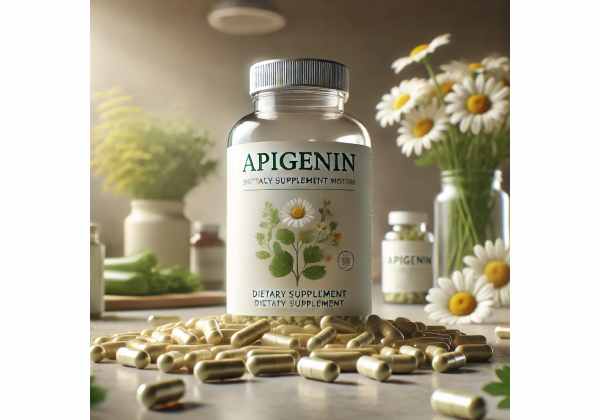
Apigenin is a plant flavonoid that has moved from nutrition science into the supplement world, especially in products aimed at calm, sleep, and brain support. It is found naturally in foods and herbs such as parsley, celery, chamomile, and oregano, but concentrated supplements deliver far more than a typical meal. That gap matters, because apigenin sits in an interesting place: it has promising effects in laboratory and animal research, yet human evidence is still limited and far less settled.
For readers interested in brain health and mental wellness, that makes apigenin worth understanding carefully. It may support stress resilience, sleep quality, and aspects of neuroprotection, but it is not a proven treatment for anxiety, depression, insomnia, or cognitive decline. This guide explains what apigenin is, how it may work, where the evidence looks strongest, how people use it, what dosage questions remain, and which safety issues deserve real attention.
Table of Contents
- What Apigenin Is and Why It Gets Attention
- How Apigenin May Work in the Brain
- Benefits for Mood, Stress, and Sleep
- Cognition and Neuroprotection
- Uses, Forms, and Dosage
- Safety, Side Effects, and Interactions
What Apigenin Is and Why It Gets Attention
Apigenin is a naturally occurring flavone, a type of polyphenol found in many plants. In everyday nutrition, people usually consume small amounts from herbs, vegetables, and teas. Parsley and chamomile are often highlighted because they are among the better-known food and botanical sources, but intake varies widely depending on diet, preparation, and portion size.
What makes apigenin especially interesting for brain and mental wellness is not one single effect. It is the combination of several plausible actions that point in the same direction. Researchers have explored apigenin for its anti-inflammatory activity, antioxidant effects, influence on stress-related signaling, and potential interaction with pathways involved in relaxation, sleep, and neuronal resilience. That broad profile helps explain why apigenin is often included in supplements marketed for calm evenings, better sleep, or “stack” formulas aimed at recovery and healthy aging.
Still, there is an important difference between biological promise and proven clinical benefit. Much of the excitement around apigenin comes from cell and animal research, where it has shown effects on oxidative stress, neuroinflammation, memory models, and behavior linked to anxiety or depression. Human data are much thinner. In practice, that means apigenin is best viewed as an emerging supplement ingredient rather than a fully established nootropic or mental health therapy.
A sensible way to think about it is this:
- Food-level apigenin is part of a generally healthy dietary pattern.
- Supplemental apigenin is a higher-exposure experiment, not a routine necessity.
- The strongest claims made online often run ahead of the evidence.
That does not make apigenin unhelpful. It means expectations should stay realistic. Someone who wants a gentle, non-stimulant supplement for evening use may find it appealing, especially if sleep quality and stress regulation are part of the goal. But apigenin is not a substitute for treating persistent insomnia, major anxiety, depression, or progressive memory problems at their root.
It also helps to place apigenin in context. If you are exploring plant compounds for calm or cognitive support, it belongs in the broader conversation about nootropics and brain boosters, where the key question is not whether a compound has any effect in a lab, but whether it delivers meaningful real-world benefits at practical doses.
How Apigenin May Work in the Brain
Apigenin attracts interest because it may influence several brain-related pathways at once. That does not mean all of those effects are equally strong in humans, but the mechanisms are helpful for understanding why the compound is being studied.
One frequently discussed pathway involves GABA signaling. GABA is the brain’s main inhibitory neurotransmitter, meaning it helps quiet excess neural firing. That is why GABA-related compounds often come up in conversations about relaxation, tension, and sleep. Apigenin appears to interact with GABA-related systems in ways that may partly explain its calming reputation, although the exact effect can vary by model and may not behave like a standard sedative drug.
Another major theme is inflammation and oxidative stress. Chronic inflammation and excess oxidative damage can interfere with neuronal function, mood regulation, and long-term brain health. Apigenin has shown anti-inflammatory and antioxidant actions in experimental research, including effects on cytokines and cell-protective pathways. Those findings matter because many modern brain complaints, from stress-linked fatigue to age-related cognitive decline, are tied in part to inflammatory burden.
Researchers have also looked at signaling pathways involved in learning, memory, and synaptic plasticity. In preclinical work, apigenin has been linked to pathways such as ERK, CREB, and BDNF, which are often discussed in relation to memory formation, adaptive stress responses, and neuronal survival. It may also affect cholinergic signaling and other neurotransmitter systems relevant to attention and cognition.
A newer angle involves CD38 and NAD+ metabolism. This has drawn attention in aging research because NAD+ is important for cellular energy and repair. Apigenin has been studied as a CD38 inhibitor in experimental settings, raising interest in whether it could support healthy aging processes that indirectly benefit the brain. At this stage, that is still more of a mechanistic and translational idea than a proven supplement outcome.
The important takeaway is that apigenin does not seem to act through a single simple lever. Instead, it may work through a network of effects:
- calming or inhibitory signaling
- lower inflammatory stress
- antioxidant defense
- support for plasticity-related pathways
- potential influence on cellular aging biology
That multi-pathway profile is promising, but it also makes marketing claims easy to exaggerate. A plausible mechanism is not the same thing as a clinically verified result. This is especially true for compounds with low oral bioavailability, where what happens in a cell dish may not fully translate after a capsule is swallowed.
That broader point also connects with the larger discussion around stress and the brain. Compounds that reduce inflammatory or oxidative strain may help create better conditions for mental performance, but they usually work best as part of a system that includes sleep, nutrition, physical activity, and lower overall stress load.
Benefits for Mood, Stress, and Sleep
When people search for apigenin, they are often really asking about three outcomes: Will it help me feel calmer? Can it improve sleep? And is there any reason to think it supports mood?
The sleep question is the most common. Apigenin is often associated with chamomile, a traditional herb used for relaxation and bedtime support. That connection is not random. Apigenin is one of chamomile’s notable bioactive compounds, and it is often treated as a likely contributor to chamomile’s calming effects. Human research on isolated apigenin is sparse, but human studies on chamomile products suggest a modest potential benefit for sleep quality and anxiety-related symptoms in some people. That does not prove pure apigenin alone will do the same, yet it helps explain why apigenin is so commonly placed in nighttime supplement blends.
For mood and stress, the picture is promising but still preliminary. In animal research, apigenin has shown anxiolytic-like and antidepressant-like effects in several models. Those studies point to possible benefits for stress resilience, reduced anxiety-like behavior, and better emotional regulation under adverse conditions. But animal models are not the same as clinical care. A supplement that shifts rodent behavior does not automatically become a dependable tool for generalized anxiety disorder or low mood in humans.
A careful summary would look like this:
- Sleep support is plausible, especially for people whose sleep is affected by stress or mental overactivation.
- Calming effects may be more noticeable than dramatic sedation.
- Mood-related benefits remain suggestive rather than established.
This matters because the wrong expectation leads to disappointment. Apigenin is better framed as a gentle support option than a powerful sleep aid. Someone dealing with occasional tension, an overbusy mind at night, or mild stress-related sleep disruption may find it useful. Someone with severe insomnia, panic symptoms, or major depression should not rely on it as a primary solution.
It may also be more helpful when paired with good sleep habits. Bedtime timing, evening light exposure, caffeine use, alcohol intake, and screen habits all influence whether a mild calming supplement makes any noticeable difference. People comparing options sometimes also look at compounds such as L-theanine for anxiety and focus, which can be used for a similar “calm without heavy sedation” goal.
In practical terms, apigenin may be most reasonable for:
- mild evening tension
- stress-linked difficulty winding down
- sleep routines that need a gentle nudge, not a knockout effect
- people who want a non-stimulant addition to a broader brain-health plan
That is a useful niche. It is just narrower, and more realistic, than many supplement labels suggest.
Cognition and Neuroprotection
Apigenin’s brain-health reputation is not only about calm and sleep. It is also studied for neuroprotection, which means helping protect neurons and brain tissue from processes that contribute to dysfunction over time. This is where the science gets most interesting, and also where careful interpretation matters most.
In preclinical research, apigenin has shown potential benefits in models involving memory impairment, neuroinflammation, oxidative stress, and age-related brain changes. Researchers have reported improvements in learning and memory tasks in animals, along with changes in pathways tied to synaptic plasticity, inflammation, apoptosis, and antioxidant defense. Those effects suggest apigenin may help create a more favorable environment for neuronal function.
The possible mechanisms are relevant because many drivers of cognitive decline overlap:
- inflammation can impair signaling and plasticity
- oxidative stress can damage cellular structures
- disrupted trophic signaling can weaken learning and memory processes
- poor metabolic resilience can make the brain less adaptable under strain
Apigenin appears to touch all of those areas in experimental settings. That is why it is often mentioned alongside broader neuroprotective nutrients and polyphenols.
At the same time, readers should avoid a common mistake: neuroprotection is not the same thing as noticeable cognitive enhancement. A compound may show cell-protective effects without making a healthy person feel sharper next week. It may also help preserve function in theory without producing a measurable benefit in a human clinical trial. That gap between mechanism and experience is one of the biggest reasons supplement claims become inflated.
So where does that leave apigenin?
For healthy adults, it is best viewed as a possible supportive compound rather than a proven memory booster. For older adults or people focused on long-term brain resilience, it may be appealing because its research profile overlaps with pathways relevant to aging. But it should not be seen as a stand-alone strategy for preventing dementia or reversing cognitive decline.
A stronger brain-health foundation still comes from the basics:
- consistent sleep
- regular exercise
- blood sugar stability
- a nutrient-dense diet
- control of vascular risk factors
- cognitive and social engagement
Supplements may add to that foundation, but they do not replace it. This is also why apigenin makes more sense as part of a broader anti-inflammatory and neuroprotective pattern than as a miracle ingredient. Readers exploring related nutritional approaches often compare it with compounds such as omega-3s for brain function, which have a deeper human evidence base for long-term brain support.
In short, apigenin has credible scientific interest for cognition and neuroprotection, but the strongest evidence is still upstream from everyday clinical use. The theory is solid enough to watch closely, yet not strong enough to make sweeping promises.
Uses, Forms, and Dosage
One of the hardest parts of writing honestly about apigenin is dosage, because there is no universally accepted, evidence-based standard dose for isolated apigenin in routine human use. That is the central point readers should understand before focusing on capsule numbers.
In the real world, apigenin is used in three main ways:
- as part of food intake from herbs, vegetables, and teas
- as a stand-alone supplement, often in low milligram amounts
- as one ingredient in sleep, stress, or healthy-aging blends
Food sources are the gentlest route, but they are also the least predictable in dose. Supplement forms provide more consistency, yet they bring the biggest uncertainty because human clinical data on isolated apigenin remain limited.
Commercial products often provide relatively modest amounts, commonly around 25 mg to 50 mg per serving, especially in evening formulas. Some products go higher, but more is not automatically better. Because apigenin has poor water solubility and limited oral bioavailability, increasing the dose may not scale benefits in a simple way. It may only increase the chance of side effects, interactions, or wasted expense.
A practical, conservative approach looks like this:
- Start with the lowest available dose.
- Use it in the evening if your main goal is calm or sleep support.
- Give it several nights rather than judging it after one dose.
- Avoid stacking it immediately with multiple new sleep aids.
- Stop if you feel groggy, headachy, or “off” the next day.
Timing depends on the goal. Evening use is the most common because apigenin is usually taken for relaxation or sleep quality rather than daytime performance. Some people do prefer daytime use for calm focus, but that is more individual and less predictable.
Form also matters. Apigenin appears in capsules, powders, and complex blends. Blends can be appealing, but they make it harder to tell what is working. If you want to test your response clearly, a simpler formula is usually better at first. Then, if it helps, you can decide whether a combination product is worth considering.
Quality is worth attention too. Look for transparent labeling, third-party testing when available, and clear ingredient amounts. This is especially important in the supplement space, where “proprietary blend” formulas can hide doses that are too low, too high, or impossible to interpret.
Because dosage science is still unsettled, apigenin is best treated as a cautious trial, not a precision-prescribed tool. That is also why people who want a stronger evidence base for their goals often compare it with more established sleep and mood support options such as magnesium for anxiety and sleep.
Safety, Side Effects, and Interactions
Apigenin is often described as low-toxicity, and that is broadly fair in the context of food intake and the limited data available. Still, “natural” does not mean risk-free, especially when a compound is taken in concentrated supplemental form.
Most people who try a modest dose are more likely to notice mild issues than serious ones. Possible side effects may include:
- stomach upset
- nausea
- headache
- unusual drowsiness
- next-day grogginess
- feeling flat or overly relaxed
The bigger concern for some users is interaction risk. Because apigenin has been studied for effects on metabolic enzymes and signaling systems, it may not be a smart add-on for everyone. Extra caution is reasonable if you take sedatives, sleep medications, anti-anxiety drugs, seizure medicines, anticoagulants, or other medications with narrow safety margins. Even when the interaction evidence is incomplete, the safest assumption is that a calming plant compound could amplify unwanted sedation or alter drug handling in ways that are not obvious at first.
People who should be especially careful include:
- anyone who is pregnant or breastfeeding
- people taking multiple psychiatric medications
- people with a seizure disorder
- people on blood thinners or complex medication regimens
- anyone preparing for surgery
- people with known allergies to chamomile or related plants
Another practical point is symptom masking. If apigenin seems to help, that can be useful. But if you are depending on it night after night because of significant insomnia, rising anxiety, low mood, or cognitive changes, those issues deserve direct evaluation. A supplement should not delay proper care.
For safer use, keep the rules simple:
- start low
- do not mix recklessly with other sedating supplements
- review medications before using it regularly
- stop if adverse effects appear
- talk with a clinician if you have health conditions or take prescription drugs
This is especially important when comparing apigenin with other sleep-oriented supplements. Readers sometimes stack it with products discussed in guides on melatonin timing and dosage, but combining several sleep agents at once can make it harder to judge benefit and easier to create next-day impairment.
Used thoughtfully, apigenin appears reasonably low-risk for many healthy adults. Used casually in a crowded supplement stack, it becomes much harder to predict.
References
- The Beneficial Role of Apigenin against Cognitive and Neurobehavioural Dysfunction: A Systematic Review of Preclinical Investigations 2024 (Systematic Review). ([PMC][1])
- Apigenin: a natural molecule at the intersection of sleep and aging 2024 (Review). ([PubMed][2])
- Apigenin: A Bioflavonoid with a Promising Role in Disease Prevention and Treatment 2024 (Review). ([MDPI][3])
- A Review on Flavonoid Apigenin: Dietary Intake, ADME, Antimicrobial Effects, and Interactions with Human Gut Microbiota 2019 (Review). ([PMC][4])
- Therapeutic efficacy and safety of chamomile for state anxiety, generalized anxiety disorder, insomnia, and sleep quality: A systematic review and meta-analysis of randomized trials and quasi-randomized trials 2019 (Systematic Review and Meta-Analysis). ([PubMed][5])
Disclaimer
This article is for educational purposes only and is not medical advice. Apigenin supplements are not approved to diagnose, treat, cure, or prevent mental health disorders, sleep disorders, dementia, or any other disease. Research on isolated apigenin in humans is still limited, and individual responses can vary. Always speak with a qualified healthcare professional before starting apigenin if you are pregnant, breastfeeding, have a medical condition, or take prescription medications, especially sedatives, blood thinners, or psychiatric drugs. Seek prompt medical care for severe insomnia, major mood changes, panic symptoms, suicidal thoughts, or worsening cognitive symptoms.
If you found this article useful, consider sharing it on Facebook, X, or your preferred platform to help others learn about apigenin more responsibly.