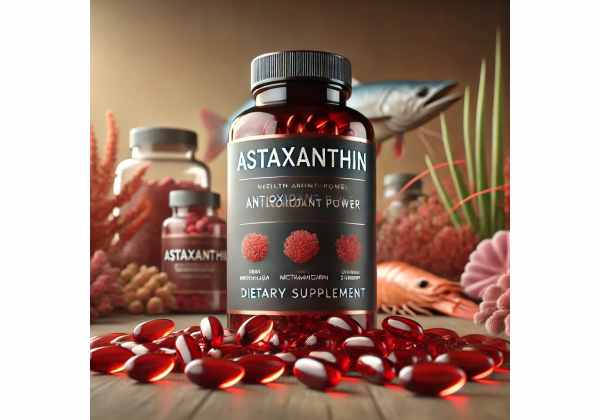
Astaxanthin is the deep red carotenoid that gives salmon, trout, shrimp, and microalgae their distinctive color, but its appeal goes far beyond appearance. In supplement form, it has drawn attention for a more practical reason: it is a fat-soluble antioxidant that may help protect cell membranes, support mitochondrial function, and calm some of the oxidative and inflammatory stress linked with brain aging. That does not make it a miracle nutrient, and it is not a proven treatment for depression, anxiety, or dementia. Still, it is one of the more interesting compounds in the brain-health space because early human trials, especially in middle-aged and older adults, suggest possible benefits for memory, processing speed, and cognitive resilience. This article explains what astaxanthin is, how it may work, what the human research actually shows, how to take it, and where safety and expectations matter most.
Table of Contents
- What Astaxanthin Does in the Brain
- Brain Benefits and Mental Wellness
- What Human Studies Show
- Best Uses and Who It Fits
- Dosage, Forms, and How to Take It
- Safety, Side Effects, and Interactions
What Astaxanthin Does in the Brain
Astaxanthin belongs to the carotenoid family, but it behaves differently from better-known carotenoids such as beta-carotene. Its structure lets it sit across cell membranes rather than only inside or outside them. That matters because brain cells are packed with delicate membranes, especially in mitochondria and synapses, where signaling and energy production happen all day long.
In plain terms, astaxanthin is interesting for brain health because it appears to help in three overlapping ways. First, it may reduce oxidative stress. The brain uses a great deal of oxygen, and that makes it especially vulnerable to reactive oxygen species. Second, it may help tone down inflammatory signaling that can interfere with neuronal function over time. Third, it may support mitochondrial efficiency, which matters for mental energy, attention, and the ability to sustain cognitive work.
Preclinical research also suggests that astaxanthin can reach brain tissue and influence pathways involved in cellular defense, including systems related to Nrf2, NF-kB, and mitochondrial protection. That does not prove a clinical effect in people, but it helps explain why researchers keep studying it for cognitive aging and neuroprotection.
Its source also matters. Most reputable supplements use natural astaxanthin from the microalga Haematococcus pluvialis. This is different from the synthetic astaxanthin used in some animal feed applications. In consumer supplements, the microalgal form is the one most often used in human studies.
Astaxanthin is also fat-soluble, which shapes how it should be taken and absorbed. Like several nutrients discussed alongside omega-3 fatty acids, it works best when delivered in a lipid-friendly context rather than swallowed on an empty stomach. That is one reason softgels suspended in oil are common.
A useful way to think about astaxanthin is as a protective support nutrient rather than a stimulant or classic nootropic. It is not something most people feel on day one. Its value, when it shows up, is more likely to come from steady use over weeks, especially in people dealing with age-related cognitive strain, high oxidative load, or concerns about long-term brain resilience. That slower, steadier profile is part of its appeal, but it is also why expectations should stay realistic.
Brain Benefits and Mental Wellness
The strongest reason people look at astaxanthin for mental wellness is not that it directly changes neurotransmitters in the way a psychiatric medication does. It is that brain function depends on a healthy cellular environment. When oxidative stress, neuroinflammation, poor mitochondrial performance, and vascular wear increase, focus, processing speed, memory, and mental stamina can all suffer. Astaxanthin may help at that level.
Potential brain-related benefits usually fall into five areas.
- Memory support: Small human trials suggest possible help with aspects of memory, especially in middle-aged and older adults.
- Processing speed and executive function: Some studies report improvement in speed-based cognitive tasks or mental efficiency.
- Neuroprotection: Preclinical evidence suggests astaxanthin may help protect neurons from inflammatory and oxidative injury.
- Mental fatigue resilience: By supporting mitochondrial function and reducing oxidative strain, it may help some people feel less mentally worn down.
- Healthy brain aging: It is often discussed as part of a long-term strategy aimed at preserving function rather than producing an immediate boost.
Where mood and emotional health are concerned, the picture is more cautious. There is a plausible indirect link between astaxanthin and mental wellness because inflammation, oxidative stress, sleep disruption, metabolic dysfunction, and vascular health can all shape mood. That is one reason compounds with anti-inflammatory potential get attention in psychiatry research. The overlap is part of the broader conversation around inflammation and depression. Even so, direct clinical evidence that astaxanthin meaningfully treats anxiety, depression, or stress symptoms remains limited.
That distinction matters. Someone may notice better clarity, less fatigue, or more stable cognitive energy while taking astaxanthin, and those changes can improve daily well-being. But that is different from saying astaxanthin is an established mood supplement. At this point, the evidence supports “possible supportive role” far more than “reliable mental health treatment.”
Its benefit profile may also be more relevant for certain groups than others. Older adults, people with mild subjective memory complaints, and those interested in long-range cognitive maintenance are the most obvious candidates. Healthy younger adults looking for a sharp, same-day focus boost are less likely to notice dramatic effects.
A fair summary is this: astaxanthin looks more promising for protecting the terrain of the brain than for forcing a quick change in attention or mood. That makes it appealing to people who care about prevention, mental longevity, and low-drama supplementation, but it also means the results can be subtle.
What Human Studies Show
Human evidence on astaxanthin is encouraging, but it is still modest. That is the right starting point. The research is not large enough or consistent enough to justify sweeping claims, and some of the more positive findings come from small trials, short durations, or formulas that combine astaxanthin with other ingredients such as tocotrienols or sesamin. When that happens, it becomes harder to credit astaxanthin alone.
Still, a pattern has started to emerge. Several trials in middle-aged and older adults have reported improvements in selected cognitive outcomes, including memory-related measures, processing speed, or executive function. These are not universal findings, and they do not prove disease prevention, but they do suggest that astaxanthin may offer measurable support in populations already dealing with age-related cognitive strain.
The most cautious reading of the evidence looks like this:
- Human studies are small but not empty.
- Benefits, when present, tend to appear after weeks rather than days.
- Cognitive effects seem more likely in older adults than in young high performers.
- Objective improvements are usually modest, not dramatic.
- Research on direct mental health outcomes is still sparse.
A key nuance is that astaxanthin may work better as part of a “brain maintenance” strategy than as a stand-alone performance enhancer. That makes it different from supplements marketed for a noticeable acute lift. In the broader world of nootropics for focus, astaxanthin sits on the protective and long-range end of the spectrum.
The biomarker evidence is also worth noting. Systematic reviews and meta-analyses suggest astaxanthin can modestly improve some markers of oxidative stress and inflammation. That does not automatically translate into better mood or memory, but it strengthens the biological case that the compound is doing something relevant in humans.
What human studies do not yet show is just as important. There is no strong evidence that astaxanthin prevents Alzheimer disease, reverses established dementia, or works as a clinically proven therapy for depression or anxiety. Those claims go too far. The more defensible position is that astaxanthin may support cognitive function and neuroprotection in certain contexts, especially when used consistently and combined with the basics that matter more, such as sleep, exercise, metabolic health, and diet quality.
In practice, the current research supports curiosity, not hype. Astaxanthin looks credible enough to consider, especially for healthy aging, but not established enough to treat as a cornerstone therapy.
Best Uses and Who It Fits
Astaxanthin is best suited to people whose goals are preventive, supportive, and long-term. It is not the ideal choice for someone who wants a stimulant-like effect, fast mood elevation, or a clearly felt change in concentration within an hour. It fits better when the aim is to reduce cumulative strain on the brain and support cognitive function over time.
The people most likely to consider it include:
- adults in midlife who feel their memory or mental sharpness is not as effortless as it used to be
- older adults interested in healthy cognitive aging
- people with high oxidative or inflammatory burden from poor sleep, cardiometabolic stress, or demanding training
- supplement users building a brain-health stack around steady support rather than immediate stimulation
Astaxanthin may also appeal to people who prefer gentle, low-risk additions to a routine. In that setting, it is often paired conceptually with options such as curcumin, which is also valued more for steady anti-inflammatory support than for a dramatic same-day effect. That does not mean the two should always be combined, only that they occupy a similar lane in the supplement landscape.
It may be less useful when the main problem is clearly one of sleep debt, uncontrolled anxiety, untreated depression, burnout, iron deficiency, thyroid dysfunction, or medication side effects. In those cases, the root cause matters more than adding another antioxidant. Astaxanthin can be supportive, but it is rarely the first thing to fix a major symptom driver.
A practical expectation is that astaxanthin may be most worthwhile for people who say, “I want to protect my brain, age better, and possibly improve subtle aspects of cognitive performance,” rather than, “I need a strong focus supplement by tomorrow.” That distinction prevents disappointment.
It is also worth remembering that cognition is networked. Supplements do not work in isolation from blood sugar control, exercise, sleep quality, hearing health, social connection, and vascular risk. A person with poor fundamentals may get much more from improving those areas than from any carotenoid.
So where does astaxanthin fit best? As an adjunct. It can make sense in a thoughtful plan built around food quality, movement, sleep, and targeted supplements with complementary roles. It makes less sense as a single hero ingredient expected to carry the whole burden of brain and mental wellness on its own.
Dosage, Forms, and How to Take It
In human studies, astaxanthin doses commonly fall between 4 mg and 24 mg per day, but the most practical real-world range is usually 6 mg to 12 mg daily. That is where many supplement products and cognitive studies cluster. Higher doses are not automatically better, and the evidence does not clearly show that pushing upward produces stronger brain benefits.
A simple approach looks like this:
- Start with 4 mg to 6 mg daily if you are new to it or prefer a cautious entry point.
- Move to 8 mg to 12 mg daily if your goal is ongoing cognitive support and you tolerate it well.
- Use it consistently for 8 to 12 weeks before deciding whether it is helping.
- Take it with a meal that contains fat to improve absorption.
Form matters too. Many of the best-known products use natural astaxanthin extracted from Haematococcus pluvialis and put it into oil-based softgels. That format makes sense because the compound is fat-soluble and relatively fragile. A dry capsule can still work, but an oil-based delivery system is often more appealing.
Some formulas combine astaxanthin with vitamin E, tocotrienols, phospholipids, or other carotenoids. Combination products are not inherently better. In fact, they can make it harder to tell what is helping. A simple, clearly labeled formula is often the better starting point. People building broader cognitive support routines sometimes layer it with supplements such as phosphatidylserine, but it is usually smarter to introduce one product at a time.
Timing is flexible. Morning or lunch tends to be easiest because people are more likely to take it with a real meal. There is no strong evidence that taking astaxanthin at night improves sleep or that taking it in the morning creates a stronger acute brain effect. Consistency matters far more than clock time.
When choosing a supplement, look for a few basics:
- natural astaxanthin from microalgae
- a clearly stated dose per softgel
- third-party testing or transparent quality practices
- a short ingredient list without unnecessary extras
Astaxanthin is one of those supplements where patience matters. If it helps, the change is often subtle: steadier mental energy, slightly better recall, less sense of cognitive drag, or better support during aging. It is not usually the kind of ingredient that announces itself.
Safety, Side Effects, and Interactions
Astaxanthin is generally well tolerated at typical supplemental doses, and that is part of why it remains attractive. In published human research and safety reviews, serious adverse effects have not been a major pattern at standard intake levels. Even so, “generally safe” does not mean “appropriate for everyone” or “worth taking without thought.”
Possible side effects are usually mild and may include digestive upset, stomach discomfort, loose stools, changes in stool color, or mild skin color changes with higher intake. Not everyone experiences these, and many people notice nothing obvious at all. Still, it is reasonable to start on the lower end of the dosing range if you tend to react to supplements.
A few precautions deserve attention.
- Pregnancy and breastfeeding: There is not enough strong human safety data to recommend routine use without medical advice.
- Medication use: Extra caution makes sense if you take anticoagulants, antiplatelet drugs, blood pressure medication, or glucose-lowering medication.
- Medical conditions: If you have an autoimmune condition, are preparing for surgery, or manage a significant chronic disease, check with a clinician before starting it.
- Allergy concerns: Astaxanthin itself is often sourced from microalgae rather than shellfish, but excipients and manufacturing details still matter.
Astaxanthin also should not be used as a substitute for evidence-based care. If the real issue is worsening memory, depression, panic symptoms, major sleep disruption, or neurologic change, self-treating with a carotenoid can delay proper evaluation. That is especially important when symptoms are new, progressive, or affecting daily life.
From a mental wellness perspective, it helps to match the supplement to the goal. Astaxanthin may be a reasonable adjunct for brain aging and cognitive resilience. It is less directly targeted than options like L-theanine when the immediate concern is stress reactivity or anxious tension. That does not make it inferior, only different.
The bottom line on safety is balanced and reassuring: for many healthy adults, astaxanthin is a sensible low-risk supplement when taken within common dose ranges and with realistic expectations. The main hazards are not usually toxicity or major side effects. They are poor product quality, overstacking supplements, and expecting a subtle neuroprotective nutrient to do the work of sleep, exercise, therapy, or medical treatment.
References
- The Effects of Astaxanthin on Cognitive Function and Neurodegeneration in Humans: A Critical Review 2024 (Critical Review)
- Astaxanthin and improvement of dementia: A systematic review of current clinical trials 2024 (Systematic Review)
- Astaxanthin supplementation mildly reduced oxidative stress and inflammation biomarkers: a systematic review and meta-analysis of randomized controlled trials 2022 (Systematic Review and Meta-analysis)
- The Role of Astaxanthin as an Antioxidant and Anti-Inflammatory Agent in Human Health: A Systematic Review 2026 (Systematic Review)
- Safety of astaxanthin for its use as a novel food in food supplements 2020 (Safety Opinion)
Disclaimer
This article is for educational purposes only and does not provide medical advice, diagnosis, or treatment. Supplements can affect people differently based on age, medical history, medications, and overall health. Astaxanthin is not a proven treatment for depression, anxiety, dementia, or other neurological conditions, and it should not replace care from a qualified clinician. Speak with a healthcare professional before starting astaxanthin if you are pregnant, breastfeeding, have a chronic medical condition, take prescription medication, or have new or worsening cognitive or mental health symptoms.
If you found this article useful, consider sharing it on Facebook, X, or another platform that fits your community.