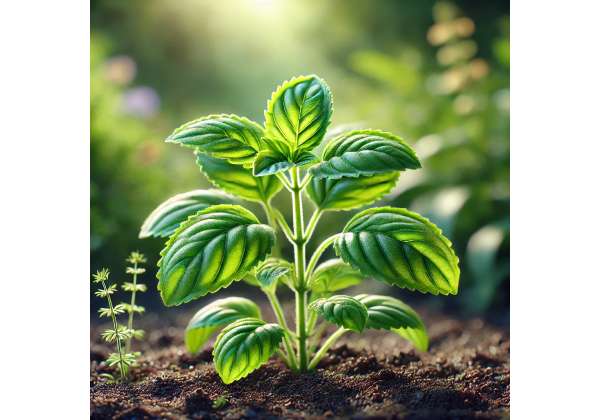
Basil lemon (Ocimum × citriodorum), often called lemon basil, is a fragrant basil with a clean citrus aroma that bridges kitchen and herbal traditions. It is valued first as a culinary herb—brightening salads, fish, teas, and summer dishes—but its lemony essential oil profile also explains why many people use it for gentle, everyday wellness goals. In practical terms, lemon basil is most often used to support digestive comfort, freshen the breath, and create a calming sensory routine through warm tea or aromatic steam. Its leaves contain a mix of volatile oils and polyphenols that contribute to antioxidant and antimicrobial activity in laboratory settings, while real-world benefits tend to be subtler and more tied to routine and dose.
Because lemon basil can be used as food, tea, or concentrated extract, safety depends on the form. Culinary amounts are typically well tolerated, while essential oils and high-dose supplements require more caution—especially for pregnancy, children, sensitive skin, and people taking certain medications.
Top Highlights
- Lemon basil may support mild digestive comfort and post-meal ease when used as tea or in meals.
- The aroma can be used to build a calming routine, but effects are usually gentle rather than dramatic.
- Typical adult tea range is 1–3 g/day of dried leaves (often 1–2 g per cup, up to 2–3 cups daily).
- Essential oil can irritate or sensitize skin; avoid undiluted topical use and stop if burning or rash appears.
- Avoid concentrated extracts and essential oil use if pregnant, breastfeeding, or using it for a child without clinician guidance.
Table of Contents
- What is lemon basil
- Key ingredients and properties
- Does it offer health benefits
- How to use lemon basil
- How much lemon basil per day
- Side effects and who should avoid
- What the evidence actually shows
What is lemon basil
Lemon basil is a basil with a distinctly citrus-forward aroma and flavor, typically described as “basil with lemon peel and lemongrass notes.” Botanically it is often labeled Ocimum × citriodorum, reflecting its hybrid origin and the fact that lemon-scented basils can be genetically and chemically variable. In everyday use, what matters most is that lemon basil belongs to the mint family (Lamiaceae), shares many features with other basils, and produces fragrant volatile oils in leaf glands that release quickly when the leaves are bruised or torn.
How it differs from sweet basil
Sweet basil’s flavor often leans toward clove-like or anise-like notes, depending on the chemotype (the dominant oil profile). Lemon basil shifts the balance toward citrus-like compounds, giving it a brighter, cleaner top note that can stand in for lemon zest in a pinch. That difference also affects how people use it: lemon basil is frequently added at the end of cooking to preserve aroma, used in cold dishes, or steeped as tea.
What parts are used
- Leaves and tender tops: the main culinary and tea ingredient
- Flowers: edible, aromatic, and often used as garnish
- Essential oil (distilled): used in aromatics and fragrances; not the same as eating the leaf
Why “form” matters
When you eat lemon basil, you’re taking in small amounts of volatile oils alongside fiber, water, and polyphenols. When you use an essential oil, you are using a concentrated mixture of volatile compounds—often hundreds of times stronger than the plant itself. That concentration changes both expected benefits and risk.
Common wellness intent
Most people reach for lemon basil in two scenarios:
- As a digestive and palate herb—to make meals feel lighter and more comfortable.
- As a sensory herb—a warm tea or aromatic ritual that supports relaxation through smell, warmth, and routine.
If you keep this “food to concentrate” spectrum in mind, lemon basil becomes easier to use well: start with the leaf, build consistency, and treat concentrated products as optional and higher-risk rather than automatically “better.”
Key ingredients and properties
Lemon basil’s signature comes from its volatile oils, supported by a quieter layer of polyphenols and plant acids. While exact percentages vary by cultivar, growing conditions, harvest timing, and drying method, lemon basil is often characterized by citrus-leaning compounds (commonly associated with lemony aromas) alongside classic basil terpenes.
Volatile oils (aroma and “fast” effects)
Citral-like citrus compounds
Many lemon-scented plants owe their aroma to a pair of closely related molecules (often described together as citral). These compounds contribute to the crisp lemon profile and are part of why lemon basil feels “clearing” and bright when steeped as tea or inhaled as steam. They are also relevant to safety: citrus-leaning fragrance compounds can irritate or sensitize sensitive skin, especially in concentrated products.
Linalool and related terpenes
Linalool is a common floral terpene found across many aromatic herbs. In daily life, it helps explain why lemon basil can feel soothing as an aroma even before you “feel” anything physiological: scent can shape breathing patterns, perception of stress, and comfort. Linalool is also known for oxidation products that can become more allergenic over time, which is one reason older essential oils may cause more skin reactions than fresh oils.
Eugenol, estragole, and chemotype variability
Some basils contain more clove-like eugenol or anise-like estragole. Lemon basil tends to be more citrus-driven, but chemotypes overlap, and products made from “basil oil” can vary widely. This variability is a practical reason to avoid internal essential-oil use unless a product is tightly controlled and clearly labeled.
Polyphenols (antioxidant and “slower” support)
Rosmarinic acid and flavonoids
Like many mint-family herbs, basil leaves can contain rosmarinic acid and other polyphenols associated with antioxidant activity. In human terms, polyphenols are best viewed as supportive rather than medicinally forceful: they contribute to the health value of herbs in the diet, but they are not a substitute for medical treatment.
Tannins and gentle astringency
In tea form, lemon basil can have a mild astringent edge. For some people that feels refreshing; for others it can feel drying. This is why tea strength and steep time matter.
What these properties mean in real use
- Aroma-driven comfort tends to appear quickly (minutes), especially with tea or steam.
- Digestive support is usually modest and tied to meals: reduced heaviness, less bloating, and improved appetite cues in some people.
- Antimicrobial effects are strongest in lab tests and concentrated extracts; in daily use, think “supportive hygiene,” not “treating infection.”
A useful way to choose a product is to match it to your goal: leaf and tea for routine wellness, and aromatics for sensory support—while keeping essential oils in the “powerful and optional” category.
Does it offer health benefits
Lemon basil can offer genuine benefits, but the most dependable ones are practical, gentle, and routine-based rather than dramatic. If your expectations fit the herb, it can be a satisfying tool for everyday comfort.
Digestive comfort and post-meal ease
The most common traditional and modern use is as a carminative-style herb—one that supports comfort after eating. People often use lemon basil when meals feel heavy, when appetite is low, or when they want a “lighter” finish after rich foods. Lemon basil tea is frequently chosen because it is both flavorful and easy to dose. Typical outcomes, when it helps, include:
- less sensation of fullness sitting high in the stomach
- reduced gassiness or bloating after meals
- improved desire to eat when stress blunts appetite
If digestive comfort is your main goal, lemon basil can also pair well with other classic after-meal herbs. For comparison, peppermint for digestive and respiratory benefits is another widely used option that many people find reliable for post-meal comfort.
Calm and sensory regulation
Lemon basil often supports calm through ritual and aroma: warm tea, slow breathing over steam, or the simple act of preparing and sipping a fragrant cup. This is not trivial. For many people, lowering “body tension” and settling the nervous system improves digestion, sleep onset, and recovery. Lemon basil may be especially useful when stress and digestion are linked—when your stomach feels tight during a demanding week, or when your evening routine needs a gentler landing.
Freshening and oral comfort
As a culinary herb, lemon basil can support fresh breath and a clean mouthfeel after meals. Some people also use diluted tea as a mouth rinse. This is best considered supportive hygiene, not a treatment for oral infection.
Immune and antimicrobial interest
Laboratory studies of basil oils and extracts show antimicrobial activity against various organisms. In real life, you should interpret this cautiously. The leaf in food form supports a diverse diet and contributes polyphenols, but it does not replace medical care for infections. If you are sick, the best role for lemon basil is comfort—warm fluids, hydration support, and appetite-friendly flavor—rather than an “antibiotic alternative.”
What benefits are most realistic
Lemon basil is at its best when used for:
- mild digestive discomfort tied to meals
- gentle winding-down routines
- culinary support for a nutrient-dense diet
If you want targeted clinical outcomes (for example, treating anxiety disorders or clearing infections), lemon basil is unlikely to be strong enough on its own. But for everyday well-being and comfort, it can be both enjoyable and useful—especially when you keep dosing steady and expectations grounded.
How to use lemon basil
Lemon basil is easy to use because it works well in food, tea, and aromatic routines. The best method is the one you can repeat consistently without side effects.
Culinary use (best for most people)
Fresh lemon basil is most potent when added near the end of cooking. Practical ideas:
- Toss into salads with cucumber, tomato, olive oil, and a little salt.
- Add to fish, chicken, or legumes after cooking for a clean citrus finish.
- Stir into yogurt-based sauces or dressings to brighten richer meals.
- Blend into pesto-style sauces (often with less garlic than sweet basil pesto).
For sensitive digestion, culinary use is often the gentlest option because the dose is naturally limited by taste.
Tea and warm infusions
Simple lemon basil tea
- Use fresh leaves (lightly bruised) or dried leaves.
- Steep covered to preserve aroma.
- Sip after meals for comfort, or in the evening as part of a wind-down routine.
You can also blend lemon basil with other calming or digestive herbs. If you like gentle floral notes, lavender oil for sleep and stress is often used as an aromatic complement to evening routines—though it should be treated as a concentrated product and used cautiously, especially on skin.
Steam and “breathing tea”
A practical approach for a tense day is to pour hot water over lemon basil, let it cool slightly, and take a few slow breaths of the rising steam before sipping. This is less about treating congestion and more about shifting breathing patterns and softening stress.
Topical use (leaf-based, not essential oil)
Some people apply crushed leaves as a short-contact rub for a fresh scent after outdoor activity. If you try this, keep it brief and avoid broken skin. Wash off if tingling or redness develops.
Essential oil: use with restraint
If you use lemon basil essential oil at all, treat it as optional and high-potency:
- Diffuser: a small number of drops is usually enough for a room.
- Topical: only if properly diluted in a carrier oil and only on small areas.
Avoid internal essential oil use unless a qualified clinician provides explicit guidance, because basil oils can vary in constituents and some compounds have stricter safety limits than most people realize.
The simplest “best practice” is: start with food, move to tea if you want a more consistent routine, and use aromatic products only if you tolerate them and keep the dose conservative.
How much lemon basil per day
Dosing lemon basil is best approached by form: fresh leaf in food, dried leaf as tea, and essential oil as a separate category with tighter safety boundaries. The ranges below are designed to be practical, conservative, and easy to evaluate.
Fresh leaf (culinary)
There is no strict “dose” for culinary use. A useful daily range for many adults is:
- 1–2 tablespoons chopped fresh leaves in meals, up to 1/4 cup if well tolerated.
If you are new to lemon basil or have reflux, start small. The citrus-like aroma can feel stimulating for some people late in the day.
Dried leaf tea (most common wellness form)
A common adult tea range is:
- 1–2 g dried leaves per cup (about 1–2 teaspoons, depending on cut), steeped 10–15 minutes, up to 2–3 cups daily.
This yields a practical daily total of 1–3 g/day (sometimes up to ~6 g/day in tea form if using multiple cups), but many people do best at the lower end.
Timing tips
- For digestive comfort: drink after meals.
- For evening calm: drink 60–90 minutes before bed.
- For sensitive stomachs: take with a small snack rather than on an empty stomach.
Extracts and capsules
If you see lemon basil capsules, check whether they are leaf powder or an extract, and whether the label lists standardization. Because product potency varies, follow the label and use a “start low” strategy:
- Begin with one-half to one serving daily for 3–5 days, then increase only if well tolerated.
Essential oil (aromatic and topical)
Because drops are not a precise medical unit, focus on conservative practice:
- Diffuser: use the smallest amount that scents the room comfortably; more is not better if it triggers headache or throat irritation.
- Topical dilution: keep to about 0.5–1% for most adults with tolerant skin. As a simple approximation, 1 drop per teaspoon (5 mL) of carrier oil is roughly a 1% dilution.
When to reassess
- For tea or culinary use, you can usually judge fit within 1–2 weeks: comfort, sleep routine support, and digestion cues.
- For extracts, reassess within 2–4 weeks and stop if you do not see a clear benefit.
If your main goal is digestive comfort and nausea-prone days, some people prefer a more strongly studied kitchen herb. For comparison, ginger benefits and active compounds may be helpful when you want a more targeted option for nausea and stomach settling.
Side effects and who should avoid
Lemon basil is usually well tolerated as a food herb, but risk rises with concentration—especially essential oils and strong extracts. A safety-first approach is to treat culinary use as the default and reserve concentrated forms for people who have screened for sensitivity and interactions.
Common side effects
From leaf and tea (more likely at higher amounts):
- heartburn or reflux (especially if taken on an empty stomach)
- mild nausea if the tea is very strong
- headache in scent-sensitive individuals (often aroma-related)
From essential oil or concentrated aromatics:
- skin irritation, burning, or redness
- allergic contact dermatitis (delayed itchy rash)
- headache or throat irritation if diffused heavily in a small space
Because lemon basil’s aroma profile often includes fragrance-like compounds, old or oxidized oils can be more irritating than fresh ones. If an oil smells “sharp,” stale, or different from usual, do not use it on skin.
Who should avoid lemon basil supplements or essential oil
- Pregnant or breastfeeding people: culinary use is generally considered reasonable, but avoid essential oils and high-dose extracts unless a clinician approves.
- Infants and young children: avoid essential oils and supplements; use food amounts only if appropriate for the child’s diet.
- People with very sensitive skin, eczema, or fragrance allergy: avoid topical essential oil use; patch testing is essential even with diluted products.
- Those with severe reflux or gastritis: strong tea may aggravate symptoms; choose culinary amounts instead.
Medication interactions and practical cautions
Lemon basil is not known for dramatic interactions in culinary amounts, but a few real-world cautions are worth taking seriously:
- Warfarin and vitamin K consistency: leafy herbs can contribute vitamin K. Sudden, large dietary changes can affect anticoagulant management. The safest approach is consistency—do not drastically increase herb intake without coordinating with your clinician.
- Diabetes or blood-pressure medications: basil-family extracts are sometimes discussed for metabolic effects. Even if effects are mild, stacking multiple “metabolic” supplements can create unpredictability. Monitor and involve your clinician if you use concentrated products.
- Sedatives and alcohol: if lemon basil tea makes you drowsy, do not combine it with other sedating substances and then drive.
Stop rules
Stop use and seek medical guidance if you develop:
- hives, facial swelling, wheezing, or difficulty breathing
- severe rash or blistering
- fainting, severe dizziness, or persistent vomiting
For most people, the safest path is simple: use the leaf in food, keep tea moderate, and treat essential oil use as optional and carefully controlled.
What the evidence actually shows
The evidence around lemon basil sits in a familiar place for culinary herbs: strong for chemical composition, supportive for lab-based biological activity, and more limited for human clinical outcomes. This does not make lemon basil unhelpful—it simply tells you what it is best used for.
What we know with confidence
It contains bioactive volatile oils and polyphenols.
Studies consistently show that basil species (including lemon-scented types) contain complex essential oil profiles and a range of phenolic compounds. These profiles vary by cultivar and environment, which explains why one lemon basil plant can smell intensely citrusy while another leans more floral or clove-like.
Volatile oils can show antimicrobial activity in vitro.
Essential oils from basil species can inhibit microbial growth under lab conditions. This supports the traditional idea of basil as a “clearing” aromatic herb, but it does not prove that eating basil treats infections. In practical use, this evidence best supports hygiene-adjacent uses (freshening mouthfeel, supporting a clean kitchen herb routine) rather than medical treatment.
What is plausible but not guaranteed
Digestive comfort benefits are plausible and commonly reported.
Carminative herbs often help through a combination of aroma, taste-driven digestive secretion, and relaxation effects. Lemon basil fits that pattern well. However, because these outcomes are subjective and influenced by context, individual response varies.
Calming effects are often routine-driven.
A warm, fragrant tea and a brief aromatic pause can reduce perceived stress. That benefit may be partly physiological (breathing and sensory pathways) and partly behavioral (a structured break). Either way, it can be meaningful if it improves sleep onset or meal comfort.
Where evidence is limited
Direct human trials on Ocimum × citriodorum are scarce.
Most clinical work centers on other basil types or isolated constituents. For lemon basil specifically, much of the published work is agricultural, analytical (what compounds are present), or laboratory-based (antioxidant and antimicrobial testing).
Dose-response guidance is not standardized.
Tea amounts are usually guided by traditional and culinary practice rather than formal dosing trials. That is why conservative ranges and clear stop rules matter.
Evidence-informed best use
Lemon basil is best positioned as:
- a high-value culinary herb that improves diet adherence by making healthy food taste better
- a gentle tea herb for comfort and routine
- an aromatic tool used conservatively, especially if you are fragrance-sensitive
If you want a stronger polyphenol-focused beverage with broader human evidence for cardiometabolic markers, green tea health benefits may be a better evidence-forward comparison—while lemon basil remains a flavorful, low-friction companion that many people can use daily.
References
- A glance at the chemodiversity of Ocimum species: Trends, implications, and strategies for the quality and yield improvement of essential oil 2021 (Review)
- Ocimum Species: A Review on Chemical Constituents and Antibacterial Activity 2022 (Review)
- Screening of Metabolites and Metabolic Pathways in Five Different Ocimum Species From the Same Origin Using GC-MS 2025 (Analytical Study)
- Fragrance Contact Allergy – A Review Focusing on Patch Testing 2024 (Review)
- Advice oral use of Essential Oils – Ocimum basilicum L. 2022 (Government Monograph)
Disclaimer
This article is for educational purposes only and does not provide medical advice, diagnosis, or treatment. Herbs and essential oils can cause side effects and allergic reactions, and concentrated products may interact with medications. Do not use lemon basil essential oil internally unless a qualified healthcare professional has advised it. If you are pregnant, breastfeeding, managing a chronic condition, taking prescription medications (including anticoagulants or diabetes drugs), or considering use for a child, consult a qualified clinician before using lemon basil supplements or essential oils. Seek urgent medical care for signs of a severe allergic reaction, trouble breathing, facial swelling, or rapidly worsening rash.
If this guide helped, consider sharing it on Facebook, X (formerly Twitter), or your preferred platform so others can make safer, better-informed choices.