Wild sarsaparilla, Aralia nudicaulis, is a woodland herb native to northern and eastern North America and one of the most misunderstood plants that carries the name “sarsaparilla.” It is not the same as the tropical Smilax species commonly sold as sarsaparilla root, and it is actually closer to ginseng than to true sarsaparilla vines. Traditionally, its rhizome has been used by Indigenous peoples and later herbalists for coughs, skin complaints, circulation, aches, and general tonic support. Modern research adds a more specific picture, pointing to bioactive polyacetylenes, phenolic acids, and triterpenoid saponins that may help explain its antioxidant, antimicrobial, and anti-inflammatory potential.
What makes wild sarsaparilla especially interesting is its position between folk medicine and emerging phytochemistry. It has a real ethnobotanical record, but not a polished supplement industry behind it. That means the plant deserves careful attention, not exaggeration. This article explains what wild sarsaparilla is, what compounds it contains, which benefits are most plausible, how it has been used, why dosage remains mostly historical rather than clinical, and which safety issues matter most for modern readers.
Quick Overview
- Wild sarsaparilla shows promising antioxidant and anti-inflammatory activity in extract research.
- Traditional use and laboratory studies both support antimicrobial potential, especially for the rhizome.
- Historical herbal use has described 15 to 30 drops of a 1:5 tincture up to 3 times daily, but no validated modern clinical dose exists.
- Pregnant people, children, and anyone using it as a substitute for proven treatment should avoid self-prescribing concentrated preparations.
Table of Contents
- What wild sarsaparilla is and why it is not true sarsaparilla
- Key compounds and medicinal properties of wild sarsaparilla
- Potential health benefits and what the evidence suggests
- Traditional and modern uses of Aralia nudicaulis
- Dosage, forms, timing, and why standard dosing remains unclear
- Safety, side effects, interactions, and who should avoid it
- How to identify, harvest, and use it wisely
What wild sarsaparilla is and why it is not true sarsaparilla
Wild sarsaparilla is the common name for Aralia nudicaulis, a perennial forest herb in the Araliaceae family. That makes it a botanical relative of ginseng and spikenard, not of the tropical Smilax vines that are more often sold commercially as sarsaparilla root. This distinction is not a minor technicality. It changes how the plant should be understood, how traditional claims are interpreted, and why so much online content about “sarsaparilla” becomes confusing so quickly.
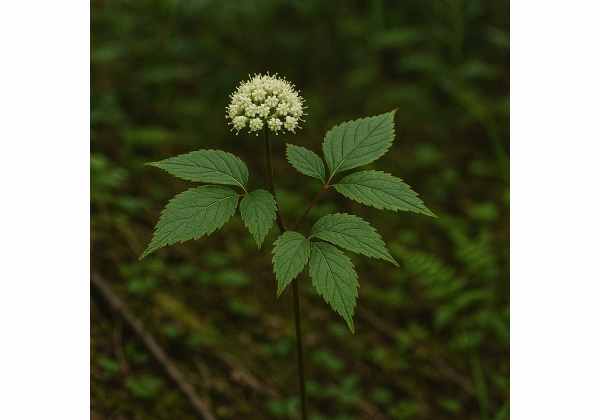
The plant grows from long creeping rhizomes that run through moist woodland soil. In spring and early summer, it sends up one or sometimes more leaf stalks bearing compound leaves, along with a separate flowering stalk topped with small rounded clusters of greenish-white flowers. Later, it forms dark berry-like fruits. The rhizome is the part most often associated with medicinal use, though aboveground parts have also been studied chemically.
One reason wild sarsaparilla is often misunderstood is the name itself. “Sarsaparilla” has historically been applied to several different plants, especially those with aromatic or tonic roots. That naming overlap encouraged substitution in trade, confusion in herbal texts, and a tendency to import benefits from unrelated species. In practice, readers need to treat Aralia nudicaulis as its own herb, not as a northern version of Caribbean or Central American Smilax sarsaparilla.
This matters even more because the plant family shapes expectations. Unlike Smilax, wild sarsaparilla sits in the same broader botanical company as American ginseng and other North American Araliaceae herbs. That does not mean it acts like ginseng, but it helps explain why herbalists sometimes describe it as tonic, restorative, or supportive rather than simply pungent or cleansing. It also helps explain why modern phytochemical research finds saponins and polyacetylenes rather than the exact profile many readers expect from commercial sarsaparilla products.
Wild sarsaparilla also has a practical identity outside herbal medicine. The rhizome has an aromatic, rooty character that contributed to old-fashioned flavoring traditions, including root beer folklore. That culinary-historical use gives the plant a friendly image, but the medicinal part of its story is more serious. Indigenous use included coughs, tuberculosis-related remedies, skin problems, pain, and tonic preparations. Later herbal traditions described it as alterative, diaphoretic, and supportive for chronic, sluggish conditions.
A second identity issue concerns look-alikes. The plant is sometimes confused in the field with poison ivy because young shoots may appear in clusters of three leaflets at a glance. Careful observation usually resolves this. Wild sarsaparilla has finely toothed leaflets and a herbaceous growth habit, while poison ivy is typically glossier, less evenly toothed, and often associated with a woody base or vine-like growth.
The best starting view, then, is simple: wild sarsaparilla is a real medicinal plant with its own chemistry, history, and uses. But it is not “just sarsaparilla,” and any serious article has to separate it from Smilax and from generic root-beer folklore before saying anything else.
Key compounds and medicinal properties of wild sarsaparilla
Wild sarsaparilla’s medicinal reputation comes from several overlapping groups of compounds rather than from one celebrated marker ingredient. The rhizome has drawn attention for polyacetylenes, especially falcarinol and panaxydol, while newer work on the leaves has identified triterpenoid saponins, including newly described nudicaulosides. Rhizome extracts also contain meaningful phenolic acids, with chlorogenic, caffeic, and protocatechuic acids among the most notable. Together, these compounds give the plant a profile that is aromatic, protective, and pharmacologically interesting.
The polyacetylenes are especially important because they help explain one of the most striking findings in the literature: antimycobacterial activity from the rhizome. Falcarinol and panaxydol are not unique to Aralia nudicaulis, but they are central to its modern ethnopharmacological relevance. These compounds help connect traditional respiratory and infection-related uses with laboratory evidence.
The phenolic side of the plant matters just as much. In rhizome extracts enriched for phenolics, researchers found notable levels of chlorogenic, caffeic, and protocatechuic acids. These are compounds widely recognized for antioxidant and inflammation-modulating potential in many plant systems. In wild sarsaparilla, they likely contribute to the plant’s oxidative stress protection and to its more general tonic reputation.
Then there are the saponins. Leaf extracts have yielded triterpenoid saponins, including newly described molecules that showed moderate anti-inflammatory activity in vitro. This is important for two reasons. First, it shows that the plant is chemically richer than older literature sometimes suggests. Second, it helps explain why people who rely only on the rhizome story may miss part of the herb’s medicinal picture. Wild sarsaparilla is not just a root medicine. Different parts contain different active patterns.
Taken together, the plant’s core medicinal properties can be described as:
- antimicrobial
- antioxidant
- anti-inflammatory
- mildly tonic in traditional use
- potentially supportive for skin and mucosal stress in experimental settings
A useful comparison can be made with other herbs whose kitchen-adjacent reputation hides surprisingly complex pharmacology. Wild sarsaparilla is not a major culinary spice like ginger, but it shares the same broad lesson: a familiar-tasting or folkloric root can still carry a meaningful and multi-layered chemical profile.
Another important point is that chemistry shifts with plant part and preparation. A rhizome decoction does not deliver the same balance of constituents as a leaf extract, and neither is equivalent to a tincture. Drying, alcohol strength, and extraction method can all shift which compounds dominate. This is one reason wild sarsaparilla has never settled into a simple, standardized supplement identity. It behaves more like a traditional materia medica plant than a single-molecule botanical.
The medicinal profile also helps explain why some historical uses feel more plausible than others. Claims tied to infections, chronic respiratory irritation, blood-cleansing language, and low-grade inflammatory states fit the chemistry better than grander promises about hormone regulation or dramatic detoxification. When people overstate the plant, they often wander away from the chemistry that actually makes it interesting.
So the best way to think about wild sarsaparilla is as a polyacetylene-, phenolic-, and saponin-containing North American tonic herb. That description is less flashy than a list of miracle claims, but it is more accurate. It respects both the traditional record and the modern evidence without forcing the plant into a role it has not truly earned.
Potential health benefits and what the evidence suggests
Wild sarsaparilla has several plausible health benefits, but they do not all rest on the same level of evidence. Some are supported mainly by ethnobotanical use, some by in vitro or cell-based work, and some by compound isolation studies that connect traditional claims to specific bioactive molecules. The most honest way to discuss the plant is to rank the evidence rather than flatten it.
Antimicrobial potential is one of the strongest areas. Research on rhizome extracts isolated falcarinol and panaxydol as major constituents with activity against Mycobacterium tuberculosis in laboratory settings. More recent work on Indigenous Canadian remedies has also shown activity from belowground wild sarsaparilla extracts in MRSA-related biofilm models. This does not mean wild sarsaparilla is a home treatment for tuberculosis or resistant wound infections. It does mean the plant’s long-standing use in infection-related traditions is not just folklore without pharmacologic basis.
Antioxidant activity is also strongly supported. Phenolic-enriched rhizome extracts inhibited oxidative stress in cellular models and helped protect skin fibroblasts against UV-B- and IR-A-related reactive oxygen stress. This is especially interesting because it expands the plant’s relevance beyond older respiratory and tonic language. It suggests that wild sarsaparilla may deserve attention as a skin-protective or oxidative-stress-modulating botanical in future formulations, although this remains preclinical rather than clinical.
Anti-inflammatory effects appear reasonably plausible as well. The saponin work from leaf extracts showed moderate inhibition of inflammatory signaling in macrophage models. When this is viewed alongside the phenolic findings, it becomes easier to understand why traditional herbalists described the plant in chronic inflammatory, sluggish, or “stagnant” conditions even when they lacked modern language for oxidative stress and inflammatory mediators.
Respiratory support has the deepest traditional record, but modern evidence is indirect. Indigenous use included cough, chest complaints, and tuberculosis-related preparations. The antimycobacterial findings strengthen the plausibility of those traditions. Still, modern readers should not mistake this for clinical proof that wild sarsaparilla is an effective respiratory medicine in the way a tested pharmaceutical or standardized expectorant is.
Skin-supporting potential is another emerging area. Because phenolic extracts protected fibroblasts under oxidative stress, and because traditional use also included washes or preparations for dermatologic complaints, this is an area where historical use and experimental findings converge. But again, the evidence is promising rather than finished.
A comparison with better-studied medicinal roots and pungent herbs is useful here. Garlic, for example, has a much larger clinical literature behind its antimicrobial and cardiometabolic reputation. Wild sarsaparilla does not. That means its benefits must be described more modestly, even when the early evidence looks compelling.
The most balanced summary looks like this:
Most convincing
- antimicrobial potential
- antioxidant activity
- anti-inflammatory potential
Traditionally credible but not clinically established
- respiratory support
- skin support
- tonic or restorative use in chronic sluggish states
Not established enough for strong claims
- generalized immune boosting
- detoxification as a measurable therapeutic effect
- stand-alone treatment for chronic infection or inflammatory disease
This ranking matters because wild sarsaparilla is often marketed through borrowed mystique. It sounds old-fashioned and potent, so people may assume it does everything. In reality, it does a smaller number of things plausibly well, and even those actions still need more human research. That does not diminish the plant. It simply places it where it belongs: promising, traditional, and worthy of respect, but not yet a clinically settled herb.
Traditional and modern uses of Aralia nudicaulis
Wild sarsaparilla’s traditional uses are one of its strongest assets. Indigenous peoples in parts of Canada used the rhizome in preparations for coughs, chest complaints, blood cleansing, pain, skin conditions, and general tonic support. Some traditions also used it in tuberculosis-related contexts. Later herbal literature from settler and eclectic traditions described the plant as alterative, diaphoretic, mildly stimulant, and useful in chronic pulmonary complaints or skin disorders.
The old word alterative deserves a brief translation. In nineteenth-century herbal language, it often referred to plants thought to gradually improve chronic, constitutional, or “impure” conditions rather than acting as sharp short-term medicines. In modern terms, that broad category is imprecise, but it often overlaps with herbs used for inflammation, chronic skin problems, sluggish digestion, or mild metabolic stagnation. Wild sarsaparilla fits that historical pattern well.
Traditional use also had a practical, sensory dimension. The rhizome has an aromatic, slightly balsamic, somewhat root-beer-like profile, which made it attractive in syrups and flavoring preparations. That partly explains why the plant gained a reputation beyond medicine alone. It sat at the border between remedy and flavoring root, a place many old North American herbs occupied.
Today, its modern uses are narrower and more exploratory. It is not a widely standardized supplement on pharmacy shelves, and that is important. Most contemporary use falls into one of four categories:
- herbalist tinctures or decoctions
- ethnobotanical and foraging interest
- experimental phytochemical research
- occasional use in traditional-style formulas rather than mainstream consumer supplements
This lower commercial profile may actually be helpful. It means the plant has been less distorted by marketing than some fashionable herbs. At the same time, it also means dosing is less standardized and user expectations are often shaped by old herbal texts rather than formal guidance.
Wild sarsaparilla is sometimes compared to other traditional North American “alterative” or spring-support herbs. The comparison is not exact, but it is useful. Like dandelion, the plant has a reputation for slowly improving internal terrain rather than delivering a dramatic quick effect. Unlike dandelion, however, it is more aromatic, more root-centered in use, and less normalized as a daily food herb.
Modern herbalists may use it in formulas aimed at:
- chronic skin irritation
- lingering respiratory weakness with mucus
- low vitality or long recovery states
- mild rheumatic or inflammatory patterns
- tonic support alongside other Aralia-family plants
Still, it is important not to overmodernize the plant. Wild sarsaparilla is not well supported as an adaptogen in the strict supplement sense, and it should not automatically inherit the evidence base of ginseng or eleuthero simply because it belongs to the same family. It has its own identity.
Perhaps the most accurate modern use is as a heritage medicinal root with active chemistry and limited standardization. That may sound modest, but it is actually a strong position. The plant is not inert. It clearly contains pharmacologically relevant compounds. It also clearly has a serious ethnomedicinal history. What it lacks is the final layer of modern clinical polishing that would allow confident, product-style recommendations.
For many readers, that is enough. Wild sarsaparilla remains valuable not because it has become a mainstream supplement, but because it still preserves the character of a true regional medicinal plant: rooted in landscape, rooted in tradition, and now gradually being clarified by modern research rather than replaced by it.
Dosage, forms, timing, and why standard dosing remains unclear
Wild sarsaparilla does not have a well-established modern clinical dose. That is the central fact of the dosage discussion, and everything else needs to be built around it.
Unlike herbs that have official monographs with standardized extract ranges or supplement labels anchored to consistent actives, Aralia nudicaulis remains largely a historical and traditional herb. Most practical dosage information comes from herbal tradition, not from controlled human trials. That does not make it meaningless, but it does mean the dose conversation must be more cautious.
Historically, herbal folios and practitioner notes have described the root in cold infusion at 2 to 4 ounces or as a 1:5 tincture at 15 to 30 drops, up to 3 times daily. These are useful as traditional practice ranges, especially because they are route-specific and relatively modest. Still, they should not be mistaken for evidence-based clinical dosing in the modern sense.
That distinction matters because different forms extract different compounds. A cold infusion or decoction of the rhizome does not reproduce the same chemistry as an alcohol tincture. A leaf extract rich in saponins and anti-inflammatory constituents will not behave like a rhizome extract centered on phenolic acids and polyacetylenes. There is no single “wild sarsaparilla dose” that captures the whole plant.
Practical forms include:
- rhizome decoction or cold infusion
- tincture
- dried rhizome powder in formulas
- compound syrups in historical practice
- research extracts, usually not consumer products
Timing tends to follow the intended use rather than any strict chronobiology. Traditional tonic use often favors divided doses through the day. Respiratory or chronic formula use may also be split into multiple smaller doses rather than one larger dose. Because wild sarsaparilla is not a clearly stimulating herb like caffeine or a clearly sedating herb like valerian, time of day matters less than consistency and tolerance.
A comparison with other roots used as long-game tonic or alterative herbs helps here. These are rarely “take once and feel it immediately” plants. They are usually prepared in repeated, moderate doses over time. Wild sarsaparilla fits that pattern better than it fits the capsule-and-biohack model.
For readers, the safest dosing conclusions are:
- there is no validated modern clinical dose
- traditional dosing exists, but it is historical rather than standardized
- route matters greatly
- stronger is not automatically better
- concentrated self-prescribing is harder to justify than modest traditional use
This is why the article should not pretend more precision than the evidence allows. A clean milligram recommendation would sound neat, but it would not be honest. Wild sarsaparilla belongs to a group of herbs where the best modern approach is to acknowledge uncertainty and keep preparations modest.
So, if someone chooses to use wild sarsaparilla, the most defensible framework is this: use a traditional form, keep the amount moderate, avoid long-term unsupervised escalation, and do not confuse historical range with clinical validation. That may feel less satisfying than a firm supplement label dose, but it is more trustworthy and much better aligned with the actual state of knowledge.
Safety, side effects, interactions, and who should avoid it
Wild sarsaparilla does not have a reputation for dramatic toxicity, but its safety profile is still underdescribed in modern literature. That is different from saying it is risk-free. In practice, the biggest safety issue is not usually overt poisoning from the plant itself. It is uncertainty: uncertainty about dosing, uncertainty about preparation strength, and uncertainty created by confusion with other “sarsaparilla” species.
The first safety point is botanical identity. People sometimes assume all sarsaparilla products are interchangeable. They are not. Smilax sarsaparilla, Jamaican sarsaparilla, Indian sarsaparilla, and wild sarsaparilla each bring different traditions and different chemistry. Using dosage expectations from one for the other is a common mistake.
The second safety point is route and concentration. Historical preparations were usually infusions, decoctions, syrups, or modest tinctures. Modern users who jump straight to concentrated extracts or layered formulas may be increasing uncertainty without increasing benefit. Because the evidence base is strongest for moderate traditional use and lab extracts, not for aggressive consumer supplementation, a conservative approach makes more sense.
Possible side effects are not especially well cataloged, but the most plausible ones include:
- stomach upset or nausea in sensitive people
- loose stools with excessive use
- allergic reaction in people sensitive to Araliaceae plants
- unpredictable response when combined with many other tonic herbs
Because wild sarsaparilla sits in the ginseng family, some users assume it can be stacked freely with ginseng, eleuthero, or other “adaptogenic” formulas. That is not automatically unsafe, but it is not automatically wise either. When a plant lacks standardized dose and robust interaction data, polyherbal enthusiasm can become guesswork.
A useful comparison can be made with better-studied Araliaceae herbs such as American ginseng. Ginseng has clearer product categories, better dose discussion, and more defined interaction awareness. Wild sarsaparilla does not. That alone argues for more restraint.
Pregnancy and breastfeeding deserve extra caution. There is not enough modern safety data to support concentrated medicinal use in these periods. The same is true for young children. Historical use does not replace modern safety evidence, especially when the herb is being used medicinally rather than as a trace flavoring component.
Who should avoid self-prescribing wild sarsaparilla?
- pregnant or breastfeeding people
- children
- people with known plant allergies involving related species
- anyone taking multiple herbal tonics without professional guidance
- anyone using it to delay evaluation of chronic cough, skin disease, or infection
- anyone expecting it to replace proven medical treatment for tuberculosis, serious skin infection, or systemic inflammatory illness
Field identification also matters. Wild sarsaparilla is often mistaken for poison ivy at certain stages, especially by inexperienced foragers. While that confusion is more about collection than about the herb’s intrinsic toxicity, it still belongs in a safety discussion. A misidentified plant can turn a cautious herbal experiment into a rash, a ruined harvest, or worse.
So the best safety summary is this: wild sarsaparilla appears relatively gentle when used in traditional forms and moderate amounts, but it lacks the modern safety framework needed to support confident self-prescribing at higher intensity. In herbal medicine, lack of dramatic toxicity does not equal proof of broad safety. With Aralia nudicaulis, prudence remains part of good practice.
How to identify, harvest, and use it wisely
Wild sarsaparilla rewards careful observation. It grows in woods and forest edges, often forming colonies from creeping rhizomes. The plant usually presents as a single leaf stalk rising from the ground and dividing into three major branches, each of which bears additional leaflets. The flowering stalk is separate, shorter or equal in height, and topped by rounded clusters of small greenish-white flowers. Later, these become dark purplish berries.
This separate flower stalk is one of the easiest clues for correct identification. It helps distinguish the plant from poison ivy, which does not produce the same rounded umbel-like flower clusters on a separate herbaceous stalk. Wild sarsaparilla leaflets are also more finely toothed and generally more delicate in texture. Even so, if there is any doubt, the plant should be left alone.
The rhizome is the most important medicinal part. It is aromatic, creeping, and often long. Traditional use centers on harvesting the underground stem rather than the berries or leafy parts, although modern research has also looked at leaf extracts. Because the plant spreads by rhizome, careless harvesting can quickly damage a patch. Ethical collection means taking only a small portion from a robust colony and leaving enough for regeneration.
A wise harvesting approach includes:
- confirming identification from more than one feature
- choosing mature, abundant patches
- digging lightly and selectively rather than stripping a colony
- washing rhizomes promptly and drying them well if not using fresh
- labeling material clearly to avoid confusion with other roots
Storage depends on form. Dried rhizome should be kept in a cool, dry place away from light. Tinctures should be labeled with date, strength, and solvent. Because wild sarsaparilla is not a mainstream commercial herb, home labeling becomes especially important. Confusion at the shelf stage is just as risky as confusion in the woods.
In actual use, the plant works best when treated like a traditional root rather than a trendy supplement. That usually means modest decoctions, small tincture doses, or formula use guided by a skilled herbalist. It does not mean heroic dosing, vague detox protocols, or assuming that “more natural” automatically means “more effective.”
A helpful comparison is other North American herbs that reward steady, moderate use rather than dramatic escalation. Wild sarsaparilla fits that style of herbalism. It is a plant of patience, not intensity.
There is also value in recognizing when not to use it. If the goal is a well-standardized anti-inflammatory or a clinically defined respiratory herb, wild sarsaparilla may not be the best first choice. Its strengths lie in tradition, nuance, and emerging phytochemistry. Those are real strengths, but they are different from standardization.
In the end, wise use depends on respecting the plant’s true scale. Wild sarsaparilla is neither a forgotten miracle nor a mere woodland curiosity. It is a regionally important medicinal root with real chemistry, real tradition, and real limits. When identified correctly, harvested responsibly, and used conservatively, it can still hold an honorable place in modern herbal practice. That place simply needs to be earned through precision rather than assumption.
References
- The antimicrobial potential of traditional remedies of Indigenous peoples from Canada against MRSA planktonic and biofilm bacteria in wound infection mimetic conditions 2024 (Research Article)
- Phenolic Extract from Aralia nudicaulis L. Rhizomes Inhibits Cellular Oxidative Stresses 2021 (Research Article)
- Isolation and characterization of triterpenoid saponins from leaves of Aralia nudicaulis L 2021 (Research Article)
- Anti-mycobacterial diynes from the Canadian medicinal plant Aralia nudicaulis 2012 (Research Article)
- Aralia Spikenard 2024 (Historical Herbal Folio)
Disclaimer
This article is for educational purposes only and is not a substitute for medical advice, diagnosis, or treatment. Wild sarsaparilla has a meaningful traditional record and promising laboratory evidence, but it does not have a well-established modern clinical dose, and its benefits should not be used to justify delaying care for chronic cough, infection, skin disease, or any serious condition. Use extra caution during pregnancy, breastfeeding, childhood, and when combining multiple herbal formulas or concentrated extracts.
If you found this article helpful, please consider sharing it on Facebook, X, or any other platform you prefer.