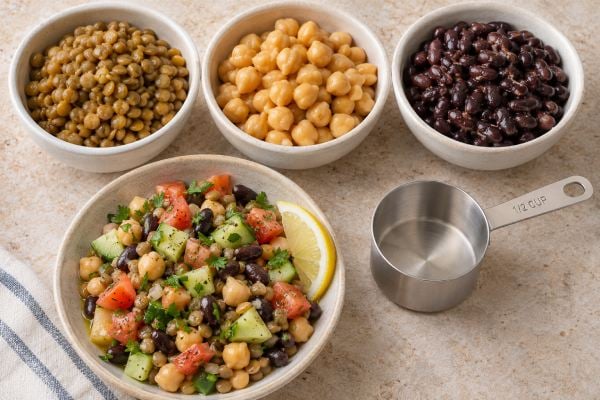
Beans, lentils, chickpeas, and other pulses can help lower LDL cholesterol, and you do not need a rare variety to get the benefit. The best choice is usually the bean or lentil you enjoy enough to eat regularly. Recent randomized trials and meta-analyses suggest that increasing whole-pulse intake can produce small but meaningful reductions in LDL and non-HDL cholesterol. A practical serving is about ½ to 1 cup cooked per day, although even a few servings per week can improve the overall quality of your diet.
Different pulses bring slightly different textures and nutrient profiles, but all provide fiber, plant protein, minerals, and very little saturated fat. They work especially well when they replace refined grains or fatty meat rather than simply being added on top of the same diet. Black beans, navy beans, chickpeas, lentils, pinto beans, and kidney beans are all reasonable choices. Convenience counts too: canned beans can work well when drained and rinsed.
Table of Contents
- Why Beans Help Lower Cholesterol
- Best Beans and Lentils to Choose
- How Much to Eat for a Practical Cholesterol Benefit
- Canned vs Dried Beans: What Matters Most
- How to Add Beans Without Too Much Gas or Bloating
- Easy Ways to Use Beans Every Day
- When Beans Are Helpful but Not Enough
Why Beans Help Lower Cholesterol
Pulses—beans, lentils, chickpeas, and dried peas—lower cholesterol through several overlapping mechanisms. Their soluble and viscous fibers can reduce bile-acid reabsorption in the gut, encouraging the liver to use cholesterol to make more bile. Their plant protein and low saturated-fat content also make them useful replacements for foods that raise LDL more strongly.
Recent trials suggest the effect is not explained by fiber alone. Beans contain resistant starch, phytochemicals, saponins, and other components that may influence cholesterol metabolism and the gut environment. A 2024 randomized trial found that about ¾ cup of mixed dry beans daily lowered LDL compared with white rice in adults with mild hypercholesterolemia, while the pea intervention in the same trial did not significantly lower LDL.
A broader 2025 meta-analysis of whole dietary pulses found average reductions in LDL, non-HDL cholesterol, and ApoB, with similar effects across pulse types. That means there is no need to obsess over a single “best bean.” The biggest benefit comes from eating pulses consistently and using them in place of less favorable foods.
For the overall pattern, beans and lentils for heart health explains how pulses fit into blood pressure, blood sugar, and satiety goals as well as cholesterol.
Best Beans and Lentils to Choose
Black beans are rich in fiber and work well in tacos, soups, grain bowls, and breakfast dishes. Navy beans are especially soft when cooked and can be blended into soups or spreads. Pinto beans are affordable and versatile. Kidney beans hold their shape well in chili and salads. Chickpeas work in curries, salads, hummus, and roasted snacks. Lentils cook quickly and are easy to add to soups, sauces, and grain bowls.
Nutritionally, differences between varieties are smaller than the difference between eating pulses and not eating them. A typical ½-cup cooked serving provides roughly 6–9 g of protein and 6–8 g of fiber, depending on the type and preparation. Lentils and beans are also rich in folate, potassium, magnesium, and iron.
If your goal is LDL reduction, rotate varieties rather than searching for one perfect bean. Variety improves meal flexibility and makes it easier to eat pulses often enough to matter. The 2025 pulse meta-analysis found a dose-response signal for beans up to about 1 cup per day, but benefits were still modest, not medication-level.
Soybeans are also legumes but have a different nutrient profile and are often discussed separately because soy protein has its own cholesterol evidence. They can still be part of the same heart-healthy pattern.
How Much to Eat for a Practical Cholesterol Benefit
A useful target is ½ to 1 cup of cooked pulses on most days. You do not need to start there. If you currently eat beans rarely, begin with ¼ to ½ cup several times per week and increase gradually as your gut adapts.
Clinical trials often use larger, consistent servings. One 2021 canned-bean study compared ½ cup and 1 cup daily with white rice. The 1-cup serving produced the clearest LDL reduction. A 2024 lentil trial used about 980 g of cooked lentils per week—roughly one serving per day—and found lower fasting LDL and total cholesterol after 12 weeks.
Those study amounts are helpful guides, not rigid prescriptions. The goal is to create a repeatable eating pattern. Someone with a small appetite may do better using ½ cup beans at lunch and another ¼ cup in soup later. A larger, active person may comfortably eat 1 cup in one meal.
Calories still count, so replacement matters. Adding 1 cup of beans to a large meal without reducing anything else can increase total energy intake. Replacing some meat, cheese, white rice, or refined pasta with beans is usually more useful for cholesterol and weight control.
Canned vs Dried Beans: What Matters Most
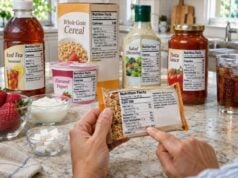
Canned beans are nutritionally useful and much faster than cooking dried beans. Their main drawback is sodium, not cholesterol. Choose no-salt-added or low-sodium versions when available. Draining and rinsing regular canned beans can remove some sodium and improve flavor.
Dried beans are usually cheaper per serving and let you control salt completely. They require soaking in some cases and longer cooking, although lentils and split peas cook quickly without soaking. A pressure cooker can make dried beans much easier for batch preparation.
Frozen cooked beans are another option if available. They often contain little or no sodium and can be portioned directly into soups or bowls.
Do not let perfection become a barrier. A convenient canned bean you eat three times per week is more valuable than a bag of dried beans that stays in the pantry. If sodium is also a concern, canned options can still fit by checking labels and rinsing.
For other pantry choices, heart-healthy canned foods can help you compare sodium and ingredient lists.
How to Add Beans Without Too Much Gas or Bloating
Gas is the most common reason people stop eating beans. Pulses contain fermentable carbohydrates that gut bacteria break down, producing gas. The effect usually improves with gradual exposure.
Start with smaller portions—about ¼ cup—and increase every few days. Lentils and canned chickpeas may be easier for some people than large servings of kidney or navy beans, although tolerance is individual. Rinsing canned beans can reduce some fermentable compounds. Cooking dried beans until very soft also helps.
Spread intake across meals instead of eating a large serving all at once. Drink enough fluid as you increase fiber. If you have irritable bowel syndrome or follow a low-FODMAP diet, work with a dietitian because serving size can make a major difference in symptoms.
Do not confuse normal mild gas with an allergy or other medical problem. Severe abdominal pain, persistent diarrhea, vomiting, blood in the stool, or unexplained weight loss requires medical evaluation.
Most people can adapt to regular bean intake over one to several weeks. The adaptation itself is useful: a diet consistently higher in fiber supports stool regularity and can make high-fiber eating easier to maintain.
Easy Ways to Use Beans Every Day
The easiest strategy is to attach beans to meals you already make.
- Stir lentils into tomato sauce or soup.
- Add black beans to tacos, burrito bowls, eggs, or salads.
- Use chickpeas in curry, chopped salads, or hummus.
- Mash white beans with olive oil, lemon, and herbs as a sandwich spread.
- Replace half the ground meat in chili with beans or lentils.
- Add beans to whole-grain pasta dishes or roasted-vegetable bowls.
A simple cholesterol-friendly plate might combine ½–1 cup beans, a large serving of vegetables, and a modest portion of whole grain, finished with olive oil, nuts, seeds, or avocado. This naturally raises fiber while keeping saturated fat low.
Beans also pair well with other LDL-lowering foods. Oats at breakfast, beans at lunch, and vegetables plus whole grains at dinner can create a high-fiber day without any single meal feeling extreme. If you want a more structured approach, a short-term LDL-lowering food strategy can help you prioritize the highest-impact changes.
When Beans Are Helpful but Not Enough
Beans can lower LDL modestly, but they cannot reliably treat very high cholesterol on their own. If LDL is severely elevated, if you have familial hypercholesterolemia, or if you already have cardiovascular disease, medication may be needed even with an excellent diet.
Use a repeat lipid panel to judge the total effect of your eating pattern. If you make a meaningful diet change, a 6–12 week interval is often enough to see whether LDL is moving in the right direction. Keep in mind that weight loss, exercise, thyroid status, medications, and genetics can all affect the result.
Do not focus only on LDL if triglycerides, blood pressure, blood sugar, or ApoB are also concerns. Pulses can support several of these markers, but treatment targets should be individualized.
The practical takeaway is simple: eat the pulse you like, use a meaningful portion, and let it replace a less favorable part of the meal. Consistency matters more than whether you choose lentils, chickpeas, black beans, or pinto beans on any given day.
Preparation method changes the rest of the meal more than it changes the bean itself. Beans cooked with large amounts of bacon, sausage, butter, or coconut milk can still be enjoyable, but they may bring enough saturated fat and sodium to offset some of the heart-health advantage. Using olive oil, herbs, vegetables, spices, and modest amounts of cheese keeps the balance more favorable.
Bean-based pasta can be a useful convenience food because it often contains more protein and fiber than refined wheat pasta. It is not identical to eating whole beans, but it can help increase pulse intake. Check ingredients and sodium, especially in flavored products.
For people concerned about protein quality, a varied diet easily covers essential amino acids. Beans do not need to be paired with rice at the exact same meal. Eating a range of plant and animal proteins across the day is enough for most adults.
Beans vs Lentils vs Chickpeas: Is One Clearly Better?
The evidence does not support a single universal winner. Beans have some of the clearest direct trial data, including recent studies showing LDL reductions with mixed dry beans and canned beans. Lentils also have randomized evidence for improving fasting cholesterol. Chickpeas are included in broader pulse research and have a similar high-fiber, low-saturated-fat profile.
Differences in cooking time and texture may matter more in daily life. Lentils can be ready in 20–30 minutes and do not require soaking. Chickpeas hold their shape well in salads and roasting. Black, pinto, navy, and kidney beans work well in soups and bowls. If convenience determines whether you eat pulses three times per week or not at all, convenience wins.
The 2026 dose-response meta-analysis found broadly similar effects across pulse types, with a clearer dose-response relationship for beans. That does not mean lentils and chickpeas are ineffective; it means beans currently have more direct dose-response evidence. Variety remains a reasonable strategy.
How Beans Compare With Other LDL-Lowering Foods
Beans are one part of a portfolio. Oats and barley provide beta-glucan, psyllium provides concentrated soluble fiber, nuts provide unsaturated fat and plant sterols, and soy foods can replace higher-saturated-fat animal proteins. Combining several of these foods can produce a larger effect than relying on one alone.
For example, breakfast could include oats and berries, lunch a lentil soup, and dinner a black-bean taco bowl with avocado. This pattern raises soluble fiber across the day while replacing refined grains and fatty meats. The changes reinforce one another.
Plant sterol-fortified foods can lower LDL further, though they are not necessary for everyone. If your cholesterol remains high despite a strong diet, the next step is not to keep adding more and more “functional foods” indefinitely. Recheck the lipid panel and discuss medication when appropriate.
Meal-Prep Methods That Make Pulses Easier
Batch cooking is the simplest way to make dried beans practical. Cook a large pot, cool it quickly, and freeze in meal-size portions. Cooked beans freeze well and can be added directly to soups or thawed for salads and bowls. Lentils can be cooked in a smaller batch because they are so quick.
For canned beans, keep two or three varieties in the pantry. A no-cook meal can be as simple as rinsed chickpeas, chopped vegetables, olive oil, lemon, and whole-grain bread. Black beans can be warmed with frozen vegetables and served over brown rice. White beans can be blended with garlic, lemon, and olive oil into a spread.
Seasoning is what makes repetition sustainable. Use cumin and lime for Mexican-style bowls, rosemary and lemon for white beans, curry spices for chickpeas, and smoked paprika for lentils. Salt can be modest because acids, herbs, and spices provide strong flavor.
Special Considerations for Diabetes and Kidney Disease
Beans contain carbohydrate, but their fiber and protein often produce a slower glucose rise than refined grains. People with diabetes still need to count carbohydrate according to their treatment plan, especially when using insulin. Replacing white rice with beans can be helpful, but adding a large bean portion on top of the same amount of rice increases total carbohydrate.
People with advanced kidney disease may need individualized limits for potassium, phosphorus, or protein. Beans can still fit some renal diets, but portions and preparation may need adjustment. If you have chronic kidney disease, do not assume that every “heart-healthy” food is automatically appropriate for your kidney plan. A renal dietitian can reconcile the two goals.
How to Judge Progress
Do not expect to feel a cholesterol change. The useful test is a repeat lipid panel after you have eaten pulses consistently for several weeks. Keep the rest of your routine reasonably stable so you can interpret the result. If LDL drops, continue the pattern that is easy to maintain. If it barely changes, beans are still nutritious, but you may need additional diet changes or medication.
Also pay attention to what beans replace. A ½-cup serving that replaces processed meat or refined starch may be more useful than a larger serving added to an already oversized meal. The substitution is part of the treatment effect.
For long-term heart health, beans are valuable because they are inexpensive, shelf-stable, filling, and compatible with many cuisines. Those practical advantages make them easier to sustain than a highly specialized cholesterol-lowering diet.
The most useful way to apply this information is to make one change, measure the result, and then decide whether it deserves a permanent place in your routine. Cardiovascular risk factors respond to the total pattern over time, so a modest intervention can still be worthwhile when it is safe, affordable, and easy to sustain. At the same time, do not let a modest food or supplement effect delay treatment that has stronger evidence when your risk is high.
Keep records simple: note the product or food amount, the dates you used it, relevant home measurements, and the next lab value or clinic reading. This prevents memory from exaggerating benefits or side effects. If the expected benefit does not appear after a reasonable trial, reassess rather than automatically increasing the dose. If it does help, keep the rest of the plan in place—diet quality, physical activity, sleep, smoking avoidance, and prescribed treatment remain the foundation of cardiovascular prevention.
References
- Effect of Different Types of Whole Dietary Pulses on Established Therapeutic Lipid Targets for Cardiovascular Risk Reduction: An Updated Systematic Review and Dose-Response Meta-Analysis of Randomized Controlled Trials. 2026 (Systematic Review)
- Legume intakes on cardiometabolic profile and gut microbiome function: systematic review and meta-analyses of randomised controlled trials. 2025 (Systematic Review)
- A Comparison of Dry Bean and Pea Consumption on Serum Cholesterol: A Randomized Controlled Trial in Adults with Mild Hypercholesterolemia 2024 (RCT)
- Twelve Weeks of Daily Lentil Consumption Improves Fasting Cholesterol and Postprandial Glucose and Inflammatory Responses-A Randomized Clinical Trial 2024 (RCT)
- Canned Beans Decrease Serum Total and LDL Cholesterol in Adults with Elevated LDL Cholesterol in a 4-wk Multicenter, Randomized, Crossover Study 2021 (RCT)
Disclaimer
This article provides general nutrition information and is not a substitute for medical care. People with very high LDL, established cardiovascular disease, kidney disease, or significant digestive conditions should discuss diet targets and treatment with a qualified clinician or dietitian.