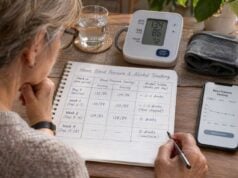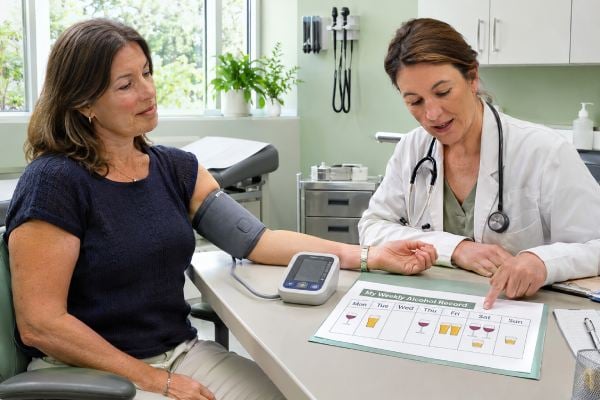
Even relatively low alcohol intake can be associated with higher blood pressure over time, and risk rises as the amount increases. There is no firmly established level of alcohol that is guaranteed to have zero effect on blood pressure. Recent cohort meta-analyses show a dose-response relationship: compared with people who do not drink, average systolic pressure rises progressively as daily alcohol intake increases. The effect is small at low intake and larger with heavier drinking, but a few millimeters of mercury can matter when combined with age, high sodium intake, excess weight, poor sleep, or genetics. For people who already have hypertension, reducing alcohol is a standard lifestyle strategy, with the greatest benefit generally seen in those drinking more than two standard drinks per day. A “standard drink” is smaller than many real-world pours, so estimating intake accurately is essential. If you have high blood pressure, the safest interpretation is not to hunt for a protective dose, but to understand your actual intake, keep it low or avoid it, and judge the impact using reliable home or ambulatory readings.
Table of Contents
- The Dose-Response: More Alcohol, Higher Pressure
- Does One Drink a Day Raise Blood Pressure?
- Why Binge Drinking Is Different
- How to Calculate a Standard Drink
- Why the Same Amount Affects People Differently
- What to Do if You Drink and Have High Blood Pressure
- When High Blood Pressure or Drinking Needs Medical Help
The Dose-Response: More Alcohol, Higher Pressure
The overall relationship is dose-related: higher habitual alcohol intake is associated with higher blood pressure and a greater chance of developing hypertension. Recent evidence has challenged the older assumption that small amounts are neutral for blood pressure.
A 2023 meta-analysis of longitudinal cohort studies found that systolic blood pressure increased progressively with baseline alcohol intake. Compared with no alcohol, about 12 grams per day was associated with an average systolic increase of roughly 1.25 mm Hg over follow-up, while about 48 grams per day was associated with a rise of about 4.9 mm Hg. Diastolic pressure also increased, though the relationship varied more by sex and geography.
Twelve grams of pure alcohol is close to, but a little less than, one U.S. standard drink, which contains about 14 grams. Forty-eight grams is roughly 3.5 U.S. standard drinks.
These numbers are averages, not guarantees. One person may see almost no change, while another may have a much stronger response. Still, the population pattern matters because blood pressure risk is continuous: even small sustained differences influence long-term rates of stroke and heart disease.
A 2024 meta-analysis focusing on new hypertension also found increasing risk with greater alcohol consumption. Together, these data support a simple message: there is no obvious blood-pressure benefit to drinking more.
Does One Drink a Day Raise Blood Pressure?
One daily drink may have a small effect on blood pressure, but “small” does not mean “none.” Observational evidence suggests that systolic pressure can rise gradually even across lower intake levels. That differs from older advice that often implied one drink per day was harmless for cardiovascular health.
There are important caveats. Cohort studies can be affected by differences between drinkers and nondrinkers, including diet, smoking, income, exercise, and prior illness. Alcohol intake is also frequently self-reported and underestimated. However, the dose-response finding is consistent with other evidence showing higher cardiovascular risk at increasing alcohol exposure.
For someone with normal blood pressure and low cardiovascular risk, the absolute effect of one drink may be modest. For someone whose pressure is already 138/86 mm Hg, even a small alcohol-related increase may be one of several contributors that pushes the average higher.
No one should start drinking to lower blood pressure or protect the heart. If you already drink, the relevant question is whether the enjoyment or social value is worth the health tradeoff for you. From a blood pressure perspective, less alcohol is generally preferable.
If your goal is to understand a personal effect, a period of lower intake or abstinence with systematic home monitoring is more informative than relying on a population average.
Why Binge Drinking Is Different
Binge drinking concentrates a large alcohol dose into a short period. In the United States, binge drinking is commonly defined as a pattern that raises blood alcohol concentration to 0.08%, often around five drinks for men or four for women within about two hours, though body size and other factors change the result.
The cardiovascular effects can include short-term blood pressure swings, faster heart rate, poor sleep, dehydration, and increased arrhythmia risk. A person who drinks only on weekends may therefore have substantial cardiovascular exposure even if the weekly average seems moderate.
Binge drinking also tends to travel with salty food, smoking, missed medications, and inadequate sleep. Those factors can compound the blood pressure effect.
For people with AFib, the problem is even clearer because alcohol can acutely trigger episodes. Alcohol is among the best-supported lifestyle triggers for AFib.
If you are reducing alcohol for blood pressure, focus on eliminating binges first. Cutting a Saturday night from six drinks to two may matter more than removing a single drink from an otherwise low-intake week.
How to Calculate a Standard Drink
A standard drink is a fixed amount of pure alcohol, not a glass, can, or cocktail. In the United States, it is about 14 grams of alcohol.
Common equivalents are 12 ounces of 5% beer, 5 ounces of 12% wine, or 1.5 ounces of 40% distilled spirits. But many modern drinks exceed those assumptions.
A useful approximation is:
standard drinks = beverage ounces × ABV as a decimal ÷ 0.6
A 16-ounce beer at 8% ABV contains roughly 2.1 standard drinks. A 9-ounce glass of 14% wine contains about 2.1 standard drinks. A cocktail with 3 ounces of 40% spirits contains about two standard drinks before considering any additional liqueurs.
This is why “I only have two drinks” can mean very different alcohol exposure.
Tracking for one week can reveal your true baseline. Include tasting pours, refills, and mixed drinks. Once you know the real number, you can make a realistic reduction plan.
If you have high triglycerides as well, alcohol amount matters for more than pressure. Alcohol can raise triglycerides, particularly with heavier intake and metabolic risk factors.
Why the Same Amount Affects People Differently
Alcohol response varies because blood pressure itself is influenced by many systems. Genetics can affect alcohol metabolism and vascular response. Older adults may be more sensitive to dehydration and medication interactions. Women generally reach higher blood alcohol concentrations than men after the same amount because of differences in body composition and alcohol distribution, though individual variation is large.
Baseline blood pressure matters. Someone with hypertension may have more room for improvement when alcohol is reduced than someone whose pressure is already low. Heavy drinkers also tend to show larger blood pressure reductions after cutting back.
Other amplifiers include:
- excess body weight;
- high sodium intake;
- short sleep or sleep apnea;
- chronic stress;
- kidney disease;
- smoking;
- medications that raise blood pressure;
- inconsistent use of prescribed antihypertensive medication.
Drinking time may also matter indirectly. Alcohol close to bedtime can fragment sleep and worsen snoring or obstructive sleep apnea. That can raise nighttime and morning blood pressure.
This is one reason a 24-hour ambulatory blood pressure monitor can be useful when office readings do not tell the whole story. It captures daytime, nighttime, and morning patterns rather than one clinic moment.
What to Do if You Drink and Have High Blood Pressure
First, measure both variables accurately. Count standard drinks for at least a week and collect home blood pressure averages using a validated upper-arm cuff.
Then choose a realistic change. If you drink four drinks nightly, cutting to one or two—or stopping—may produce a noticeable effect. If you drink one drink a few times per week, the blood pressure effect may be smaller, so other lifestyle factors may deserve equal attention.
A practical four-week experiment is:
- Measure morning and evening blood pressure for seven days while keeping your usual routine.
- Reduce alcohol substantially or abstain for the next three weeks.
- Keep medication, caffeine timing, and measurement technique as consistent as possible.
- Repeat seven-day blood pressure averages near the end.
A good home blood pressure routine is essential because random checks create too much noise.
Combine alcohol reduction with proven strategies: lower sodium, eat more fruits and vegetables, exercise regularly, lose excess weight if appropriate, and treat sleep apnea. Lowering excess sodium can be especially helpful when the diet is high in restaurant or packaged foods.
If readings improve substantially, do not stop medication on your own. Your clinician may need to adjust treatment to avoid low blood pressure, especially if you make several lifestyle changes at once.
When High Blood Pressure or Drinking Needs Medical Help
Contact a clinician if home blood pressure averages remain above your treatment target despite lifestyle changes, if readings are repeatedly very high, or if you develop dizziness or fainting after cutting alcohol while taking blood pressure medication.
Seek urgent medical attention for blood pressure around 180/120 mm Hg or higher when accompanied by chest pain, severe shortness of breath, new neurologic symptoms, confusion, vision changes, or other signs of acute organ injury. A single high reading without symptoms should still be repeated after quiet rest and discussed according to your clinician’s plan.
Alcohol withdrawal can also be dangerous. If you drink heavily every day, have had withdrawal before, or need alcohol to prevent shaking or anxiety, do not suddenly stop without medical advice. Severe withdrawal can cause seizures, hallucinations, rapid heart rate, and dangerous blood pressure changes.
For most people who are not dependent, reducing alcohol is straightforward and low risk. The key is to evaluate the result using averages, not expectations. If your pressure drops, that is useful information. If it does not, you have still removed one cardiovascular risk factor and can focus on the remaining causes.
How risk changes across a typical range of intake
It is useful to think in bands rather than searching for one magic cutoff. At very low intake—an occasional drink—the blood pressure effect for an individual may be too small to detect. Around one drink per day, population studies suggest a modest upward shift in systolic pressure over time. At two to three drinks per day, the contribution becomes more clinically relevant. At four or more per day, alcohol should be considered a major reversible cause in many people with hypertension.
The relationship is not perfectly linear for every person, and diastolic pressure shows more variation than systolic pressure. But the direction is consistent enough that people with hypertension do not need to prove alcohol is “the” cause before reducing it.
A useful analogy is sodium. Not everyone has the same salt sensitivity, yet lowering excess sodium is still a standard hypertension strategy because enough people respond and the overall risk-benefit balance is favorable. Alcohol sensitivity is similarly individual.
Why older “safe limit” advice can be confusing
Traditional advice often focused on maximum daily limits rather than the possibility that lower levels still carry some risk. Those limits were designed for broad public-health communication, not to define a dose that is physiologically harmless.
Modern cardiovascular research also separates different outcomes more carefully. A drinking pattern that appears neutral for coronary disease in one observational study may still raise blood pressure, AFib risk, cancer risk, or injury risk. There is no requirement that one dose have the same effect on every health outcome.
For someone specifically trying to lower blood pressure, the most logical target is therefore below the old maximum, not right at it.
What if your blood pressure is normal now?
Normal pressure does not mean alcohol cannot matter later. Blood pressure tends to rise with age, weight gain, sleep apnea, kidney changes, and vascular stiffness. A modest alcohol-related effect that is invisible at age 30 may become relevant at age 55 when several risk factors accumulate.
If you drink regularly, include alcohol when reviewing preventable hypertension risks. You do not need to stop solely because of a single normal reading, but avoiding binges and keeping intake low reduces the chance that alcohol becomes one more pressure-raising factor over time.
Do not rely on symptoms
High blood pressure usually causes no symptoms. Headache, flushing, or feeling your pulse after drinking does not reliably tell you whether pressure is high, and feeling fine does not mean it is normal.
Measure instead. A validated upper-arm monitor and a seven-day average can reveal a change long before symptoms would. This is especially useful after a sustained alcohol reduction, because people often misjudge progress based on how they feel.
When complete abstinence makes the most sense
Abstinence is often the clearest choice when alcohol repeatedly triggers AFib, triglycerides are severely elevated, liver disease is present, pregnancy is possible, medications have dangerous interactions, or prior attempts at moderation have failed. It may also be simpler for someone whose blood pressure clearly improves without alcohol and rises again when drinking resumes.
If you do not have those issues and choose to drink, keep the amount low, avoid binges, and reassess if blood pressure trends upward. The goal is not to find the highest amount you can “get away with.” It is to reduce overall cardiovascular risk while making choices you can sustain.
How alcohol interacts with sodium, weight, and sleep
Alcohol rarely acts alone. Drinks often come with restaurant food, chips, pizza, cured meats, or other high-sodium foods that can raise pressure independently. Alcohol also adds calories and can lower dietary restraint, making gradual weight gain more likely. Even modest weight gain can increase blood pressure over time.
Sleep is another multiplier. Alcohol may shorten the time it takes to fall asleep, but it fragments the second half of the night and can worsen snoring or sleep apnea. Repeated poor sleep increases sympathetic activity and makes morning pressure harder to control. If you reduce alcohol and simultaneously sleep better, the observed pressure improvement may reflect both pathways—and that is still a useful health gain.
What a meaningful home change looks like
Look at averages, not the best reading. If your seven-day average falls from 134/84 to 128/80 mm Hg after a sustained reduction, that is more meaningful than seeing one isolated reading of 118/76. Likewise, if your average stays essentially unchanged, alcohol may not be a major driver at your current intake.
Measurement technique must stay consistent. Changing cuff position, checking immediately after exercise, or measuring at different times can create apparent changes larger than the true effect. The cleaner the comparison, the more confidently you and your clinician can decide what to do next.
The most useful conclusion is therefore personal and practical: if reducing alcohol lowers your average pressure, keep the lower-intake pattern; if it does not, you have still reduced one potential contributor and can focus on other causes. Either result is more informative than assuming an old population limit defines what is safe for you.
A sustained change matters more than a perfect short-term result. Keep the lower-alcohol routine long enough to judge the true trend, then use your clinician’s target—not a single online cutoff—to decide whether additional treatment is needed.
References
- Alcohol Intake and Risk of Hypertension: A Systematic Review and Dose-Response Meta-Analysis of Nonexperimental Cohort Studies. 2024 (Systematic Review)
- Alcohol Intake and Blood Pressure Levels: A Dose-Response Meta-Analysis of Nonexperimental Cohort Studies. 2023 (Systematic Review)
- 2024 ESC Guidelines for the management of elevated blood pressure and hypertension 2024 (Guideline)
- Association of Habitual Alcohol Intake With Risk of Cardiovascular Disease. 2022
- The effect of a reduction in alcohol consumption on blood pressure: a systematic review and meta-analysis 2017 (Systematic Review)
Disclaimer
This article is for general education and does not replace medical advice for hypertension or alcohol use. Do not abruptly stop heavy daily drinking if you may be physically dependent, and do not change prescribed blood pressure medicine without clinician guidance. Seek urgent care for severe symptoms, possible hypertensive emergency, or severe alcohol withdrawal.