
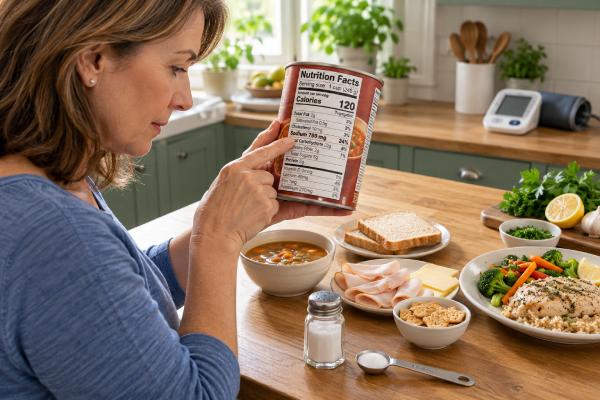
Too much sodium can raise blood pressure because it makes the body hold on to more water and changes how blood vessels and the kidneys regulate pressure. For most adults, keeping sodium below 2,300 mg a day is a practical ceiling, and moving toward about 1,500 mg a day can provide additional blood-pressure benefit for many people, especially those with hypertension. The biggest challenge is that most sodium does not come from the salt shaker. It is already built into breads, deli meats, soups, sauces, frozen meals, restaurant foods, and packaged snacks. That means a lower-sodium diet is less about eliminating every grain of salt and more about choosing foods strategically. Blood-pressure response also varies: some people are more salt-sensitive than others, but it is difficult to predict perfectly in advance. A realistic goal is to reduce sodium steadily, monitor blood pressure, and focus on the food sources that contribute the most.
Table of Contents
- How Sodium Raises Blood Pressure
- How Much Sodium Is Too Much?
- Salt Versus Sodium: The Numbers That Matter
- Where Most Dietary Sodium Comes From
- How to Cut Sodium Without Making Food Bland
- Salt Sensitivity, Potassium, and the DASH Pattern
- When Sodium Restriction Needs Medical Guidance
How Sodium Raises Blood Pressure
Sodium is an essential mineral. Your nerves and muscles need it, and it helps regulate fluid balance. The problem is not sodium itself; it is routinely eating more than the body needs.
When sodium intake rises, the kidneys must excrete the excess. Until that happens, sodium can increase water retention and expand the amount of fluid circulating through the bloodstream. More circulating volume can raise pressure inside the arteries. Sodium also affects hormones, the nervous system, kidney function, and the ability of blood vessels to relax. Over time, those effects can contribute to persistently higher blood pressure in susceptible people.
The relationship is not identical in everyone. Some adults can eat a salty meal with only a small temporary change in blood pressure, while others show a larger response. This variation is often called salt sensitivity. It tends to be more common with older age, hypertension, chronic kidney disease, diabetes, and certain genetic or physiologic patterns, although no simple home test can tell you exactly how salt-sensitive you are.
The effect can also appear quickly. Controlled feeding studies have found meaningful blood-pressure differences after only about a week of higher- versus lower-sodium eating. In one recent crossover trial of adults ages 50 to 75, a low-sodium diet lowered systolic blood pressure for most participants, including people with and without hypertension and people already taking blood-pressure medication.
That does not mean everyone should chase the lowest possible sodium number. It means sodium is one modifiable part of blood-pressure control. If your readings are high, reducing sodium can work alongside medication, exercise, weight management, sleep, moderation of alcohol, and other dietary changes rather than replacing them.
How Much Sodium Is Too Much?
For most adults, 2,300 mg of sodium per day is a useful upper limit. For many adults with elevated blood pressure or hypertension, moving toward 1,500 mg per day may produce additional benefit. Even if 1,500 mg feels unrealistic, reducing usual intake by about 1,000 mg per day is a meaningful step.
These numbers are easier to use as ranges than as pass-or-fail cutoffs:
| Daily sodium intake | How to think about it |
|---|---|
| About 1,500 mg | A lower target that may provide extra blood-pressure benefit for many adults |
| 1,500–2,300 mg | A practical lower-sodium range for many people |
| More than 2,300 mg | Above the commonly recommended adult limit |
| 3,000–4,000+ mg | Common with restaurant-heavy or highly processed diets and often a useful place to target reductions |
The important point is that benefit is dose-related. You do not need to move from 4,000 mg to 1,500 mg overnight to make progress. Recent dose-response research suggests that reducing sodium can lower blood pressure in a roughly graded way, with larger average effects among people who already have hypertension or chronic kidney disease.
A practical example: suppose your usual day contains 3,600 mg of sodium. Replacing a 1,200-mg restaurant lunch with a 500-mg lunch brings the day to about 2,900 mg. Switching a 500-mg salty snack for a 100-mg option brings it to 2,500 mg. Choosing a lower-sodium dinner sauce may take you under 2,300 mg. Those changes are often easier to maintain than trying to cook an entirely new diet overnight.
If you monitor at home, judge the effect over repeated readings rather than one measurement after one meal. A consistent home blood-pressure monitoring schedule can help you see whether a lower-sodium routine is actually changing your average numbers.
Salt Versus Sodium: The Numbers That Matter
Salt and sodium are related, but they are not the same thing. Table salt is sodium chloride, and sodium makes up about 40% of its weight. Nutrition labels list sodium, not the total weight of salt.
A useful conversion is:
- 1 gram of sodium is roughly 2.5 grams of salt.
- 2,300 mg of sodium is roughly 5.8 grams of salt, or about one teaspoon of table salt in total.
- 1,500 mg of sodium is roughly 3.8 grams of salt.
These estimates refer to the entire day’s sodium from all foods, not permission to add that much table salt after eating packaged food. A sandwich with bread, cheese, deli meat, mustard, and pickles may already contain a large share of a day’s sodium before any salt is added at the table.
Nutrition labels are more useful than trying to calculate teaspoons. Check both sodium per serving and servings per container. If a soup lists 700 mg per serving and the can contains two servings, eating the entire can provides 1,400 mg.
Label claims can also help, but they need context. In the United States, foods labeled low sodium contain no more than 140 mg per serving. “Reduced sodium” means at least 25% less sodium than the regular version, which can still be a large amount. For example, a sauce reduced from 1,000 mg to 750 mg per serving is technically reduced sodium but remains salty enough to matter.
A simple rule is to compare similar products side by side. Bread, canned beans, broth, tomato sauce, cottage cheese, tortillas, and frozen meals can vary dramatically in sodium even when calories and ingredients look similar. Learning how to read nutrition labels for heart health makes sodium reduction much easier because you can target the products that deliver the biggest savings.
Where Most Dietary Sodium Comes From
For many adults, more than 70% of sodium comes from packaged, prepared, and restaurant foods rather than salt added at the table. This explains why someone who “never uses the salt shaker” can still eat several thousand milligrams a day.
Common high-sodium categories include:
- Deli meats, bacon, sausage, hot dogs, and cured meats
- Pizza, sandwiches, burgers, and restaurant meals
- Canned soups, instant noodles, and boxed meal mixes
- Soy sauce, teriyaki sauce, bottled dressings, gravies, and seasoning packets
- Cheese and processed cheese products
- Frozen dinners and ready-made entrées
- Breads, rolls, tortillas, and crackers, especially when eaten several times a day
- Pickles, olives, brined foods, and salted snacks
Some foods are “stealth” sources because they do not taste extremely salty. Bread is a good example. One slice may not contain an alarming amount, but several slices, buns, wraps, or bagels across the day can add up. The same is true for condiments and cheese.
Restaurant meals are particularly variable. A single entrée can contain most or all of a day’s recommended sodium, and side dishes, sauces, soups, and appetizers can push the total much higher. When nutrition information is available, look at it before ordering. Request sauces and dressings on the side, choose grilled or simply prepared foods when possible, and ask for no extra salt during cooking.
At home, canned and jarred foods deserve attention. Draining and rinsing canned beans or vegetables can remove some sodium, but choosing “no salt added” versions gives you more control from the start. Broth, bouillon, seasoning blends, and bottled sauces are especially concentrated sources.
If your diet seems healthy but sodium remains high, review the foods you eat repeatedly rather than searching only for obviously salty snacks. A guide to hidden sodium sources and lower-sodium swaps can help identify the everyday items that make the biggest difference.
How to Cut Sodium Without Making Food Bland
The most sustainable approach is to reduce sodium in stages while increasing other sources of flavor. Taste preferences can adapt over time, so foods that initially seem under-salted may taste normal after several weeks.
Start with the largest sodium sources in your routine. You may get more benefit from changing one lunch and one dinner staple than from obsessing over the 40 mg in a minor ingredient.
A practical sequence is:
- Track one or two typical days. Write down sodium from labels and restaurant nutrition information. You do not need perfect accuracy; you need to find the biggest contributors.
- Choose the top two targets. If deli meat contributes 900 mg and a dinner sauce contributes 700 mg, work on those first.
- Swap, do not just subtract. Use fresh poultry instead of cured meat, no-salt-added beans instead of heavily salted versions, or a lower-sodium sauce used in a smaller amount.
- Build flavor with acid and aromatics. Lemon, lime, vinegar, garlic, ginger, onion, herbs, pepper, smoked paprika, cumin, chili, and toasted spices can make lower-sodium food satisfying.
- Taste before salting. If you do use salt, add a measured amount at the end rather than repeatedly salting during preparation and again at the table.
- Recheck after two to four weeks. Compare your new routine with the original day and look at your average blood-pressure readings.
A simple 1,000-mg reduction might look like this:
| Usual choice | Lower-sodium change | Approximate savings |
|---|---|---|
| Deli-meat sandwich | Fresh cooked chicken sandwich with lower-sodium bread and mustard used lightly | 300–500 mg |
| Regular canned soup | Lower-sodium soup or homemade leftovers | 300–600 mg |
| Large serving of bottled sauce | Half the amount plus citrus, herbs, or spices | 200–400 mg |
Do not assume “healthy,” “organic,” “plant-based,” or “high protein” means low sodium. Many meat alternatives, protein snacks, vegetable soups, and prepared grain bowls contain substantial sodium. The label still matters.
Salt Sensitivity, Potassium, and the DASH Pattern
Blood pressure usually responds best when sodium reduction is part of a broader eating pattern rather than a single isolated rule. The DASH eating pattern emphasizes vegetables, fruit, beans, whole grains, nuts, seeds, low-fat dairy, fish, and other minimally processed foods while limiting highly processed, salty foods. It naturally tends to provide more potassium, magnesium, fiber, and other nutrients linked with healthier blood pressure.
Potassium matters because it helps the body handle sodium and supports normal blood-vessel function. Many adults can increase potassium safely through foods such as beans, lentils, potatoes, tomatoes, leafy greens, yogurt, fruit, and fish. A DASH-style plan for high blood pressure combines lower sodium with this broader nutrient pattern instead of focusing only on what to remove.
However, more potassium is not safe for everyone. People with impaired kidney function or a history of high blood potassium may need a different plan. Some medications can also raise potassium. This is especially important before using potassium chloride salt substitutes, which can provide a concentrated potassium dose even though they reduce sodium.
Salt sensitivity can make sodium reduction especially useful, but you do not need a formal salt-sensitivity diagnosis to act. A practical approach is to lower sodium while keeping other major variables reasonably stable, then compare average blood-pressure readings over several weeks. If your pressure falls, the change is useful regardless of the label.
Remember that sodium is not the only dietary factor. High alcohol intake, low potassium intake, excess calories, and a diet dominated by ultraprocessed foods can all work against blood-pressure goals. Conversely, a lower-sodium diet that is rich in whole foods can improve several cardiovascular risk factors at the same time.
When Sodium Restriction Needs Medical Guidance
Most adults can safely reduce excessive sodium by eating fewer highly processed foods and choosing lower-sodium versions. Some situations, however, call for individualized guidance rather than a generic target.
Talk with a clinician or dietitian if you have chronic kidney disease, heart failure, liver disease with fluid retention, adrenal or electrolyte disorders, recurrent low sodium levels, or a medically prescribed fluid or sodium plan. The right intake may depend on kidney function, medications, blood tests, symptoms, and how much fluid you retain.
People who lose unusually large amounts of sodium through prolonged heavy sweating may also need different advice. Endurance athletes, outdoor workers in extreme heat, and people with certain medical conditions can lose far more sodium than a typical sedentary adult. A blanket 1,500-mg target may not fit those circumstances.
Do not stop blood-pressure medication because your readings improve after reducing sodium. Dietary changes can make medication work more effectively, which is a reason to review readings with your clinician, not to change treatment on your own. If your home readings become unexpectedly low and you develop dizziness, fainting, weakness, or falls, seek medical advice.
Also remember that a very salty meal can cause a temporary rise in blood pressure or fluid retention, but one reading does not diagnose a problem. Sit quietly, use proper technique, and repeat the measurement. Seek urgent care for very high blood pressure accompanied by symptoms such as chest pain, severe shortness of breath, new neurologic symptoms, confusion, or other signs of a medical emergency.
For most people, the best long-term strategy is straightforward: keep average sodium under 2,300 mg, move lower when appropriate, make changes where sodium is concentrated, and judge success by a pattern of blood-pressure readings rather than perfection on any single day.
References
- 2025 AHA/ACC/AANP/AAPA/ABC/ACCP/ACPM/AGS/AMA/ASPC/NMA/PCNA/SGIM Guideline for the Prevention, Detection, Evaluation and Management of High Blood Pressure in Adults: A Report of the American College of Cardiology/American Heart Association Joint Committee on Clinical Practice Guidelines 2025 (Guideline)
- How Much Sodium Should I Eat Per Day? 2025 (Official Guidance)
- Dietary sodium reduction and blood pressure: a dose-response meta-analysis in hypertensive and chronic kidney disease patients 2025 (Meta-Analysis)
- Self-Performed Dietary Sodium Reduction and Blood Pressure in Patients With Essential Hypertension: A Randomized Clinical Trial 2024 (RCT)
- Effect of Dietary Sodium on Blood Pressure: A Crossover Trial 2023 (Clinical Trial)
- Sodium Intake and Risk of Hypertension: A Systematic Review and Dose-Response Meta-analysis of Observational Cohort Studies. 2022 (Systematic Review)
Disclaimer
This article provides general education and is not a substitute for individualized medical advice. Sodium needs can differ with kidney disease, heart failure, heavy sweating, electrolyte disorders, and certain medications. If you have a medical condition that affects fluid or mineral balance, ask your clinician or dietitian what sodium target is appropriate before making a major dietary change.





