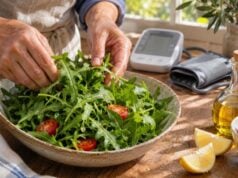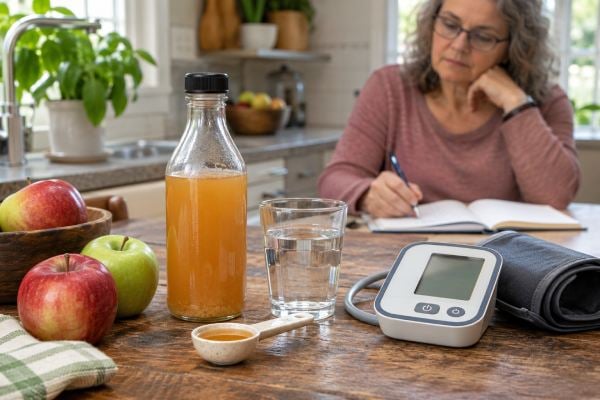
Apple cider vinegar may lower blood pressure slightly in some people, but the evidence is not strong enough to use it as a treatment for hypertension. Recent reviews of vinegar trials suggest a small average reduction in systolic blood pressure, while effects on diastolic pressure are less consistent. The research is limited by small studies, mixed vinegar types, short follow-up, and populations that often have diabetes or other metabolic conditions. Apple cider vinegar has also been studied more for blood sugar and cholesterol than for blood pressure itself.
If you enjoy vinegar as part of meals, it can fit into a heart-healthy diet. But drinking concentrated vinegar, taking large doses, or replacing prescribed blood pressure treatment with apple cider vinegar can cause harm. Acid can irritate the mouth and esophagus, damage tooth enamel, worsen reflux, and interact with conditions or medications that affect potassium or blood sugar. The safest approach is to treat vinegar as food, not as a blood pressure drug.
Table of Contents
- What the Evidence Shows
- How Vinegar Might Affect Blood Pressure
- How Much Apple Cider Vinegar Is Studied?
- Risks and Side Effects
- Who Should Be Cautious
- Better-Proven Ways to Lower Blood Pressure
- How to Use Apple Cider Vinegar Safely
What the Evidence Shows
The best summary is that vinegar may have a modest blood pressure effect, but confidence in the exact size of that effect is limited.
A 2022 dose-response meta-analysis of randomized trials reported that each 30 mL per day increment of vinegar was associated with an average reduction of about 3.3 mm Hg in systolic pressure and about 3.3 mm Hg in diastolic pressure. The authors rated the certainty of evidence as low. Importantly, the analysis included vinegar broadly, not only apple cider vinegar, and the underlying trials varied substantially.
A 2026 umbrella review reassessed meta-analyses of randomized vinegar trials and found an average systolic blood pressure reduction of about 2.9 mm Hg, with no significant overall reduction in diastolic blood pressure. That review rated the certainty for the systolic result higher than earlier work, but it still highlighted variability among outcomes and studies.
Those findings are interesting, not definitive. A reduction of 2 to 3 mm Hg in systolic pressure can matter at a population level if it is real and sustained, but it is much smaller than the improvement often achieved with comprehensive lifestyle treatment or effective antihypertensive medication.
Most importantly, there is no strong evidence that apple cider vinegar prevents heart attacks, strokes, heart failure, or kidney disease. Blood pressure treatment is judged by outcomes as well as by a short-term change in the cuff reading.
How Vinegar Might Affect Blood Pressure
The active component in vinegar is acetic acid. Researchers have proposed several mechanisms for possible cardiometabolic effects, but most remain incomplete or better supported in laboratory and animal studies than in humans.
Possible pathways include:
- Improved insulin sensitivity after meals.
- Slower gastric emptying and reduced post-meal glucose spikes.
- Effects on liver lipid metabolism.
- Changes in body weight when vinegar modestly reduces appetite or energy intake.
- Potential effects on the renin-angiotensin system or vascular function suggested by preclinical research.
In practice, some of the observed blood pressure effect may be indirect. If a person uses vinegar-based dressings instead of salty bottled sauces, loses a small amount of weight, or improves blood sugar control, blood pressure can improve for reasons that are not specific to acetic acid.
This is why it is difficult to interpret “natural remedy” trials without looking at the whole diet. A teaspoon of vinegar does not cancel the blood-pressure effect of a high-sodium diet, poor sleep, heavy alcohol use, or untreated sleep apnea.
How Much Apple Cider Vinegar Is Studied?
Trials have used a range of vinegar doses, often around 15 to 30 mL per day. Thirty milliliters equals about 2 tablespoons. Some studies divide the amount across meals.
That does not mean 30 mL is a recommended blood pressure dose. The research does not establish an optimal dose, and taking more increases acid exposure without proven additional benefit.
If you choose to use apple cider vinegar as food, smaller amounts are reasonable. For example, 1 tablespoon in a salad dressing or diluted into a large glass of water with a meal creates less direct acid exposure than swallowing it straight.
Never take undiluted vinegar as a “shot.” Concentrated acid can irritate or injure the mouth, throat, and esophagus. Products vary in acidity, and concentrated vinegar products can be much stronger than ordinary culinary vinegar.
Apple cider vinegar gummies and tablets do not necessarily solve the problem. Supplements can vary in acid content, added sugar, ingredients, and quality. Tablets have also been linked with esophageal injury in older reports. There is no evidence that a pill form is superior for blood pressure.
Risks and Side Effects
The most common problems come from acidity and from using large amounts over time.
Tooth enamel erosion
Frequent exposure to acidic liquids can soften enamel. If you drink diluted vinegar, avoid swishing it around the mouth. Using it with meals and rinsing the mouth with plain water afterward can reduce contact time. Do not brush immediately after an acidic drink because softened enamel is more vulnerable to abrasion.
Reflux and stomach symptoms
Apple cider vinegar can worsen heartburn, nausea, or upper abdominal discomfort in some people. It may also delay stomach emptying, which can be a problem for people with gastroparesis.
Throat and esophageal injury
Concentrated vinegar can cause corrosive injury. This is uncommon with ordinary culinary use but becomes more relevant with accidental ingestion of highly concentrated acetic acid, repeated undiluted “shots,” or tablets that lodge in the esophagus.
Low potassium risk
Large chronic vinegar intake has been associated with low potassium in case reports. This is particularly relevant for people using medications that already affect potassium balance or for those with kidney or endocrine disorders.
Blood sugar effects
Vinegar can modestly lower post-meal glucose in some people. That may sound beneficial, but someone taking insulin or glucose-lowering medication could theoretically need closer monitoring if they begin using substantial amounts regularly.
Who Should Be Cautious
Apple cider vinegar as a normal recipe ingredient is usually low risk for most adults. Regular medicinal-style use deserves more caution.
Talk with a healthcare professional before using large daily amounts if you have:
- Chronic kidney disease.
- Low potassium or a history of potassium abnormalities.
- Diabetes treated with insulin or medications that can cause hypoglycemia.
- Gastroparesis.
- Severe reflux, swallowing problems, or previous esophageal injury.
- An eating disorder or a pattern of using acidic products to suppress appetite.
- Multiple medications that affect blood pressure, fluid balance, or potassium.
People taking diuretics, insulin, or other medications that influence potassium or glucose should be especially careful. The concern is not that a tablespoon of vinaigrette is dangerous; it is that repeated high-dose use can behave more like a supplement than a food.
Pregnant people should also avoid using unpasteurized vinegar products if food-safety guidance recommends pasteurized products in their setting.
Better-Proven Ways to Lower Blood Pressure
If your goal is lower blood pressure, start with interventions that have stronger evidence.
Reduce sodium
Many people get most dietary sodium from packaged and restaurant foods rather than the salt shaker. Reading labels, cooking more at home, and choosing lower-sodium soups, sauces, breads, and prepared meals can meaningfully reduce intake.
A practical list of high-sodium foods to limit for blood pressure can help identify the biggest sources.
Follow a DASH- or Mediterranean-style diet
DASH emphasizes vegetables, fruit, whole grains, legumes, nuts, and low-fat dairy while limiting sodium and heavily processed foods. It has much stronger evidence for blood pressure lowering than vinegar.
Exercise regularly
Aerobic exercise and resistance training can both lower resting blood pressure. A realistic plan is more valuable than occasional intense workouts. If you are inactive or have cardiovascular symptoms, increase activity gradually.
Lose excess weight if appropriate
Blood pressure often improves with weight loss, particularly in people with abdominal obesity. Even modest loss can help.
Limit alcohol
Heavier alcohol intake raises blood pressure. Reducing alcohol can lower pressure within days to weeks, especially in people who consume more than about two drinks per day. See how alcohol affects blood pressure for the dose-response pattern.
Take prescribed medication consistently
Lifestyle and medication are complementary. If your clinician has prescribed a blood pressure medicine, do not reduce or stop it because a home remedy appears to work. Untreated hypertension can damage the heart, brain, kidneys, and blood vessels for years without causing symptoms.
How to Use Apple Cider Vinegar Safely
If you like apple cider vinegar, the safest role is culinary. Use it to make food more flavorful while supporting an overall heart-healthy pattern.
Simple uses include:
- Mix with olive oil, herbs, and mustard for salad dressing.
- Add a small amount to bean or lentil salads.
- Use in marinades.
- Stir a little into soups or sauces for acidity.
- Dilute a small amount into water if you prefer drinking it, rather than taking it straight.
Do not assume that “more” produces more benefit. There is no established therapeutic dose for hypertension, and high intake increases risk.
If you want to test whether it affects your blood pressure, measure blood pressure properly before and during use rather than relying on how you feel. Hypertension is often symptomless. Use a validated upper-arm cuff, sit quietly for five minutes, and average multiple readings over several days. A consistent home blood pressure routine is far more informative than one reading after drinking vinegar.
If your average home pressure remains elevated, discuss it with a clinician. Apple cider vinegar is at most a small adjunct. It should never delay evaluation of persistent hypertension or replace therapies proven to prevent cardiovascular events.
Why the research is easy to overstate
Vinegar studies are often small and short, which makes dramatic headlines easier to produce than firm clinical conclusions. A trial lasting eight or twelve weeks can detect a change in blood pressure or fasting glucose, but it cannot show whether people have fewer strokes or heart attacks years later. Small samples are also more vulnerable to chance findings and may not represent older adults, people with kidney disease, or those taking several medications.
Another problem is that “vinegar” is not one standardized intervention. Studies may use apple cider vinegar, date vinegar, or other products with different concentrations of acetic acid and plant compounds. Doses, timing, background diets, and participant health also vary. Pooling these trials gives a useful estimate, but the result should not be treated like the effect of a precisely dosed medication.
The placebo problem is relevant too. Vinegar has a strong taste, so participants often know whether they are receiving the active product. That can change food choices or expectations during the study. Some apparent benefit may therefore come from behavior surrounding the intervention rather than acetic acid alone.
How the possible benefit compares with proven strategies
A systolic reduction of roughly 2 to 3 mm Hg, if sustained, is not meaningless. But it is modest. Comprehensive lifestyle programs can produce larger changes, especially in people with high sodium intake, low activity, excess weight, or heavy alcohol use. Prescription antihypertensive medicines can often lower pressure by much more and have direct evidence for preventing cardiovascular and kidney complications.
This comparison helps set priorities. If you like vinegar, using it in meals is reasonable. If your average home blood pressure is 150/95 mm Hg, however, focusing on vinegar while postponing medical care is a poor trade. The higher the baseline pressure and overall risk, the more important proven therapy becomes.
What about “the mother,” raw vinegar, or organic products?
Unfiltered apple cider vinegar may contain a cloudy mixture of bacteria, yeast, and fermentation by-products often marketed as “the mother.” There is no good evidence that this makes it more effective for lowering blood pressure. Organic certification likewise relates to production standards, not proven cardiovascular potency.
Choose a food product based on taste, safety, and how you plan to use it. Claims that one brand “detoxifies arteries” or replaces medication are not supported by clinical evidence.
A simple self-test without fooling yourself
If you still want to see whether regular culinary use affects your pressure, keep the experiment simple. Measure home blood pressure for a week before changing anything major. Then use a modest, diluted or food-based amount consistently while keeping sodium, exercise, alcohol, and medication reasonably stable. Repeat the same home measurement schedule after several weeks.
If the average changes only 1 or 2 mm Hg, that may be normal variation. A larger consistent reduction is more interesting, but it still does not prove vinegar alone caused it. Most importantly, do not reduce prescribed medication based on a short self-experiment without discussing the readings with your clinician.
How to read supplement claims critically
Claims such as “supports healthy circulation,” “balances blood pressure,” or “detoxifies the arteries” can sound medical without proving a clinical benefit. A useful test is to ask what outcome was actually measured. Was it a blood pressure reading in a small short-term trial, or was it a reduction in strokes and heart attacks? Those are very different levels of evidence.
Also look for dose realism. A product may cite research using liquid vinegar but sell gummies with a different amount of acetic acid and added sugar. That is not the same intervention. “Clinically studied ingredients” can also mean that one component was studied somewhere, not that the exact product on the shelf was tested.
For blood pressure, the most convincing evidence still comes from interventions that repeatedly show benefit across large populations and, for medications, reduce cardiovascular events. Vinegar does not meet that standard.
What if you already take blood pressure medicine?
Using a small culinary amount of apple cider vinegar usually does not require changing medication. The concern arises when someone begins taking large daily doses and sees lower readings. Do not reduce a prescribed drug on your own. Blood pressure varies naturally, and stopping medication can allow it to rise again without obvious symptoms.
Instead, keep a home log and share the averages with your clinician. If blood pressure is consistently lower, the medication plan can be adjusted safely if needed. This is particularly important for older adults or people who are prone to dizziness, falls, kidney problems, or electrolyte disturbances.
When to skip the experiment entirely
If vinegar worsens reflux, causes nausea, irritates your mouth or throat, or makes you dread meals, there is no compelling reason to force it. The possible blood pressure effect is too small and uncertain to justify discomfort. The same applies if you have gastroparesis, recurrent low potassium, significant kidney disease, or medication-related concerns.
Heart-healthy eating has many routes. You can lower sodium, eat more vegetables and legumes, exercise, lose excess weight if appropriate, sleep better, and take effective medication without ever drinking apple cider vinegar. It is optional, not essential.
References
- Vinegar Consumption and Health: An Umbrella Review of Meta-Analyses of Randomized Controlled Trials 2026 (Umbrella Review)
- Role of vinegar in cardiovascular health: A narrative review 2025 (Review)
- The Effects of Apple Cider Vinegar on Cardiometabolic Risk Factors: A Systematic Review and Meta-analysis of Clinical Trials 2023 (Systematic Review)
- Dose-dependent effect of vinegar on blood pressure: A GRADE-assessed systematic review and meta-analysis of randomized controlled trials 2022 (Systematic Review)
- Medical nutrition therapy provided by a dietitian improves outcomes in adults with prehypertension or hypertension: a systematic review and meta-analysis 2024 (Systematic Review)
- Accidental ingestion of concentrated white vinegar in Hatay children in Turkey 2023
Disclaimer
This article is for general education and is not a substitute for diagnosis or treatment of high blood pressure. Do not stop prescribed medication or use concentrated vinegar as a treatment without medical guidance. Seek prompt care for very high blood pressure accompanied by chest pain, severe shortness of breath, neurologic symptoms, or other emergency signs.