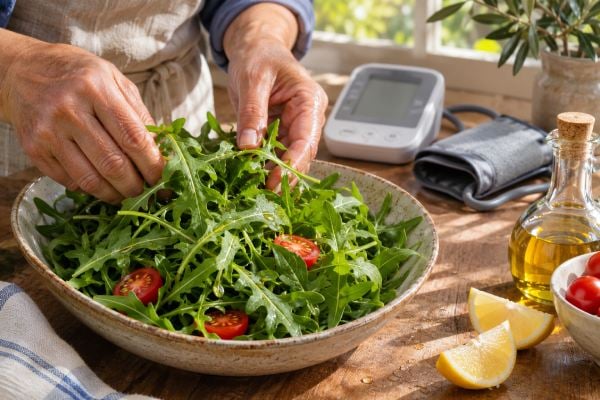
Arugula—also called rocket—is one of the most nitrate-rich leafy greens. Dietary nitrate can be converted in the body to nitric oxide, a signaling molecule that helps blood vessels relax and may support lower blood pressure. That makes arugula a useful food for a heart-healthy diet, but it is not a standardized blood-pressure treatment. Nitrate levels vary widely between batches, and trials of nitrate-rich vegetables have produced mixed results. Some studies show lower blood pressure after high-nitrate foods, while a larger five-week trial of leafy greens in adults with elevated blood pressure found no significant change in 24-hour systolic pressure. The better reason to eat arugula is that it combines nitrate with potassium, folate, vitamin K, carotenoids, and very few calories. A large handful or two can easily fit into salads, sandwiches, pasta, eggs, and grain bowls. If you take warfarin, the key is not to avoid arugula but to keep vitamin K intake reasonably consistent.
Table of Contents
- Why arugula is high in nitrate
- How nitrate becomes nitric oxide
- What the blood-pressure evidence shows
- How much arugula to eat
- Easy ways to use arugula
- Safety, warfarin, and kidney disease
- How to make nitrate-rich foods count
Why arugula is high in nitrate
Plants take up nitrate from soil as a source of nitrogen. Leafy greens tend to accumulate more nitrate than many fruits, grains, or animal foods, and arugula is often near the high end among vegetables.
The exact nitrate content is highly variable. Growing conditions, fertilizer use, season, light exposure, storage, and variety can all change the amount. That means a cup of arugula from one farm may not deliver the same nitrate dose as a cup from another.
This variability matters if someone is trying to copy a clinical trial dose. It is one reason food-based nitrate research is harder to standardize than studies using measured beetroot juice concentrates or nitrate salts.
Still, arugula has advantages beyond nitrate. It is low in calories and supplies vitamin K, folate, calcium, potassium, carotenoids, and glucosinolate-related compounds. Its peppery flavor also makes it easy to add intensity to a meal without relying on large amounts of salt.
Arugula should therefore be viewed as a nutrient-dense leafy vegetable first and a nitrate source second. That framing prevents the common mistake of treating one vegetable as a blood-pressure supplement.
How nitrate becomes nitric oxide
After you eat arugula, nitrate is absorbed in the small intestine. A portion circulates back into saliva, where bacteria on the tongue convert it to nitrite. After swallowing, nitrite can be reduced further to nitric oxide.
Nitric oxide relaxes smooth muscle in blood-vessel walls and helps regulate vascular tone. It also supports endothelial function—the ability of the inner lining of blood vessels to respond appropriately to changes in blood flow.
This pathway is useful because it does not depend entirely on nitric oxide synthase, the enzyme system the body also uses to make nitric oxide. With aging and cardiometabolic disease, nitric oxide availability can decline, which has increased interest in dietary nitrate as a supportive pathway.
The oral microbiome plays a real role. Strong antibacterial mouthwash can reduce nitrate-to-nitrite conversion. This does not mean dental hygiene is harmful or that prescribed antiseptic rinses should be stopped. It simply shows that nitrate physiology depends partly on oral bacteria.
Arugula is not unique. Spinach, lettuce, celery, and beetroot can also be nitrate-rich. leafy greens for blood pressure can help you vary sources instead of relying on one food.
What the blood-pressure evidence shows
Dietary nitrate can lower blood pressure in some experimental settings, but the effect of whole leafy vegetables is inconsistent.
One small crossover study compared equal nitrate doses from sodium nitrate, beetroot juice, rocket (arugula) beverage, and spinach. All sources raised circulating nitrate and nitrite, and nitrate-rich vegetables produced short-term blood-pressure changes in healthy adults. That supports the basic biological plausibility of arugula as a nitrate source.
However, a larger randomized trial in 243 adults with systolic blood pressure between 130 and 159 mmHg gave participants either low-nitrate vegetables, nitrate pills, or leafy green vegetables providing about 300 mg nitrate daily for five weeks. There was no significant difference in 24-hour systolic blood pressure between groups.
Recent systematic reviews of vegetable nitrate intake suggest potential associations with lower cardiovascular risk and improved vascular function, but much of that evidence is observational. Observational studies can show patterns, not prove that nitrate itself caused the outcome.
This mixed evidence is important. Arugula can support a diet associated with better cardiovascular health, but no responsible recommendation should promise that a particular salad will lower blood pressure by a specific number of mmHg.
If your blood pressure is elevated, proven strategies include sodium reduction, regular exercise, weight management when appropriate, adequate potassium from foods if kidney function permits, good sleep, limited alcohol, and medication when needed. The DASH diet combines many of these food-based features.
How much arugula to eat
There is no established therapeutic serving of arugula for hypertension. A practical food serving is 1–2 loose cups of raw arugula, which can be used as the base of a salad or mixed with other greens.
Because nitrate concentration varies, measuring arugula by cups cannot guarantee a research-level nitrate dose. That is not a problem if your goal is a healthy diet rather than a supplement-like intervention.
A useful target is to include leafy greens most days and rotate among arugula, spinach, romaine, kale, chard, bok choy, and other vegetables. Rotation improves nutrient variety and reduces dependence on one food.
Arugula is light, so a “cup” does not contain much mass. If you want it to make a meaningful contribution to a meal, use a generous handful rather than a decorative garnish.
Cooking changes texture and can affect nitrate content depending on method. Boiling may leach some nitrate into cooking water. Sautéing or adding arugula at the end of cooking preserves more of the leaf itself. You do not need to keep it raw for heart-health value.
Easy ways to use arugula
Build a mixed-green salad. Combine arugula with romaine or spinach if the peppery flavor is too strong. Add tomatoes, cucumber, beans, nuts, and an olive-oil vinaigrette.
Add it after cooking. Toss a handful into warm pasta, lentils, barley, or quinoa just before serving. The residual heat wilts the leaves without turning them mushy.
Use it on sandwiches. Arugula adds flavor and crunch to a whole-grain sandwich with hummus, grilled vegetables, chicken, or fish. Its pepperiness can reduce the need for salty cured meats or cheese.
Top eggs or omelets. Fold arugula into eggs at the end of cooking with tomatoes and herbs.
Make a pesto. Blend arugula with walnuts or almonds, olive oil, lemon, garlic, and a modest amount of Parmesan. This gives you unsaturated fat plus leafy greens in one sauce.
Add it to pizza after baking. A pile of arugula with lemon can replace some processed-meat toppings and adds fresh volume.
Blend a small amount into a smoothie. This works if you enjoy the flavor, but it is not necessary. Whole salads and cooked meals are often more satisfying and make it easier to see how much you are eating.
A heart-healthy meal matters more than the arugula alone. Arugula on a pizza loaded with processed meat and sodium does not neutralize the rest of the meal.
Safety, warfarin, and kidney disease
Arugula is safe for most people in normal food portions.
Warfarin: Arugula contains vitamin K, which affects warfarin dosing. The usual advice is not to eliminate vitamin K-rich greens, but to keep intake relatively consistent from week to week. Sudden large changes can alter the INR. People taking direct oral anticoagulants such as apixaban or rivaroxaban do not have the same vitamin K interaction.
Kidney disease: Arugula contains potassium. Many people with mild kidney disease do not need to avoid it, but some people with advanced disease or high potassium levels require individualized limits.
Low blood pressure: Normal food portions are unlikely to cause dangerous hypotension in most people. Someone with symptomatic low blood pressure who is also using concentrated nitrate supplements should be more cautious.
Kidney stones: Leafy greens vary in oxalate. Arugula is generally considered lower in oxalate than spinach, which can make it a useful alternative for some people prone to calcium oxalate stones, but stone-prevention advice should be individualized.
Food safety: Wash loose leaves thoroughly and keep packaged greens refrigerated. People who are pregnant, older, immunocompromised, or otherwise at higher risk from foodborne illness should follow careful produce-handling practices.
How to make nitrate-rich foods count
The strongest use of arugula is as part of a vegetable-rich pattern. If you eat arugula because of nitrate but the rest of the diet is high in sodium, refined carbohydrates, and processed meat, the overall cardiovascular effect will be limited.
Pair arugula with foods that solve multiple heart-health problems at once. A bowl with arugula, lentils, tomatoes, barley, olive oil, and a small amount of feta provides fiber, plant protein, potassium, unsaturated fat, and whole grains. A sandwich with arugula, hummus, tomato, and grilled chicken can displace processed meat and mayonnaise.
If your goal is specifically blood-pressure control, monitor the outcome that matters: your average home blood pressure. Use a validated cuff and good technique rather than guessing from how you feel. correct home blood-pressure measurement is more useful than trying to infer pressure changes from symptoms.
Arugula does not need to be medicinal to be valuable. It is a low-calorie, flavorful vegetable that makes it easier to eat more greens. Its nitrate content adds an interesting vascular mechanism, but the real advantage is how easily it fits into a heart-supportive eating pattern.
Because nitrate content varies so much, arugula is better used as part of a nitrate-rich vegetable pattern than as a dose-controlled treatment. A week that includes arugula, spinach, lettuce, celery, and beets will provide a range of nitrate exposures along with many other nutrients. That is closer to how population studies link vegetables with cardiovascular health.
The food matrix also matters. Vegetable nitrate comes packaged with vitamin C and polyphenols, which may influence nitric-oxide chemistry and reduce formation of undesirable N-nitroso compounds. This is one reason researchers distinguish nitrate from vegetables from nitrate and nitrite used in processed meats. The health effects of a nutrient depend on where it comes from and what accompanies it.
If you are interested in blood-pressure effects, the best meal context is one that also keeps sodium modest. An arugula salad with olives, cured meat, salty cheese, and a large bottled dressing can contain more sodium than expected. You can keep the flavor while reducing salt by using lemon, vinegar, herbs, toasted nuts, fruit, pepper, and a small amount of strong cheese rather than a large amount.
Arugula also works well as a “volume food.” Two cups add a large pile of greens for very few calories. That can make sandwiches, bowls, and pasta dishes feel more substantial without relying on refined starch or high-fat toppings. For weight management, that structural change may matter more than the nitrate itself.
Storage affects quality. Keep arugula refrigerated and dry. Excess moisture speeds spoilage, so a paper towel in the container can help absorb condensation. Discard slimy or foul-smelling leaves. If a bag is near its use-by date, cook the greens into eggs, soup, or pasta rather than letting them go to waste.
If the peppery taste is too strong, mix arugula with milder greens or briefly wilt it. You do not need to force a large raw salad. Nitrate remains present after gentle cooking, though boiling can move some into the cooking water.
People taking warfarin often receive overly restrictive advice about leafy greens. The clinically important issue is consistency. If you normally eat greens three times per week, keep that pattern relatively stable and have INR checked as directed. Suddenly going from almost no greens to very large daily salads can alter anticoagulation.
For people with hypertension, arugula should not distract from measuring sodium, taking medication, and checking home pressure correctly. A person can eat a very high-nitrate diet and still have uncontrolled blood pressure because of genetics, kidney disease, sleep apnea, medication effects, or high sodium intake.
That is also why symptoms are a poor guide. High blood pressure is often silent. You cannot tell whether arugula “worked” by whether you feel calmer or less flushed. Use averaged readings from a validated cuff.
Finally, avoid turning nitrate into a reason to buy expensive powders. Whole vegetables provide a much broader nutritional package and are easier to integrate into meals. Supplements may have a role in research or sports settings, but for routine heart health, eating more vegetables is the more durable strategy.
Arugula can also make heart-healthy meals easier for people who dislike bland food. Its natural peppery bite adds intensity without sodium, which is useful when adapting to a lower-salt diet. Try it with citrus, balsamic vinegar, garlic, toasted seeds, roasted peppers, or fruit such as pear or orange. Strong contrasting flavors reduce the need for salty dressings.
When comparing leafy greens, do not rank them only by nitrate. Kale and collards may provide less nitrate than arugula but more of other nutrients; spinach is nutrient-dense but higher in oxalate; romaine is mild and easy to eat in larger quantities. Variety is better than trying to identify a single “best” green.
If you want to increase vegetable nitrate without juice, include one generous serving of leafy greens plus another nitrate-rich vegetable during the day. That might mean arugula at lunch and roasted beets at dinner, or lettuce at lunch and spinach in an omelet. This is a food-pattern approach, not a prescribed dose.
People with reflux sometimes find raw peppery greens irritating. Wilting arugula into warm food can make it easier to tolerate. People with chewing or swallowing difficulty can chop it finely or use cooked greens instead. Heart-health advice should be adapted to what a person can safely and comfortably eat.
Arugula is also highly perishable, so buying a giant box that spoils is not necessarily economical. Smaller packages, frozen alternatives such as spinach, or hardy greens such as cabbage can help maintain vegetable intake when fresh arugula is expensive or unavailable. The cardiovascular goal is consistent vegetable intake, not loyalty to one ingredient.
Another benefit of rotating greens is food safety and practicality. Prewashed salad mixes are convenient, but they still need refrigeration and should be used promptly after opening. When fresh greens are not practical, frozen spinach, cabbage, broccoli, and other vegetables still support a heart-healthy diet even if their nitrate content differs. The goal is a pattern you can maintain through different seasons, budgets, and schedules rather than a short-lived “nitrate challenge.”
In other words, arugula earns its place because it is a versatile vegetable with a plausible vascular benefit, not because it delivers a guaranteed drug-like effect. If it helps you eat more greens and use less salt, that alone is a practical cardiovascular win. Regular use matters more than a one-time serving, and the best approach is the one that fits your meals without creating unnecessary cost or complexity.
References
- Associations between Vegetable Nitrate Intake and Cardiovascular Disease Risk and Mortality: A Systematic Review 2024 (Systematic Review)
- The Cardioprotective Role of Nitrate-Rich Vegetables 2024 (Review)
- Dietary Nitrate from Plant Foods: A Conditionally Essential Nutrient for Cardiovascular Health. 2023 (Review)
- A randomized clinical trial of the effects of leafy green vegetables and inorganic nitrate on blood pressure 2020 (RCT)
- 2021 Dietary Guidance to Improve Cardiovascular Health: A Scientific Statement From the American Heart Association 2021 (Scientific Statement)
Disclaimer
This article provides general nutrition information and does not replace treatment for hypertension. If you take warfarin, have advanced kidney disease, recurrent kidney stones, or symptomatic low blood pressure, ask your clinician how leafy greens and nitrate-rich foods fit your individual plan.