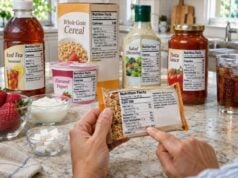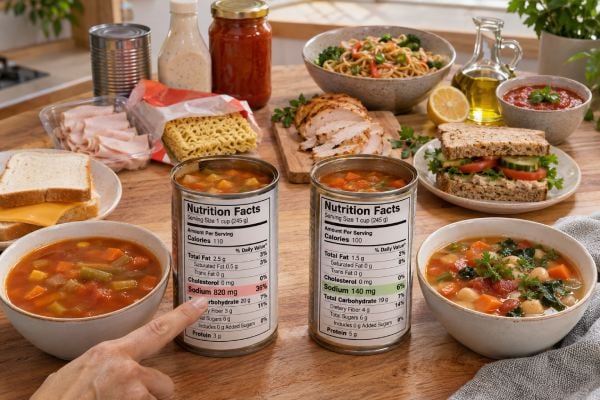
Most dietary sodium does not come from the salt shaker. It is already built into packaged foods, restaurant meals, breads, sauces, deli meats, cheese, soups, frozen meals, and other everyday foods before you take the first bite. That is why someone can “never add salt” and still eat far more sodium than intended. In the United States, roughly 70% of sodium intake comes from packaged, prepared, and restaurant foods. The practical solution is not to eliminate every salty-tasting food or cook bland meals. It is to find the foods you eat often that contribute the most sodium, compare labels within the same category, and make a few high-impact swaps. Cutting sodium can lower blood pressure, with larger effects often seen in people who already have hypertension. A useful target for many adults is to stay at or below 2,300 mg of sodium per day, while individual goals may be lower based on health needs and clinical advice.
Table of Contents
- Why Hidden Sodium Adds Up So Fast
- The Biggest Hidden Sodium Sources
- How to Read Sodium on Food Labels
- Easy Lower-Sodium Swaps
- Restaurant and Takeout Sodium
- How to Lower Sodium Without Making Food Bland
- A Simple Plan to Find Your Own Hidden Sodium
Why Hidden Sodium Adds Up So Fast
Hidden sodium adds up because it is used for much more than making food taste salty. Manufacturers and restaurants use sodium-containing ingredients for flavor, preservation, texture, moisture control, leavening, curing, and food safety. A food can therefore contain substantial sodium even when it does not taste intensely salty.
Sodium and salt are related but not identical. Table salt is sodium chloride and is about 40% sodium by weight. Nutrition labels list sodium, not grams of salt. As a rough conversion, 2,300 mg of sodium is about 5.8 grams of salt, close to one teaspoon of table salt from all sources combined.
Blood pressure tends to rise as sodium intake rises. Sodium affects fluid balance and, in sodium-sensitive people, can increase the pressure inside blood vessels. Controlled trials show that reducing sodium lowers blood pressure across a range of starting intakes, with a stronger average response among people with hypertension.
The challenge is that “salty taste” is a poor tracking tool. A slice of bread may not taste salty, but several slices across breakfast and lunch can make a meaningful contribution. The same is true for tortillas, sandwich meats, condiments, cheese, and packaged snacks. Each item may look manageable by itself, yet the meal total can climb quickly.
That is why sodium and blood pressure is best managed by looking at the whole day, not just avoiding the salt shaker. The highest-impact changes usually come from foods you eat frequently rather than rare treats.
The Biggest Hidden Sodium Sources
The largest source depends on your eating pattern, but several categories repeatedly contribute large amounts because they are either sodium-dense, eaten often, or both.
| Food category | Why sodium adds up | Lower-sodium direction |
|---|---|---|
| Bread, rolls, bagels, tortillas | Moderate sodium per serving but eaten often | Compare brands and choose lower-sodium versions |
| Deli meats, bacon, sausage, cured meats | Salt is used for curing, preservation, and flavor | Use fresh poultry, fish, beans, eggs, or lower-sodium deli options |
| Pizza | Crust, cheese, sauce, and processed toppings all contribute | Choose vegetable toppings, lighter cheese, less processed meat, smaller portions |
| Soups and broths | Large serving sizes can concentrate sodium | Buy reduced-sodium versions or dilute with unsalted ingredients |
| Sauces and condiments | Small amounts can be very sodium-dense | Measure portions; use acid, herbs, and lower-sodium sauces |
| Frozen meals and boxed mixes | Seasoning, sauces, and preservation contribute | Compare labels and add plain vegetables or grains |
| Cheese | Sodium varies widely by type and portion | Use smaller amounts of flavorful cheese or lower-sodium varieties |
| Canned vegetables and beans | Brine can add sodium | Choose no-salt-added or rinse and drain |
The most useful insight is that frequency can matter as much as concentration. If you eat two slices of bread, a tortilla, or a serving of cheese every day, a 100–200 mg difference between brands can add up to hundreds of milligrams across the day.
Ultra-processed foods are not automatically high in sodium, but many common ultra-processed products are major sodium vehicles. If much of your diet comes from packaged meals, savory snacks, processed meats, and convenience foods, reviewing ultra-processed foods and blood pressure can help identify overlapping problems such as sodium density and low potassium intake.
Do not overlook breakfast. Breakfast sandwiches, biscuits, bacon, sausage, cheese, flavored instant oats, and some cereals can create a high-sodium start before lunch. Likewise, “healthy” foods such as cottage cheese, plant-based meat substitutes, wraps, and bottled dressings can be surprisingly high depending on the brand.
How to Read Sodium on Food Labels
The fastest way to find hidden sodium is to compare products that serve the same purpose. You do not need a perfect database of every food you eat.
Start with three numbers on the Nutrition Facts label: serving size, sodium in milligrams, and percent Daily Value. In the U.S., the Daily Value for sodium is 2,300 mg. As a general label rule, 5% Daily Value or less per serving is considered low, while 20% or more is high.
Serving size is where people get tripped up. A soup container may list sodium for one cup even though you eat two cups. A seasoning packet may list a fraction of the packet as one serving. A frozen entrée may be one serving, but a family-style product may not be. Always multiply the sodium by the amount you actually eat.
Also pay attention to wording:
- Sodium-free: less than 5 mg sodium per serving.
- Very low sodium: 35 mg or less per serving.
- Low sodium: 140 mg or less per serving.
- Reduced sodium: at least 25% less sodium than the regular version.
- No salt added/unsalted: no salt added during processing, but the food may still contain naturally occurring sodium.
“Reduced sodium” does not necessarily mean low sodium. If the regular product contains 1,000 mg, a 25% reduction still leaves 750 mg.
The most effective shopping tactic is side-by-side comparison. Bread is a good example: similar-looking loaves can differ by 100 mg or more per slice. Sauces and soups can vary even more. Once you find a lower-sodium brand you like, you no longer need to reanalyze that decision every week.
If you want a broader heart-healthy shopping framework, a DASH diet grocery list can help you shift the cart toward foods that are naturally lower in sodium and richer in potassium, fiber, and other nutrients.
Easy Lower-Sodium Swaps
The best swaps preserve the meal you already like. You do not need to rebuild your diet from scratch.
Sandwiches: Replace several ounces of deli turkey or ham with leftover roasted chicken, tuna with no-salt-added ingredients, egg, hummus, or beans. Choose a lower-sodium bread and use mustard or pickles more lightly if they are high in sodium.
Breakfast: Swap bacon or sausage for eggs, plain yogurt with fruit, unsalted nuts, or homemade oats. If you keep breakfast meat, make it a smaller accent rather than the main protein.
Soup: Choose a lower-sodium soup and add frozen vegetables, beans, cooked grains, or water to stretch it. For homemade soup, start with unsalted or reduced-sodium broth and season at the end.
Pasta: Jarred pasta sauce can range widely in sodium. Compare labels, then add extra tomatoes, vegetables, herbs, garlic, or olive oil. Use Parmesan as a finishing flavor rather than a large topping.
Tacos and wraps: Use fresh meat, beans, or lentils instead of heavily seasoned packaged fillings. Pick a lower-sodium tortilla, pile on cabbage, tomato, avocado, cilantro, and lime, and measure salty cheese or salsa rather than pouring freely.
Snacks: Swap salted chips and crackers for unsalted nuts, fruit, plain popcorn, vegetables with a lower-sodium dip, or yogurt. If you want chips, portion them instead of eating from a large bag and pair them with lower-sodium foods.
Canned beans and vegetables: No-salt-added versions are easiest. If you buy regular canned beans, draining and rinsing them can remove a meaningful amount of surface sodium. This makes beans especially useful because they also provide fiber and potassium. The combination fits well with beans and lentils for heart health.
Seasoning packets: Taco seasoning, ramen flavor packets, gravy mixes, and rice mixes can be concentrated sources. Use part of the packet or make a blend from paprika, cumin, garlic, onion, pepper, oregano, and chili powder.
A swap is successful when you can repeat it. Saving 200–400 mg at breakfast and another 300–500 mg at lunch may matter more than buying one specialty “low-sodium” food you dislike.
A few foods deserve special attention because their health halo can hide sodium. Plant-based burgers and deli slices may be lower in saturated fat than some meat products but can still contain substantial sodium. Cottage cheese provides protein and calcium but is often much saltier than plain yogurt. Whole-grain bread can be a nutritious choice and still contribute meaningful sodium if you eat several slices. Sports and electrolyte drinks may contain sodium by design; that can be useful during prolonged heavy sweating but unnecessary as an everyday beverage for many people.
Convenience does not have to disappear. Build “fast” meals from lower-sodium components: microwaveable plain brown rice, frozen vegetables without sauce, no-salt-added beans, rotisserie-style chicken you prepared at home, eggs, canned fish with lower sodium, or prewashed salad greens. The goal is to control the seasoning layer. A bowl of plain grain, beans, vegetables, avocado, lime, and a measured spoonful of salsa can be quick while keeping the salty ingredient in a smaller role.
Cost matters too. Lower-sodium specialty products are sometimes more expensive, but many of the cheapest options are naturally low in sodium: dried beans, lentils, oats, potatoes, rice, frozen vegetables, bananas, apples, and unsalted peanut butter. Cooking a batch of grains or legumes once or twice a week can reduce reliance on boxed mixes and takeout without requiring elaborate recipes.
When a favorite food is high in sodium, you do not always need to eliminate it. Dilute, downsize, or pair it. Use half the seasoning packet, choose a smaller portion of cured meat, or pair a salty cheese with unsalted whole foods. This approach often feels more realistic than trying to turn every meal into a low-sodium “diet meal.”
Restaurant and Takeout Sodium
Restaurant meals can contain a full day’s sodium in one sitting because multiple components are seasoned separately. Bread, marinades, sauces, cheese, cured meat, broth, seasoning blends, and finishing salt can all stack together.
You do not need to avoid restaurants, but use a few high-yield strategies:
- Check posted nutrition information for chain restaurants when available.
- Ask for sauces, dressings, gravies, and salty toppings on the side.
- Choose grilled, baked, or roasted proteins that are not cured or heavily sauced.
- Pick plain rice, potato, vegetables, fruit, or salad instead of heavily seasoned sides.
- Skip extra salt at the table before tasting the food.
- Split very large meals or save part for later.
- Balance a higher-sodium restaurant meal with lower-sodium foods during the rest of the day rather than trying to “detox” afterward.
Certain cuisines are not inherently “bad,” but common restaurant versions can be sodium-heavy. Soy sauce, fish sauce, teriyaki, curry sauces, cheese-heavy dishes, cured meats, pickled foods, broths, and seasoning blends are common contributors. Asking for less sauce or sauce on the side can make a larger difference than ordering a dish simply because it contains vegetables.
Be cautious with the idea that drinking extra water cancels out a salty meal. Healthy kidneys regulate sodium and water, but extra water does not erase the blood-pressure effect of chronically high sodium intake. The better strategy is reducing repeated excess.
Potassium-rich foods can support blood-pressure control, but potassium is not a free pass for high sodium. If you are trying to improve the overall sodium-to-potassium balance, potassium-rich foods for blood pressure can help, with extra caution if you have kidney disease or take medicines that raise potassium.
How to Lower Sodium Without Making Food Bland
Your palate adapts. When sodium intake falls gradually, foods that once seemed normal can eventually taste overly salty. That adjustment is easier when you replace salt with other forms of flavor instead of simply removing it.
Use acid: lemon, lime, vinegar, tomatoes, and sumac brighten food and can reduce the need for salt.
Use aromatics: garlic, onion, ginger, scallions, shallots, and fresh herbs create depth.
Use spices: cumin, smoked paprika, coriander, pepper, turmeric, chili, cinnamon, and spice blends without added salt can make simple foods taste complete.
Use texture and browning: roasting vegetables, searing meat, toasting nuts, and crisping chickpeas create flavor that boiled or steamed foods may lack.
Use umami carefully: mushrooms, tomato paste, nutritional yeast, and modest amounts of Parmesan can add savory flavor. Some umami ingredients, including soy sauce and certain packaged seasonings, are themselves high in sodium, so read labels.
Salt substitutes made partly or entirely with potassium chloride can lower sodium, but they are not right for everyone. People with kidney disease and those taking certain medicines can develop dangerously high potassium. Before using them regularly, review potassium-chloride salt substitute safety or ask your clinician.
One of the easiest methods is to reduce sodium in stages. If a recipe calls for one teaspoon of salt, try three-quarters, then half, while increasing herbs, acid, and aromatics. For packaged foods, combine a regular product with an unsalted version. Mixing regular broth with unsalted broth, for example, cuts sodium without making the change feel abrupt.
A Simple Plan to Find Your Own Hidden Sodium
You can usually find your biggest sodium opportunities in three days.
- Write down what you actually eat and drink. Include sauces, dressings, bread, toppings, snacks, and restaurant items.
- Check the sodium for packaged foods. Use the label and multiply by your real serving size.
- Estimate restaurant items when nutrition information is available. Do not worry if every independent restaurant cannot be calculated exactly.
- Circle repeat foods that contribute 300 mg or more per serving. Also flag foods that contribute 150–300 mg but appear several times a day.
- Choose two or three swaps first. Compare bread, deli meat, soup, frozen meals, sauces, or other repeat items.
- Recheck after one or two weeks. If blood pressure is your reason for cutting sodium, follow a consistent home-monitoring routine and look at averages.
Do not aim for “zero sodium.” Sodium is an essential nutrient, and many wholesome foods contain small natural amounts. The goal is to avoid habitual excess, especially from foods where sodium is easy to reduce without sacrificing nutrition.
People with heart failure, kidney disease, cirrhosis, certain endocrine conditions, or medications that affect fluid and electrolyte balance may need individualized sodium advice. A generic 2,300 mg target may not match every medical situation.
For most adults, the biggest win is remarkably ordinary: compare labels, choose less processed versions when practical, cook more meals from basic ingredients, and make restaurant sauces and salty toppings optional instead of automatic. Those changes reduce hidden sodium without demanding a bland or highly restrictive diet.
References
- 2025 AHA/ACC/AANP/AAPA/ABC/ACCP/ACPM/AGS/AMA/ASPC/NMA/PCNA/SGIM Guideline for the Prevention, Detection, Evaluation and Management of High Blood Pressure in Adults: A Report of the American College of Cardiology/American Heart Association Joint Committee on Clinical Practice Guidelines 2025 (Guideline)
- Effect of population-based sodium reduction interventions on blood pressure: a systematic review and meta-analysis of randomized trials. 2025 (Systematic Review)
- Blood Pressure-Lowering Medications, Sodium Reduction, and Blood Pressure 2024 (Systematic Review)
- Sodium – a systematic review for Nordic Nutrition Recommendations 2023 2024 (Systematic Review)
- Sodium Reduction in the Food Supply 2024
Disclaimer
This article provides general nutrition information and is not a substitute for individualized medical advice. If you have heart failure, kidney disease, significant blood-pressure problems, or another condition that affects sodium or fluid balance, ask your healthcare professional what sodium target is appropriate for you.