Eating a lot of ultra-processed food is associated with a higher risk of developing high blood pressure, and several features of these foods can help explain the link. The most direct is sodium: packaged meals, processed meats, savory snacks, sauces, and restaurant-style convenience foods can deliver a large sodium load before you ever touch the salt shaker. Ultra-processed diets can also make it easier to eat excess calories, gain weight, consume less potassium and fiber, and rely on foods that are easy to eat quickly.
Additives such as emulsifiers, flavor enhancers, and some nonnutritive sweeteners are being studied, but their specific role in human blood pressure is much less certain than the evidence for sodium, overall diet quality, and excess weight. That distinction matters because you do not need to fear every ingredient with a long name. A more useful strategy is to identify the packaged foods that contribute the most sodium and calories in your routine, then replace them with simpler options that are realistic enough to keep eating.
Table of Contents
- What Counts as Ultra-Processed Food?
- How Ultra-Processed Foods May Affect Blood Pressure
- Why Sodium Is the Clearest Target
- What We Know About Additives
- Simple Swaps That Lower the Load
- How to Shop and Read Labels
- Build a Blood-Pressure-Friendly Eating Pattern
What Counts as Ultra-Processed Food?
“Ultra-processed” is a food-processing category, not simply another word for unhealthy. Most research uses the NOVA system, which separates foods by how they are made and formulated. Ultra-processed foods are industrial formulations that often contain ingredients not commonly used in a home kitchen, such as modified starches, protein isolates, flavorings, emulsifiers, colors, sweeteners, and other additives.
Common examples include:
- soft drinks and many energy drinks;
- packaged cookies, cakes, candy, and snack bars;
- chips and flavored savory snacks;
- many frozen pizzas and ready meals;
- instant noodles and some packaged soups;
- processed meats such as hot dogs and some deli meats;
- sweetened breakfast cereals;
- many fast-food items;
- some packaged breads, desserts, and flavored dairy products.
But the category is broad. A high-fiber packaged whole-grain bread and a sugar-sweetened soda can both meet a technical definition of ultra-processed, yet they are not nutritionally equivalent. Recent cohort research has found that different UPF groups can have different associations with cardiovascular outcomes.
That is why “avoid every UPF” is less useful than looking at what the food contributes to your diet. For blood pressure, sodium, calories, potassium, fiber, saturated fat, and the overall eating pattern matter greatly.
If you already have elevated readings, start with how sodium affects blood pressure rather than trying to memorize every food-processing category.
How Ultra-Processed Foods May Affect Blood Pressure
Observational studies consistently find that people who eat more ultra-processed food tend to have a higher risk of hypertension. A 2022 meta-analysis reported about a 23% higher odds of hypertension in the highest UPF consumers compared with the lowest, while later reviews have reached similar conclusions. However, the certainty is limited because most of the evidence is observational.
That means researchers can show association more easily than direct causation. People who eat more UPFs may differ in physical activity, sleep, smoking, income, body weight, and many other factors. Researchers adjust for these variables, but they cannot eliminate every source of confounding.
Several plausible mechanisms still fit the observed pattern.
More sodium
Salt increases blood pressure in many people by changing fluid balance, kidney sodium handling, and vascular function. People vary in salt sensitivity, but the average effect is clear enough that sodium reduction remains a core blood-pressure strategy.
More calories and weight gain
Many UPFs are energy-dense, highly palatable, and easy to eat quickly. When they increase calorie intake and promote weight gain, blood pressure can rise through changes in kidney function, sympathetic nervous system activity, insulin resistance, and vascular regulation.
Less potassium and fiber
Diets dominated by packaged snack foods, refined grains, processed meats, and sweetened drinks often displace fruits, vegetables, beans, and whole grains. Those minimally processed foods provide potassium, magnesium, fiber, and other nutrients that fit a blood-pressure-lowering pattern.
High glycemic load and metabolic effects
Sugary drinks and refined starches can contribute to insulin resistance, weight gain, and metabolic syndrome. These conditions often travel with hypertension. The effect is not that sugar instantly raises blood pressure the same way a stimulant might; it is the long-term metabolic pattern that matters.
Why Sodium Is the Clearest Target
Sodium is the most practical place to start because it is measurable, strongly linked with blood pressure, and concentrated in many packaged foods. Most sodium in modern diets comes from food that is already salted before it reaches the table, not from the salt shaker alone.
High-sodium categories often include:
- deli meats, bacon, sausages, and hot dogs;
- pizza;
- canned and instant soups;
- frozen dinners;
- instant noodles;
- salty snack foods;
- sauces, dressings, and condiments;
- some breads and wraps;
- restaurant and fast food.
A single meal can contain more sodium than you realize. A frozen entrée may have 700–1,000 mg, a restaurant sandwich can exceed 1,500 mg, and sauces can add several hundred milligrams more.
Look at daily totals, not just “salty taste”
Foods do not need to taste extremely salty to contribute a lot of sodium. Bread, cereal, cheese, sauces, and deli meat can add up because people eat them frequently. A meal with two slices of bread, deli turkey, cheese, pickles, and mustard may contain substantial sodium even if no salt is added at home.
Current cardiovascular guidance commonly encourages keeping sodium intake below about 2,300 mg per day, with lower intakes often producing greater blood-pressure benefit for people with hypertension. The best target may vary with health status and dietary pattern.
The DASH diet is a useful model because it combines lower sodium with more fruits, vegetables, whole grains, legumes, low-fat dairy, nuts, and seeds. Recent reviews continue to find meaningful blood-pressure reductions when DASH-style eating is paired with sodium restriction.
Potassium changes the context
Potassium helps counterbalance some of sodium’s effects and supports normal vascular and kidney function. Foods naturally rich in potassium include beans, lentils, potatoes, tomatoes, leafy greens, yogurt, bananas, oranges, avocados, and many other fruits and vegetables.
Do not start a potassium supplement or potassium-based salt substitute without medical advice if you have kidney disease or take medicines that can raise potassium. For appropriate people, potassium-chloride salt substitutes can be useful, but they are not safe for everyone.
What We Know About Additives
Additives are often blamed for the blood-pressure effects of ultra-processed foods, but the evidence is not equally strong for every ingredient. This is an area where caution is more accurate than alarm.
Sodium-containing additives still count as sodium
Some additives contribute sodium even when “salt” is not prominent in the ingredient list. Examples can include sodium bicarbonate, monosodium glutamate, sodium phosphate, sodium benzoate, and other sodium salts. The Nutrition Facts panel captures their sodium contribution, so the total sodium number is more useful than scanning for individual chemical names.
Monosodium glutamate, or MSG, contains sodium, but less sodium by weight than table salt. The practical question is the total sodium in the finished food, not whether one particular sodium-containing ingredient appears.
Emulsifiers and gut-microbiome effects are still being studied
Some animal and mechanistic research suggests that certain emulsifiers could alter the gut microbiome, intestinal barrier, or inflammatory signaling. Those pathways could theoretically affect cardiometabolic health. But there is not enough human evidence to say that a specific emulsifier independently causes hypertension at normal food exposures.
Artificial sweeteners are not a simple blood-pressure explanation
Replacing a sugar-sweetened soda with a low- or no-calorie drink can reduce sugar and calories. At the same time, observational studies of nonnutritive sweeteners can be difficult to interpret because people at higher metabolic risk may be more likely to choose diet products in the first place.
Water, unsweetened tea, and other unsweetened drinks are the simplest default. But switching from regular soda to a diet version can still be a reasonable transitional step if it reduces sugar and total calories.
Packaging chemicals are a separate question
Researchers are also studying compounds that can migrate from packaging into food. This is scientifically important, but it should not distract from the better-established factors you can act on now: sodium, calorie density, diet quality, weight, and displacement of potassium-rich foods.
Simple Swaps That Lower the Load
You do not have to cook every meal from scratch. The goal is to reduce the biggest UPF and sodium sources while keeping convenience.
| Common choice | Simpler swap | What improves |
|---|---|---|
| Instant noodles | Plain noodles with frozen vegetables, egg or tofu, and a lower-sodium broth | Less sodium, more protein and vegetables |
| Deli-meat sandwich | Leftover chicken, tuna, egg, hummus, or bean filling | Often less sodium and less processed meat |
| Frozen pizza | Whole-grain pita with tomato, vegetables, and a modest amount of cheese | More control over sodium and portions |
| Canned soup | Lower-sodium soup plus extra frozen vegetables and beans | Lower sodium, more fiber and potassium |
| Chips | Unsalted nuts, fruit, air-popped popcorn, or vegetables with hummus | Less sodium, more nutrients |
| Sugary soda | Water, sparkling water, or unsweetened tea | Less sugar and fewer calories |
| Bottled sauce-heavy meal | Plain protein and vegetables with herbs, lemon, vinegar, or a measured sauce | Better sodium control |
| Sweet breakfast cereal | Oats with fruit and nuts | More fiber, less added sugar |
The biggest improvement often comes from changing a repeat food. If lunch is deli meat five days a week, changing that one meal can matter more than replacing an occasional cookie. If dinner comes from a frozen entrée every night, start there.
Keep convenient minimally processed foods on hand
Convenience does not require ultra-processing. Useful shortcuts include:
- frozen vegetables without salty sauces;
- canned beans rinsed under water;
- no-salt-added canned tomatoes;
- plain oats;
- prewashed salad greens;
- frozen fruit;
- rotisserie or pre-cooked proteins with lower sodium when available;
- plain yogurt;
- unsalted nuts;
- microwavable plain brown rice or quinoa.
These foods make it possible to assemble a meal in minutes without relying on heavily salted ready meals.
A one-week transition that does not require a diet overhaul
If most of your current meals are packaged or takeout, changing everything at once can backfire. A better approach is to replace one repeated source of sodium every few days.
Days 1–2: change beverages and snacks. Replace sugary drinks with unsweetened options and choose fruit, unsalted nuts, plain yogurt, or lower-sodium popcorn more often. This removes calories and sodium without changing your main meals.
Days 3–4: fix one meal you eat repeatedly. Breakfast might become oats with fruit and nuts instead of a salty breakfast sandwich. Lunch might become leftover chicken and vegetables instead of deli meat. Keep it simple enough to repeat.
Days 5–7: compare your usual dinner staples. If you rely on frozen meals, look for versions with substantially less sodium and add vegetables or beans. If takeout is common, order sauces and dressings on the side, choose grilled rather than heavily breaded items, and build part of the meal at home.
This approach also helps you identify which change is doing the most work. If your daily sodium drops from roughly 4,000 mg to 2,500 mg because you changed one sandwich and one frozen dinner, that is more meaningful than eliminating an occasional food with a long ingredient list.
What if you have no time to cook?
Use assembly meals instead of recipes. A bowl of microwavable brown rice, rinsed canned beans, frozen vegetables, salsa with a reasonable sodium level, and avocado can be ready in minutes. So can plain yogurt with oats, berries, and nuts; eggs with whole-grain toast and fruit; or canned no-salt-added tuna mixed with olive oil and lemon over salad greens.
The aim is to create a few reliable default meals. Once those are easier than ordering takeout, reducing ultra-processed food becomes a systems problem you have solved rather than a daily test of discipline.
How to Shop and Read Labels
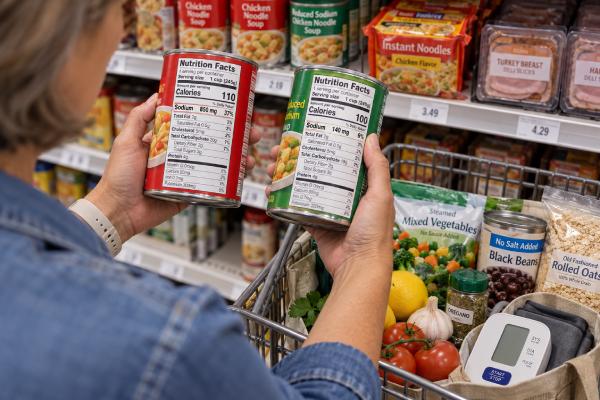
For blood pressure, the Nutrition Facts panel is often more useful than the ingredient list. Start with sodium per serving, then check how many servings you actually eat.
Compare products within the same category
Sodium can vary dramatically between brands of bread, soup, cereal, tortillas, sauces, and frozen meals. You do not have to find a zero-sodium version. Choosing the lower-sodium option you will actually eat can make a meaningful difference across a week.
Use the percent Daily Value as a quick guide. A food providing 20% or more of the Daily Value for sodium per serving is generally considered high in sodium, while 5% or less is low. Remember to multiply if you eat more than one serving.
“Organic,” “plant-based,” and “gluten-free” do not mean low sodium
These labels describe other qualities. A plant-based frozen meal can still contain 900 mg of sodium. An organic soup can still be salty. A gluten-free snack can still be highly refined.
Do not judge by ingredient count alone
A long ingredient list may signal heavy formulation, but it is not a direct blood-pressure score. A packaged whole-grain bread with several functional ingredients may be a better choice than a short-ingredient processed meat that is extremely high in sodium and saturated fat.
Use a hierarchy: first sodium and nutritional quality, then processing level as additional context.
One more useful check is sodium per calorie or per meal, not just per serving. A 150 mg snack may be reasonable, while a 700 mg entrée that leaves you hungry can consume a large share of your daily sodium budget without providing much food. By contrast, a complete meal with 500–600 mg of sodium, vegetables, protein, and fiber may fit more easily into the rest of the day. Context helps prevent label reading from turning into a search for the lowest number at any cost.
Build a Blood-Pressure-Friendly Eating Pattern
The strongest strategy is not “zero UPF.” It is a dietary pattern in which minimally processed, nutrient-dense foods make up most meals and ultra-processed foods play a smaller role.
A simple plate can look like this:
- half vegetables or fruit;
- one quarter protein such as beans, fish, chicken, tofu, eggs, or plain dairy;
- one quarter whole grain or starchy vegetable;
- a small amount of unsaturated fat such as olive oil, nuts, seeds, or avocado.
Season with herbs, spices, garlic, citrus, vinegar, chili, and aromatics so reducing salt does not mean bland food. Taste preferences can adapt over time when sodium gradually falls.
If your readings are high, combine food changes with correct home blood pressure monitoring. That helps you see whether the overall plan is working and reduces the chance of overreacting to one office reading.
Also address sleep, activity, alcohol, weight, and medication adherence. Ultra-processed foods are one piece of hypertension risk, not the whole picture. A person who replaces frozen dinners with home-cooked meals but still drinks heavily, sleeps four hours a night, and skips blood pressure medication has not addressed the most important drivers.
The practical takeaway is to focus on high-impact substitutions. Lower the sodium load, eat more potassium-rich whole foods when medically appropriate, replace sugary drinks and heavily refined snacks, and choose convenience foods with better labels. You do not need perfection for your blood pressure to benefit.
References
- A systematic review to critically appraise methodological rigor in research on ultra-processed food and cardiovascular disease and hypertension. 2026 (Systematic Review)
- Ultra-processed foods and cardiovascular disease: analysis of three large US prospective cohorts and a systematic review and meta-analysis of prospective cohort studies 2024 (Systematic Review)
- The blood pressure control effect of the sodium-restricted dietary approaches to stop hypertension diet: a systematic review 2024 (Systematic Review)
- Association between ultra-processed foods consumption and the risk of hypertension: An umbrella review of systematic reviews. 2023 (Review)
- Ultra-processed Foods Consumption Increases the Risk of Hypertension in Adults: A Systematic Review and Meta-analysis 2022 (Systematic Review)
Disclaimer
This article provides general nutrition information and is not a substitute for individualized medical care. If you have hypertension, kidney disease, heart failure, or take medicines that affect sodium or potassium balance, discuss major dietary changes or potassium-based salt substitutes with your healthcare professional.