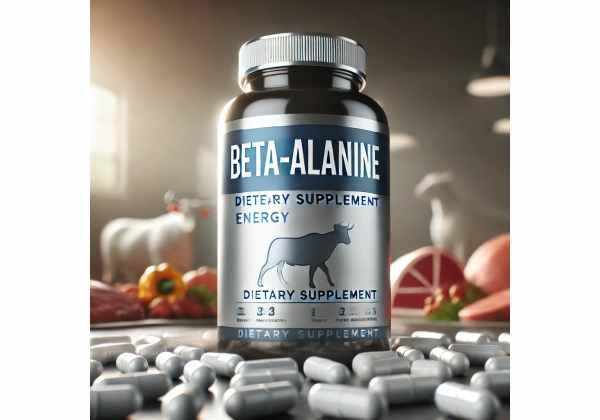
Beta-alanine is best known as a sports nutrition supplement, but its story is broader than gym performance alone. This amino acid helps the body make carnosine, a compound linked to acid buffering, antioxidant defense, and cellular protection. That has sparked growing interest in whether beta-alanine could also support brain health, mental stamina, and age-related cognitive resilience. The catch is that the evidence is not equally strong in every area. Its performance benefits are well established, while the research on mood, cognition, and mental wellness is still early and more selective.
That makes beta-alanine worth a closer look, especially if you want a realistic view rather than a sales pitch. Below, you will find what beta-alanine does, where the brain-health claims stand, who may benefit most, how to dose it, and what safety issues matter most before you try it.
Table of Contents
- What beta-alanine does
- Brain and mood potential
- Who might consider it
- Dosage timing and forms
- Safety side effects and interactions
- Realistic expectations and best practices
What beta-alanine does
Beta-alanine is a nonessential amino acid, which means your body can make it and you can also get it through supplements. Its main claim to fame is that it helps form carnosine, a dipeptide made from beta-alanine and histidine. In practical terms, beta-alanine is the rate-limiting ingredient in that process. When you supplement it regularly, muscle carnosine levels tend to rise over time.
That matters because carnosine acts as an intracellular buffer. During hard exercise, especially repeated high-intensity efforts, acid builds up in working muscle. Higher carnosine stores help buffer that rise, which can delay fatigue and preserve output. This is why beta-alanine is so often used in sports that involve intervals, sprinting, repeated bursts, or hard efforts lasting roughly one to several minutes.
For brain health, the picture is more indirect and more tentative. Carnosine and related compounds are also relevant in nervous tissue, which has led researchers to explore whether beta-alanine might influence mental performance, stress resilience, or healthy aging. The proposed mechanisms are biologically interesting:
- support for acid-base balance inside cells
- antioxidant effects that may help limit oxidative stress
- anti-glycation activity, which may matter in aging tissues
- possible membrane and mitochondrial protection
- potential support for resilience during physical or environmental stress
Still, beta-alanine is not a classic “feel it right away” brain supplement. It does not work like caffeine, and it does not act as a quick calming agent. You are not likely to notice an immediate change in focus after one dose. Instead, its effects depend on repeated intake over weeks, with the best-supported results showing up in exercise performance rather than in everyday mood.
That distinction is important for mental wellness readers. Some of beta-alanine’s value may come from better physical capacity, less fatigue during training, and improved tolerance for demanding effort. Those changes can indirectly support mood, confidence, and mental sharpness, especially when combined with regular movement and routines that already favor exercise for brain health and mood.
So, what does beta-alanine actually do? Most reliably, it raises carnosine over time and supports high-intensity performance. What it may do for the brain is promising but less settled. The supplement is better understood as a cumulative, physiology-based tool than as an instant nootropic or direct mental health treatment.
Brain and mood potential
The most important thing to know about beta-alanine and brain health is that the human evidence is still developing. There are encouraging signals, but they are not broad enough to justify sweeping claims. The strongest interest so far comes from studies in older adults and from research on resilience under stress.
In older adults, one placebo-controlled trial found that 10 weeks of beta-alanine at 2.4 grams per day improved cognitive scores in participants whose baseline cognitive performance was at or below normal. That is a meaningful detail. The benefit did not appear as a blanket effect in everyone. It seemed more likely in people who already had room for improvement. The same study also suggested a possible reduction in depression scores, but it did not show clear changes in anxiety, global mood, or physical function across the whole sample.
A follow-up imaging study in a smaller subset added another interesting clue. Beta-alanine supplementation was linked to improved fractional anisotropy in parts of the hippocampus and amygdala, areas involved in memory and emotional processing. That does not prove that beta-alanine is a brain-protective therapy, but it does give researchers a plausible direction for future work. It suggests that the supplement may influence tissue integrity in selected populations, even if the mechanism is not fully mapped yet.
There is also military and stress-resilience research that keeps beta-alanine in the conversation. Reviews discussing soldiers and other demanding environments suggest that the supplement may help support performance and resilience during heat stress, intense exertion, or other physically challenging conditions. Even there, though, the cognitive findings are mixed. Benefits may be more noticeable when the brain is under stress than during calm, routine tasks.
That is why beta-alanine should not be framed as a proven treatment for anxiety, depression, ADHD, or everyday brain fog. At this stage, it is better described as a supplement with an established physical role and a plausible, still-emerging neurological role. If you are shopping for a primary cognition supplement, a guide to nootropics for focus and their evidence may help you compare stronger and weaker options more realistically.
The takeaway is balanced but not dismissive. Beta-alanine may have real brain-health relevance, especially in aging or physically stressful settings. But the evidence is narrower than many marketing claims suggest. It makes more sense to view it as a targeted supplement with possible mental benefits than as a universal brain enhancer.
Who might consider it
Beta-alanine makes the most sense when your goals involve both physiology and performance. It is not usually the first supplement to reach for if your only concern is feeling calmer, happier, or mentally clearer during an ordinary desk-bound day. It becomes more compelling when mental demands overlap with physical stress, fatigue, aging, or intense training.
The best fit often includes people like these:
- athletes in sports with repeated high-intensity bursts, such as sprinting, rowing, combat sports, field sports, interval training, and high-effort cycling
- active adults who want better fatigue resistance during hard training blocks
- older adults who are physically active and interested in preserving function while exploring emerging cognitive support options
- people whose mental performance tends to drop when they are physically taxed, overheated, or deep into strenuous work
For these groups, beta-alanine may serve two purposes at once. First, it supports exercise capacity in its most established role. Second, it may help preserve mental steadiness when the body is under load. That is different from saying it will sharpen memory in everyone or lift mood on its own.
It may be a weaker fit for:
- someone looking for immediate focus or an acute productivity boost
- someone seeking a calming supplement for anxious thoughts
- someone wanting a sleep aid
- sedentary adults hoping for major cognitive benefits without lifestyle change
- people who dislike the tingling sensation and do not want to split doses
It is also worth comparing beta-alanine with other supplements based on your actual goal. If your main interest is direct brain energy, cognitive fatigue, or neuroprotection, there are cases where creatine for brain health may be a more obvious option to discuss with a clinician. Beta-alanine is often strongest when the problem you are trying to solve includes physical intensity, fatigue buffering, or functional decline rather than pure mood support.
Another good question is whether your goal is narrow or broad. If you want help during hard workouts, demanding duty, or age-related slowing, beta-alanine may be worth a trial. If you want a supplement to treat depression, panic, chronic insomnia, or severe attention problems, it is not a substitute for medical care and it is probably not the most direct tool.
In other words, beta-alanine is best matched to a context, not a fantasy. It suits people who want a cumulative supplement with performance roots and possible brain-health overlap. It is less suited to people chasing instant mental effects or expecting a standalone mood solution.
Dosage timing and forms
With beta-alanine, dosage strategy matters more than perfect timing. Unlike caffeine, it does not need to be taken right before a mentally demanding task to work. The goal is to build up tissue carnosine over time, so consistency is far more important than taking it at a special hour.
For performance-oriented use, common evidence-based protocols usually fall in the range of 4 to 6.4 grams per day. In resistance and high-intensity settings, research often favors splitting that total into smaller servings, sometimes around 0.8 grams at a time, over several weeks. In older-adult brain research, a lower dose of 2.4 grams per day has also been studied for 10 weeks, with some cognitive benefits in selected participants.
A practical way to think about dosing is:
- Start low if you are new to beta-alanine.
- Split the total into smaller doses across the day.
- Increase only if you tolerate it well and your goal justifies it.
- Stay consistent for at least several weeks before judging the result.
Many people do well with two to four smaller daily doses, especially when taken with meals. More fragmented schedules can reduce the chance of uncomfortable tingling, though they are less convenient. Capsules can make split dosing easier. Powders are often cheaper but can be more annoying to portion. Sustained-release products may help some users, but the simplest and most reliable tactic is still smaller divided doses.
Timing around workouts is optional. You can take beta-alanine pre-workout, but that does not appear to be the main driver of its benefit. If your supplement only “works” when you remember it 20 minutes before exercise, it is probably not beta-alanine doing the heavy lifting. This is one reason many pre-workout blends can be misleading. They often pair beta-alanine with caffeine, and users may confuse the stimulant hit with the slower effect of beta-alanine. If you are sensitive to stimulants, it helps to understand the difference between beta-alanine and caffeine’s effects on focus, anxiety, and sleep.
For brain and mental wellness goals, the best approach is to keep expectations grounded. A lower daily dose may be reasonable if you are following the older-adult research model, but there is no universally accepted “brain health dose” yet. In most cases, the dosing conversation should begin with your goal: performance buffering, healthy aging support, or exploratory use under professional guidance.
Safety side effects and interactions
At typical supplemental doses, beta-alanine is generally considered safe for healthy adults. The best-known side effect is paresthesia, a tingling or prickling feeling that often shows up in the face, neck, hands, or upper body soon after a dose. It can feel odd, but it is usually temporary and not dangerous. For many people, the sensation becomes the deciding factor in whether they keep using the supplement.
The risk of tingling tends to rise when a large amount is taken all at once. That is why divided dosing is so common. Smaller servings usually make the experience easier to tolerate. Some people also find that taking beta-alanine with food softens the effect.
Other possible issues are less common but still worth noting:
- mild stomach discomfort
- the inconvenience of multiple daily doses
- confusion caused by pre-workout blends that contain many other active ingredients
- unrealistic expectations when using beta-alanine for mood or cognition alone
A broad safety review found no clear evidence that standard oral beta-alanine supplementation harms people at the doses used in research. That is reassuring, but it does not mean every situation has been studied equally well. Long-term use outside research settings is still less documented than short- to medium-term use in healthy adults.
Interactions are not a major headline issue, but caution still matters. There has been theoretical concern about competition with taurine transport in some experimental settings. Human data at typical doses have not shown a clear harmful effect in the way many online warnings imply, but it is still sensible to keep an eye on the bigger picture if you are also exploring taurine for brain and anxiety support or multiple amino-acid supplements at once.
Certain groups should be more cautious:
- people who are pregnant or breastfeeding
- children and teenagers unless advised by a clinician
- anyone with kidney, liver, or serious metabolic disease
- people taking several psychiatric or neurological medications
- anyone with unexplained symptoms who is using supplements as a substitute for evaluation
It is also smart to look beyond the label. A standalone beta-alanine product is easier to assess than a multi-ingredient pre-workout. If the formula also contains caffeine, niacin, yohimbine, synephrine, or other stimulants, those ingredients may matter more than beta-alanine for both benefit and side effects.
In short, beta-alanine has a fairly good safety profile for healthy adults, but “generally safe” does not mean “appropriate for everyone.” Dose, formulation, overall supplement stack, and medical context all shape the real answer.
Realistic expectations and best practices
The smartest way to use beta-alanine is to decide what success would actually look like before you start. If your goal is vague, such as “better brain health,” it becomes hard to tell whether the supplement is helping. If your goal is concrete, such as better repeat sprint performance, less training-related mental fade, or steadier function during a demanding training phase, the trial becomes much more useful.
A realistic beta-alanine plan usually looks like this:
- choose one clear reason to use it
- use a dose you can tolerate consistently
- give it enough time to work
- track something measurable
For an athlete, that might mean noticing whether hard intervals feel more repeatable after several weeks. For an older adult, it might mean pairing the supplement with regular exercise, sleep, and nutrition while tracking everyday function, attention, or training tolerance. For a person interested in mental wellness, it means remembering that beta-alanine is not a shortcut around the basics.
Those basics still carry more weight than any supplement:
- regular movement
- stable sleep
- enough protein and overall calories
- hydration
- stress management
- appropriate medical care when symptoms are significant
That is especially true for cognitive health. A supplement can support a plan, but it rarely replaces one. If your concentration is poor because you are chronically underslept, overstimulated, or burned out, even a well-chosen supplement will have limited impact compared with protecting sleep, memory, focus, and mood at the routine level.
It also helps to know when to stop. Beta-alanine may not be worth continuing if the tingling is bothersome, if you dislike the dosing schedule, or if your goal is mostly emotional calm rather than physical resilience. The supplement is most persuasive when the context matches its strengths. It is less impressive when used for goals it was never designed to meet.
The bottom line is measured rather than flashy. Beta-alanine is a credible supplement with a clear physiological role and a modest but interesting brain-health research trail. It is not a miracle nootropic. It is not a treatment for mental illness. But for the right person, used for the right reason, it can be a sensible part of a broader strategy for performance, resilience, and healthy aging.
References
- Role of β-Alanine Supplementation on Cognitive Function, Mood, and Physical Function in Older Adults; Double-Blind Randomized Controlled Study 2023 (RCT)
- β-Alanine supplementation improves fractional anisotropy scores in the hippocampus and amygdala in 60-80-year-old men and women 2024 (RCT)
- The Effect of β-Alanine Supplementation on Performance, Cognitive Function and Resiliency in Soldiers 2023 (Review)
- Dosing strategies for β-alanine supplementation in strength and power performance: a systematic review 2025 (Systematic Review)
- A Systematic Risk Assessment and Meta-Analysis on the Use of Oral β-Alanine Supplementation 2019 (Systematic Review)
Disclaimer
This article is for educational purposes only and is not medical advice, diagnosis, or treatment. Beta-alanine is not a substitute for professional care for anxiety, depression, cognitive decline, or any other health condition. If you are pregnant, breastfeeding, have a medical condition, or take prescription medications, speak with a qualified clinician or pharmacist before using beta-alanine or any other supplement.
If you found this article helpful, please consider sharing it on Facebook, X, or your preferred platform.