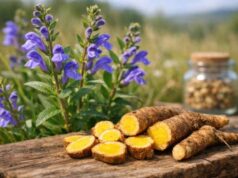
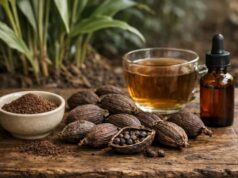
Black cohosh (Actaea racemosa) is a North American woodland plant best known for its long history of use in menopausal care—especially for hot flashes, night sweats, sleep disruption, and the “wired and tired” feeling that can accompany hormonal transitions. The part used in supplements is the rhizome and root, which contain distinctive triterpene glycosides and other compounds that appear to influence thermoregulation and neurotransmitter signaling rather than acting as a straightforward estrogen substitute.
In modern practice, black cohosh is most often taken as a standardized extract (tablets, capsules, or liquid extract). Many people consider it when they want nonhormonal support or when hormone therapy is not desired or not an option. At the same time, black cohosh is not a one-size-fits-all remedy: results are often product-specific, benefits tend to be modest, and it carries important safety considerations—most notably rare reports of liver injury and the need for caution in pregnancy, breastfeeding, and certain medical histories.
Quick Summary
- May reduce overall menopausal symptom burden, with the strongest interest around hot flashes and night sweats.
- Choose standardized extracts for the best chance of consistent results; effects can take 4–8 weeks.
- Typical extract dosing is about 40–80 mg per day (standardized product-specific), and higher is not always better.
- Avoid if pregnant or breastfeeding, and use extra caution with liver disease or unexplained fatigue, dark urine, or jaundice.
Table of Contents
- What is black cohosh?
- Key ingredients and medicinal properties
- Does black cohosh help menopause symptoms?
- How to use black cohosh
- How much black cohosh per day?
- Side effects, interactions, and who should avoid
- What the evidence actually says
What is black cohosh?
Black cohosh is a tall, flowering plant in the buttercup family (Ranunculaceae) native to eastern North America. It thrives in shaded forests and is recognizable in summer by its long, feathery white flower spikes. In herbal practice, the medicinal portion is not the flower—it is the underground rhizome and roots, which are harvested, dried, and extracted.
You may see black cohosh listed under older names, including Cimicifuga racemosa. Both refer to the same botanical, but the accepted name in many modern references is Actaea racemosa. It is also known by traditional common names such as black snakeroot and bugbane. These names matter because “black cohosh” products have occasionally been found to contain other Actaea species or unrelated botanicals, which can change both effectiveness and safety.
Historically, black cohosh was used for a wide range of concerns, but its modern identity is tightly linked to menopausal support. People most often consider it during perimenopause (when cycles become irregular) and postmenopause, especially when vasomotor symptoms—hot flashes and night sweats—begin to disrupt sleep and daily comfort. It is also commonly discussed for mood irritability, tension, and the sense of internal “heat” or flushing that can appear in waves.
Black cohosh is not typically used as a food herb. Its taste is bitter and astringent, and traditional “tea” preparations are less common today because many of the most-studied preparations are standardized extracts, not simple infusions. In other words, the way black cohosh is taken strongly influences what you can reasonably expect from it.
A practical way to frame black cohosh is as a nonhormonal menopausal support option with a long history of use and a moderate research base—useful for some people, inconsistent for others, and best approached with attention to product quality, duration limits, and liver-related warning signs.
Key ingredients and medicinal properties
Black cohosh is chemically distinct from many “phytoestrogen” herbs. Its best-known constituents are triterpene glycosides rather than high concentrations of estrogen-like isoflavones. That difference helps explain why it is sometimes used by people seeking a nonhormonal approach, while also explaining why its effects may feel more like symptom modulation than hormonal “replacement.”
Triterpene glycosides (signature compounds)
The rhizome contains characteristic triterpene glycosides such as actein and 27-deoxyactein (names vary slightly by analytical method and extract). These compounds are commonly used as quality markers in standardized products. In practical terms, they are associated with the herb’s traditional role in easing climacteric (menopause-related) complaints, likely by influencing signaling pathways involved in temperature regulation and sensory perception.
Phenolic acids and aromatic constituents
Black cohosh also contains phenolic acids (often discussed for antioxidant behavior) and smaller aromatic fractions. These are not usually the main drivers of menopausal effects, but they may contribute to broader properties such as inflammatory balance and tissue-level signaling. This is one reason some people report benefits in generalized aches or “overall discomfort,” even though that is not the primary evidence-backed use case.
Neurotransmitter-related activity (a key modern hypothesis)
One of the more useful modern perspectives is that black cohosh may influence neurotransmitter systems linked to thermoregulation and mood—particularly serotonergic pathways—rather than acting as a direct estrogen mimic. This aligns with real-world reports from some users who notice changes in hot flashes, sleep continuity, or irritability without feeling overtly “hormonal.”
Medicinal properties in plain language
When used appropriately, black cohosh is most often described as having these practical properties:
- Vasomotor support: may reduce frequency or severity of hot flashes for some people
- Sleep and tension support: may help indirectly by reducing night sweats and nighttime awakenings
- General menopausal comfort: may improve “overall symptom scores,” especially with certain standardized extracts
Why extract type matters
Not all black cohosh products are equivalent. The clinical literature often centers on particular extract types (commonly alcohol-based extracts) at defined doses. Whole-root powders and teas can be less predictable. Because the herb’s effects are not dramatic or immediate, small differences in preparation can be the difference between “it helped” and “nothing happened.”
If you want the best chance of consistency, choose products that clearly list extract type, dose, and standardization—rather than proprietary blends that hide details.
Does black cohosh help menopause symptoms?
Black cohosh is primarily used for menopausal symptoms, and the most realistic expectation is modest improvement, not an overnight transformation. Many people try it because they want a nonhormonal option for hot flashes, night sweats, and sleep disruption—especially when symptoms are frequent enough to feel draining but not severe enough to justify stronger interventions, or when hormone therapy is not preferred.
Hot flashes and night sweats (vasomotor symptoms)
This is the main reason black cohosh is on the map. Some people experience fewer hot flashes, less intense flushing, or fewer sleep interruptions from night sweats after several weeks of steady use. Others notice no change. A helpful way to evaluate it is to track a simple baseline for 7 days (how many hot flashes per day, how many night awakenings), then reassess after 4–8 weeks.
Sleep quality and fatigue
When black cohosh helps sleep, it is often indirect: fewer night sweats can mean fewer awakenings, which improves sleep continuity and next-day energy. If your sleep disruption is driven by anxiety, restless legs, sleep apnea, or late caffeine, black cohosh is less likely to be the missing piece. Many people do best pairing any supplement trial with sleep basics: a consistent bedtime, cooler bedroom temperature, and reduced late-day alcohol.
Mood irritability and stress reactivity
Some users report feeling less “on edge,” but mood outcomes are more variable than hot flashes. If mood changes are the dominant issue—persistent low mood, panic, or severe irritability—it is wise to treat black cohosh as a supportive experiment, not a primary treatment.
Other claimed uses (where expectations should be lower)
Black cohosh is sometimes promoted for joint pain, headaches, and libido changes. Those claims are less consistent, and benefit—if it happens—often reflects overall symptom improvement rather than a targeted effect. It is also studied in specific contexts such as treatment-related menopausal symptoms, but results can differ from general menopause populations.
Comparisons and alternatives
If you are exploring botanical options, it helps to distinguish categories:
- Black cohosh is typically positioned as nonhormonal symptom support.
- Some alternatives are discussed more as phytoestrogen-like supports, such as red clover isoflavones, which come with their own suitability questions.
A useful “fit” checklist
Black cohosh may be a reasonable trial if:
- hot flashes or night sweats are your primary complaint,
- you can commit to a 6–8 week trial, and
- you can choose a transparent, standardized product.
It is less likely to be the right choice if you need fast relief, have liver risk factors, or are taking multiple medications where caution is warranted.
How to use black cohosh
Using black cohosh well is mostly about matching the form to your goal and keeping the trial structured. Because benefits can be subtle, consistency and product quality matter more than “stacking” many herbs at once.
Common forms
- Standardized extract tablets or capsules: The most research-aligned approach. These typically provide a defined amount of extract per dose and are easier to use consistently.
- Liquid extract (tincture-style): Useful for people who prefer flexible dosing or have trouble swallowing pills. The taste can be strong, and alcohol content varies.
- Dried root powder: Often sold in capsules, but quality and standardization vary widely.
- Tea/infusion: Less common today; it may be too weak or inconsistent for reliable menopausal outcomes and can be unpleasantly bitter.
A practical way to start (simple and trackable)
- Choose one product with clear labeling (extract amount, serving size, and ideally standardization markers).
- Start at the lower end of the label dose for the first week to assess tolerance.
- Use it daily at the same time(s). Many people take it with food to reduce stomach upset.
- Track outcomes using a short daily note: hot flash count, night sweats, awakenings, and overall daytime comfort.
- Reassess at 4 weeks, then again at 8 weeks.
When to take it
- If night sweats are your main issue, splitting doses (morning and early evening) can be practical.
- If stomach sensitivity is an issue, taking it with meals is often easier.
- Avoid taking it “whenever you remember.” Inconsistent dosing makes it hard to judge results.
What not to do
- Don’t combine black cohosh with multiple other menopause herbs immediately. If you do a multi-ingredient blend, you won’t know what helped or caused side effects.
- Don’t assume more is better. Higher doses can increase side effects without improving benefits.
- Don’t use it indefinitely without a plan. Treat it as a time-limited trial unless a clinician advises otherwise.
If you want to compare hormone-focused botanicals
Some people consider cycling-related herbs such as vitex (chaste tree), but that is generally discussed more for premenstrual and cycle-pattern concerns than for classic postmenopausal hot flashes. Keeping these categories separate helps you choose more rationally.
The simplest, safest approach is usually: standardized extract, consistent dosing, symptom tracking, and a clear stop point if it does not help.
How much black cohosh per day?
Black cohosh dosing is often confusing because labels may list milligrams of “root,” milligrams of “extract,” or a proprietary blend that does not clarify the actual amount of black cohosh. The most useful dosing guidance is therefore product-specific, with a preference for standardized extracts used in clinical settings.
Typical extract dosing ranges
Many commonly used standardized products fall into these everyday ranges:
- Standardized extract: about 40–80 mg per day, often split into 1–2 doses
- Lower-start approach: begin with 20–40 mg per day for 7–10 days, then increase if tolerated and still needed
Some products use different extract ratios or extraction solvents, so the same milligram number can represent different strengths. This is why choosing a product with clear labeling matters.
If using liquid extracts
Liquid extracts vary by concentration. A common practical range is 1–2 mL, one to two times daily, but this is highly dependent on how the extract is made. Use the manufacturer’s dose as the primary guide, and avoid “freestyle dosing” with strong tinctures.
If using dried root powder
Root powder is less standardized, but many products land around 1–2 g per day (often divided). Because the active profile can vary, this form is less predictable for menopausal symptoms than standardized extracts.
Timing and duration
- Onset: many people evaluate changes after 4 weeks, with a fuller trial of 6–8 weeks.
- Trial length: if you see no meaningful benefit by 8–12 weeks, it is reasonable to stop.
- Longer use: some studies and traditional practices extend longer, but many cautious protocols recommend limiting unsupervised use and checking in with a clinician if you plan to continue beyond several months.
A simple dose-and-decision plan
- Weeks 1–2: low dose, assess tolerance
- Weeks 3–8: standard dose, track symptoms
- Week 8: decide—continue (if clearly helpful), adjust (if partly helpful), or discontinue (if not helpful)
Dose adjustments that often matter
- If you get headaches, stomach upset, or jittery discomfort, reduce the dose or split it.
- If sleep is worse, avoid late evening dosing and reassess whether the product contains additional stimulants or additives.
Avoid “stacking” without clarity
It is common to pair black cohosh with other approaches for sleep. If you choose to add something like melatonin timing strategies, add it only after you have a clear read on black cohosh alone. One change at a time makes your results interpretable and safer.
Side effects, interactions, and who should avoid
Black cohosh is often well tolerated in the short term, but safety deserves center stage because (1) effects can be subtle, and (2) rare but serious adverse events have been reported—most notably liver injury. The goal is not to create fear, but to help you recognize when black cohosh is a reasonable trial and when it is not.
Common side effects
These are usually mild and may improve with dose reduction or taking it with food:
- Stomach upset, nausea, or abdominal discomfort
- Headache
- Dizziness
- Rash or skin irritation (less common)
- A feeling of heaviness or fatigue in some individuals
If side effects persist beyond 1–2 weeks, it is a signal to stop or switch products rather than pushing through.
Liver-related caution (important)
Rare cases of liver injury have been reported in people taking products labeled as black cohosh. In some cases, the relationship is unclear due to confounders like adulteration, multiple-ingredient blends, or other health issues. Still, the risk is serious enough that you should stop immediately and seek medical evaluation if you develop:
- Yellowing of skin or eyes (jaundice)
- Dark urine or pale stools
- Unusual right-upper abdominal pain
- Persistent nausea with profound fatigue
- Itching without a clear cause
Who should avoid black cohosh (especially supplements)
- Pregnant or breastfeeding people
- Anyone with known liver disease or unexplained abnormal liver enzymes
- People who have had hepatitis or severe alcohol-related liver injury unless a clinician approves
- Individuals with unexplained vaginal bleeding or symptoms that have not been medically assessed
- Children and adolescents
Estrogen-sensitive conditions and hormone therapy
Black cohosh is not a simple phytoestrogen, but because it is used for menopausal symptoms, questions often arise for people with estrogen-sensitive histories (such as certain breast cancer contexts) or those using hormone therapy. This is not a place for self-experimentation: involve your oncology or women’s health team if you have a cancer history or are on endocrine therapy.
Potential interactions
Evidence for major drug interactions is limited, but caution is sensible in these situations:
- Multiple medications processed by the liver, especially if you already monitor liver enzymes
- Hormone therapies and selective estrogen receptor modulators (discuss with a clinician)
- Multi-herb blends (unclear attribution of risk)
Quality and adulteration risk
A practical safety move is choosing products from reputable manufacturers that provide batch testing or third-party verification. Avoid blends that combine black cohosh with many other botanicals, because that raises both interaction complexity and the chance of mislabeling.
If you are the kind of person who “always reacts” to supplements, start lower than the label suggests, and consider a food-and-lifestyle-first approach rather than escalating doses.
What the evidence actually says
Black cohosh has a large footprint in menopause care, but the research picture is best described as promising for some extracts, inconsistent overall, and highly dependent on product type. This is not unusual in herbal medicine—where preparation details can determine whether a trial succeeds.
1) Effects tend to be modest, not dramatic
When benefits appear, they often show up as moderate reductions in overall menopausal symptom scores, sometimes with clearer improvements in vasomotor symptoms (hot flashes and night sweats) than in mood measures. This matches real-world experiences: many people report “better nights” rather than “no symptoms.”
2) Product specificity is a major reason results differ
Some of the most discussed evidence involves specific extract types and dosing protocols. Meanwhile, studies using different preparations (or products of uncertain composition) may show little effect. From a consumer standpoint, this translates into a simple rule: a low-quality or poorly labeled product can fail even if black cohosh itself has potential.
3) Placebo response is real in hot flash research
Menopausal symptom trials often show substantial placebo improvements, especially for hot flashes. That does not mean symptoms are “in your head.” It means symptom perception and nervous-system regulation are responsive to context, sleep quality, expectation, and daily stress. For you, it means tracking baseline and making a fair, time-limited comparison.
4) Safety data: generally tolerable, but liver caution persists
Across clinical studies, black cohosh is often tolerated with mostly mild side effects. The lingering concern is rare liver injury reports and the possibility that adulteration or product variability contributes. This is why reputable sourcing and attention to warning signs matter more here than with many other menopause supplements.
5) What is reasonable to conclude today
- Black cohosh is a rational nonhormonal trial for hot flashes and night sweats, especially when a standardized product is used consistently.
- It is not reliably effective for everyone, and it should not be positioned as a guaranteed replacement for medical therapy.
- Safety is acceptable for many healthy adults in the short term, but caution is warranted for liver risk, pregnancy, breastfeeding, and complex medical histories.
If you approach black cohosh as a structured experiment—right product, steady dosing, symptom tracking, and clear stop rules—you are far more likely to get a useful answer about whether it belongs in your plan.
References
- Black cohosh extracts in women with menopausal symptoms: an updated pairwise meta-analysis – PubMed 2023 (Systematic Review and Meta-Analysis)
- Black cohosh efficacy and safety for menopausal symptoms. The Spanish Menopause Society statement – PubMed 2022 (Position Statement)
- Black Cohosh – LiverTox – NCBI Bookshelf 2025 (Safety Monograph)
- Black Cohosh: Usefulness and Safety | NCCIH 2024 (Government Health Summary)
Disclaimer
This article is for educational purposes only and does not provide medical advice, diagnosis, or treatment. Black cohosh supplements may cause side effects and have been linked to rare cases of liver injury. Stop use and seek medical care promptly if you develop jaundice, dark urine, severe fatigue, or persistent abdominal pain. If you are pregnant, breastfeeding, have liver disease, a history of hormone-sensitive cancer, unexplained vaginal bleeding, or take prescription medicines, consult a licensed clinician before using black cohosh.
If this guide helped you, consider sharing it on Facebook, X (formerly Twitter), or your preferred platform so others can make safer, more informed choices.