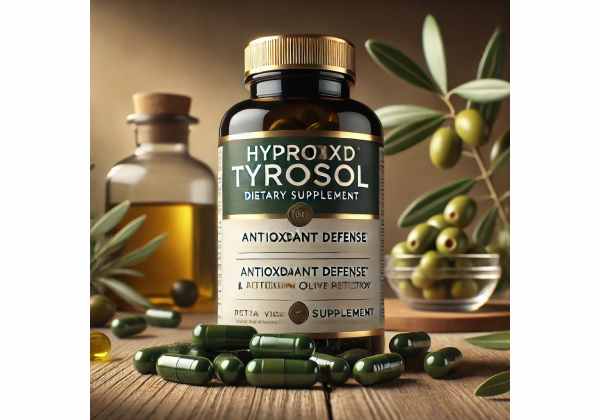
Hydroxytyrosol is one of the most studied polyphenols found in olives and extra virgin olive oil, yet it is still far less familiar than omega-3s, magnesium, or curcumin. Interest in it has grown because it combines three features that matter for brain health: strong antioxidant activity, anti-inflammatory effects, and a plausible role in protecting the blood vessels and cellular signaling systems the brain depends on every day. That combination makes hydroxytyrosol especially appealing to people thinking about cognitive aging, stress-related wear and tear, and nutrition strategies that support long-term mental resilience. At the same time, it is important not to oversell it. Most of the strongest evidence is still mechanistic, preclinical, or tied to olive oil patterns rather than hydroxytyrosol alone. This guide explains how hydroxytyrosol works, what the human evidence actually shows, where it may fit into a brain-supportive routine, how to think about dosing and product quality, and which safety questions deserve attention before supplementing.
Table of Contents
- What Hydroxytyrosol Does in the Brain
- Where the Human Evidence Looks Best
- Brain Health Mood and Mental Wellness
- Who May Benefit Most
- Dosage Forms and Timing
- Safety Side Effects and Precautions
What Hydroxytyrosol Does in the Brain
Hydroxytyrosol is a small phenolic compound derived mainly from olives, olive leaves, and extra virgin olive oil. It tends to attract attention for one main reason: it is biologically active in several systems that matter for brain aging and mental function. Rather than acting like a stimulant or neurotransmitter booster, hydroxytyrosol works more like a cellular protector. That does not make it weak. It means its effects are more likely to show up in long-term resilience, vascular support, and reduced oxidative stress than in a dramatic same-day feeling.
Its main proposed actions include:
- Reducing oxidative stress
- Modulating inflammatory signaling
- Supporting endothelial function
- Influencing mitochondrial and cell-survival pathways
- Possibly helping protect neurons and surrounding brain tissue under stress
This matters because the brain is especially vulnerable to cumulative oxidative strain. It uses a great deal of oxygen, relies on delicate membrane signaling, and depends on healthy blood flow to deliver nutrients and remove waste. Compounds that help preserve vascular function and reduce inflammatory pressure are therefore plausible candidates for cognitive support, even if they do not directly “boost focus” the way a stimulant might.
Hydroxytyrosol is also interesting because it appears to be well absorbed and rapidly metabolized. That profile has encouraged research into whether it can contribute to effects seen in olive-rich eating patterns, especially Mediterranean-style diets. The challenge is that much of the research looks at olive oil or olive polyphenol mixtures rather than hydroxytyrosol alone. So while the molecule itself is promising, it is not always easy to isolate its exact contribution in human outcomes.
Mechanistically, the most persuasive case for hydroxytyrosol is not that it makes a healthy brain perform above normal on command. It is that it may help maintain a healthier internal environment for cognition over time. That distinction is important. A compound can support neuroprotection without producing a noticeable “brain boost” on an ordinary Tuesday.
It is also why hydroxytyrosol fits better into a preventive, systems-based view of brain health than into a classic nootropic mindset. If a person is dealing with poor sleep, chronic stress, high blood sugar swings, inactivity, or heavy alcohol use, hydroxytyrosol is unlikely to override those factors. But as part of a broader pattern of anti-inflammatory, cardiometabolic, and brain-supportive choices, it may support the conditions that help preserve mental sharpness and healthy neuroplasticity over time.
In short, hydroxytyrosol is best viewed as a neuroprotective polyphenol with promising mechanisms, not as a fast-acting mental performance enhancer.
Where the Human Evidence Looks Best
The strongest human evidence around hydroxytyrosol is not yet in direct treatment of memory loss, depression, or cognitive decline as stand-alone conditions. Instead, the more convincing data cluster around broader systemic effects that matter to the brain, especially oxidative stress, vascular function, inflammation, and cardiometabolic health. Those areas are highly relevant because brain health is tightly connected to blood vessels, glucose control, inflammatory tone, and endothelial integrity.
This creates an evidence pattern that is encouraging but layered. Hydroxytyrosol looks compelling in preclinical neuroscience, and it has growing human data in cardiovascular and metabolic settings. But when the question becomes, “Does hydroxytyrosol alone clearly improve cognition in humans?” the answer is still more cautious.
A fair summary of the evidence looks like this:
- Strongest support: antioxidant activity, lipid oxidation protection, and vascular relevance
- Moderate but mixed support: broader cardiometabolic markers and some measures tied to cognitive aging risk
- Preliminary support: cognitive and psychomotor outcomes in selected human contexts
- Insufficient support: broad claims that hydroxytyrosol alone reliably improves memory, focus, or mood in the general population
One reason hydroxytyrosol gets attention anyway is that the brain rarely benefits from isolated interventions alone. If a compound helps endothelial function, reduces oxidative damage, and improves inflammatory signaling, that may still support better long-term brain outcomes even before a trial shows dramatic memory-score changes.
This is also where olive oil research becomes relevant. Studies of olive oil consumption, especially within Mediterranean-style diets, often suggest better cognitive aging outcomes. But that evidence should not be simplified into “hydroxytyrosol supplements prevent dementia.” Olive oil contains many compounds, and the diet pattern around it matters. Human cognition trials involving olive oil are useful context, yet they do not prove that hydroxytyrosol by itself is responsible for every observed effect.
That nuance matters for readers comparing hydroxytyrosol with more established interventions. Right now, it makes more sense to say hydroxytyrosol may support brain health through vascular and oxidative-stress pathways than to claim it has proven direct cognitive benefits on its own. It belongs more comfortably in a brain-protective dietary strategy than in a “memory pill” narrative.
This is especially important for people worried about age-related cognitive decline. Hydroxytyrosol may be a reasonable adjunct, but it should sit beside better-established steps such as exercise, blood pressure management, sleep protection, hearing care, and the kinds of habits that support cognitive decline prevention over time.
So where does the human evidence look best? In the systems that feed and protect the brain, not yet in sweeping stand-alone claims about cognition.
Brain Health Mood and Mental Wellness
When readers search for hydroxytyrosol and mental wellness, they are usually asking one of three things: can it protect the brain, can it help mood, and can it make day-to-day thinking feel clearer? Those are related questions, but they are not the same.
For brain health, hydroxytyrosol is most plausible as a long-range support compound. Its antioxidant and anti-inflammatory profile, together with possible benefits for vascular health, makes it relevant to brain aging and resilience. If the brain is constantly exposed to inflammatory stress, oxidative strain, and suboptimal blood flow, then reducing those pressures is meaningful even if the effect is gradual.
For mood, the evidence is less direct. Hydroxytyrosol is not a classic anxiolytic or antidepressant supplement. There is no strong human evidence that it directly relieves anxiety or treats depression in the way some people hope from supplement marketing. The more realistic case is indirect: if a person’s mental wellness is being affected by poor cardiometabolic health, inflammatory load, or a diet pattern low in protective plant compounds, hydroxytyrosol may contribute to improvement as part of a larger strategy.
That makes it more of a supportive compound than a symptom-targeted one.
Possible ways hydroxytyrosol may fit into mental wellness support include:
- Supporting a lower-inflammatory dietary pattern
- Contributing to healthier vascular function
- Helping protect cells from oxidative stress during aging
- Complementing olive-rich or Mediterranean-style eating
- Working as part of a broader neuroprotective routine
What it is less likely to do:
- Produce a strong immediate lift in motivation
- Calm acute anxiety on demand
- Replace treatment for depression
- Correct poor concentration caused by sleep loss or overload
- Act like a stimulant or a prescription cognitive enhancer
This distinction protects people from the most common supplement mistake: reaching for a promising molecule when the main problem is not cellular stress but unaddressed insomnia, emotional overload, or burnout. If the actual problem is poor sleep, nervous system strain, or a pattern of constant distraction, hydroxytyrosol is unlikely to solve it. Those issues usually respond more to sleep repair, activity, stress regulation, and the basics of nutrition and mental health than to one olive-derived compound.
Still, hydroxytyrosol is not irrelevant to mental wellness. It may have a place for people interested in long-term brain preservation, especially when combined with a brain-supportive diet and lifestyle. The safest way to describe it is not “a mood supplement” or “a memory booster,” but a potentially useful neuroprotective polyphenol that may support the biological environment in which good cognition and emotional regulation become easier to sustain.
That framing is less flashy, but it is closer to what the current evidence supports.
Who May Benefit Most
Hydroxytyrosol is not a universal supplement. Its best fit depends on the person, the dietary pattern, and the goal. In general, it makes more sense for long-term health support than for people seeking an immediate focus or mood effect.
The groups most likely to find hydroxytyrosol worth considering include:
- Adults interested in healthy cognitive aging
- People who eat little or no extra virgin olive oil
- Those following or moving toward a Mediterranean-style diet
- Individuals with cardiometabolic risk factors that overlap with brain health concerns
- People seeking polyphenol-based support rather than stimulant-style nootropics
Aging adults are the most obvious group. Brain aging is not just about neurons. It also involves blood vessels, inflammation, insulin sensitivity, and cumulative oxidative stress. Hydroxytyrosol fits that picture well because it may help address several of those systems at once. That does not mean everyone over 50 needs a capsule. But it does make hydroxytyrosol more relevant to prevention-minded adults than to healthy younger people looking for sharper exam performance.
Diet quality also matters. A person who regularly uses high-quality extra virgin olive oil, eats a plant-rich diet, and already gets a large amount of olive polyphenols may have less reason to supplement. Someone who rarely eats olive-based foods may have more room to benefit from adding either the food source or a supplement.
Hydroxytyrosol may also appeal to people who do not tolerate stimulating nootropics well. If caffeine, strong cholinergics, or multi-ingredient “focus blends” tend to cause anxiety or sleep disruption, a gentler neuroprotective compound may be more aligned with their needs. It is less about chasing performance peaks and more about protecting the terrain that supports consistent thinking over time.
People who may be disappointed include:
- Those wanting same-day mental energy
- Those expecting a strong antidepressant effect
- Students or professionals hoping for a clear productivity surge
- Anyone using supplements to avoid evaluating worsening memory symptoms
That last point is especially important. If someone notices increasing forgetfulness, word-finding trouble, mental slowing, or concentration problems that affect daily life, self-treatment can delay proper assessment. Those symptoms may reflect stress or poor sleep, but they can also point to medical, neurologic, or psychiatric causes. Hydroxytyrosol is not a substitute for figuring out why forgetfulness may be getting worse.
The ideal user, then, is usually not someone in crisis. It is someone with a prevention mindset who wants a well-tolerated, polyphenol-based supplement that may support long-term vascular and brain resilience as part of a larger plan.
Dosage Forms and Timing
Hydroxytyrosol dosing is less standardized than dosing for nutrients such as magnesium or DHA. Part of the reason is that hydroxytyrosol appears in different contexts: olive oil, olive leaf preparations, functional foods, and stand-alone supplements. Another reason is that the human trial literature uses a fairly wide range of formulations and daily amounts.
In published human studies and review summaries, hydroxytyrosol intake has ranged from low single-digit milligram amounts up to around 25 mg per day in some supplement contexts, with even broader exposure when hydroxytyrosol is part of olive-derived foods or mixed olive extracts. That does not mean more is automatically better. In fact, the current evidence does not support aggressive “high-dose brain boosting” strategies.
A practical framework looks like this:
- Food-first approach: regular use of extra virgin olive oil or polyphenol-rich olive products
- Low-dose supplement approach: often around 5 to 10 mg per day
- Moderate supplemental range: often around 10 to 25 mg per day in commercial products and some trials
- Higher-dose experimentation: usually unnecessary outside research or clinician-guided use
Timing is less critical than consistency. Hydroxytyrosol is not a stimulant, so there is no strong reason to time it before work or study sessions. Taking it with meals often makes the most sense, especially if the product is olive-derived or part of a broader food-based supplement routine.
When choosing a form, common options include:
- Extra virgin olive oil
- Olive fruit extracts
- Olive leaf products containing some hydroxytyrosol
- Purified hydroxytyrosol capsules or liquids
The key is to distinguish between total olive extract weight and actual hydroxytyrosol content. A product may sound impressive because it contains several hundred milligrams of olive extract, while the hydroxytyrosol dose itself is modest. That is not necessarily bad, but it means labels need careful reading.
For many people, the most reasonable first step is not a supplement at all. It is upgrading dietary fat quality and using more high-quality olive oil in a pattern similar to a Mediterranean-style brain health diet. That approach brings hydroxytyrosol together with other beneficial compounds rather than isolating it.
If a person still wants a supplement, the smartest approach is to choose a clearly labeled product, stay in a modest daily range, and judge it over weeks rather than hours. Hydroxytyrosol is not something you “feel” the way you feel caffeine. The question is whether it fits a sustainable plan for long-term brain support.
Safety Side Effects and Precautions
Hydroxytyrosol appears generally well tolerated at the use levels studied and has also been assessed in Europe in the context of novel food authorization. Even so, safety is not the same thing as unlimited use. The right way to think about hydroxytyrosol is that it looks relatively low risk at common intake levels, but the evidence base is still much smaller than it is for staple nutrients or major medications.
Most people who use hydroxytyrosol are unlikely to notice dramatic side effects. When side effects do appear, they are more likely to be mild and nonspecific, such as:
- Stomach upset
- Nausea
- Digestive discomfort
- Headache
- Sensitivity to a poorly tolerated formulation
A few practical safety points matter more than the side effect list itself.
First, hydroxytyrosol products are not all the same. Some are purified compounds, while others are olive extracts with a wider mixture of polyphenols. Tolerability may depend on the full formulation, not just the hydroxytyrosol content.
Second, the research base for long-term high-dose supplementation is still limited. A person using modest supplemental amounts or obtaining hydroxytyrosol through olive oil is in a very different situation from someone taking large proprietary doses for months while also using several other polyphenol products.
Third, special populations need more caution. Regulatory decisions in Europe have specifically excluded certain groups, including very young children and pregnant or lactating women, from some authorized novel food uses. That does not prove harm in those groups. It means the evidence is not strong enough to assume routine use is appropriate.
Extra caution is reasonable for:
- Pregnant or breastfeeding people
- Children
- People with multiple medical conditions
- Anyone taking several supplements or medications at once
- People using products with vague or proprietary labeling
It is also wise to keep expectations realistic around mental symptoms. If someone is experiencing persistent low mood, cognitive decline, brain fog, or stress-related dysfunction, hydroxytyrosol may be part of a bigger health strategy, but it should not delay proper evaluation. A supplement with antioxidant promise is not a substitute for working up the real causes of brain fog or memory change.
A sensible safety checklist is simple:
- Choose a reputable product with clear hydroxytyrosol content.
- Stay within modest, label-supported dosing.
- Take it with food if preferred for tolerability.
- Avoid treating it like a high-dose self-experiment.
- Talk with a clinician if you are pregnant, breastfeeding, medically complex, or trying to manage cognitive symptoms with supplements alone.
For most adults, hydroxytyrosol looks more conservative than flashy. That is often a good sign.
References
- Systemic Health Effects of Oleuropein and Hydroxytyrosol Supplementation: A Systematic Review of Randomized Controlled Trials 2024 (Systematic Review)
- Novel Ingredients: Hydroxytyrosol as a Neuroprotective Agent; What Is New on the Horizon? 2025 (Review)
- Olive Oil Phenolic Compounds’ Activity against Age-Associated Cognitive Decline: Clinical and Experimental Evidence 2023 (Review)
- The effects of olive oil consumption on cognitive performance: a systematic review 2023 (Systematic Review)
- Commission Implementing Decision (EU) 2017/2373 of 14 December 2017 authorising the placing on the market of hydroxytyrosol as a novel food ingredient under Regulation (EC) No 258/97 of the European Parliament and of the Council 2017 (Regulatory Decision)
Disclaimer
This article is for educational purposes only and is not medical advice. Hydroxytyrosol supplements are not a treatment for depression, anxiety, dementia, or other medical conditions, and they should not replace professional evaluation for worsening cognitive or mental health symptoms. If you are pregnant, breastfeeding, managing a chronic illness, or taking prescription medications, speak with a qualified clinician before starting a new supplement.
If you found this article useful, please consider sharing it on Facebook, X, or another platform where it may help someone make a more informed decision.