Copper is easy to overlook because the body needs it in very small amounts, yet those small amounts help power some of the brain’s most important chemistry. Copper supports enzymes involved in cellular energy, antioxidant defense, iron handling, myelin integrity, and the production of signaling molecules that influence attention, mood, and nervous system function. That makes it essential, but not simple. Too little copper can contribute to fatigue, numbness, gait changes, anemia, and cognitive problems, while too much may harm the liver and nervous system.
For brain health, the real question is not whether copper matters. It does. The harder question is whether copper supplementation helps, for whom, and at what dose without creating new problems. This article explains what copper does in the brain, what the research says about cognition and mental wellness, when supplementation may make sense, how much is typically used, and the safety issues to understand before buying a product.
Table of Contents
- Why copper matters to the brain
- What research says about mood and cognition
- Who might actually benefit from copper
- Dosage forms and food-first strategy
- Safety risks and important precautions
- How to use copper wisely
Why copper matters to the brain
Copper is an essential trace mineral, which means the body cannot function normally without it. In brain and nervous system health, its role is unusually broad. Copper is not a stimulant, sedative, or classic nootropic. Instead, it acts behind the scenes as a cofactor for enzymes that keep neurons, glial cells, blood vessels, and mitochondria working properly.
Several of copper’s most important brain-related functions include:
- helping enzymes involved in cellular energy production
- supporting antioxidant defense through copper-dependent superoxide dismutase
- contributing to neurotransmitter and neuropeptide chemistry
- helping maintain normal iron transport, which affects oxygen delivery and cognition
- participating in connective tissue and vascular integrity
- supporting normal myelin and nervous system development
These functions matter because the brain is metabolically expensive tissue. It uses a large share of the body’s oxygen and energy, and it is especially vulnerable to oxidative stress, mitochondrial strain, and poor nutrient handling. Copper sits at the intersection of those systems. When copper status is adequate, the brain is better positioned to maintain energy production, redox balance, and signaling. When copper balance is disrupted, those same systems can start to falter.
Copper also appears to influence synaptic activity more directly. It can interact with receptors and ion channels involved in excitatory and inhibitory signaling. That does not mean copper works like a fast-acting psychiatric supplement. It means copper homeostasis is part of the machinery that keeps neural communication regulated. In that sense, copper is less like a performance “booster” and more like a maintenance mineral that supports the brain’s baseline operating conditions.
The catch is that copper is a narrow-range nutrient. That is what makes it different from the way many people think about supplements. With copper, more is not automatically better. Low copper can impair nervous system function, but high copper can also become harmful through oxidative injury and tissue accumulation. For brain health, the key idea is balance rather than aggressive supplementation.
This is also why copper should be viewed in context. It works with other nutrients, proteins, and regulatory systems, not in isolation. A discussion of copper makes the most sense as part of a broader view of nutrition and mental health, where the goal is not megadosing one mineral but supporting the systems that keep the brain resilient over time.
What research says about mood and cognition
Copper has real biological importance for the brain, but that does not automatically translate into strong evidence that copper supplements improve mood, memory, or focus in people who already have normal copper status. This distinction matters because search results and supplement marketing often blur the line between “essential for brain function” and “beneficial to supplement.” Those are not the same claim.
The current evidence is best understood in three layers.
First, there is strong mechanistic evidence. Copper is required for enzymes involved in mitochondrial energy production, antioxidant protection, neuropeptide processing, and catecholamine metabolism. That makes it plausible that both deficiency and excess could affect cognition, mood, or neurological function.
Second, there is observational evidence. Some newer population studies in older adults suggest that dietary copper intake is associated with better cognitive performance up to a point, with the relationship appearing nonlinear rather than endlessly positive. In simple terms, too little copper may be a problem, but increasing intake above a certain range does not appear to keep improving cognition. That pattern fits what is already known about copper biology: the brain seems to need enough, not the most.
Third, there is disease-association research. Altered copper homeostasis has been linked with conditions such as Wilson disease, Menkes disease, neurodegenerative disorders, and major depression. A recent meta-analysis reported higher serum copper levels in people with major depressive disorder than in controls. That finding is interesting, but it should be interpreted carefully. It does not prove that excess copper causes depression in every case, nor does it mean lowering copper is a treatment strategy for the general public. It suggests that copper dysregulation may be part of the wider biology of depression in some people.
This is where many readers need the clearest guidance: there is not good evidence that copper works as a direct mood enhancer or focus supplement for otherwise healthy adults. There are no strong randomized trials showing that taking copper by itself reliably improves memory, reduces anxiety, or lifts mood in people without deficiency. So while copper matters for cognition, it is not a proven shortcut for mental performance.
A practical way to frame the research is this:
- copper adequacy supports brain function
- copper imbalance may contribute to neurological and mood-related problems
- supplementation is most defensible when there is low intake, deficiency, malabsorption, or another clear reason to suspect need
- routine high-dose copper for sharper thinking is not supported
That places copper in a different category from many products sold as brain supplements. It is more accurate to treat it as a precision mineral than a general-purpose nootropic. If you are comparing supplement claims, it helps to keep that in mind when reading about nootropics for focus and their risks.
Who might actually benefit from copper
For most healthy adults who eat a varied diet, copper supplementation is not an obvious first move for brain health. The people most likely to benefit are usually those with a specific risk factor, a likely deficiency state, or a clinical picture that makes copper status worth checking.
Copper supplementation may make sense in situations such as these:
- documented copper deficiency on clinical evaluation
- malabsorption disorders, including celiac disease
- history of bariatric or upper gastrointestinal surgery
- long-term high-dose zinc supplementation
- heavy use of zinc-containing denture adhesives
- certain rare genetic disorders affecting copper transport
- unexplained anemia, low white blood cells, neuropathy, or gait problems where deficiency is part of the workup
This matters because copper deficiency can affect both blood and nervous system function. Early signs may be vague, such as fatigue, low stamina, or reduced exercise tolerance. In more significant cases, people can develop numbness, tingling, balance problems, sensory ataxia, neuropathy, and cognitive slowing. Clinically, copper deficiency can sometimes resemble other neurological disorders, including issues linked to vitamin B12 deficiency and brain symptoms. That overlap is one reason self-diagnosis is risky.
Copper may also become relevant when zinc is used aggressively. Zinc is a valuable mineral, but high doses can interfere with copper absorption over time. Someone taking zinc for immune support, acne, or other reasons may not realize that a new anemia, low neutrophil count, or neurological symptom could reflect secondary copper deficiency rather than a lack of zinc benefit. In these cases, copper is not a trendy add-on. It is part of restoring balance.
On the other hand, copper is usually a poor fit for:
- someone looking for a fast boost in concentration
- someone hoping to self-treat anxiety or depression
- someone already using multiple multivitamins and mineral blends
- anyone with known Wilson disease or unexplained liver issues unless managed by a specialist
- people who simply want to “cover all bases” with high-dose trace minerals
That last group deserves emphasis. Copper is not like adding a little extra fiber or protein. It is a tightly regulated trace mineral with a meaningful downside if overused. For mental wellness, the most appropriate use of copper is usually corrective or targeted, not experimental or aggressive.
Dosage forms and food-first strategy
If you are considering copper, start with this question: are you trying to meet normal needs, correct a likely shortfall, or treat a confirmed deficiency? The right dose depends heavily on which of those situations applies.
For adults, the recommended dietary allowance is 900 micrograms per day. Needs increase modestly in pregnancy and lactation, reaching 1,000 micrograms and 1,300 micrograms per day, respectively. The tolerable upper intake level for adults is 10,000 micrograms, or 10 milligrams, per day. That upper limit is not a target. It is a safety ceiling.
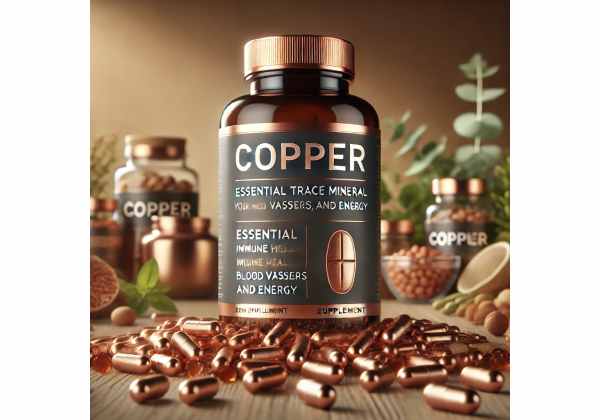
In the supplement aisle, copper appears in several common forms, including:
- copper gluconate
- copper sulfate
- copper amino acid chelates or bisglycinate forms
- cupric oxide
At this point, there is no clear evidence that one oral form is universally superior for brain or mental health outcomes. That is useful to know because marketing often implies otherwise. In practice, product quality, dose appropriateness, and total intake matter more than choosing the most exotic form.
For everyday use, a food-first strategy is often the smartest approach. Copper-rich foods include shellfish, nuts, seeds, organ meats, cocoa, and whole grains. Many people can meet their needs without a separate copper supplement, especially if their diet is varied and not highly restrictive. That is one reason copper fits more naturally into the conversation about foods for brain health than into the category of quick-fix mental performance products.
If you do use a supplement, moderation matters. Many multivitamins contain small amounts of copper, often around the level meant to support daily adequacy. Standalone products can be much higher. For general self-care, low-dose copper is usually more sensible than high-dose products unless a clinician has identified a real need. Taking copper with food may reduce stomach upset.
A practical approach looks like this:
- Review how much copper you already get from food and other supplements.
- Check whether your multivitamin already contains copper.
- Avoid stacking several mineral products without calculating the total.
- Use the lowest dose that matches the reason you are taking it.
- Reassess if the plan extends beyond a short trial or includes other minerals that affect balance.
Copper can be helpful, but it is not a mineral to “eyeball.” Dose discipline is part of using it safely.
Safety risks and important precautions
Copper’s safety profile depends less on dramatic acute side effects and more on avoiding the slow problems that come from the wrong person using the wrong dose for too long. That is why copper deserves more caution than many general wellness supplements.
At modest doses, some people notice little more than mild stomach upset or nausea, especially if they take copper on an empty stomach. The bigger concern is chronic overuse. Excess copper can contribute to gastrointestinal symptoms, abdominal pain, nausea, vomiting, and, over time, liver injury. In people with inherited disorders of copper handling, the risks are much greater because the body cannot regulate copper properly.
The most important high-risk condition is Wilson disease. In Wilson disease, copper accumulates abnormally in tissues, especially the liver and brain. For someone with this disorder, casual copper supplementation is not just unhelpful. It can be dangerous. That is one reason copper is not a supplement for broad self-experimentation.
The other major safety theme is imbalance with other minerals, especially zinc. High zinc intake can reduce copper absorption and eventually create deficiency. This does not mean zinc is harmful or copper should always be paired with it, but it does mean long-term high-dose zinc should never be treated casually. Readers exploring zinc for cognitive and mental health should keep copper balance in mind rather than thinking of each mineral as a separate lane.
Other situations that call for caution include:
- liver disease
- unexplained gastrointestinal symptoms
- pregnancy unless the dose is appropriate and purposeful
- use of several overlapping multivitamins, mineral blends, or sports supplements
- unexplained neurological symptoms that have not been evaluated
It is also worth remembering that copper exposure is not limited to pills. Water from copper plumbing, dietary intake, and fortified or blended supplements all contribute to the total. A person may think they are taking “just a little extra copper” when they are really stacking multiple sources.
One practical point often missed is that copper is not known to have major clinically relevant medication interactions, but that should not create false confidence. A lack of formal medication interactions does not mean a supplement is harmless in the context of liver disease, metal-handling disorders, or an already high intake.
The safest mental-health message is simple: copper is essential, but unsupervised high intake can backfire. If your goal is better memory, steadier mood, or less brain fog, the first step is not usually more copper. The first step is figuring out whether copper is truly part of the problem.
How to use copper wisely
The best way to use copper is to treat it like a targeted mineral, not a broad wellness trend. That means matching the decision to a clear reason rather than taking it because it sounds brain-friendly on paper.
A sensible copper plan usually starts with one of two situations. The first is prevention of a likely shortfall, such as a restrictive diet, known malabsorption issue, or prolonged zinc use. The second is correction of a suspected or confirmed deficiency. In both situations, the goal is balance, not pushing intake as high as possible.
If copper deficiency is on the table, it is worth getting a proper medical evaluation rather than guessing. Depending on the situation, clinicians may consider copper status along with ceruloplasmin, a complete blood count, zinc status, iron-related markers, vitamin B12, folate, and liver tests. That broader view matters because copper problems rarely exist in isolation, and symptoms such as fatigue, low mood, numbness, or poor concentration can have many causes. If memory changes or mental slowing are unexplained, a wider medical review is more useful than assuming one mineral is the answer, especially when there are many possible causes of memory problems in adults.
When choosing a product, focus on basics:
- pick a reputable brand with third-party testing when possible
- avoid “mega mineral” formulas unless a clinician recommended them
- check the label for total elemental copper, not just compound weight
- review your multivitamin, pre-workout, greens powder, or trace mineral drops for overlap
- prefer a steady, modest intake over irregular high doses
It also helps to decide in advance what success would look like. For copper, success is often not a dramatic mental lift. It may be more subtle: correcting a deficiency, improving lab values, stabilizing blood counts, or stopping the progression of neurological symptoms. If you are taking copper hoping to feel instantly calmer or sharper, you are likely using the wrong tool for the job.
The bottom line is straightforward. Copper is essential for brain health and mental wellness because the nervous system depends on it. But copper supplementation is not automatically beneficial, and it can become harmful when used casually. The smartest approach is to treat copper as a balance issue: enough to support the brain, not so much that the mineral itself becomes part of the problem.
References
- Copper – Health Professional Fact Sheet 2022 (NIH Fact Sheet)
- Role of copper in central nervous system physiology and pathology 2024 (Review)
- Copper Dysregulation in Major Depression: A Systematic Review and Meta-Analytic Evidence for a Putative Trait Marker 2025 (Systematic Review and Meta-Analysis)
- Association between dietary copper intake and cognitive function in American older adults: NHANES 2011–2014 2025 (Observational Study)
- Neurological complications due to copper deficiency in the context of Wilson disease treatment: a case report with long-term follow-up and review of the literature 2024 (Review)
Disclaimer
This article is for educational purposes only and is not medical advice, diagnosis, or treatment. Copper supplementation is not a proven treatment for depression, anxiety, memory loss, or brain fog in the general population. Because both copper deficiency and copper excess can affect the nervous system, it is best to speak with a qualified clinician before using copper supplements, especially if you have liver disease, a gastrointestinal disorder, unexplained neurological symptoms, or take other mineral supplements such as zinc.
If you found this article helpful, please consider sharing it on Facebook, X, or your preferred platform.