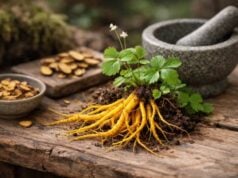
Cow parsnip (Heracleum maximum) is a large, native North American member of the carrot family (Apiaceae) that grows in moist meadows, stream edges, forest margins, and mountain corridors. It has an impressive umbrella of white flowers and broad leaves that can make it look inviting to hikers, gardeners, and curious foragers. Yet cow parsnip is best known not for a supplement-like “benefit,” but for a safety lesson: its watery sap can contain light-activated compounds that trigger painful, burn-like skin reactions after sun exposure.
Historically, some Indigenous communities used prepared parts of the plant in traditional foodways and medicine, and modern laboratory research has explored its antimicrobial and immune-related activity. Even so, cow parsnip is not a common self-care herb today because its risks can outweigh its potential value, especially when misidentified or handled without protection. This guide focuses on what cow parsnip is, what’s in it, what the evidence suggests, and—most importantly—how to approach it safely and responsibly.
Key Takeaways
- The sap can cause severe phytophotodermatitis with blistering after UV exposure, so prevention matters more than “benefits.”
- Traditional use exists, but modern human research is limited and does not support routine supplementation.
- After suspected contact, wash with soap and water and avoid sun on the area for 48–72 hours.
- Risk is higher during outdoor work, trimming, and hiking when sap is aerosolized or smeared on skin.
- Avoid self-treatment if you are pregnant, have photosensitivity, take photosensitizing medications, or cannot confirm identification.
Table of Contents
- What is cow parsnip?
- Key ingredients and phototoxic compounds
- Traditional and potential health uses
- How cow parsnip is used today
- How much is safe to use?
- Side effects, interactions, and who should avoid
- What the evidence shows
What is cow parsnip?
Cow parsnip (Heracleum maximum) is a tall perennial herb in the Apiaceae family. It is native across broad regions of North America and often appears where soil stays damp: along creeks, in wet ditches, at forest edges, and in mountain valleys. The plant typically produces large, white, umbrella-shaped flower clusters (umbels) and thick, hollow stems, with wide, lobed leaves that can look almost “umbrella-like” themselves.
For many readers, the first question is practical: Is cow parsnip a “medicinal herb” or a dangerous weed? The real answer is both, depending on context. As a botanical, it has a history of traditional use and a chemistry that shows biological activity. As an everyday “herb,” it is not commonly recommended because its sap can cause serious skin reactions in sunlight. That reaction is not rare in outdoor settings, and it can be severe enough to resemble a burn.
Confusion also drives risk. Cow parsnip is sometimes mistaken for other large white-flowered Apiaceae, including invasive giant hogweed (Heracleum mantegazzianum) and highly toxic poison hemlock (Conium maculatum). The safest position is straightforward: if you are not trained in local plant identification, do not touch, crush, cut, or “test” any large umbel plant with bare skin. This is especially important for children, hikers who brush plants at trail edges, and anyone using string trimmers or brush cutters that can spray plant juices.
From a wellness perspective, cow parsnip is best approached as a plant you respect rather than a plant you ingest. It is far more useful to understand its risk profile (how reactions happen, how to prevent them, and what to do after exposure) than to chase speculative benefits.
A final note on names: “cow parsnip” can refer to different Heracleum species in different regions. When safety is involved, always rely on the botanical name (Heracleum maximum) rather than common names alone.
Key ingredients and phototoxic compounds
Cow parsnip’s chemistry is the reason it is both biologically interesting and potentially hazardous. The plant produces multiple groups of compounds, but the most important for real-world safety are furanocoumarins (also called psoralens), which can become phototoxic when they contact skin and are then activated by ultraviolet A (UVA) light.
1) Furanocoumarins (psoralens): the core safety issue
Furanocoumarins can bind to skin DNA and proteins after UVA exposure, triggering inflammation that may look and feel like a burn. Symptoms often appear hours later, can worsen over 24–48 hours, and may leave lingering hyperpigmentation. Cow parsnip is not the only Apiaceae plant with this issue. Several edible relatives contain furanocoumarins too, though usually at far lower “sap exposure” intensity than Heracleum species. If you want a familiar example of how this plant family shows up in everyday life, see celery and Apiaceae plant compounds, especially in the context of skin sensitivity in some individuals.
2) Polyacetylenes and related antimicrobial compounds
Some Heracleum species—including H. maximum—have been studied for polyacetylenes and other constituents that may have antimicrobial or immune-modulating activity in laboratory settings. These compounds are part of why researchers have explored the plant beyond its dermatologic risk. However, the presence of bioactivity does not automatically translate into a safe or useful self-care supplement.
3) Volatile oils and aromatic constituents
Cow parsnip has a distinct “green” scent when crushed, reflecting volatile constituents that can vary by growing conditions and plant part. In many plants, volatile oils contribute to antimicrobial or anti-inflammatory effects in vitro. In cow parsnip, they are not the primary driver of traditional modern use because the phototoxic sap risk dominates the practical conversation.
4) Flavonoids and phenolics (general plant defense chemistry)
Like many wild plants, cow parsnip contains antioxidant-related phenolic compounds. These are common across many safer culinary herbs and do not justify taking on a high-contact risk plant for “antioxidants.”
A useful way to frame cow parsnip is this: its chemistry is not “bad,” but it is high-consequence. The same plant defenses that deter predators and microbes can also injure human skin under the right conditions. That is why safety, handling, and context must lead the discussion.
Traditional and potential health uses
Cow parsnip has a long ethnobotanical history in parts of North America. In some Indigenous traditions, carefully prepared plant parts were used as food or medicine, often in ways designed to reduce irritation and make the plant tolerable. Those traditional practices are important culturally and historically, but they do not automatically translate into safe do-it-yourself herbalism today—especially when plant identification, preparation knowledge, and local context are missing.
Traditional themes (high level, not a recipe)
Historical accounts commonly describe uses that fall into broad categories:
- Respiratory support: prepared root infusions or decoctions used in community healing contexts
- Digestive and general tonic use: small, prepared doses used seasonally or situationally
- Topical application: poultice-style use for aches or skin concerns in some local traditions
Because cow parsnip can irritate skin and is associated with phototoxic reactions, it’s important to interpret topical traditions with care. Traditional topical use may have involved specific plant parts, seasons, or preparations that are not captured well by modern “internet herbalism.” The safety margin for a casual experiment is not high.
Modern interest: why scientists studied it
Modern research has explored H. maximum for immune-related and antimicrobial activity in laboratory models, including investigations into how plant extracts interact with certain immune pathways. This is scientifically interesting and supports the idea that the plant contains potent constituents. It does not yet support common consumer outcomes like “take cow parsnip for immunity” or “use it for infection,” especially given the risk profile.
What cow parsnip is not
- It is not a mainstream, standardized supplement with an established dose.
- It is not a reliable “natural antibiotic.”
- It is not an evidence-based home remedy for chronic disease.
A safer decision framework
If your goal is immune support, digestive comfort, or antimicrobial botanicals, there are many herbs with better safety data and more human research. For example, readers often compare “immune herbs” by tradition and evidence; echinacea’s common uses and safety profile is a more typical starting point than a phototoxic wild Heracleum species.
A respectful takeaway is that cow parsnip has legitimate historical relevance and biochemical potency, but modern self-care rarely needs to include it. In most cases, the wisest “use” is knowledge: recognizing the plant, understanding the risk, and preventing exposure.
How cow parsnip is used today
For most people, cow parsnip’s modern “use” is not as a supplement or tea—it is as a plant you learn to handle safely in outdoor life. That may sound like a detour from wellness, but it is directly aligned with health outcomes: avoiding skin injury, preventing infection from blistered skin, and reducing the chance of long-lasting hyperpigmentation.
1) Outdoor safety and prevention (the most relevant use-case)
If you hike, garden, landscape, or clear brush, the highest-value approach is prevention:
- Wear long sleeves, gloves, and eye protection when working near tall umbel plants.
- Avoid string-trimming or brush-cutting unknown weeds in shorts; sap can aerosolize and coat skin.
- Treat “wet plant contact” as higher risk than dry contact, especially on sunny days.
- Keep pets away from dense patches; sap can transfer to your skin when you handle a pet’s fur.
2) What to do right after possible contact
If you suspect you brushed against cow parsnip or got sap on skin:
- Wash exposed skin promptly with soap and cool water.
- Remove contaminated clothing and wash it separately.
- Keep the exposed area covered and out of sunlight for at least the next couple of days.
- Monitor for redness, burning, or blistering over the next 24–48 hours.
This is not overcautious. Phytophotodermatitis can have a delayed onset, and early prevention (washing and sun avoidance) can reduce severity.
3) If a rash or blistering develops
Supportive care often includes cool compresses, gentle wound hygiene, and pain control. If blistering is extensive, involves the face or genitals, shows signs of infection, or affects vision (eye exposure is an emergency), seek medical care promptly.
4) “Traditional food use” in modern life: a strong caution
Yes, some people discuss eating cow parsnip shoots or stems. The risk is not only the plant’s sap; it is misidentification with toxic relatives and the handling required. This guide does not recommend foraging or experimenting with cow parsnip as food.
If your goal is skin-soothing support after minor outdoor irritation (not a severe burn-like reaction), a gentler, widely used botanical is often a better fit. For instance, plantain leaf traditional topical uses is commonly discussed for minor skin comfort and is far less hazardous than Heracleum contact exposure. (Severe blistering, however, is a medical issue, not a home-herb project.)
In short, cow parsnip is “used” best as a reminder that plant medicine includes plant risk. Knowing how to prevent and respond to exposure is the most practical health skill this plant offers.
How much is safe to use?
This is the most important dosage section you may read about cow parsnip: there is no widely accepted, standardized, consumer-safe medicinal dose for Heracleum maximum. Unlike common culinary herbs, cow parsnip is not routinely sold as a standardized supplement, and the major real-world risk—phototoxic sap exposure—does not behave like a typical “dose-response supplement” question. It behaves like a contact hazard that depends on sunlight, skin sensitivity, and how concentrated the sap exposure was.
Why a typical supplement dose is not recommended
- The plant’s furanocoumarin content can vary by plant part, season, and environment.
- Home extraction methods can concentrate phototoxic constituents unpredictably.
- Human research is not strong enough to establish safe, effective internal dosing for general use.
- The downside risk (skin injury and long-lasting pigmentation changes) is meaningful.
A practical “dosage” that actually matters: exposure timing
If you have suspected contact, the most actionable ranges are time-based:
- Wash as soon as possible after contact, ideally immediately when you realize exposure.
- Avoid sun on the exposed area for 48–72 hours by covering clothing or staying out of direct UVA exposure. This window matters because phototoxicity is driven by the interaction between plant chemicals and UVA.
If you are seeking therapeutic psoralens
Some furanocoumarins (like methoxsalen) are used medically in controlled settings (for example, PUVA therapy) under prescription supervision. That is not the same as using cow parsnip. Medical psoralens involve controlled dosing, known purity, and clinician monitoring—precisely because these compounds can be powerful and risky.
A cautious stance for curious readers
If you are reading this because you saw cow parsnip discussed online as an “herbal remedy,” the safest conclusion is: don’t self-dose. There are many alternatives with clearer dosing, better evidence, and far less potential for injury. If you still want to explore traditional medicine contexts, do so with a qualified clinician or experienced ethnobotanical educator who can address identification, preparation, and risk reduction.
With cow parsnip, the best “dose strategy” is almost always avoidance, followed by rapid washing and sun protection if exposure occurs.
Side effects, interactions, and who should avoid
Cow parsnip is a plant where safety is not a footnote—it is the main story. The most significant adverse effect is phytophotodermatitis, a phototoxic reaction that can cause redness, burning pain, blistering, and later dark staining of the skin (post-inflammatory hyperpigmentation). The pattern can look streaky or splash-like, reflecting how sap touched the skin. Symptoms may not appear immediately, which can mislead people into thinking they “got away with it,” only to develop blisters the next day.
Common side effects from exposure
- Burning, stinging, or itching that progresses over hours
- Blisters (sometimes large bullae) after UVA exposure
- Residual hyperpigmentation that can last weeks to months
- Secondary infection risk if blisters break and the skin barrier is damaged
High-risk scenarios
- Brush cutting, weed trimming, or mowing tall vegetation
- Hiking in shorts through wet meadow edges
- Handling plants with bare hands and then touching face or eyes
- Working in bright sun shortly after plant contact
Eye exposure is urgent
Sap in the eyes can cause serious injury. If this is suspected, flush immediately with clean water and seek urgent medical evaluation.
Interactions: think “photosensitivity stacking”
Cow parsnip exposure can be more problematic if you are already prone to photosensitivity. Risk may be higher if you:
- Take photosensitizing medications (certain antibiotics, retinoids, some diuretics, and others)
- Have a history of severe sun reactions
- Undergo UV-based dermatologic treatments
It also helps to understand that furanocoumarins are not unique to cow parsnip. They show up in some essential oils and botanical products, where phototoxicity is a known safety topic. If you use citrus-type essential oils on skin, the broader concept is similar: avoid sunlight after topical exposure. For a practical example of how phototoxicity is discussed in a more common botanical context, see bergamot uses and safety considerations.
Who should avoid contact and self-experimentation
- Children and adolescents (higher accidental exposure risk)
- People with photosensitivity disorders or a history of severe sun reactions
- Anyone on photosensitizing medications or using UV therapies
- Pregnant or breastfeeding individuals considering “herbal dosing”
- Anyone unable to confirm identification with expert help
If you develop blistering, widespread rash, facial involvement, fever, or signs of infection, treat it as a medical problem rather than a home remedy situation.
What the evidence shows
The evidence around cow parsnip falls into three main buckets: clinical observations (case reports), general medical reviews of phytophotodermatitis, and plant-chemistry research on Heracleum species. These categories help explain why the plant is discussed, and why the safest recommendations remain conservative.
1) Clinical evidence: cow parsnip can cause significant injury
Modern case reports document that exposure to Heracleum maximum can produce classic phytophotodermatitis—painful erythema and blistering after UVA exposure—with supportive care as the main treatment. The key clinical lesson is prevention: prompt washing, sun protection, and avoiding the plant when possible. Clinicians also emphasize misdiagnosis risk, because the rash can resemble cellulitis, allergic dermatitis, or even chemical burns.
2) Medical reviews: the mechanism is well established
High-quality reviews describe phytophotodermatitis as a non-allergic phototoxic reaction triggered by plant furanocoumarins plus UVA. This is one of the most “settled” parts of the topic: the pathophysiology is not speculative. Where uncertainty remains is in predicting severity for a given person and exposure, because real-world factors (amount of sap, sunlight intensity, skin moisture, and timing) vary widely.
3) Plant science: Heracleum species are notable furanocoumarin producers
Research on the genus shows that Heracleum species can produce a range of linear and angular furanocoumarins, and that closely related species may differ significantly in how much they accumulate. This explains why some hogweeds are infamous for severe burns while others are considered less extreme—yet it does not make casual handling “safe.”
4) What evidence does not support
- Routine supplementation for “immunity,” “detox,” or chronic disease
- Self-made extracts or essential oil use as a home remedy
- Reliable benefits that outweigh the practical risks for most people
A balanced, evidence-led conclusion
Cow parsnip is best treated as a plant that teaches hazard awareness and respects traditional knowledge without encouraging casual experimentation. If future research clarifies safe, standardized preparations for specific therapeutic uses, recommendations could evolve. Right now, the evidence supports one clear priority: prevent exposure, recognize reactions early, and seek care when symptoms are severe.
References
- New Insights Concerning Phytophotodermatitis Induced by Phototoxic Plants 2024 (Review) ([PMC][1])
- Sap and Sun: A Case of Phytophotodermatitis 2023 (Case Report) ([PubMed][2])
- Furanocoumarins in two European species of Heracleum: transcriptomic and metabolomic study 2025 (Phytochemistry) ([PMC][3])
- The Impact of Dietary Intake of Furocoumarins and Furocoumarin-Rich Foods on the Risk of Cutaneous Melanoma: A Systematic Review 2025 (Systematic Review) ([PMC][4])
Disclaimer
This article is for educational purposes only and does not provide medical advice. Cow parsnip can cause serious skin injury when sap contacts the skin and is exposed to sunlight. Do not use cow parsnip for self-treatment, and do not forage or prepare it unless guided by qualified experts who can confirm identification and safe handling. If you develop blistering, facial or eye exposure, widespread rash, severe pain, fever, or signs of infection, seek medical care promptly. If you are pregnant, breastfeeding, photosensitive, or taking medications that increase sun sensitivity, consult a qualified healthcare professional before using any botanicals with known phototoxic potential.
If this guide helped you, consider sharing it on Facebook, X (formerly Twitter), or your preferred platform so others can prevent avoidable plant-related skin injuries.