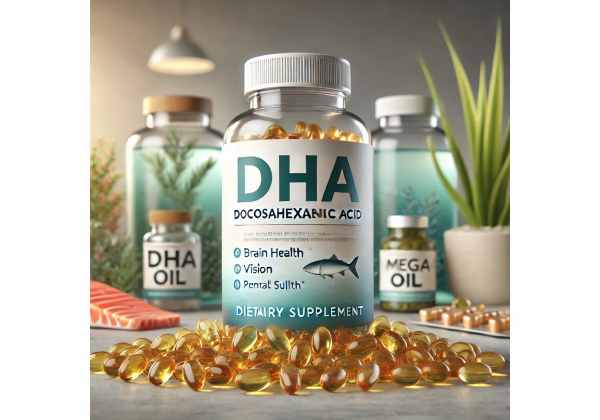
Docosahexaenoic acid, usually called DHA, is one of the fats the brain uses most heavily. It is built into neuronal membranes, concentrated in the retina, and especially important during periods of rapid growth and change, from pregnancy and infancy to older age. That makes DHA a common topic in conversations about memory, mood, attention, and long-term brain health. At the same time, the evidence is more nuanced than many supplement labels suggest. DHA is not a quick stimulant, and it does not act like a prescription treatment for depression or dementia. Its value is more structural and longer-term: supporting cell membranes, signaling, and development, while possibly helping certain groups with cognition or mood when intake is low. This guide explains how DHA works, where the evidence looks strongest, who may benefit most, how much to take, how to choose a product, and which safety points matter before you supplement.
Table of Contents
- Why DHA Matters in the Brain
- What DHA May Help With
- DHA and Mood Across Life Stages
- Pregnancy Infancy and Low-Intake Groups
- Dosage Forms and Product Quality
- Safety Side Effects and Interactions
Why DHA Matters in the Brain
DHA is not just another dietary fat. It is a long-chain omega-3 fatty acid that becomes part of the physical structure of brain cells. In practical terms, that means it helps shape the membranes that surround neurons and support communication between them. These membranes are not passive wrapping. They influence how receptors function, how signals move across synapses, and how flexible and responsive brain tissue remains over time.
This structural role helps explain why DHA is discussed so often in brain health. Unlike caffeine or some nootropics, DHA does not create a dramatic same-day feeling of stimulation. It works more like a building material than a switch. That slower, foundational role is also why DHA tends to attract interest in areas such as cognitive aging, visual function, pregnancy, and long-term mental resilience.
Several features make DHA distinct:
- It is highly concentrated in the brain and retina.
- It contributes to membrane fluidity, which affects signaling.
- It supports processes involved in synaptic function and cell growth.
- It appears to influence inflammation-related pathways relevant to brain health.
- It is difficult for the body to make in large amounts from plant omega-3 precursors.
That last point matters. Many people assume flax, chia, or walnuts cover all omega-3 needs. Those foods are useful, but they mainly provide ALA, not DHA. Human conversion of ALA into DHA is limited, so people who do not eat fish, eggs enriched with omega-3s, or algal oil may end up with lower DHA status over time.
DHA also matters because the brain is not static. It is constantly remodeling connections, repairing membranes, and adapting to demands such as aging, sleep disruption, stress, illness, and learning. Nutrients do not determine these outcomes on their own, but they shape the conditions under which the brain operates. In that sense, DHA is better understood as part of the infrastructure of healthy brain function.
This is also why DHA fits best into a broader framework rather than a miracle-supplement narrative. A person who is sleep deprived, sedentary, and metabolically unwell will not fix those issues with fish oil alone. But in a solid overall plan, DHA may support the kinds of membrane integrity and signaling that matter for attention, learning, and healthy aging, alongside other inputs that influence neuroplasticity and recovery.
The most realistic expectation is this: DHA helps support the brain’s structure and adaptability. That is a meaningful role, but it is not the same as an immediate boost in focus or mood.
What DHA May Help With
The search interest around DHA usually centers on memory, focus, and protection against cognitive decline. Those are reasonable questions, but the evidence needs careful framing. DHA is biologically plausible for cognition, and some studies are encouraging, yet the size of benefit is often modest and not universal.
The clearest pattern is that DHA seems more promising in support roles than in rescue roles. It may be more helpful for maintaining cognitive function, supporting aging brains, or addressing low baseline intake than for reversing established dementia. In other words, it is a better candidate for “support and prevention” than for dramatic symptom reversal.
Research suggests DHA may be most relevant in situations such as:
- Mild age-related memory complaints
- Low habitual fish or seafood intake
- Early cognitive decline rather than advanced impairment
- Periods of increased developmental demand
- Diet patterns low in long-chain omega-3 fats
Potential benefits discussed in the literature include support for:
- Memory and learning
- Processing speed
- Executive function
- White matter integrity
- Healthy brain aging
Still, results are mixed. Some trials show small improvements in memory or related cognitive measures, while others show little to no effect. Several factors probably explain the inconsistency:
- Baseline status differs. People with low DHA intake or low blood omega-3 levels may have more room to benefit than those who already eat fish regularly.
- Age and disease stage matter. Earlier intervention often looks more promising than later intervention in advanced neurodegeneration.
- Study design varies. Some trials use DHA alone, while others use mixed EPA and DHA formulas.
- Outcome measures differ. A supplement may influence one domain, such as verbal memory, without clearly changing broad cognitive scores.
- Time frame matters. Structural nutrients may need months, not days, to show measurable effects.
It is also worth separating DHA from the broader “omega-3” category. Many studies use fish oil blends, not DHA alone. That means some positive findings cannot be credited to DHA by itself with full confidence. At the same time, DHA has a strong biological case because it is the dominant omega-3 incorporated into neural tissue.
For readers thinking about cognitive decline, the most balanced takeaway is this: DHA is worth considering as part of a broader prevention strategy, especially when diet is low in marine foods or when age-related cognitive changes are a concern. But it works best beside sleep, exercise, blood sugar stability, social engagement, and a dietary pattern that already supports brain aging. It should not replace habits known to matter for cognitive decline prevention.
DHA can be useful. It is just not a shortcut. The best case for it is steady support, not a dramatic brain upgrade.
DHA and Mood Across Life Stages
DHA is often marketed for mood, stress, and emotional balance, but this is an area where precision matters. Omega-3 fats as a category have been studied quite a bit in depression, yet the strongest mood-related findings often involve EPA-heavy formulas rather than DHA-dominant ones. That does not mean DHA is irrelevant. It means DHA’s role in mental wellness may be more supportive and indirect than acute.
One reason DHA remains important in this discussion is that mood is not just about neurotransmitters in isolation. It is also shaped by membrane function, inflammation signaling, stress biology, and the health of neural circuits over time. DHA participates in those systems. It is involved in cell membrane properties, and it contributes to compounds that help regulate inflammatory responses. Because chronic inflammation and low omega-3 status have both been linked with depressed mood in some research, DHA remains a meaningful part of the mental wellness conversation.
Where DHA may matter most for mood:
- When overall omega-3 intake is low
- During pregnancy and postpartum periods
- During cognitive aging
- In people whose diets are low in seafood
- As part of a combined omega-3 approach rather than as a stand-alone mood treatment
The evidence, however, is not clean enough to present DHA as a direct antidepressant. People looking for fast mood change should keep expectations grounded. In mood disorders, supplementation may work best as an adjunct to other care, not as a replacement for therapy, medication, sleep treatment, exercise, or nutritional correction more broadly.
A more realistic view is that DHA may support the biological environment in which mood regulation happens. That can still be valuable. Some people are not looking for a supplement to “treat depression” in a narrow sense. They want better resilience, less mental wear-and-tear, or better support during hormonally demanding phases of life. In those contexts, DHA may be one useful part of a bigger strategy.
The inflammation connection is especially relevant. Mood symptoms often intersect with sleep disruption, metabolic stress, and low-quality diets. For that reason, DHA supplementation tends to make more sense when it sits within an overall anti-inflammatory pattern rather than on top of a highly processed diet. This is one reason it pairs conceptually with broader work on inflammation and depression, where nutrition, activity, and recovery all matter together.
So where should readers land? DHA is not the most targeted omega-3 for acute mood treatment, and evidence for DHA-only mood improvement is mixed. But it remains highly relevant to mental wellness because of its role in brain structure, low-intake populations, developmental windows, and the broader physiology that supports emotional regulation.
Pregnancy Infancy and Low-Intake Groups
If there is one area where DHA’s importance is hardest to dismiss, it is early life. During pregnancy and infancy, DHA is not just a “brain health” talking point. It is a core developmental nutrient. The fetal brain and retina accumulate DHA rapidly, especially in late pregnancy, which is why maternal intake receives so much attention in prenatal nutrition guidance.
This does not mean every pregnant person needs a very high-dose supplement. It does mean DHA deserves more serious consideration during this stage than it does in the average healthy adult who already eats fish regularly.
Groups most likely to benefit from paying close attention to DHA include:
- Pregnant people
- Breastfeeding mothers with low seafood intake
- Infants born preterm
- Vegetarians and vegans
- Adults who rarely eat seafood
- Older adults with very low long-chain omega-3 intake
Why this matters in pregnancy and infancy:
- DHA supports fetal brain and eye development.
- Maternal stores can be drawn down during pregnancy and lactation.
- Low seafood intake makes low DHA intake more likely.
- Some evidence supports benefits for preterm birth risk reduction when long-chain omega-3 intake improves.
The evidence on later child cognition is more mixed than headlines often imply. Some studies show benefits in early visual, attentional, or psychomotor measures, while others show little difference in long-term cognitive outcomes. That does not erase DHA’s importance. It simply means that correcting a biologically important nutrient does not always translate into large, easily measurable changes on every developmental test.
For adults outside pregnancy, the most relevant “low-intake” issue is often diet pattern. Someone who eats fish once every few months and relies on plant omega-3 sources may not be getting much DHA at all. That does not guarantee symptoms, but it does make supplementation a more reasonable conversation.
A food-first approach still makes sense when possible. Fatty fish, seafood lower in mercury, and algal DHA for those who avoid fish can all play a role. Supplements are especially practical when a person dislikes fish, follows a vegan diet, is pregnant, or wants predictable intake. This is also why DHA fits naturally within larger diet patterns such as the Mediterranean diet for brain health, where fish intake, overall anti-inflammatory food quality, and long-term cognitive support tend to reinforce each other.
In short, DHA is relevant for many adults, but it is especially worth prioritizing in pregnancy, infancy, and low-intake groups, where its biological importance is strongest and dietary gaps are common.
Dosage Forms and Product Quality
DHA dosing is best approached by purpose rather than by hype. The most useful dose depends on whether you are trying to cover a dietary gap, support pregnancy needs, or target a specific research-informed use such as cognitive aging. Bigger is not always better, and many people do well with moderate daily amounts taken consistently.
Common real-world approaches look like this:
- General dietary support: many people use a supplement that provides roughly 200 to 500 mg of DHA per day, especially if fish intake is low.
- Pregnancy support: many prenatal recommendations include an additional 100 to 200 mg of DHA per day beyond a baseline intake of combined DHA and EPA.
- Targeted cognitive support: studies often use higher amounts, sometimes around 900 mg to 2 g of DHA per day, but results are mixed and this range is not necessary for everyone.
A practical way to choose a dose is:
- Start with the reason you are taking it.
- Estimate how much fatty fish or seafood you already eat.
- Check the label for actual DHA milligrams, not just total fish oil.
- Stay consistent for several weeks to months before judging it.
- Increase only when there is a clear reason, not because the bottle implies higher is smarter.
Form matters too. DHA comes from fish oil, krill oil, and algal oil. Algal DHA is especially useful for vegetarians, vegans, and people who want a fish-free option. The source matters less than the actual DHA content, freshness, and product quality.
When reading labels, look for:
- Exact DHA amount per serving
- Whether EPA is included and how much
- Third-party testing for purity and oxidation
- A brand that discloses form and source clearly
- Sensible serving size rather than “proprietary blend” language
It is also worth paying attention to tolerability. Some people do better taking DHA with a meal, especially if they experience reflux or fishy aftertaste. Dividing the dose can help when the total amount is on the higher side.
For most readers, the biggest mistake is not underdosing by 50 mg. It is buying a product based on “1,200 mg fish oil” without noticing that the actual DHA content is much lower. Another common mistake is treating DHA as a stand-alone solution while ignoring overall diet quality. DHA tends to work best when it complements broader nutrition work on nutrition and mental health, not when it is asked to carry the whole load.
Choose the dose that fits the goal, the product that clearly states its DHA content, and the plan you can follow consistently.
Safety Side Effects and Interactions
At typical supplement doses, DHA is generally well tolerated. Most people who run into problems experience nuisance side effects rather than serious ones. Even so, “natural” does not mean risk free, and the details matter more once doses rise, medications enter the picture, or pregnancy changes the context.
The most common side effects are straightforward:
- Fishy aftertaste or burping
- Mild nausea
- Stomach upset
- Loose stools
- Reflux when taken on an empty stomach
These issues are often manageable. Taking DHA with food, splitting the dose, or switching to an algal product can help. Product freshness also matters. Oxidized oils are more likely to taste unpleasant and may be less desirable from a quality standpoint.
Important safety points to keep in mind:
- High-dose omega-3 products can have mild antiplatelet effects.
- People taking anticoagulants or antiplatelet drugs should review supplements with a clinician.
- Very high-dose prescription omega-3 regimens have been linked in some studies to a small increase in atrial fibrillation risk in certain cardiovascular populations.
- Seafood allergies may make fish-derived products inappropriate, though algal DHA may still be an option.
- People with medical conditions, especially bleeding disorders or significant heart rhythm concerns, should be cautious with higher intakes.
Pregnancy deserves its own note. DHA is often encouraged during pregnancy, but the product matters. A prenatal DHA supplement should come from a reputable manufacturer and fit within a broader prenatal plan rather than being added casually on top of multiple overlapping products.
It is also important not to overpromise DHA for mental health conditions. If someone has major depression, persistent cognitive decline, postpartum symptoms, or significant anxiety, DHA can be part of the conversation, but it should not delay evaluation or treatment. A supplement works best when it supports care, not when it replaces it.
A sensible safety checklist looks like this:
- Stay within a purpose-driven dose rather than assuming more is better.
- Review the label for actual DHA content.
- Take it with food if tolerated better that way.
- Use extra caution with blood thinners or heart rhythm issues.
- Talk with a clinician before using high doses, especially in pregnancy or alongside prescription medication.
For most healthy adults using moderate amounts, DHA is a low-drama supplement. The main goal is not to fear it. It is to use it thoughtfully, choose a clean product, and avoid turning a supportive nutrient into an unnecessarily high-dose experiment.
References
- Omega-3 Fatty Acids – Health Professional Fact Sheet 2025 (Fact Sheet)
- Dietary Supplements and Life Stages: Pregnancy – Health Professional Fact Sheet 2025 (Fact Sheet)
- Omega-3 Polyunsaturated Fatty Acids and Cognitive Decline in Adults with Non-Dementia or Mild Cognitive Impairment: An Overview of Systematic Reviews 2025 (Overview of Systematic Reviews)
- Omega-3 Polyunsaturated Fatty Acids in Depression 2024 (Review)
- Could early life DHA supplementation benefit neurodevelopment? A systematic review and meta-analysis 2024 (Systematic Review and Meta-analysis)
Disclaimer
This article is for educational purposes only and is not medical advice. DHA supplements can interact with medications and are not a substitute for treatment of depression, cognitive decline, pregnancy-related concerns, or other health conditions. If you are pregnant, breastfeeding, taking blood thinners, have a bleeding disorder, or have a heart rhythm condition, speak with a qualified clinician before starting or substantially increasing DHA intake. Seek medical care promptly for serious symptoms or worsening mental health concerns.
If you found this article helpful, please consider sharing it on Facebook, X, or any platform where it may help someone make a more informed decision.