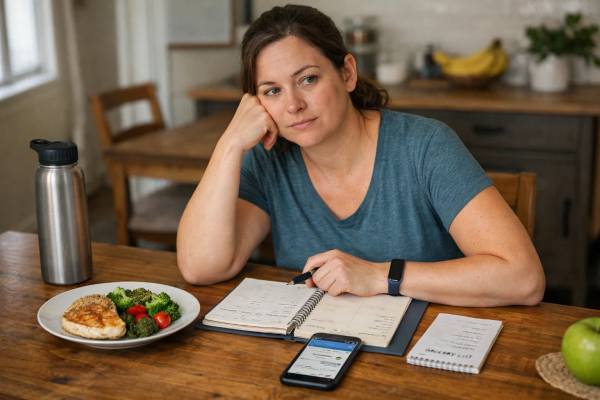
If you are tracking your food, exercising, saying no to treats, and still not seeing the scale move, the problem is usually not laziness or lack of discipline. More often, one or two variables are quietly distorting the picture: a deficit that is smaller than it looks, water retention hiding real fat loss, lower daily movement, appetite compensation, or a medical or lifestyle factor that has not been addressed yet.
The good news is that a stubborn stall is usually explainable. Once you know what to check, you can stop guessing and troubleshoot in a more useful order. This article walks through the most common reasons weight loss stalls even when you feel like you are doing everything right, and what to look at before cutting calories harder.
Table of Contents
- First check whether it is a true stall
- Hidden intake errors add up
- Your deficit may have quietly shrunk
- Water retention can hide progress
- Exercise does not guarantee a larger deficit
- Sleep stress and routine still matter
- A smart troubleshooting plan and red flags
First check whether it is a true stall
The first question is not whether you feel stuck. It is whether you are actually in a plateau.
A true weight loss stall usually means your average body weight has not meaningfully decreased for at least 2 to 4 weeks under reasonably consistent conditions. That timeframe matters because body weight is noisy. Sodium, carbohydrate intake, stress, poor sleep, harder training, constipation, menstrual cycle changes, travel, and restaurant meals can all raise scale weight temporarily even when body fat is going down.
This is why one frustrating week is rarely enough to diagnose a real plateau. You need a trend, not a mood. If you weigh daily or several times per week, look at the rolling average rather than any single number. If you only weigh occasionally, it is easy to miss the pattern completely and feel stuck when you are really just seeing normal fluctuation. A structured check like how to tell in 2 to 4 weeks whether it is a real plateau can help separate noise from an actual problem.
You also need to define progress more broadly than the scale alone. If your waist is shrinking, photos look different, gym performance is stable or improving, and clothes fit better, you may be recomping rather than fully stalled. That is especially common if you recently increased strength training, returned to exercise after time off, or raised protein intake. In those cases, tracking progress without the scale is not a consolation prize. It is a better measurement strategy.
A few signs that it may not be a true stall yet:
- your weight is bouncing within a narrow range but the average is still drifting down
- you had a recent high-sodium, high-carb, or high-volume eating stretch
- your digestion has changed
- you started a harder workout plan
- you are close to goal weight, where fat loss usually slows
- body measurements are still improving
A few signs it may be a true stall:
- your average weight has been flat for 2 to 4 weeks
- your routine has been genuinely consistent
- your portions, steps, and tracking have not changed on purpose
- measurements and photos are flat too
- you are not in an obvious water-retention window
The point of this first check is simple: do not solve the wrong problem. Many people cut calories too quickly because they mistake temporary scale noise for failure. That often makes the next problem worse by increasing hunger, fatigue, and rebound eating.
Hidden intake errors add up
When people say they are doing everything right, the most common missing piece is not effort. It is accuracy. Weight loss can stall even when your food choices look healthy and your portions seem reasonable if your actual intake is higher than you think.
This does not mean you are lying to yourself. It means food intake is easy to underestimate. Oils, dressings, nut butters, handfuls, bites while cooking, drinks, weekend extras, restaurant portions, and “healthy” snacks can close a calorie deficit surprisingly fast. The more often you eyeball instead of measure, the more room there is for drift.
Common blind spots include:
- cooking oils that are poured instead of measured
- coffee drinks, juices, smoothies, and alcohol
- sauces, dressings, dips, and spreads
- nuts, granola, cheese, and trail mix
- kids’ leftovers, tasting while cooking, and desk snacks
- restaurant meals that seem light but are cooked with more fat than you would use at home
- weekdays that look controlled but weekends that quietly erase the deficit
This is especially important when you have been dieting for a while. The longer a routine runs, the easier it is for portions to creep and logging habits to loosen. A weighed serving slowly becomes “about right.” One snack becomes a few bites here and there. A weekend treat becomes normal background intake.
If that sounds familiar, you do not necessarily need to track forever. But you may need a short recalibration phase. For 7 to 14 days, tighten the basics:
- Weigh calorie-dense foods instead of estimating them.
- Log oils, condiments, drinks, and snacks.
- Keep restaurant meals limited or predictable.
- Compare weekdays and weekends honestly.
- Watch for “BLTs” like bites, licks, and tastes.
This kind of audit often reveals more than people expect. That is why issues such as hidden calories that stall weight loss and underreporting without realizing it are so common.
Another subtle problem is compensatory eating. You work out, feel virtuous, and end up hungrier later. Or you choose a protein bar, smoothie, or post-workout snack that quietly eats up much of the calorie burn. The pattern still feels disciplined, but the deficit shrinks.
Healthy eating can stall too if the overall energy balance is off. Avocados, olive oil, nuts, dark chocolate, granola, and protein snacks can all fit a fat-loss plan, but they are still calorie-dense. If your meals are nutritious yet easy to overshoot, the issue is not food quality alone. It is the relationship between quality, quantity, and satiety.
Your deficit may have quietly shrunk
Even if your tracking is accurate, your original calorie target may no longer be creating the same deficit it did at the start.
As you lose weight, your body usually needs fewer calories to maintain itself. A lighter body costs less energy to move, less energy to carry through daily life, and often less energy to maintain at rest. That means the intake that worked well 20 pounds ago may now produce slower loss, or no loss at all. This is one reason your calorie deficit naturally shrinks as you lose weight.
There is also a behavioral side to this. Dieting fatigue can make routines look the same on paper while getting less precise in real life. You may still be “on plan,” but:
- meal prep is less consistent
- portions have grown
- you are eating out more often
- hunger is higher at night
- your food choices are a little more reward-driven
- you are taking fewer steps without noticing
At the same time, the body can adapt in smaller ways that make continued loss harder. Resting energy expenditure may drop somewhat with weight loss, movement efficiency can improve, and non-exercise activity often falls. This does not mean your metabolism is broken or that you are in “starvation mode.” It means the body tends to defend itself against ongoing energy shortage in practical, measurable ways.
This is where people often make two opposite mistakes. One is refusing to adjust anything because they feel they should still be losing at the old rate. The other is slashing calories too aggressively. Usually the better move is more measured:
- recalculate your likely maintenance needs
- estimate the size of your current deficit honestly
- check whether your daily activity has dropped
- tighten consistency before cutting intake
- reduce calories modestly only if the data support it
If you suspect your intake is now simply too high for continued progress, a small adjustment can be enough. That might mean trimming 100 to 200 calories per day, tightening restaurant meals, reducing alcohol, or raising steps slightly. In other cases, the real problem is that you are pushing too hard, getting increasingly hungry, and drifting into overeating later. Articles like when to recalculate calories and how to adjust calories and macros during a stall fit this phase well.
The key idea is that your plan cannot stay frozen while your body and behavior change. A good weight loss strategy is dynamic. It gets updated before frustration turns into “nothing works for me.”
Water retention can hide progress
One of the most frustrating realities of fat loss is that body fat and scale weight do not move in perfect sync. You can be losing fat while the scale looks flat, or even up, because water is masking the change.
This matters more than most people realize. Water retention is a common reason people think they are doing everything right but not losing weight. In reality, they may be losing fat and holding extra fluid temporarily because of one or more of the following:
- higher sodium intake
- more carbohydrates than usual
- hard training and muscle soreness
- poor sleep
- psychological stress
- constipation
- menstrual cycle shifts
- travel, heat, or long periods of sitting
That is why a plateau should never be judged in isolation from context. If you had a high-sodium weekend, started lifting harder, are due for your period, and slept badly all week, a flat scale tells you very little by itself.
This becomes especially important in the last phase of dieting. The closer you get to goal weight, the slower fat loss often becomes, and the easier it is for a modest amount of retained water to completely hide it. A two-week flat trend can feel like failure when it is really a slow loss plus temporary fluid retention.
Constipation and digestion can also distort the picture. If your bowel habits are off, food volume alone can hold scale weight up. So can increasing fiber suddenly, changing meal timing, or eating much more restaurant food than usual.
If you suspect this is happening, do not react by panic-cutting calories. Instead:
- Keep intake steady for several more days.
- Normalize sodium and meal structure.
- Hydrate normally rather than drastically.
- Keep activity consistent.
- Compare average weight, waist, and how clothes fit.
This is where understanding water retention hiding fat loss and the difference between bloating and actual fat gain can save you from making a smart plan worse.
A useful rule is that true fat gain usually comes from repeated calorie surplus over time. Temporary jumps after one salty meal, one weekend away, one hard leg day, or one stressful week are much more often fluid, glycogen, digestion, or inflammation related. That does not mean the scale should be ignored. It means it needs interpretation.
Exercise does not guarantee a larger deficit
Exercise is valuable for fat loss, health, muscle retention, appetite regulation, and long-term maintenance. But it does not always create as large a deficit as people expect.
The first issue is simple overestimation. Treadmills, watches, cardio machines, and apps often give calorie-burn numbers that are rough at best. If you “eat back” exercise calories generously, you can erase much of the intended deficit without realizing it.
The second issue is compensation. A hard workout can increase hunger, justify extra treats, or reduce your movement for the rest of the day. You may burn 300 calories during training and then sit more, snack more, or feel more deserving of extras later. The workout still helps, but the net deficit is smaller than it looks.
That is why someone can start exercising more and still see the scale slow down. This does not mean exercise is pointless. It means exercise lives inside the whole energy-balance system.
A few common compensation patterns:
- tougher cardio followed by more nighttime hunger
- strength training followed by “reward eating”
- morning workouts followed by less spontaneous movement later
- extra gym sessions paired with more rest-day inactivity
- fatigue that lowers step count without you noticing
This effect is one reason exercise compensation and drops in daily movement during dieting are so important to check. NEAT, which includes everyday movement like walking, standing, chores, and fidgeting, can change far more than people realize. You may be training hard for one hour and moving less for the other fifteen.
Muscle gain and inflammation can also muddy the scale, especially if you recently added strength training. In that case, the issue may not be “no progress” at all. It may be that your body composition is improving while water and muscle-related changes flatten the scale temporarily.
A smarter exercise lens is this:
- use exercise to support the deficit, not define it
- keep steps or general movement stable
- do not automatically eat back device calories
- pay attention to hunger after certain workouts
- judge the program by trend data, not one week
If your training is intense but recovery, hunger, and daily activity are not well managed, the plan can look heroic and still underperform. Sometimes the fix is not more exercise. It is better integration between food intake, recovery, and everyday movement.
Sleep stress and routine still matter
Weight loss is not just a math problem. It is a behavior problem happening inside a body that responds to sleep, stress, routine, and fatigue.
Sleep is one of the easiest plateau drivers to underestimate. Poor sleep can increase hunger, reduce satiety, worsen cravings, lower patience, and make calorie-dense foods more appealing. It can also make workouts feel harder and reduce spontaneous movement the next day. You may still be “trying hard,” but the conditions are working against you.
Stress creates a similar effect. Not every stressed person overeats, but many people do eat differently under chronic pressure. They snack more mindlessly, get less satisfaction from structured meals, become more impulsive at night, and tolerate hunger worse. Even when intake does not change much, stress can shift food choices, routine quality, and water retention enough to flatten the scale.
Routine disruption matters too. A plan can look good from the outside while daily rhythm falls apart:
- meals get pushed later and later
- breakfast becomes coffee only
- protein intake is inconsistent
- weekends stop resembling weekdays
- work stress causes long sedentary stretches
- late-night snacking returns
- step count drops on busy days
These issues often show up during plateaus because dieting itself is tiring. The longer the effort lasts, the more ordinary life friction starts to matter.
This does not mean you need a perfect lifestyle before fat loss can happen. It means that once the obvious nutrition basics are in place, recovery and routine become more important than people expect. If sleep has slipped, repairing sleep debt and recovery may help more than cutting another 150 calories. If weekdays are controlled but weekends keep unraveling, something like fixing weekend overeating patterns may be more effective than changing your weekday breakfast.
A few useful questions:
- Are you sleeping enough to manage hunger well?
- Has stress made you more impulsive around food?
- Do evenings feel harder than mornings?
- Has your weekend routine drifted?
- Are you more sedentary on busy days than you realize?
People often call this “doing everything right,” but what they really mean is “I am trying very hard.” Those are not always the same thing. Trying hard while sleep, stress, and routine are deteriorating can create a plateau even when motivation is high.
A smart troubleshooting plan and red flags
When the scale is not moving, the most useful response is a calm audit in the right order. Do not jump straight to harsher dieting. Start by checking the factors that most often explain a stall.
| What you notice | Most likely issue | What to check next |
|---|---|---|
| Scale flat for one week | Normal fluctuation | Use a 2 to 4 week average |
| Healthy eating but no loss | Intake higher than expected | Audit oils, snacks, drinks, weekends, and portions |
| Plan used to work but now stalled | Deficit has shrunk | Recalculate targets and review activity |
| Waist changing but scale flat | Water retention or recomposition | Use measurements, photos, and consistency |
| More exercise but not more loss | Compensation | Review hunger, steps, and eating back calories |
| Good plan but poor sleep and high stress | Recovery and routine problems | Improve sleep, meal timing, and evening structure |
A practical two-week troubleshooting plan looks like this:
- Keep calories steady instead of panic-cutting.
- Weigh under similar conditions and track the average.
- Tighten logging accuracy for calorie-dense foods.
- Keep steps and meal timing consistent.
- Limit restaurant meals and alcohol temporarily.
- Track waist, photos, and workout performance.
- Review sleep, stress, digestion, and menstrual timing.
If after that your average weight, measurements, and trend data are still flat, then a modest change makes sense. That may be a small calorie reduction, slightly higher steps, better weekend structure, or more consistent protein and meal timing. You do not need a dramatic reset. You need a precise one.
There are also situations where it is worth thinking beyond normal plateau mechanics. A clinician can help if:
- weight is rising despite clearly reduced intake
- fatigue, constipation, hair loss, cold intolerance, or menstrual changes are prominent
- a new medication may be affecting weight
- you have symptoms of sleep apnea
- PCOS, hypothyroidism, insulin resistance, depression, or another medical issue may be in the picture
In those cases, pages on medical barriers to weight loss and when to see a doctor for trouble losing weight become highly relevant.
The most important takeaway is that a stall is feedback, not proof that your body is broken. When you troubleshoot in the right order, the missing piece is often far more ordinary and fixable than it feels in the moment.
References
- Overweight and obesity management 2025 (Guideline)
- Differential mechanisms affecting weight loss and weight loss maintenance 2023 (Review)
- Dietary and Lifestyle Strategies for Obesity 2024 (Review)
- Sleep Deprivation: Effects on Weight Loss and Weight Loss Maintenance 2022 (Review)
- Changes in Energy Intake and Non-exercise Physical Activity 2023 (Review)
Disclaimer
This article is for general educational purposes only and is not a substitute for medical advice, diagnosis, or treatment. If you have persistent weight loss resistance, major fatigue, menstrual changes, suspected sleep apnea, or think a medication or medical condition may be affecting your weight, discuss it with a qualified clinician.
If you found this article helpful, please share it on Facebook, X, or your preferred platform so others can troubleshoot a stubborn stall more calmly and effectively.