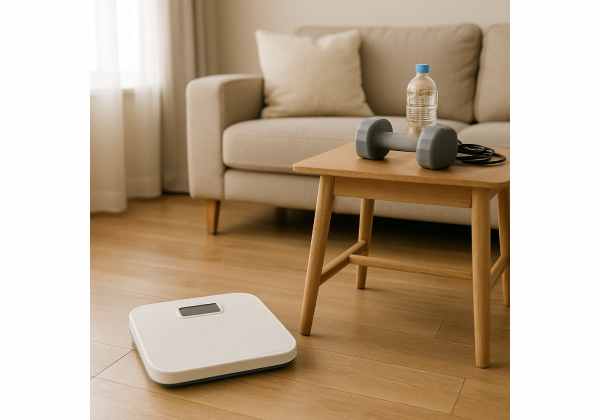
You can keep eating in a calorie deficit, keep doing your workouts, and still lose less weight than expected because your everyday movement quietly falls. That drop is often called a NEAT drop. NEAT, or non-exercise activity thermogenesis, covers the calories you burn through ordinary movement outside formal exercise: walking around the house, standing, doing errands, taking stairs, shifting position, and all the little motions that make up an active day.
This matters because dieting does not just change what you eat. It can also change how much you move without you noticing. If your daily movement slips far enough, part of your deficit disappears. The good news is that NEAT can be tracked, protected, and rebuilt with simple routines once you know what to watch.
Table of Contents
- What NEAT Means During a Diet
- Why NEAT Often Drops When Calories Drop
- How to Tell Your Movement Has Slipped
- The Best Ways to Keep NEAT Up
- How to Build a Daily Movement System
- What to Do if Your NEAT Drop Caused a Stall
What NEAT Means During a Diet
NEAT is one of the most misunderstood parts of fat loss. People tend to think of calorie burn as mostly workouts, but for many adults, everyday movement contributes a large share of activity-related energy expenditure. NEAT includes things like:
- walking to the kitchen, mailbox, or store
- standing while cooking or working
- cleaning, carrying groceries, and doing chores
- taking stairs instead of elevators
- parking farther away
- pacing while on calls
- getting up more often during the day
- small spontaneous movements like shifting posture or fidgeting
What NEAT does not include is deliberate exercise such as a run, lifting session, spin class, or a scheduled treadmill workout. That is why someone can keep their gym routine exactly the same and still burn fewer calories overall if the rest of the day becomes more sedentary.
During a diet, this distinction becomes important fast. You may still be “doing everything right” in the obvious sense. You train four times per week, log your meals, and stay under your calorie target. But if you start sitting more, skipping walks, or moving more slowly through the day because you feel tired or hungry, your actual energy output can fall.
A common example looks like this: someone begins dieting and adds three gym sessions per week. They expect the scale to move quickly. But outside those sessions, they unconsciously take fewer steps, sit longer after work, do less housework, and avoid optional movement. The planned exercise stays in place, but the rest of the day gets quieter.
That is why NEAT matters so much during plateaus. It is not just a technical term. It is often the missing explanation for why expected fat loss does not match what happens on the scale. A consistent walking habit can matter just as much as a hard workout if it keeps your total daily movement from collapsing. In fact, for many people, preserving NEAT is one reason walking for weight loss works better than they expect.
A useful way to think about NEAT is this: it is the background activity level of your life. When that background stays high, dieting is usually smoother. When it falls, your calorie deficit often shrinks, your scale trend slows, and it becomes harder to tell whether the problem is intake, adaptation, or both.
Why NEAT Often Drops When Calories Drop
A NEAT drop during dieting is not a character flaw. It is usually an energy-conservation response. When calories come down, your body and behavior often adjust in ways that reduce total expenditure. Some of that change is expected because a lighter body burns fewer calories moving around. But some of it comes from moving less, even when you do not mean to.
This is one reason aggressive deficits can backfire. The harder the diet feels, the more likely you are to conserve energy in the rest of the day. You may not notice it happening because it shows up in tiny choices:
- sitting instead of standing
- taking fewer trips around the house
- choosing the closest parking spot
- delaying errands
- skipping a short walk because you feel flat
- moving more slowly when tired
- spending more time on the couch after training
These changes can seem trivial one by one. Over a full week, they are not trivial.
Dieting can also lower motivation for spontaneous movement. Formal exercise has a start and finish, but NEAT depends on many small actions that are easy to cancel when energy is low. That is why people often overestimate how active they still are. They remember the workout, but not the quieter day wrapped around it.
Sleep, stress, and hunger make this worse. If your diet is already pushing your energy low, poor sleep can make movement feel even more expensive. Harder training can do the same if recovery is poor. A difficult deficit plus bad sleep often creates a perfect setup for lower daily movement. If that pattern sounds familiar, fix sleep and recovery during a stall before assuming the only answer is fewer calories.
Another issue is compensation. Many people increase exercise and assume the added calorie burn will show up directly in fat loss. Sometimes part of that exercise burn is offset by lower movement later in the day. You train hard, then subconsciously rest more. The workout still helps, but not as much as you expected.
A modest, sustainable deficit usually protects NEAT better than a severe one. So does eating enough protein, planning meals well, and keeping recovery under control. This is one reason the most effective calorie deficit strategies are usually the ones that reduce hunger and preserve routine, rather than chasing the largest possible gap.
The key point is simple: your body does not only respond to dieting by losing weight. It also responds by trying to make the deficit cost less. Lower NEAT is one of the most common ways that happens.
How to Tell Your Movement Has Slipped
Most people do not notice a NEAT drop in real time. They notice it later, when weight loss slows or a plateau seems to appear “for no reason.” That is why detection matters.
The easiest signal is a step trend. If you normally average 9,000 steps and have drifted down to 6,000 without intending to, that is not a small change. Even if you still hit the gym, that drop may be large enough to shrink your deficit meaningfully. A wearable is not perfect, but it is much better than guessing.
The second signal is behavioral, not digital. Ask yourself:
- Am I sitting more between tasks?
- Am I avoiding optional walking?
- Am I taking fewer breaks from my desk?
- Am I doing less housework or fewer errands on foot?
- Am I more likely to stay parked once I sit down?
If the answer is yes to several of those, your NEAT may have fallen even if your workouts are unchanged.
A third clue is how your day feels. People with a meaningful NEAT drop often describe themselves as “just more still.” They do not necessarily feel lazy. They feel flatter, heavier, less spontaneous, and less willing to move unless there is a strong reason. That subjective shift matters.
| What you notice | What it may mean |
|---|---|
| Step count is down for 1 to 2 weeks | Your daily movement has likely slipped enough to affect your deficit |
| You still exercise but sit most of the day | Formal workouts may not be offsetting a more sedentary routine |
| You feel unusually tired after work and stop moving | Diet fatigue may be suppressing spontaneous activity |
| Scale loss slows without obvious intake changes | A NEAT drop may be contributing to the stall |
| Weekends are much less active than weekdays | Your average movement may be lower than you think |
Another strong clue is a mismatch between effort and outcome. If you are still tracking food well, still training, and still expecting progress, but the scale trend is flatter than it should be, it is worth checking for a NEAT drop before cutting calories lower. A proper daily weigh-in protocol helps you separate a real slowdown from normal noise, especially when water retention is also in the picture.
This is also why many plateaus are not really mysterious. They are often a combination of slightly less movement, slightly looser intake, and slightly more fatigue than you realize. If you suspect that is happening, compare your last 2 to 4 weeks against the markers of a true weight loss plateau before assuming your metabolism is broken.
The Best Ways to Keep NEAT Up
The best way to protect NEAT is to make daily movement less dependent on motivation. If you wait until you feel energetic and spontaneous, your NEAT will usually drop when the diet gets harder. Systems work better than intentions.
Start with one number: a realistic step floor. Not a perfect step target. A floor. This is the daily minimum you aim to protect even on low-energy days. For one person that may be 6,000 steps. For another it may be 8,000 or 10,000. The best floor is one you can hit consistently without turning it into a second workout.
Then spread movement through the day. A single evening walk helps, but NEAT is easier to preserve when it is broken into smaller pieces. Good options include:
- a 5- to 10-minute walk after meals
- walking during phone calls
- a lap around the office or home every hour
- stairs whenever practical
- parking slightly farther away
- standing for part of meetings or screen time
- short errand walks instead of saving everything for the car
Short walks are especially useful because they are easy to repeat. A few 10-minute walks after meals can lift daily movement more reliably than hoping for one long walk later when your motivation is lower.
Environment design also matters more than willpower. Shoes by the door, a filled water bottle nearby, reminders to stand, a visible walking route, or an under-desk setup that makes movement easy can all raise the odds that you keep moving. The less friction, the better.
For desk-heavy days, protect movement before and after work and between long seated blocks. That is why a structured desk job movement plan often works better than vague advice to “move more.” Your NEAT drops in the cracks of the day, so your fixes need to live there too.
Finally, do not ignore food structure. If your diet is so aggressive that you feel drained all afternoon, you are more likely to sit still. Protein, fiber, hydration, and meal timing all influence how willing you are to keep moving. NEAT is not only an activity problem. It is also a recovery and appetite-management problem.
The goal is not to become hyperactive. It is to keep your normal human movement from shrinking every time calories come down.
How to Build a Daily Movement System
A good NEAT plan should survive a busy day, a low-energy day, and a boring day. That means it needs structure. The easiest way to do that is to build movement into anchors you already have.
Use this three-layer system.
First, set a baseline. Choose your daily step floor and write down your average over the next week. Do not start by chasing a huge increase. Start by knowing your real number. If your current average is 5,800, jumping straight to 12,000 usually fails. Building to 7,000 or 7,500 is more realistic.
Second, attach movement to fixed events. Good anchors include:
- After breakfast: 5-minute walk.
- Mid-morning: stand and move for 3 to 5 minutes.
- After lunch: 10-minute walk.
- Late afternoon: quick errand walk or stairs.
- After dinner: 10-minute walk.
This works because you no longer have to decide when to move. The cue does the work.
Third, create a rescue plan for bad days. Your rescue plan is what keeps NEAT from collapsing when life gets messy. For example:
- two 10-minute walks if the day gets away from you
- 1,000 extra steps before lunch and 1,000 after dinner
- every call taken while walking
- no sitting for more than 60 minutes at a time
- one lap around the house or office whenever you refill water
This “minimum effective movement” mindset is powerful. It stops all-or-nothing thinking. Missing your ideal target no longer turns into a sedentary day.
It also helps to track movement the way you track weight: by trend, not perfection. Daily life fluctuates. Some days will be lower. What matters is whether your weekly average is holding up.
Accountability helps here too. Some people do well with a wearable dashboard. Others need a visible checklist, a shared challenge, or a friend who asks whether the walks happened. If you struggle with consistency, a simple weight loss accountability system can keep movement from fading into the background.
Lastly, keep expectations realistic. NEAT is not about chasing exhaustion. It is about defending the ordinary movement that diets tend to erase. Done well, it should feel sustainable, almost boring in a good way. That is exactly why it works.
What to Do if Your NEAT Drop Caused a Stall
If your daily movement has clearly fallen and your weight loss has slowed, the first move is usually not to slash calories harder. The smarter move is to restore the movement that quietly disappeared.
Start with a 7- to 14-day audit. Keep your food intake steady, track your steps honestly, and bring your daily movement back to your previous baseline or to a realistic new floor. That lets you see whether the stall was partly a NEAT issue rather than a sign that the whole diet needs rewriting.
Here is a practical order of operations:
- Rebuild your step floor.
- Add one or two short anchor walks each day.
- Reduce long sedentary stretches.
- Protect sleep and recovery.
- Reassess your weekly weight trend.
In many cases, that alone is enough to restart progress. If it does, you have learned something valuable: the problem was not necessarily that calories were too high. It was that actual output drifted down.
If restoring movement does not help after a fair trial, then look at the rest of the picture. Check for looser tracking, more restaurant meals, low protein, weekend overeating, or a deficit that has simply become too small for your current body size. At that point, a structured plan to adjust calories and macros may be useful. But movement should be checked first because it is often the cleaner fix.
Also be careful not to compensate emotionally. People who notice a stall often respond by adding punishing cardio or cutting food sharply. That can make fatigue worse and push NEAT even lower outside the workout. More effort inside the gym does not always mean more total movement across the day.
If your step count is already solid and you are still stuck, then your next move may be to progress movement gradually rather than dramatically. For example, add 1,000 to 1,500 daily steps and reassess instead of forcing a huge jump. If you are unsure how to do that without creating another unsustainable rule, use a gradual plan for when steps are not enough for fat loss and you need a sensible increase.
The broader lesson is this: a NEAT drop is common, fixable, and often invisible until you measure it. Once you start treating daily movement as part of the plan rather than an optional bonus, fat loss usually becomes more predictable and plateaus become easier to explain.
References
- Non-Exercise Activity Thermogenesis in Human Energy Homeostasis 2022 (Review)
- Does adaptive thermogenesis occur after weight loss in adults? A systematic review 2022 (Systematic Review)
- Obesity Management in Adults: A Review 2023 (Review)
- Aerobic Exercise and Weight Loss in Adults: A Systematic Review and Dose-Response Meta-Analysis 2024 (Systematic Review)
Disclaimer
This article is for general educational purposes only and is not a substitute for medical advice, diagnosis, or treatment. If fatigue, dizziness, menstrual changes, medication effects, pain, or persistent difficulty losing weight are part of the picture, speak with a qualified clinician for individualized guidance.
If this article was useful, please share it on Facebook, X, or another platform where it could help someone else.