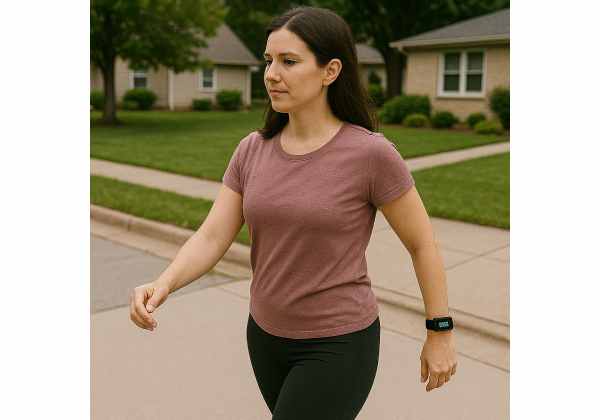
Walking more is one of the simplest ways to increase daily energy expenditure, improve fitness, and make a fat-loss plan more sustainable. But steps alone do not guarantee continued fat loss, especially once the easy progress is gone. If your step count is already decent, your food intake has drifted up, or your body has quietly compensated by moving less the rest of the day, adding more walking may stop producing meaningful results.
That does not mean steps are useless. It means they need to be used strategically. The most effective step plans are not built around a magic number or a burst of motivation. They are built around your real baseline, small increases you can recover from, and clear signs that tell you when it is time to keep pushing steps and when it is time to adjust something else.
Table of Contents
- Why steps help and still stall
- Five reasons steps stop working
- Start with a true baseline
- Increment plans by starting point
- Make your step goal easier to repeat
- Know when to change the lever
Why steps help and still stall
Steps are useful because they raise movement across the day without demanding a formal workout mindset. For many people, that makes them one of the easiest fat-loss tools to start and one of the hardest to argue against. Walking is accessible, low cost, and usually easier to recover from than hard intervals or long gym sessions.
But there is a catch: steps are a dose of movement, not a guaranteed fat-loss mechanism by themselves.
They help because they increase daily activity and support a calorie deficit. They also improve routine. A person who walks more often is often less sedentary overall, more consistent with meals, and less likely to let an entire day disappear into sitting. That is why step-based plans often work well early on, especially for people who were previously inactive. A baseline of 3,000 or 4,000 steps can often move upward without much friction, and that change can matter.
The problem starts when people assume more steps will always keep working the same way. In reality, walking has diminishing practical returns. Going from 3,500 steps to 6,000 may be a meaningful lifestyle change. Going from 9,500 to 12,000 may take much more time and effort for a smaller payoff, especially if food intake rises to match it.
Another issue is that step count measures volume, not the full training dose. Ten thousand slow indoor steps broken up over a day do not stress the body the same way as a brisk hill walk, loaded walk, or a structured cardio session. That does not make the steps worthless. It just means count alone can hide the bigger picture.
This is why people often get confused when a walking plan worked for a while and then stopped moving the scale. They assume either walking “doesn’t count” or they simply need to push to a bigger number. Often neither is true. The better question is whether steps are still the best lever.
A useful way to think about walking is this: steps are one of the most practical ways to raise daily non-exercise activity, but they are only one part of a fat-loss system. If you are relying on them as your entire system, they may stop being enough. If you use them alongside a sensible deficit, adequate protein, and some strength work, they often become far more effective.
That is also why general advice on walking for weight loss works best as a starting point, not as a complete plateau strategy. Walking is often the first lever, but it is not always the last one you should pull.
Five reasons steps stop working
When fat loss slows, the step count itself is not always the real problem. More often, the issue is how the rest of the system has adapted around it.
Here are the most common reasons a walking plan stops delivering results.
1. You are eating back the extra movement without noticing.
This is the classic problem. Walking more can increase hunger or create a quiet sense of “earning” extra food. That does not have to look like binge eating. It might look like an extra latte, a larger dinner, a few handfuls of nuts, or looser weekends. The extra movement stays real, but the calorie gap shrinks.
2. Your non-walking movement drops.
Someone might add a 40-minute walk and then sit more for the rest of the day because they feel tired or satisfied that they already “did the healthy thing.” Total daily expenditure may rise less than expected.
3. Your body gets more efficient at the same routine.
The same flat neighborhood loop at the same casual pace becomes easier over time. That is good for fitness, but it means the plan may stop providing a new challenge. Count stays the same, but the training effect becomes familiar.
4. Your baseline is already fairly high.
If you are already averaging 8,500 to 10,000 steps, adding a little more may help health and routine, but it may not be the highest-return lever for fat loss anymore. At that point, food quality, calorie accuracy, recovery, and strength training often matter more.
5. You are reading the wrong signal.
Sometimes steps are working, but the scale is noisy because of water retention, higher carb intake, sodium, poor sleep, or a hard training block. This is why people often think nothing is happening when the real issue is that the short-term data are messy.
That last point matters a lot. If your weight is flat for a week after raising steps, that does not automatically mean the plan failed. If your average body weight, waist, and photos are unchanged over a few weeks, that is more meaningful. A better way to check whether movement is actually supporting a deficit is to look at the basics of a calorie deficit that still reduces hunger, not just the watch on your wrist.
Another original but useful way to think about this is that walking often fails indirectly, not directly. The plan fails because it is too time-heavy, too vague, too easy to compensate for, or too disconnected from the rest of your routine. That is why “walk more” is weak advice, while “raise your average by 1,000 steps for two weeks and keep dinner the same” is much stronger.
The fix is not automatically more effort. The fix is better design.
Start with a true baseline
If you want an increment plan that sticks, start with the number you actually live at now, not the number that sounds respectable. A fake baseline creates fake progress. It also leads people to choose targets that feel motivating for three days and irritating for three weeks.
Track your steps for 7 to 14 normal days before changing anything. That means regular workdays, errands, commuting, and your usual weekend pattern. Do not try to impress yourself during the baseline. You are not testing discipline. You are finding the reality you need to build from.
A true baseline matters because these two people should not use the same walking plan:
- someone averaging 3,200 steps a day
- someone averaging 8,900 steps a day
The first person usually has room for a meaningful increase without much fatigue. The second person may already be active enough that pushing steps much higher becomes more of a time-management problem than a fat-loss solution.
While collecting the baseline, note a few extra things:
- Which days are naturally low?
- Which days already include easy walking opportunities?
- Are your low-step days caused by desk work, childcare, commuting, pain, weather, or simple forgetfulness?
- Does appetite spike on days when you walk more?
- Does the scale trend change at all over the same period?
This lets you build a plan around your real friction points. For example, if weekdays are low because of long desk hours, your answer is not “be more motivated.” It may be midday walking breaks or a structured desk-job movement plan. If weekends are inconsistent, your answer may be a fixed morning walk before social plans start.
You should also decide how you will judge whether the plan is working. Step count alone is not enough. The most practical dashboard is usually:
- average daily steps
- body-weight trend
- waist or clothes fit
- hunger and recovery
- adherence to the plan
That is where a consistent daily weigh-in routine helps. Not because weight is everything, but because it helps you tell the difference between “I walked more but also ate more” and “I walked more and the trend is slowly shifting.”
Another useful checkpoint is whether you are seeing any progress that does not depend on the scale. More energy, easier walking pace, better recovery from stairs, a smaller waist, or looser pants can all matter. That is why it helps to keep an eye on progress beyond the scale, especially when walking volume changes cause short-term water shifts or lifestyle changes that the scale reflects imperfectly.
A baseline is not glamorous, but it saves time. It tells you whether the next step should be 500 more steps, 1,500 more steps, or not a step increase at all.
Increment plans by starting point
The best walking progression is usually boring enough to repeat. That means small enough to recover from, clear enough to measure, and realistic enough to survive a bad week.
A strong rule of thumb is to increase steps by about 500 to 1,500 per day above baseline, then hold that level for 10 to 14 days before changing it again. People at the lower end of activity can often tolerate bigger increases. People already near 9,000 or 10,000 often do better with smaller increases, faster walking, or a different lever entirely.
| Current average steps | First increase | How to add them | When to progress |
|---|---|---|---|
| Under 4,000 | Add 1,000 to 1,500 per day | One 10 to 15 minute walk plus a few short movement breaks | After 10 to 14 steady days |
| 4,000 to 6,500 | Add 750 to 1,250 per day | Morning walk, lunch walk, or after-dinner walk | After 2 consistent weeks |
| 6,500 to 8,500 | Add 500 to 1,000 per day | Keep one anchor walk and increase everyday movement | Only if recovery and schedule stay good |
| Above 8,500 | Add 500 to 750 per day or raise pace instead | Use brisk walks, hills, incline treadmill, or tighter food control | Only if the added time is truly sustainable |
A few principles make these plans more effective:
- Increase one thing at a time. If you add 2,500 steps, start strength training, and slash calories all in the same week, you will not know what is helping or what is making you miserable.
- Use minutes when that is easier than steps. A 10-minute brisk walk after lunch and dinner is often easier to keep than chasing a floating daily number.
- Do not worship 10,000. It is a useful round number, not a law of metabolism.
- Match the plan to the environment. Treadmill desk, phone calls on foot, parking farther away, and short walks after meals often work better than relying on one big heroic walk.
A particularly good plateau strategy is to combine one anchor walk with ambient movement. For example:
- One deliberate 20-minute walk daily
- Two or three 5-minute movement breaks
- A parking, stairs, or errands rule that quietly lifts the total
This works because it spreads the effort. The more your plan depends on a single perfect block of time, the more fragile it becomes.
If you already have a desk-based schedule, building your increase into work hours often beats trying to “make it up later.” That is where a practical desk-job movement system can be more valuable than another big target number.
The right increment plan should feel almost too easy at first. That is usually a good sign.
Make your step goal easier to repeat
The best walking plan is not the hardest one you can survive this week. It is the one you can keep doing on rainy Tuesdays, during deadline weeks, after poor sleep, and when motivation is average.
That means designing for friction, not pretending it will disappear.
A step goal becomes easier to repeat when it is attached to things that already happen. This is why habit-based walking beats motivation-based walking. Instead of deciding every day whether you “feel like” moving, you turn movement into part of the script.
Useful ways to do that include:
- walk for 10 minutes right after your first meal
- take every phone call standing or walking
- use a fixed parking spot farther away
- set a timer to stand and move every 60 to 90 minutes
- stack a short walk onto school pickup, dog care, or errands
- keep indoor options ready for bad weather
The time of day matters less than reliability. Morning walks work well for some people because the day cannot steal them yet. Post-meal walks work well for others because meals happen every day and create a natural cue. Late-afternoon walks can help people separate work stress from evening eating. Choose the slot that fights your real problem.
You should also decide what counts as a successful day. If your only definition of success is hitting the full target, you will turn one disrupted day into a skipped week. A better system uses tiers:
- minimum day: hit your floor
- good day: hit your target
- great day: exceed it naturally, without forcing it
For example, if your target is 8,000 steps, your floor might be 6,500. That gives you somewhere to land on hard days without feeling like the plan collapsed.
This is also where environment matters more than willpower. Shoes by the door, a walking route you do not have to think about, a backup indoor plan, and a realistic calendar all reduce the mental cost of moving. The most durable behavior changes are often embarrassingly practical.
Two more points matter if you want the plan to stick:
- Keep effort compatible with recovery. If you are sore, under-slept, and dragging, you may need a smaller increase or a brisker but shorter walk.
- Avoid turning steps into punishment. People stick to movement better when it feels useful and normal, not like repayment for eating.
That is why walking plans often work best when they are built with the same logic as habit stacking: small cue, clear action, easy win, repeat. If your work life is the main barrier, habits drawn from office-friendly movement and meal routines often support fat loss better than one giant evening march done out of guilt.
If a step plan keeps failing, the problem is usually not that walking is ineffective. It is that the plan asks for discipline where it should have used design.
Know when to change the lever
There comes a point where adding more steps is no longer the smartest move. The skill is knowing when you are there.
Steps are probably still the right lever if:
- your baseline was low and you have not yet made a meaningful increase
- the added walking does not make you hungrier or more tired
- your schedule can absorb the extra time without friction
- your weight trend, waist, or photos are slowly improving
- you are not already consistently very active
Steps may not be the best next lever if:
- you are already averaging around 9,000 to 11,000 steps
- your walking target is starting to feel like a second job
- food intake is clearly the bigger issue
- strength training is absent
- you are sore, under-recovered, or losing consistency elsewhere to maintain the step goal
- your body weight and waist have been flat for several weeks despite real adherence
At that point, it often makes more sense to change the quality of movement or the rest of the plan rather than just push the count.
Better next options may include:
- Tighten calorie accuracy
- portions may have drifted
- snacks, drinks, oils, and weekends may be eating the deficit
- Add or improve strength training
- this helps preserve lean mass during fat loss
- it often improves body composition even when scale change is modest
- Use brisker or more structured cardio
- incline treadmill walking
- purposeful brisk walks
- cycling, rowing, or another modality if time efficiency matters more than step count
- Protect recovery
- poor sleep and chronic fatigue can quietly reduce daily movement and increase appetite
- Reassess whether this is a true plateau
- one or two stagnant weeks do not always mean the plan has failed
That last point matters. Before changing everything, check the trend over two to four weeks, not two to four days. A proper calorie and macro adjustment often works better than chasing an extra 2,000 steps if diet drift is the real issue. And if your plan still has no resistance training in it, a simple 3-day beginner strength routine may give you more return than endlessly extending walks.
A good plateau decision rule is this:
- If you are below about 7,000 to 8,000 average steps and the plan is easy to maintain, raising steps is still worth trying.
- If you are already near or above that and fat loss has truly stalled, change another lever before assuming you need 14,000 daily steps.
The strongest fat-loss plans do not keep hammering the same tool. They use the tool that matches the current bottleneck. Sometimes that is more movement. Sometimes it is better food structure. Sometimes it is strength training. Sometimes it is simply admitting that the step count is fine and something else is not.
References
- WHO guidelines on physical activity and sedentary behaviour 2020 (Guideline)
- Obesity Management in Adults: A Review 2023 (Review)
- Weight Loss in Short-Term Interventions for Physical Activity and Nutrition Among Adults With Overweight or Obesity: A Systematic Review and Meta-Analysis 2024 (Systematic Review)
- Aerobic Exercise and Weight Loss in Adults: A Systematic Review and Dose-Response Meta-Analysis 2024 (Systematic Review)
- Daily steps and health outcomes in adults: a systematic review and dose-response meta-analysis 2025 (Systematic Review)
Disclaimer
This article is for general educational purposes only. Walking targets, step tolerance, and fat-loss response vary with fitness level, joint health, medications, medical conditions, and total calorie intake, so this is not a substitute for personal medical advice, diagnosis, or treatment. If walking causes chest pain, dizziness, severe shortness of breath, worsening joint pain, or balance problems, speak with a qualified clinician before progressing your activity.
If this article helped you rethink your plateau, share it on Facebook, X, or your preferred platform so someone else can build a walking plan that is realistic enough to keep.