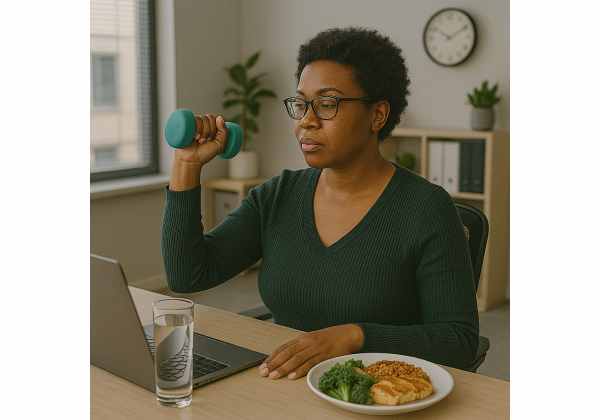
A desk job can make weight loss feel strangely difficult even when you are trying. The day starts with sitting, continues with meetings, email, and quick convenience meals, then ends when your energy is lowest and your appetite is often highest. That pattern can quietly push daily movement down while making stress snacking, takeout, and late-evening overeating more likely. The good news is that office worker weight loss habits do not need to be extreme to work. Small changes in how you move during the workday, how you plan meals, and how you handle stress can improve appetite control, reduce mindless eating, and help you stay more consistent from Monday to Friday. This guide focuses on practical habits that fit real office life, including commuting, packed calendars, hybrid work, and the mental fatigue that builds by late afternoon. The goal is not perfection. It is building a workweek that supports fat loss instead of quietly working against it.
Table of Contents
- Why Office Work Adds Friction
- Build Movement Into the Workday
- Fix Meals Before Hunger Takes Over
- Handle Stress and Desk Snacking
- Make Evenings and Sleep Work Better
- Weekly Systems That Keep You Consistent
Why Office Work Adds Friction
Office work does not cause weight gain on its own, but it creates a daily setup that makes fat loss harder than many people expect. Most office days combine long periods of sitting, easy access to snack food, disrupted meal timing, high screen exposure, mental fatigue, and just enough stress to make convenience feel reasonable. None of those things looks dramatic by itself. Together, they can quietly erase the deficit you thought you were creating.
The first problem is movement. A person can complete a workout in the morning and still spend the rest of the day largely seated. That matters because office life often lowers non-exercise movement, the everyday activity that happens between formal workouts. Standing to talk to a coworker, taking stairs, walking to lunch, or making short trips around the building may sound minor, but those actions add up. When they disappear, the day becomes more sedentary than it feels.
The second problem is decision fatigue. By late afternoon, many office workers have made hundreds of small work decisions. That mental drain changes food choices. The lunch packed at 7:00 in the morning may feel boring by 3:30 in the afternoon. The idea of cooking after the commute can feel much harder than it did at breakfast. This is why office weight loss is rarely solved by “trying harder” at 6:00 in the evening. It is usually solved by reducing how many hard choices are left by then.
The third problem is routine drift. Meetings run long. Lunch gets delayed. Coffee replaces food. Someone brings pastries. The day gets away from you. That kind of irregularity often leads to a predictable evening pattern: you arrive home overhungry, eat quickly, and keep going because the day never felt properly settled. If that sounds familiar, it helps to understand how diet, exercise, sleep, and stress interact rather than blaming the problem on food alone.
Office workers also tend to underestimate the impact of sitting because it feels normal, not passive. Yet normal is not the same as harmless. A desk job can turn an active person into someone who accumulates far less movement than they realize. That is why structured workday movement matters so much. It is not about pretending every short walk is a workout. It is about making sure the workday does not quietly collapse into chair time.
A useful mindset shift is this: your office job is not the enemy, but it is an environment that needs design. Once you treat the workday like a system instead of a test of discipline, practical solutions become much easier to build.
Build Movement Into the Workday
For office workers, movement usually improves fastest when it becomes part of the workday rather than something saved for the end of it. Many people assume they need a perfect gym routine to lose weight with a desk job. In reality, most benefit first from reducing long uninterrupted sitting and increasing total daily movement. Formal exercise still matters, but the hours between workouts matter too.
A practical office movement plan usually has three layers:
- Micro-breaks during sitting
- Short walks tied to existing transitions
- A minimum daily movement target outside workouts
Micro-breaks are the easiest starting point because they require almost no schedule change. Stand up during calls. Walk to refill water instead of using the closest option. Print to a farther printer. Take the stairs for one or two floors. Do not dismiss these as too small. Small actions work because they happen often.
Short walks are especially useful when tied to anchors you already have. Good examples include:
- after arriving at work
- after lunch
- after a long meeting block
- before driving home
- after dinner
These walks do more than add steps. They create transitions. A five- to ten-minute walk after lunch can break up a sedentary stretch and reduce the sluggish, snack-seeking feeling that often appears midafternoon. If you want a more detailed structure, an office and desk job movement plan makes this easier to repeat without constant planning.
The third layer is making sure the rest of the day is not passively inactive. Some people train hard three times a week but move very little on workdays otherwise. That pattern often feels healthier than it actually is. A better goal is to combine workouts with a floor for everyday activity. This might mean parking farther away, walking part of the commute, taking an extra lap around the office, or setting a standing reminder every 45 to 60 minutes.
A few office-friendly movement habits that tend to last are:
- schedule one walking meeting each week
- take your first break away from the desk, not on your phone
- keep shoes, bands, or a light layer ready for a short walk
- use the far restroom, far entrance, or far coffee station
- pair routine tasks with standing, such as checking messages or reviewing notes
This is also where people benefit from understanding how to burn more calories through everyday activity instead of treating exercise as the only movement that counts. The most effective office routines usually combine both.
Do not wait until you “have time” for movement. In office life, time usually does not appear on its own. It has to be built into transitions that already exist. When movement is attached to your day instead of added on top of it, it becomes much easier to keep.
Fix Meals Before Hunger Takes Over
Many office workers are not overeating because they are constantly hungry. They are overeating because they let hunger get too far ahead of them. A rushed breakfast, a delayed lunch, and a long gap before dinner can create a rebound effect that makes reasonable portions much harder to manage at night.
The best meal habits for desk jobs are usually boring in the best sense of the word. They reduce friction, protect appetite control, and keep food decisions from being made in a state of urgency. The goal is not to eat perfectly. It is to stop the day from drifting.
A stable office eating rhythm usually includes:
- a first meal that is not just coffee
- a dependable lunch plan
- a backup snack for long afternoons
- a dinner plan made before leaving work, not after arriving home exhausted
Lunch is often the hinge point. When it is skipped, delayed, or built around light snack foods, the rest of the day becomes harder. A solid lunch does not need to be elaborate. It does need enough substance to carry you through meetings and commute time. That is where packable and make-ahead lunches are often more helpful than trying to improvise every day.
Protein also deserves special attention. Meals that are too low in protein tend to fade quickly, especially in office settings where people rely on wraps, pastries, granola bars, or vending-machine snacks. A better pattern is to include a meaningful protein source in breakfast and lunch so that afternoon hunger does not spike. If you are not sure what that looks like, a realistic target and food examples become clearer when you understand protein intake for weight loss in day-to-day terms.
A few meal habits work especially well for office workers:
- decide tomorrow’s lunch the night before
- keep a shelf-stable backup snack at work
- eat lunch away from the keyboard when possible
- drink something with the meal instead of relying on caffeine alone
- do not save most of your intake for after work
The afternoon backup snack is often underrated. Many people resist it because they think all snacks are a problem. Planned snacks are different from reactive snacking. A yogurt, fruit with protein, or a simple balanced option at 4:00 can prevent the 7:00 evening crash that leads to overeating. The issue is not whether a snack exists. It is whether it protects the next decision.
Office meals get easier when you stop asking them to be exciting every day. Reliable beats exciting most weekdays. Build meals that travel well, reheat well, and keep you steady. Weight loss from a desk job usually improves when lunch stops being an afterthought and starts acting like part of the strategy.
Handle Stress and Desk Snacking
Desk snacking is rarely about true hunger alone. More often, it comes from a mix of boredom, stress, habit, and environmental exposure. The candy bowl sits in view. Someone brings treats to a meeting. You need a break but take it in food form because it is the fastest reward available. By the end of the week, those small unplanned bites can matter more than you think.
The first step is to identify what kind of snacking you are dealing with. Most office snacking falls into one of four types:
- stress snacking during deadlines or conflict
- boredom snacking when concentration drops
- social snacking because food is part of meetings or office culture
- delay snacking because a real meal was pushed too late
Each type needs a slightly different fix. Stress snacking usually improves when you create a non-food reset: a short walk, a breathing break, water, a change of location, or a quick task shift. Boredom snacking often improves when you stand up, move, or change the sensory environment rather than eating out of stimulation-seeking. Social snacking may require a boundary, such as serving yourself once, choosing the item deliberately, or stepping away from shared food after the meeting. Delay snacking is often solved by better meal timing, not stricter self-control.
Environment matters a lot. If food stays visible, open, and easy to reach, you will need more discipline than necessary. Make the healthy option easier and the impulsive option slightly less automatic. That might mean:
- keeping snacks out of sight, not on the desk
- portioning food before you sit down
- storing backup snacks in a drawer instead of grazing from a large bag
- avoiding “emergency” office foods that are mainly sugar and refined starch
- bringing a small planned option instead of relying on whatever is nearby
When stress is the driver, food is often doing emotional work. It is creating pause, relief, or reward. If that is happening often, it helps to use tools designed for stress-related cravings and overeating rather than treating the problem as simple laziness.
The same is true when you snack because lunch was too small or too far away. In that case, the better fix may be a planned afternoon option from a quick protein and fiber snack toolkit rather than trying to power through until dinner.
One more point matters in office settings: shame is not useful. Many people eat one unplanned cookie and mentally turn it into a failed day. That all-or-nothing response causes more damage than the food itself. A better response is quick and factual: note what triggered it, make the next meal normal, and adjust the environment or schedule that allowed the pattern to happen.
Desk snacking becomes easier to manage when you stop treating every snack like a moral event and start treating it like information. What made that food feel necessary right then? Answer that well, and the habit becomes much easier to change.
Make Evenings and Sleep Work Better
Many office workers think their main problem is what happens at the desk, but the workday often spills into the evening in ways that quietly affect weight loss. After sitting for hours and making decisions all day, people get home mentally tired, physically restless, and more likely to look for comfort in food, screens, or both. That is why evenings deserve as much attention as lunch breaks.
The first evening risk is decision overload. If dinner is not roughly planned before the commute home, takeout and grazing become much more tempting. The best fix is not heroic self-control at 7:30. It is deciding earlier what dinner will be. That choice can be simple: leftovers, a repeat meal, a protein plus vegetables plus starch formula, or one of a few dependable home options. For busy weekdays, a short list of easy high-protein, high-fiber dinners often prevents the “nothing sounds manageable” feeling that drives last-minute delivery.
The second issue is the false reward loop. Many office workers feel they “deserve” food after a hard day, even when they are not especially hungry. That feeling is understandable. The problem is that the workday then gets decompressed almost entirely through eating and sitting. A better evening routine includes at least one non-food transition, such as:
- a 10-minute walk after arriving home
- a shower before dinner prep
- changing clothes right away
- a short reset with music, stretching, or fresh air
- preparing tomorrow’s lunch before opening evening snacks
These small transitions help separate work stress from eating.
Sleep also plays a larger role than many office workers realize. Late screens, long commutes, unfinished work, and bedtime drift can all shorten sleep and make next-day appetite harder to control. Short sleep tends to raise cravings, reduce patience, and make high-calorie foods feel more appealing. If nights are inconsistent, weight loss often feels harder than it should. That is why it helps to know how much sleep supports appetite and recovery instead of focusing only on calories burned.
A strong evening routine does not need to be elaborate. It should do three jobs:
- lower stress after work
- make dinner easier to control
- protect the next morning from starting depleted
For many people, the most practical sequence is dinner, a brief walk or cleanup, kitchen close, low-light routine, and a consistent bedtime window. If screens are a big part of late-night drift, a more deliberate bedtime routine can help the workday stop following you into the night.
Office worker weight loss improves when evenings stop being recovery by chaos. A calmer night often creates a better morning, and that better morning makes the entire next workday easier to manage.
Weekly Systems That Keep You Consistent
Office workers rarely struggle because they do not know what healthy habits look like. They struggle because those habits are not supported by a repeatable weekly system. Work demands change. Social plans appear. Deadlines pile up. Without a basic structure, each week becomes a fresh negotiation, and progress depends too much on mood.
A good office weight loss system does not need to be rigid. It needs to answer a few questions before the week gets chaotic:
- What will I do for lunch most weekdays?
- When will movement happen during work hours?
- What are my easiest dinners on busy nights?
- What will I do when stress is high and time is short?
- How will I notice early if the week is drifting?
That is why weekends matter. A small amount of planning on Saturday or Sunday can reduce dozens of decisions later. The goal is not to meal prep every calorie. The goal is to lower friction. A simple weekly setup might include:
- choose three lunches
- choose three dinners
- buy one or two backup snacks
- schedule one or two workout windows
- set one workday movement rule, such as a walk after lunch
This kind of planning is often enough. If you want more structure without making weekends revolve around food, a compact one-hour weekend meal prep plan is usually more sustainable than marathon cooking sessions.
Consistency also improves when you track just enough to stay aware. Office workers often do better with a light-touch system than with perfectionist tracking. That could mean noting whether lunch was packed, whether walks happened, whether takeout stayed within plan, or whether bedtime drifted. You do not need 20 metrics. You need a few that show whether your routine is holding.
It also helps to expect imperfect weeks. Travel, deadlines, team lunches, birthdays, and long meetings will happen. Progress usually depends less on avoiding those disruptions than on recovering quickly afterward. The most successful office routines have a reset rule: return to planned meals at the next opportunity, re-establish movement the same day if possible, and avoid turning one messy workday into a lost week.
This is where regular check-ins help. A five-minute Friday review can catch patterns early:
- Which meal was easiest to skip?
- When did I snack most?
- Did sitting creep up when work got intense?
- What one change would make next week easier?
That style of review works especially well alongside daily or weekly accountability check-ins that keep the focus on actions rather than guilt.
Office worker weight loss does not require a dramatic reinvention of your life. It usually requires a workweek with better defaults. When movement, meals, and mindset are built into a system, consistency stops feeling fragile. That is when progress becomes more realistic and much easier to keep.
References
- Overweight and obesity management 2025 (Guideline)
- Effectiveness of interventions on sedentary behaviors in office workers: a systematic review and meta-analysis 2024 (Systematic Review and Meta-Analysis)
- Effectiveness of workplace interventions with digital elements to reduce sedentary behaviours in office employees: a systematic review and meta-analysis 2024 (Systematic Review and Meta-Analysis)
- The role of insufficient sleep and circadian misalignment in obesity 2023 (Review)
- World Health Organization 2020 guidelines on physical activity and sedentary behaviour 2020 (Guideline)
Disclaimer
This article is for general educational purposes only. It is not a substitute for personal medical advice, diagnosis, or treatment, especially if fatigue, rapid weight change, binge eating, sleep problems, pain, or a medical condition is affecting your ability to eat well, move comfortably, or lose weight safely.
If this article helped you, please share it on Facebook, X, or any platform where it may help another office worker build healthier routines that actually fit the workweek.