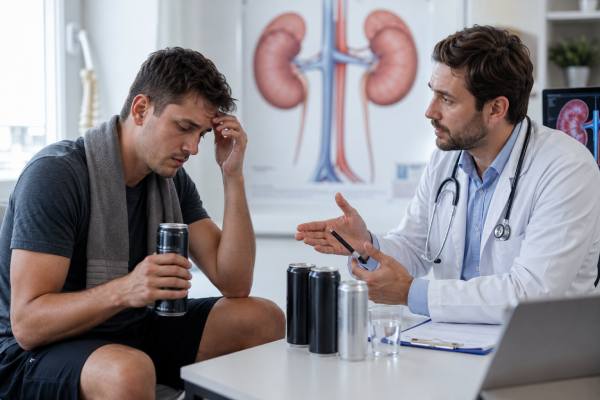
Energy drinks are easy to treat like a stronger soda or a quicker cup of coffee, but they hit the body differently. A single can often combines caffeine, sugar or artificial sweeteners, acids, sodium, herbal stimulants, and large doses of B vitamins. That mix does not automatically damage healthy kidneys, but it does create situations where kidney stress becomes more likely: dehydration, concentrated urine, higher blood pressure, sleep loss, heavy exercise, and overuse of caffeine.
The biggest kidney concerns are not usually from one occasional energy drink. The real risk shows up with large servings, multiple cans in a day, high-caffeine “performance” drinks, energy shots, use during heat or intense workouts, mixing with alcohol, or drinking them when you already have kidney disease, high blood pressure, diabetes, kidney stones, or a recent illness with vomiting or diarrhea.
This guide explains what energy drinks do to hydration, how they fit into kidney stone risk, which ingredients deserve attention, and what warning signs mean you should stop and get medical help.
Table of Contents
- Bottom Line: Are Energy Drinks Bad for Your Kidneys?
- What’s in Energy Drinks That Matters for Kidney Health
- Dehydration, Caffeine, and Concentrated Urine
- Energy Drinks and Kidney Stones
- Who Should Be More Careful With Energy Drinks
- Kidney and Caffeine Red Flags You Should Not Ignore
- Safer Choices If You Still Use Energy Drinks
Bottom Line: Are Energy Drinks Bad for Your Kidneys?
Energy drinks are not automatically “kidney poison,” but they are easy to misuse. The kidney risk depends on the dose, the setting, and your baseline health. A healthy adult who has one small energy drink once in a while, drinks enough water, and stays within a reasonable caffeine limit is in a very different situation from someone who drinks several cans daily, uses them before hard workouts, takes ibuprofen often, and already has high blood pressure or kidney stones.
Your kidneys filter waste, balance fluid, control electrolytes, help regulate blood pressure, and keep urine diluted enough that minerals do not easily crystallize. Energy drinks affect several of those pressure points at once. Caffeine stimulates the nervous system and raises urine output in some situations. Sugar-sweetened versions add a large dose of added sugar. Some formulas include sodium, potassium, creatine-like performance blends, herbal stimulants, or high amounts of niacin and other B vitamins. The label matters.
The main kidney-related concerns fall into four practical categories:
- Dehydration and concentrated urine: Caffeine, sweating, heat, workouts, alcohol, poor water intake, vomiting, or diarrhea all push urine toward a more concentrated state.
- Kidney stone risk: Low urine volume is one of the clearest stone risks. Sugary drinks also fit poorly with stone prevention, especially for people prone to uric acid stones or calcium stones.
- Blood pressure strain: Caffeine and stimulant blends raise heart rate and blood pressure in some people. High blood pressure is a major driver of long-term kidney damage.
- Acute kidney injury risk in extreme situations: Heavy caffeine intake, dehydration, intense exercise, heat illness, rhabdomyolysis, alcohol, and certain medicines create a dangerous combination for the kidneys.
The most useful question is not “Are energy drinks safe?” It is “How much caffeine and sugar am I getting, what else is happening that day, and do I have a reason to be cautious?”
A plain 8-ounce energy drink with 80 mg of caffeine is closer to a cup of coffee. A 16-ounce can with 200 to 300 mg of caffeine, plus guarana, plus sugar, plus a pre-workout powder later in the day, is a different exposure. Energy shots are even easier to overdo because they deliver a high caffeine dose in a few swallows.
People with a history of stones should think first about urine volume. If an energy drink replaces water during a long shift or workout, it works against stone prevention. If it is an occasional drink alongside steady water intake, the stone concern is lower. The broader plan matters more than one drink, so a strong prevention routine should focus on hydration, diet, and stone-specific testing rather than fear of one ingredient.
What’s in Energy Drinks That Matters for Kidney Health
Energy drinks vary widely. Some are basically caffeinated soda. Others look more like workout supplements in a can. The front label often focuses on “zero sugar,” “natural caffeine,” “electrolytes,” “focus,” or “performance,” but the kidney-relevant details are usually on the nutrition and supplement facts panels.
Caffeine and hidden caffeine sources
Caffeine is the main active stimulant. Many 12- to 16-ounce energy drinks contain roughly 100 to 300 mg of caffeine, though some products fall outside that range. The practical adult ceiling often used by health authorities is 400 mg per day from all sources. That includes coffee, tea, cola, energy drinks, pre-workout powder, caffeine pills, chocolate, some pain relievers, and “fat burner” supplements.
The problem is stacking. One large coffee in the morning, a 200 mg energy drink at lunch, and a pre-workout later can push someone past 400 mg without noticing. People who are smaller, caffeine-sensitive, pregnant, taking stimulant medication, or prone to palpitations often need a lower limit.
Guarana deserves special attention. It is a plant ingredient that naturally contains caffeine. A label that lists caffeine plus guarana is telling you the drink has more stimulant activity than the caffeine number alone suggests, unless the product clearly states total caffeine from all sources. “Natural caffeine” is still caffeine.
Sugar, acids, and sweeteners
A full-sugar energy drink often contains a soda-like sugar load. Some cans contain around 25 to 60 grams of sugar, depending on size and brand. That matters for kidney health because high added-sugar intake is tied to weight gain, insulin resistance, high uric acid, and higher stone risk patterns. Sugar-sweetened drinks also crowd out water, which is the drink that best protects against stones.
Zero-sugar energy drinks remove the sugar load, but they are not automatically kidney-friendly. They still contain caffeine and acids. Some people also notice bladder urgency or burning with acidic, carbonated, artificially sweetened drinks. That is more of a bladder symptom issue than a kidney damage issue, but it often gets mistaken for “kidney pain.” People who notice urgency, frequency, or burning after these drinks should compare them with other common bladder irritants before assuming an infection or kidney problem.
Acidity also affects teeth more directly than kidneys. Acidic drinks do not “acidify the kidneys” in a simple way, but they can worsen reflux, stomach upset, and urinary discomfort in sensitive people.
Sodium, potassium, and electrolyte blends
Some energy drinks include electrolytes, especially products marketed for performance or hydration. Electrolytes are not bad by default. Sodium helps replace salt lost in sweat, and potassium is an important mineral. The concern is matching the formula to the person.
For a healthy athlete sweating heavily for a long time, some sodium is useful. For someone with high blood pressure, kidney disease, heart failure, or a sodium-restricted diet, extra sodium works against the plan. Sodium is also relevant to stones because high sodium intake raises urine calcium in many people, which increases calcium stone risk. Readers with stone history should understand the link between salt and urine calcium instead of looking only at oxalates.
Potassium is more complicated. Healthy kidneys usually remove extra potassium well. People with reduced kidney function, certain blood pressure medicines, diabetes-related kidney disease, or a history of high potassium need to be more careful. A high-potassium energy or electrolyte drink is not a casual choice for someone on a potassium restriction.
B vitamins, taurine, and performance blends
B vitamins are common in energy drinks because they help the body use energy from food. They do not create energy by themselves. Large amounts usually leave the body through urine, which is why urine sometimes turns bright yellow after a high-B-vitamin drink.
Niacin, also called vitamin B3, is worth checking. High doses can cause flushing, itching, stomach upset, and, at very high intakes, liver problems. Kidney harm is not the usual concern from ordinary niacin amounts in drinks, but a product with large B-vitamin doses plus other supplements deserves caution.
Taurine, ginseng, L-carnitine, yohimbine, synephrine, and other “focus” or “burn” ingredients vary by brand. The main issue is not that every ingredient is proven to damage kidneys. It is that combined stimulant formulas are harder to predict, especially when used with medications, alcohol, dehydration, or intense exercise.
Dehydration, Caffeine, and Concentrated Urine
The dehydration question is often oversimplified. Caffeine has a mild diuretic effect, meaning it can increase urine output, especially in people who do not use caffeine regularly. Regular caffeine users often develop some tolerance to that effect. So one caffeinated drink does not instantly dehydrate every person.
The real issue is replacement. If an energy drink replaces water during a hot shift, a long drive, a workout, or a day when you are already behind on fluids, your urine becomes more concentrated. Concentrated urine is darker, stronger-smelling, lower in volume, and more likely to carry minerals close enough together to form crystals.
Think about three common situations.
First, someone drinks an energy drink before the gym, sweats heavily, and does not drink water until the workout ends. Their urine later is dark and low-volume. The energy drink did not act alone. The combination of caffeine, sweat loss, and poor fluid replacement created the problem.
Second, a night-shift worker uses two energy drinks to stay alert and avoids water to reduce bathroom breaks. That pattern keeps urine concentrated for hours. It also raises the chance of urinary burning, constipation, headaches, and poor sleep after the shift.
Third, someone has a stomach virus and uses caffeine to push through the day. Vomiting, diarrhea, fever, and poor food intake already reduce blood flow to the kidneys. Adding caffeine and skipping fluids makes the kidneys work under worse conditions.
Clear or pale-yellow urine is not a perfect hydration score, but it is a useful day-to-day clue. Dark amber urine, dizziness when standing, dry mouth, headache, fast heartbeat, and very little urine point to fluid deficit. If you have kidney stones, the urine-volume goal matters even more. Many stone-prevention plans aim for enough fluid to produce roughly 2 to 2.5 liters of urine daily, which usually means spreading fluids across the whole day rather than chugging water at night.
A better approach is to pair any caffeinated drink with water. If you drink an energy drink before exercise, drink water before, during, and after the session. If you work in heat, treat water as the main drink and use caffeine sparingly. For people who form stones, timing matters; steady intake across the day protects better than long dry stretches followed by a large drink. A guide to spreading fluids for stone prevention is more useful than simply counting cans or bottles.
Energy Drinks and Kidney Stones
Energy drinks do not create stones the way a seed grows into a plant. Stones form when urine contains too much of certain substances, too little fluid, too little protective citrate, or the wrong urine pH for a person’s stone type. Energy drinks matter because they can push several of those conditions in the wrong direction.
The strongest link is low urine volume
Low urine volume is one of the most reliable stone risks. When there is not enough water in the urine, calcium, oxalate, uric acid, phosphate, and other minerals become more concentrated. Crystals form more easily, and small crystals have a better chance of growing.
This is why energy drinks are most concerning when they replace water. A person who drinks one energy drink and still drinks enough water is different from someone who uses energy drinks as the main fluid all day. The kidneys care about total urine dilution, not the marketing category of the drink.
Stone formers should pay attention to morning urine and late-day urine. Dark urine after sleep is common, but urine that stays dark through the afternoon usually means fluid intake is not keeping up. If you wake up at night thirsty, get frequent headaches, or go many hours without urinating, the hydration pattern needs work.
Sugar and uric acid risk
Full-sugar energy drinks are a poor fit for people with kidney stones. Added sugars, especially fructose-containing sweeteners, are linked with higher uric acid patterns and higher stone risk in research. Uric acid stones form more easily in acidic urine. People with gout, insulin resistance, type 2 diabetes, obesity, or persistently acidic urine deserve extra caution.
That does not mean a sugary energy drink causes a stone overnight. Stone risk builds from repeated patterns: low water intake, high sodium, high added sugar, high animal protein, weight gain, and a personal tendency to form certain stone types. If you have uric acid stones, the better plan is to focus on urine pH, urine volume, and sugar reduction. The connection between fructose and uric acid stone risk is especially relevant if your drink habit includes soda, sweet tea, juice drinks, or full-sugar energy drinks.
Calcium oxalate stones: do energy drinks contain oxalate?
Most energy drinks are not major oxalate sources in the same way spinach, almonds, rhubarb, or large amounts of black tea can be. For calcium oxalate stone formers, the bigger concerns are usually low urine volume, high sodium intake, low dietary calcium with meals, high-dose vitamin C supplements, and a diet pattern that raises urine calcium or oxalate.
The mistake is focusing only on oxalate. Someone with calcium oxalate stones might avoid spinach carefully but drink two energy drinks, eat salty convenience foods, and stay under-hydrated. That pattern still raises risk. Stone prevention works best when it matches the urine test results, not when it targets one food category.
Cola-style energy drinks and phosphoric acid
Some energy drinks resemble cola or include acids for flavor and shelf stability. Phosphoric acid is more closely associated with cola beverages than with every energy drink. The practical point is simple: cola-style sugary drinks are not ideal for stone prevention, especially as daily drinks.
Citrus drinks are a different category because citrate can help some stone formers, but many citrus-flavored energy drinks do not provide the same citrate effect as lemon or lime juice used in a stone-prevention plan. Flavor words like “citrus blast” do not tell you the citrate dose.
For stone prevention, water remains the foundation. Depending on stone type, lemon water, citrate therapy, lower sodium intake, adequate calcium with meals, and tailored medication are more useful than chasing “kidney-safe” energy drink labels. People comparing drinks should start with water, citrate-containing options, and drinks to avoid rather than relying on energy drinks for hydration.
| Habit | Why it matters | Better choice |
|---|---|---|
| Using energy drinks instead of water during the day | Urine stays concentrated, which helps crystals form. | Use water as the main drink and keep caffeine separate from hydration. |
| Choosing full-sugar cans daily | Added sugar fits poorly with uric acid and metabolic stone risk. | Reduce frequency, choose unsweetened drinks, or switch to coffee or tea if tolerated. |
| Drinking energy drinks with salty meals | High sodium raises urine calcium in many stone formers. | Pair lower-sodium meals with steady water intake. |
| Using energy drinks before hard exercise without fluids | Sweat loss plus caffeine increases the chance of dark, low-volume urine. | Drink water before and during exercise; use electrolytes only when needed. |
Who Should Be More Careful With Energy Drinks
Some people should treat energy drinks as an occasional exception or avoid them completely. The issue is not moral discipline. It is that the kidneys and cardiovascular system already have less room for stress.
People with chronic kidney disease
Chronic kidney disease changes how the body handles fluid, blood pressure, acid balance, sodium, potassium, and medication effects. A drink that is harmless for one person can be a poor choice for someone with reduced kidney function.
The biggest label details for CKD are caffeine, sodium, potassium, phosphorus additives, and total fluid volume if you are on a fluid restriction. Some energy drinks are low in potassium; others include electrolyte blends. Some are low sodium; others are not. Some contain phosphate additives or performance compounds that are not useful for kidney disease.
If you have CKD, do not assume “zero sugar” means safe. Sugar-free products still have caffeine and other additives. People in later CKD stages, on dialysis, or with a history of high potassium need individualized advice. A broad CKD diet plan gives better guardrails than judging drinks by calories alone.
People with high blood pressure or heart rhythm symptoms
High blood pressure damages small kidney blood vessels over time. Caffeine and stimulant blends raise blood pressure and heart rate in some people, especially at higher doses or when combined with poor sleep, nicotine, decongestants, ADHD stimulants, or stress.
Watch your own response. If an energy drink gives you pounding heartbeat, chest tightness, tremor, anxiety, headache, or a blood pressure spike, that is useful information. Do not keep testing higher doses to “build tolerance.” A drink that reliably triggers cardiovascular symptoms is not a good kidney-health choice because kidney health and blood pressure are tightly linked.
People taking blood pressure medicines should also be cautious with electrolyte products. ACE inhibitors, ARBs, spironolactone, and some other medications raise potassium risk in susceptible people. A high-potassium drink adds another variable.
People with diabetes, gout, or uric acid stones
Full-sugar energy drinks are especially unhelpful for people with diabetes or prediabetes. A large sugar load raises blood glucose quickly and contributes to the metabolic pattern linked with kidney disease and uric acid stones.
Gout and uric acid stones often travel together because both involve uric acid handling. Sugary drinks are one of the easier targets to remove because they deliver a large dose without fullness. If you have gout flares, acidic urine, or uric acid stones, daily full-sugar energy drinks work against the prevention plan.
Teenagers, pregnant people, and caffeine-sensitive adults
Children and teens should not use energy drinks as routine beverages. The caffeine dose is often high for body size, and the sleep effects matter. Poor sleep then drives more caffeine use, creating a loop of fatigue, stimulant use, and worse recovery.
Pregnant people, people trying to become pregnant, and those breastfeeding need lower caffeine limits and should discuss caffeine intake with a clinician. Energy drinks are a poor default in this setting because the caffeine dose is sometimes high and the added ingredients are unnecessary.
Caffeine-sensitive adults know their signs: shaky hands, urgent bowel movements, panic-like symptoms, insomnia, reflux, palpitations, or feeling wired long after the drink. Kidney damage is not the usual immediate concern, but repeated overuse often leads to poor hydration, poor sleep, and higher blood pressure.
Kidney and Caffeine Red Flags You Should Not Ignore
Most energy drink side effects are unpleasant but not emergencies: jitters, mild nausea, trouble sleeping, or needing to urinate more often. Red flags are different. They point to possible dehydration, kidney injury, stone obstruction, infection, dangerous caffeine effects, or a heart rhythm problem.
Stop using energy drinks and seek urgent medical care if you have:
- Very low urine output or no urine despite drinking fluids, especially with weakness, swelling, confusion, or dizziness.
- Severe flank pain on one side of the back or side, especially if it comes in waves or moves toward the groin.
- Blood in the urine that is visible, repeated, or combined with pain, fever, or clots.
- Fever, chills, and back pain, which can signal a kidney infection.
- Persistent vomiting or diarrhea with dark urine, dizziness, or inability to keep fluids down.
- Chest pain, fainting, severe palpitations, or shortness of breath after caffeine or stimulant use.
- Severe muscle pain, weakness, or cola-colored urine after intense exercise, heat exposure, or stimulant use, which can signal rhabdomyolysis.
- Confusion, seizure, extreme agitation, or uncontrollable shaking after high caffeine intake.
Very low urine output deserves special attention. Kidneys need blood flow and fluid to filter properly. Severe dehydration, infection, blocked urine flow, medications, heart problems, and rhabdomyolysis can all reduce urine output. If you are barely urinating, do not try to fix the problem with another caffeinated drink. Use the warning signs in a guide to low urine output to decide how urgently to seek care.
Flank pain is another common source of confusion. Kidney stone pain is usually deeper, sharper, and harder to ignore than ordinary muscle soreness. It often comes in waves and does not improve much with position changes. Muscle strain usually hurts more with bending, twisting, pressing the area, or certain movements. Fever, vomiting, blood in urine, or pain with urination raises the urgency.
Energy drinks also become riskier with certain medications and substances. Be especially careful with:
- NSAIDs such as ibuprofen or naproxen: These drugs can reduce kidney blood flow, especially during dehydration or illness.
- Diuretics: Fluid shifts and electrolyte changes become more likely.
- Stimulant medications: Heart rate, blood pressure, anxiety, and insomnia effects can stack.
- Decongestants: Pseudoephedrine and similar drugs can raise blood pressure and worsen urinary symptoms.
- Alcohol: Alcohol plus caffeine encourages overuse because caffeine masks sleepiness without reversing impairment.
If you recently had abnormal kidney labs, ask about caffeine, supplements, NSAIDs, and hydration together. Creatinine can rise for several reasons, including dehydration, kidney injury, high muscle breakdown, certain medications, and true CKD progression. A clinician may repeat labs, check urine, review medications, and decide whether imaging is needed.
Safer Choices If You Still Use Energy Drinks
The safest energy drink strategy is not complicated: use less, know the caffeine dose, avoid stacking stimulants, and do not let energy drinks replace water. A practical plan works better than a vague promise to “cut back.”
Use a caffeine budget
Add up caffeine from the whole day. If your energy drink has 200 mg and your morning coffee has 150 mg, you are already close to the common adult daily limit before tea, soda, chocolate, pre-workout, or medication. If the label does not clearly state caffeine, choose another product.
A simple budget looks like this:
- Choose one main caffeine source for the day, not several.
- Keep energy shots for rare situations or skip them; they are too easy to overuse.
- Avoid caffeine late in the day because poor sleep drives next-day caffeine use.
- Do not combine energy drinks with pre-workout powders unless you know the exact total caffeine dose.
- Stop at the first signs of excess: palpitations, shaking, chest tightness, nausea, anxiety, or feeling overheated.
If you drink energy drinks for focus, the first step is often sleep repair rather than a stronger product. If you use them because of daytime sleepiness, loud snoring, night waking, or repeated morning headaches, the real issue may be poor sleep quality, not lack of stimulants.
Make water the hydration drink
Energy drinks are not the best way to hydrate your kidneys. Water should do that job. Use the energy drink, if you use one, as a stimulant beverage rather than a fluid-replacement plan.
For everyday kidney protection:
- Drink water before caffeine, especially in the morning.
- Carry water during long shifts, travel, workouts, and hot weather.
- Use urine color as a quick clue: pale yellow is usually better than dark amber.
- Increase fluids when sweating, but avoid forcing extreme water intake.
- If you form stones, ask whether a 24-hour urine test is appropriate.
More water is not always better for everyone. People with heart failure, advanced kidney disease, dialysis fluid limits, or low sodium problems need personalized fluid advice. For healthy adults, the goal is steady hydration, not water overload. A plain-language guide to kidney-friendly hydration is a better starting point than copying someone else’s gallon-a-day routine.
Choose lower-risk options
A lower-risk energy drink choice has a clear caffeine amount, a smaller serving size, little or no added sugar, no aggressive stimulant blend, modest sodium, and no high-potassium electrolyte load if you need potassium restriction. That does not make it a health food, but it lowers the chance of accidental overuse.
| Label detail | What to look for | Why it matters |
|---|---|---|
| Caffeine | A clearly listed total from all sources | Prevents stacking coffee, energy drinks, and supplements above your limit. |
| Serving size | One can equals one serving | Some labels make the numbers look smaller by splitting a can into multiple servings. |
| Added sugar | Lower grams, especially for daily use | High added sugar works against stone, diabetes, weight, and kidney protection goals. |
| Sodium | Modest amount unless you are replacing heavy sweat losses | High sodium is a problem for blood pressure and many calcium stone formers. |
| Potassium | Check carefully if you have CKD or take potassium-raising medicines | Reduced kidney function makes high potassium more dangerous. |
| Stimulant blends | Avoid products with multiple stimulants and unclear amounts | Combined effects on heart rate, blood pressure, anxiety, and sleep are harder to predict. |
Coffee or tea is often a simpler caffeine choice because the ingredient list is shorter. They are not perfect for everyone; coffee can worsen reflux, anxiety, palpitations, or bladder urgency. Still, from a kidney standpoint, plain coffee or tea without heavy sugar is usually easier to fit into a healthy routine than a large stimulant blend.
For workouts, match the drink to the session. A 30-minute easy gym session does not need a high-caffeine performance drink or electrolyte formula. A long run in heat has different needs: water, sodium replacement when appropriate, cooling, and pacing. Caffeine should not be used to override warning signs from heat, dehydration, or exhaustion.
Cut back without triggering withdrawal
People who use energy drinks daily often feel worse when they stop suddenly. Headache, fatigue, irritability, low mood, and poor concentration are common caffeine-withdrawal symptoms. They are uncomfortable, but they are usually temporary.
A smoother plan:
- Count your current caffeine. Write down the drink, size, and caffeine amount for three normal days.
- Cut one source at a time. Remove the afternoon can first if sleep is poor.
- Reduce by serving size. Switch from a 16-ounce can to a smaller one, or drink half and save the rest for another day.
- Replace the habit, not only the chemical. Use cold water, a walk, daylight, protein-containing food, or a short rest break at the usual energy-drink time.
- Keep the morning dose stable at first. Dropping all caffeine at once makes withdrawal more likely.
If energy drinks are covering severe fatigue, do not ignore the fatigue. Anemia, thyroid disease, depression, sleep apnea, medication side effects, diabetes, pregnancy, infection, and kidney disease can all show up as exhaustion. A drink that helps you push through the day is not the same as solving the cause.
When to ask for testing
Ask a clinician about urine and blood testing if you have repeated flank pain, visible blood in urine, recurrent stones, foamy urine, swelling, high blood pressure, diabetes, abnormal creatinine, or a family history of kidney disease. People with kidney stones often benefit from stone analysis and a 24-hour urine test because prevention differs by stone type.
Basic checks often include blood pressure, creatinine with eGFR, electrolytes, urinalysis, urine albumin-to-creatinine ratio, and imaging when stone symptoms or obstruction are possible. If kidney function is reduced or urine protein is present, a referral may be appropriate. A practical guide to when to see a nephrologist can help you understand which lab patterns and symptoms deserve follow-up.
Energy drinks are easiest to manage when you treat them honestly: they are stimulant products, not kidney-support products. Keep caffeine within a clear limit, make water your default drink, avoid high-sugar daily use, respect red flags, and be more careful if you already have kidney, blood pressure, heart rhythm, diabetes, gout, or stone concerns.
References
- Spilling the Beans: How Much Caffeine is Too Much? 2024 (Government Consumer Update)
- Energy Drinks: A Clinical Primer and National Data Update 2024 (Review)
- Energy drink-induced acute kidney injury: a case report and review of the literature 2025 (Case Report and Review)
- Urological Guidelines for Kidney Stones: Overview and Comprehensive Update 2024 (Guideline Review)
- Association between added sugars and kidney stones in U.S. adults: data from National Health and Nutrition Examination Survey 2007-2018 2023 (Cross-Sectional Study)
- KDIGO 2024 Clinical Practice Guideline for the Evaluation and Management of Chronic Kidney Disease 2024 (Guideline)
Disclaimer
This article is for education about energy drinks, hydration, kidney stones, and kidney warning signs. It does not diagnose kidney disease, replace urine or blood testing, or tell you whether a specific drink is safe for your medical situation. Seek medical care promptly for severe flank pain, fever with urinary symptoms, visible blood in urine, chest pain, fainting, confusion, or very low urine output.