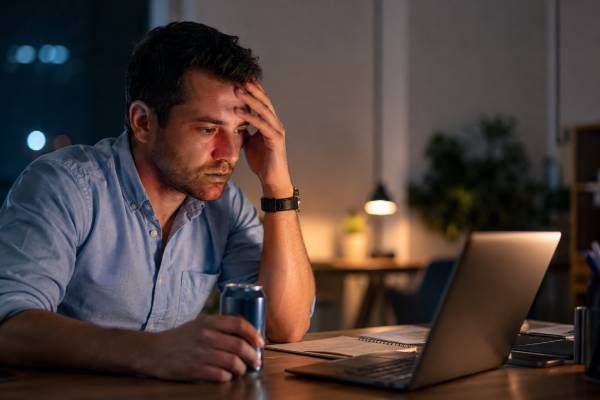
Energy drinks promise fast focus, stronger workouts, and an easy fix for low energy, but the tradeoff is not always obvious. Most products combine caffeine with sugar or sweeteners, taurine, guarana, B vitamins, and other stimulant-style ingredients. For some men, one can before a long drive or gym session feels harmless. For others, the same drink leads to a racing heart, shaky hands, anxiety, poor sleep, or higher blood pressure later that day.
The main issue is not that every energy drink is dangerous. The problem is dose, timing, personal sensitivity, and what else is happening in your body. A man with normal blood pressure, good sleep, and low caffeine intake has a different risk profile than someone with hypertension, panic symptoms, poor sleep, heart palpitations, or heavy pre-workout use. This guide explains what to watch for and how to use caffeine more safely.
Table of Contents
- What Energy Drinks Actually Do in the Body
- Heart Rate, Palpitations, and When a Racing Heart Matters
- How Energy Drinks Affect Blood Pressure
- Anxiety, Jitters, Irritability, and Panic-Like Symptoms
- Sleep, Recovery, Testosterone, and the Energy-Drink Cycle
- Men Who Should Be More Careful
- Practical Rules for Safer Use
- When to Get Medical Help or Recheck Your Habits
What Energy Drinks Actually Do in the Body
Energy drinks work mainly because of caffeine. Caffeine blocks adenosine, a brain chemical that helps create sleep pressure. That makes you feel more alert, but it also pushes the body toward a more stimulated state: more adrenaline-like activity, tighter blood vessels in some situations, faster signaling in the nervous system, and a stronger sense of being “switched on.”
That effect is useful when you are tired during a morning meeting or need short-term focus. It becomes a problem when the dose is too high, the timing is too late, or the drink is used to cover up a deeper issue such as sleep apnea, burnout, depression, low iron, thyroid disease, or poorly controlled blood sugar. Men who feel chronically drained should treat repeated energy drink use as a clue, not a solution. Persistent fatigue deserves a broader look at sleep, mood, medications, alcohol intake, fitness, and basic labs. A practical starting point is understanding common causes of low energy in men rather than only pushing through with more stimulants.
Most energy drinks contain 80–300 mg of caffeine per container, depending on the size and brand. Some “energy shots” or large cans deliver more. Labels are not always as simple as they look because guarana, yerba mate, green tea extract, and other botanicals may add more caffeine or stimulant activity. A can that looks moderate can become a high-caffeine day when combined with coffee, pre-workout powder, cola, fat burners, or strong tea.
Sugar adds another layer. A high-sugar drink can give a quick lift, then a slump, especially if taken on an empty stomach. Sugar-free versions avoid that calorie load, but they still carry the stimulant effect. Switching to sugar-free may help weight and glucose control, but it does not remove the heart rate, anxiety, blood pressure, or sleep concerns tied to caffeine.
Energy drinks are not the same as sports drinks
Sports drinks are usually designed to replace fluid, carbohydrates, and electrolytes during longer or hotter exercise. Energy drinks are designed to stimulate. That difference matters at the gym, on a construction site, during long shifts, or during outdoor work.
If you are sweating heavily, dehydrated, and using caffeine to push harder, your heart may already be working harder before the drink kicks in. In that setting, water, food, sodium, and rest breaks may solve the real problem better than another can.
| Ingredient | Why it is added | Practical concern |
|---|---|---|
| Caffeine | Alertness, focus, reduced tiredness | Can worsen palpitations, anxiety, sleep, and blood pressure at higher doses |
| Guarana | Extra stimulant effect | Contains caffeine, so total caffeine may be higher than expected |
| Sugar | Fast calories and taste | Can add a large calorie load and contribute to energy crashes |
| Taurine | Common performance-marketing ingredient | Usually not the main stimulant, but effects may differ when combined with caffeine |
| B vitamins | Energy metabolism messaging | Do not create energy unless a deficiency exists |
| Herbal extracts | Focus, metabolism, or performance claims | May complicate stimulant load or interact with medications |
Heart Rate, Palpitations, and When a Racing Heart Matters
A faster heartbeat after an energy drink is usually caused by stimulant activation. Some men feel it as a steady increase in pulse. Others feel skipped beats, fluttering, pounding in the chest, or a sudden awareness of the heart. These sensations are called palpitations.
Occasional mild palpitations after caffeine are not rare, but they should not be ignored when they are new, intense, recurrent, or paired with other symptoms. The important question is not only “Did my heart rate go up?” It is “How much did it go up, how long did it last, and did it come with warning signs?”
A resting pulse that rises modestly after caffeine and settles as the stimulant wears off is different from a heart rate that jumps suddenly, feels irregular, causes dizziness, or appears with chest pressure. Men with known rhythm problems, a family history of sudden cardiac death, fainting during exercise, or congenital long QT syndrome should be especially cautious with high-caffeine products.
Energy drinks also get riskier when stacked. A common pattern is coffee in the morning, an energy drink after lunch, then a pre-workout before training. Each choice feels separate, but the body experiences one combined stimulant load. This is where men underestimate their intake.
Workout use deserves extra caution
Many men use energy drinks before lifting, running, or sports because caffeine can improve alertness and perceived effort. The concern is that exercise already raises heart rate and blood pressure. Adding a stimulant can increase the cardiovascular workload, especially during high-intensity intervals, heavy compound lifts, hot-weather training, or sessions done while dehydrated.
This does not mean every man needs to avoid caffeine before exercise. It does mean you should be more careful with large cans, energy shots, and products that overlap with high-caffeine pre-workout supplements. The label may list caffeine per scoop, but many users take heaping scoops or combine products without counting the total.
A safer workout approach is to use the lowest effective dose, avoid trying a new stimulant before a hard session, and skip energy drinks when you feel ill, hungover, dehydrated, sleep-deprived, or unusually stressed. Those are the days when side effects are more likely to show up.
Red flags with palpitations
Do not brush off heart symptoms just because they happened after a drink. Get urgent medical care if palpitations come with chest pain, fainting, severe shortness of breath, weakness on one side, confusion, or a feeling that you may pass out. These symptoms need evaluation, not another hydration trick or a wait-and-see approach.
Schedule a medical check if you repeatedly notice irregular beats, a racing heart at rest, or symptoms that last long after caffeine should have worn off. A clinician may suggest an ECG, blood pressure review, medication check, thyroid testing, electrolytes, or a wearable heart monitor, depending on the pattern.
How Energy Drinks Affect Blood Pressure
Energy drinks can raise blood pressure for several hours, even in healthy adults. The rise is often temporary, but temporary does not always mean harmless. If your baseline blood pressure is already high, a short-term increase can push you into a range that adds strain to the arteries, heart, brain, and kidneys.
Blood pressure has two numbers. Systolic pressure, the top number, reflects pressure when the heart pumps. Diastolic pressure, the bottom number, reflects pressure between beats. Caffeine and stimulant blends can affect both, though the size of the rise varies from person to person.
A man who rarely uses caffeine may feel a stronger effect from one can than someone who drinks coffee daily. But tolerance is not complete protection. Some regular caffeine users still get blood pressure spikes, poor sleep, or palpitations when the dose is high enough.
If you already track your readings, pay attention to patterns. A single high reading after caffeine, stress, or exercise does not diagnose hypertension. Repeated elevated readings do matter. Men often discover blood pressure problems during unrelated visits, workplace checks, or after symptoms appear. It is better to know your usual numbers before you are forced to react. For a broader prevention view, see why blood pressure matters for men even when you feel fine.
What to test at home
Home blood pressure checks are useful if you use energy drinks often or have borderline readings. Use a validated upper-arm cuff, sit quietly for five minutes, keep your feet flat, and avoid caffeine, nicotine, exercise, and heavy meals for about 30 minutes before a baseline reading.
To see whether energy drinks affect you, compare readings on similar days:
- Take a resting baseline reading before caffeine.
- Drink your usual product and dose.
- Recheck around 60–90 minutes later.
- Record symptoms such as palpitations, headache, anxiety, or flushing.
- Repeat on another day rather than judging from one reading.
This is not a replacement for medical advice, but it gives you better information than guessing. If your readings repeatedly land high, or if energy drinks clearly push them up, it is time to cut back and discuss the pattern with a healthcare professional.
Why blood pressure risk matters more after 40
Men can develop rising blood pressure silently through their 30s, 40s, and 50s. Weight gain, sleep apnea, alcohol, high-sodium diets, stress, family history, and low activity all add up. Energy drinks are rarely the only cause, but they can be one more push in the wrong direction.
This is especially important for men with belly fat, high triglycerides, prediabetes, or low fitness. These issues often cluster with hypertension and raise long-term cardiovascular risk. A stimulant habit that seemed harmless at 24 may not be harmless at 44.
Anxiety, Jitters, Irritability, and Panic-Like Symptoms
Caffeine can feel like motivation when the dose is right. When the dose is too high, the same stimulation can feel like anxiety. The body signs overlap: fast heart rate, tight chest, sweating, tremor, restlessness, stomach upset, and a sense that something is wrong.
That overlap is why energy drinks can confuse men who are dealing with stress or panic symptoms. You may think, “I am anxious because my heart is racing,” when the racing heart started from caffeine. Or the opposite may happen: stress raises your baseline tension, then caffeine pushes it into a full panic-like episode.
Men often describe caffeine-related anxiety in physical terms rather than emotional terms. Common descriptions include “wired but tired,” “on edge,” “angry for no reason,” “trapped in my body,” “can’t sit still,” or “my chest feels weird.” These symptoms can look similar to generalized anxiety, panic attacks, medication side effects, thyroid problems, withdrawal from alcohol or sedatives, and some heart rhythm issues.
If anxiety has become a regular issue, it helps to look at caffeine as one modifiable trigger. Cutting back does not mean anxiety is “all in your head” or that caffeine is the only cause. It simply removes a stimulant that can make symptoms louder. Men who have panic attacks, irritability, avoidance, or constant physical tension may also benefit from learning how anxiety shows up in men, because it is not always obvious.
The dose that feels fine to one man may be too much for another
Caffeine sensitivity varies. Body size is only part of it. Genetics, sleep debt, medications, nicotine use, liver metabolism, anxiety history, and how often you use caffeine all change the response.
A man who sleeps well and has one 100 mg drink with food may feel focused. Another man who slept four hours, skipped breakfast, and drank a 300 mg can may feel shaky and panicked. The product is only one part of the situation.
Watch for these signs that your dose is too high:
- You feel tense, suspicious, irritable, or unusually impatient after drinking it.
- You get hand tremors, stomach cramps, or sudden sweating.
- You feel a wave of dread without a clear reason.
- You need another caffeinated drink to overcome the crash.
- You sleep poorly, then need more caffeine the next day.
- You avoid workouts, meetings, or social situations because you fear symptoms will happen again.
Energy drinks and alcohol are a bad mix
Mixing energy drinks with alcohol is risky because stimulation can mask how impaired you feel. You may feel more awake, but reaction time, judgment, coordination, and decision-making are still affected by alcohol. This combination can lead to heavier drinking, riskier driving decisions, fights, injuries, and worse sleep.
It also creates mixed signals in the body. Alcohol can disrupt sleep and raise heart rhythm risk in susceptible people. Caffeine can increase stimulation and delay sleep. Together they make it harder to judge your true state.
Sleep, Recovery, Testosterone, and the Energy-Drink Cycle
Energy drinks often create a cycle: poor sleep leads to caffeine, caffeine delays or weakens sleep, then worse sleep leads to more caffeine. This loop is one of the most common ways a small habit becomes a daily dependency.
Caffeine can remain active for many hours. Even when you no longer feel energized, it may still reduce sleep depth, delay sleep onset, shorten total sleep time, or make your sleep more fragmented. Men who say “I can drink caffeine and fall asleep fine” may still get lighter, less restorative sleep.
This matters for men’s health because sleep affects appetite, training recovery, mood, pain sensitivity, blood pressure, glucose control, and sexual function. Poor sleep also overlaps with low testosterone symptoms, including low energy, reduced morning erections, low motivation, and poor workout recovery. Caffeine is not usually the root cause of low testosterone, but using it late in the day can worsen the sleep loss that makes hormonal and energy problems harder to interpret. If you are trying to improve hormones naturally, sleep quality belongs near the top of the list; poor sleep is closely tied to lower energy and testosterone disruption.
Timing matters more than most men think
A practical rule is to avoid energy drinks within eight hours of bedtime. Some men need a longer cutoff, especially if they are sensitive to caffeine or already have insomnia. If your bedtime is 11 p.m., a 3 p.m. energy drink may still affect sleep. If you work night shifts, the same logic applies to your planned sleep window, not the clock on the wall.
Late caffeine is especially tempting during long workdays, new fatherhood, exam periods, travel, or double shifts. In those situations, use smaller doses earlier instead of a large dose late. A short walk, bright light, a protein-containing snack, water, or a brief nap may work better than pushing caffeine into the evening.
When caffeine hides sleep apnea
Men with loud snoring, morning headaches, high blood pressure, nighttime choking, dry mouth, or daytime sleepiness should think beyond caffeine. Sleep apnea is common in men and often goes undiagnosed. Energy drinks can mask the daytime fatigue without fixing the nighttime breathing problem.
This matters because untreated sleep apnea can worsen blood pressure, heart rhythm risk, mood, and sexual health. A man who needs large amounts of caffeine just to function may not have a caffeine problem alone. He may have a sleep problem that needs testing. Learning the signs of sleep apnea in men can help decide whether a sleep study makes sense.
Men Who Should Be More Careful
Some men should treat energy drinks as an occasional product at most. Others should avoid them unless a clinician says they are safe. The difference comes down to baseline risk, symptoms, medications, and dose.
Be more cautious if you have high blood pressure, heart disease, kidney disease, diabetes, panic attacks, insomnia, migraines triggered by caffeine, or a history of fainting or arrhythmia. Also be careful if you take stimulant medication for ADHD, decongestants, some asthma medicines, thyroid medication, or certain antidepressants. Combining stimulants can increase side effects.
Men with erectile dysfunction should also pay attention to cardiovascular clues. ED can be an early sign of blood vessel problems, especially when it appears suddenly or comes with high blood pressure, high cholesterol, smoking, diabetes, or low exercise tolerance. Energy drinks do not directly explain most ED, but stimulant-heavy living can sit inside a broader pattern of poor sleep, stress, and cardiovascular strain. When erection changes appear alongside chest symptoms, shortness of breath, or rising blood pressure, it is worth understanding when ED may point to heart or blood sugar problems.
Age is not the only issue
A healthy 25-year-old can still overdo energy drinks. A fit 50-year-old may tolerate moderate caffeine well. Risk is not based only on age. The bigger questions are:
- Do you know your blood pressure?
- Do you get palpitations or chest symptoms?
- Do you sleep well without caffeine?
- Are you combining energy drinks with coffee, nicotine, alcohol, or pre-workout?
- Do you have panic symptoms or severe stress?
- Are you using caffeine to compensate for a health problem you have not checked?
If several answers raise concern, the safest move is to reduce intake and check the underlying issue.
Do not ignore medication interactions
Energy drinks can complicate medication use. Stimulant prescriptions, some weight-loss products, decongestants containing pseudoephedrine, and high-dose thyroid replacement can all increase the chance of racing heart, anxiety, or blood pressure changes. Some antibiotics and other drugs can affect caffeine metabolism, making caffeine feel stronger or last longer.
If you take regular medication and notice symptoms after energy drinks, ask a pharmacist or clinician to review the combination. Bring the product label or a photo of it. The full ingredient list matters, not just the brand name.
Practical Rules for Safer Use
The safest energy drink habit is the one that does not become a crutch. For healthy adults, keeping total caffeine from all sources at or below about 400 mg per day is a common upper limit, but many men feel better with less. If you have anxiety, high blood pressure, palpitations, insomnia, or heart disease, your personal limit may be much lower.
Start by counting your real daily total. Include coffee, espresso, tea, soda, energy drinks, pre-workout, caffeine pills, “fat burners,” and chocolate if intake is high. Many men discover they are not having “one energy drink a day.” They are having one energy drink on top of 200–400 mg from other sources.
A practical target is to keep single servings modest. A 100–160 mg caffeine dose is easier to control than a 300 mg can or a concentrated shot. Avoid drinking multiple cans quickly. Do not use energy drinks as your main fluid source. Do not take them before bed, during illness, after heavy alcohol use, or before intense exercise if you are dehydrated.
A simple safer-use checklist
Use this checklist before reaching for a can:
- I know roughly how much caffeine is in this product.
- I have counted my coffee, tea, pre-workout, and other caffeine today.
- I am not using it within eight hours of planned sleep.
- I am not dehydrated, hungover, or sick.
- I am not mixing it with alcohol.
- I do not have chest pain, palpitations, severe anxiety, or uncontrolled blood pressure.
- I am not taking another stimulant medication or supplement without checking safety.
- I can stop at one serving.
If you cannot check most of those boxes, skip it or choose a lower-caffeine option.
Better fixes for low energy
Energy drinks are attractive because they work fast. Long-term energy usually improves through less exciting habits: consistent sleep time, morning light, protein at breakfast, hydration, regular training, fewer late-night screens, lower alcohol intake, and treating medical problems.
For a midafternoon slump, try a smaller caffeine dose, a walk outside, water, and a snack with protein and fiber. For gym motivation, try music, a planned warm-up, and a lower dose of caffeine earlier in the day. For morning exhaustion, look at bedtime, snoring, alcohol, stress, and sleep duration before assuming you need stronger stimulants.
If you want to cut down, taper rather than stop suddenly. Dropping from 500 mg a day to zero can cause headache, fatigue, irritability, and poor concentration. Reduce by one serving or 50–100 mg every few days. Replace the ritual with sparkling water, decaf coffee, herbal tea, or a lower-caffeine drink so the habit has somewhere to go.
When to Get Medical Help or Recheck Your Habits
Energy drinks should not cause repeated chest symptoms, fainting, severe anxiety, or major blood pressure spikes. If they do, your body is giving you useful feedback. The right response is not to prove you can tolerate more. It is to reduce the stimulant load and check whether something else is going on.
Seek urgent care for chest pain, fainting, severe shortness of breath, weakness on one side, confusion, severe headache with very high blood pressure, or a heart rhythm that feels dangerously fast or irregular. These symptoms need prompt evaluation.
Make a non-urgent appointment if you repeatedly notice blood pressure readings in a high range, palpitations after caffeine, panic-like episodes, insomnia, or a need for daily energy drinks to function. Bring a list of your caffeine sources, medication names, supplement labels, and several home blood pressure readings if you have them.
A clinician may check blood pressure technique, ECG, thyroid function, anemia markers, kidney function, electrolytes, glucose, cholesterol, sleep apnea risk, and medication interactions. The goal is not only to say “energy drinks are bad.” The goal is to find the pattern that applies to you.
For men with broader risk factors, energy drink symptoms can be a useful wake-up call. Rising blood pressure, poor sleep, belly fat, low fitness, high stress, and heavy stimulant use often travel together. Addressing the whole pattern lowers risk more than simply switching brands.
Bottom line
Energy drinks are not automatically dangerous, but they are not harmless water with flavor. They are stimulant products. For men, the most important risks are higher heart rate, palpitations, anxiety, poor sleep, and blood pressure increases. Those risks rise with larger servings, late-day use, stacked caffeine, alcohol mixing, dehydration, intense exercise, underlying heart or blood pressure problems, and stimulant medications.
The best rule is simple: use the lowest dose that works, use it early, do not stack products, and stop if your body reacts badly. If you need energy drinks every day to feel normal, the real question is not which can to buy. The real question is why your baseline energy is so low.
References
- The Effects of Energy Drinks on the Cardiovascular System: A Systematic Review 2025 (Systematic Review)
- Acute effects of energy drink consumption on cardiovascular parameters in healthy adults: a systematic review and meta-analysis of randomized clinical trials 2024 (Systematic Review and Meta-analysis)
- Energy drink consumption and sleep parameters in college and university students: a national cross-sectional study 2024 (Cross-sectional Study)
- The effect of caffeine on subsequent sleep: A systematic review and meta-analysis 2023 (Systematic Review and Meta-analysis)
- Caffeine intake and anxiety: a meta-analysis 2024 (Meta-analysis)
- Spilling the Beans: How Much Caffeine is Too Much? 2024 (Consumer Guidance)
Disclaimer
This article is for education and does not diagnose heart rhythm problems, anxiety disorders, insomnia, hypertension, or medication interactions. If energy drinks trigger chest pain, fainting, severe palpitations, very high blood pressure, or panic-like symptoms, seek medical care. Men with heart disease, uncontrolled blood pressure, sleep apnea, kidney disease, or stimulant prescriptions should ask a qualified clinician how much caffeine is safe for their situation.