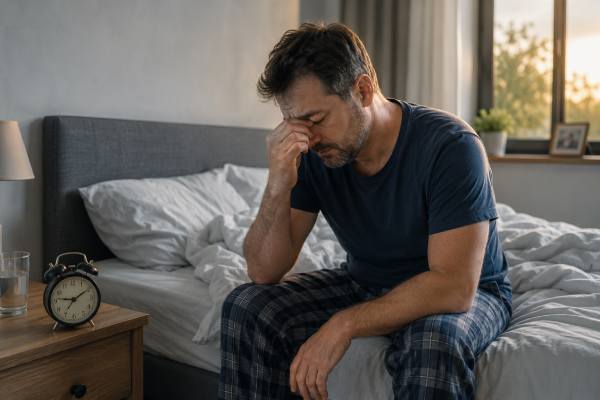
Poor sleep can lower testosterone, but the relationship is not as simple as “one bad night equals low T.” Testosterone follows a daily rhythm, rises during sleep, and is usually highest in the morning. When sleep is too short, broken, delayed, or repeatedly disturbed by sleep apnea, that rhythm can flatten. The result may feel like low energy, weaker workouts, lower sex drive, worse mood, or slower recovery.
Sleep is also tied to weight, blood sugar, stress hormones, alcohol use, and inflammation, so poor sleep can affect testosterone directly and indirectly. A man who sleeps five hours a night, snores heavily, drinks late, and wakes unrefreshed may have several hormone stressors at once. Fixing sleep does not replace medical testing when symptoms are persistent, but it is often one of the highest-yield places to start.
Table of Contents
- How Sleep Affects Testosterone
- Why Short Sleep Lowers Energy Before Labs Look Abnormal
- Sleep Apnea and Low Testosterone
- Signs Your Sleep May Be Affecting Hormones
- When to Test Testosterone
- How to Improve Sleep for Hormone Health
- What Not to Do
- When to Get Medical Help
How Sleep Affects Testosterone
Testosterone is not released at the same level all day. In many men, levels rise during sleep and reach their highest point in the early morning. That is one reason doctors usually prefer morning blood tests when checking for low testosterone.
The link starts in the brain. The hypothalamus and pituitary gland send signals that tell the testes to make testosterone. Sleep helps keep that signaling rhythm steady. Deep sleep, regular circadian timing, and enough total sleep give the body a better chance to maintain normal hormone pulses.
When sleep is cut short, the body gets less time in the sleep stages that support repair and hormonal balance. If sleep is also fragmented, the problem can be worse. A man may spend seven or eight hours in bed but still wake up repeatedly, breathe poorly, or never feel restored.
Poor sleep can affect testosterone through several routes:
- Less time asleep may reduce the normal overnight rise in testosterone.
- Sleep fragmentation can disrupt hormone signaling even when time in bed looks adequate.
- Late-night light exposure can delay the body clock and shift morning hormone timing.
- Chronic stress and short sleep can raise evening alertness when the body should be winding down.
- Poor sleep can increase hunger, weight gain, insulin resistance, and belly fat, all of which are linked with lower testosterone in many men.
This does not mean every man with poor sleep has low testosterone. Some studies show mixed findings, especially when sleep duration is measured by self-report. Age, body weight, medications, alcohol, work schedules, and illness can all change the picture.
A better way to think about it is this: sleep is one of the main conditions your hormone system depends on. If the sleep pattern is unstable for weeks or months, testosterone may be harder to interpret and harder to optimize.
Why Short Sleep Lowers Energy Before Labs Look Abnormal
Many men feel the effects of poor sleep before a blood test clearly shows low testosterone. Fatigue, low motivation, cravings, irritability, and weaker gym performance can appear after only a few nights of short sleep. Those symptoms can overlap with low testosterone, but they can also happen from sleep loss alone.
Short sleep affects the nervous system first. Reaction time slows, mood regulation gets harder, and the brain pushes for quick energy. That can feel like low discipline or low drive, when the body is actually trying to function under sleep debt.
Hormones then add another layer. Cortisol, the main stress hormone, may stay higher later in the day when sleep is restricted or irregular. Insulin sensitivity can worsen, which means the body may handle carbohydrates less efficiently. Hunger signals may increase, making late-night snacking more likely. Over time, this can lead to more visceral fat, the deeper belly fat strongly linked with metabolic risk and lower testosterone. Men dealing with abdominal weight gain may also benefit from understanding why visceral fat affects men’s health beyond appearance.
Energy problems from poor sleep often have a recognizable pattern. You may wake up tired, need caffeine to feel normal, feel better in the late evening, then struggle to fall asleep at a reasonable time. The cycle repeats because the body clock keeps drifting later.
Why libido and erections may change
Low sleep can reduce sexual interest even when testosterone is not severely low. Sex drive depends on hormones, mood, blood flow, stress, relationship context, and sleep quality. A tired brain is less responsive to sexual cues. A stressed body may prioritize alertness over reproduction.
Morning erections can also change. They are influenced by sleep stage, nerve function, blood flow, and hormones. Fewer morning erections do not automatically mean low testosterone, but a steady change alongside fatigue and low libido is worth taking seriously. For a broader look at overlapping causes, see common causes of low libido in men.
Why workouts feel harder
Testosterone matters for muscle, but sleep affects training through many other pathways too. Poor sleep can reduce coordination, increase perceived effort, slow reaction time, and impair recovery. You may still complete the workout, but soreness may last longer and strength may feel unpredictable.
Men often respond by adding more caffeine, harder training, or “testosterone boosters.” That can backfire if the real issue is sleep debt. More stimulation may hide fatigue during the day while making sleep worse at night.
Sleep Apnea and Low Testosterone
Sleep apnea is one of the most important sleep problems to consider when a man has low energy and possible low testosterone. It causes repeated pauses or reductions in breathing during sleep. Each event can lower oxygen, trigger brief arousals, and fragment sleep.
A man with sleep apnea may not remember waking up. He may think he slept seven hours, while his brain and body experienced hundreds of small interruptions. Common clues include loud snoring, choking or gasping, morning headaches, dry mouth, nighttime urination, and strong daytime sleepiness.
Sleep apnea is more common in men, especially with weight gain, larger neck size, alcohol use, nasal obstruction, and aging. It can occur in lean men too, particularly when jaw structure, airway anatomy, or family history increases risk.
The testosterone connection is important but not always straightforward. Severe obstructive sleep apnea is associated with lower testosterone in many studies. Some of that link may come from obesity and metabolic problems, but sleep fragmentation and oxygen drops may also play a role.
Treating sleep apnea can improve alertness, blood pressure, safety, and quality of life. Testosterone levels may improve in some men, but continuous positive airway pressure, often called CPAP, does not reliably raise testosterone by itself in every study. Weight loss, consistent treatment use, and better overall health may matter more than the device alone.
Men considering testosterone therapy should be especially careful if sleep apnea is untreated. Testosterone treatment can worsen breathing during sleep in some men, and major guidelines advise caution with untreated severe obstructive sleep apnea. Anyone with loud snoring, witnessed pauses, or heavy daytime sleepiness should discuss sleep testing before starting hormone treatment. More detail is covered in why sleep apnea matters before TRT.
Sleep apnea clues compared with simple short sleep
| Pattern | More suggestive of short sleep | More suggestive of sleep apnea |
|---|---|---|
| Time in bed | Often less than 6–7 hours | May be 7–9 hours but still unrefreshing |
| Breathing signs | No major snoring or gasping | Loud snoring, choking, witnessed pauses |
| Morning symptoms | Sleepy from too little time asleep | Headache, dry mouth, grogginess, high blood pressure |
| Nighttime urination | May happen after late fluids or alcohol | Can happen repeatedly due to breathing events |
| Next step | Extend and regularize sleep schedule | Ask about a sleep study or home sleep apnea test |
Signs Your Sleep May Be Affecting Hormones
Sleep-related hormone problems usually show up as a cluster, not one isolated symptom. A man may feel tired, less interested in sex, more irritable, and slower to recover from workouts. He may also notice weight gain around the waist or a stronger need for caffeine.
Possible signs include:
- Sleeping less than six hours on most nights
- Waking often or waking too early and being unable to return to sleep
- Loud snoring, gasping, or witnessed breathing pauses
- Low morning energy despite enough time in bed
- Lower sex drive or fewer morning erections
- Weaker training recovery or loss of strength
- Increased belly fat, cravings, or late-night eating
- Irritability, low mood, or brain fog
- Needing alcohol, cannabis, or sedatives to fall asleep
- Needing large amounts of caffeine to function
These symptoms are not specific to testosterone. Depression, anemia, thyroid disease, diabetes, medication side effects, chronic pain, and heart disease can look similar. That is why testing and context matter.
Sleep problems can also hide behind a busy schedule. A man may say he is “fine on five hours” because he can still work, drive, and train. But needing caffeine all morning, crashing in the afternoon, and feeling wired at night are not signs of good adaptation. They often mean the body is running on stress chemistry.
For men trying to sort through fatigue causes, low energy in men can come from several overlapping systems, not hormones alone.
When symptoms point more strongly toward low testosterone
Low testosterone becomes more likely when sexual symptoms are prominent and persistent. Low libido, fewer spontaneous erections, erectile changes, infertility concerns, reduced shaving frequency, loss of muscle, breast tenderness, hot flashes, or unexplained low bone density deserve medical evaluation.
Mood and energy symptoms alone are less specific. A man with poor sleep and stress may feel exactly like he has low testosterone even when his level is normal. On the other hand, a man with genuine hypogonadism may sleep poorly because of weight gain, low mood, or other health problems.
A useful question is: did the symptoms start after a clear sleep change? New shift work, a newborn at home, late-night screen use, worsening snoring, more alcohol, or a stressful job period can all explain a sudden drop in energy. If symptoms improve when sleep improves, testosterone may not be the main driver.
When to Test Testosterone
Testing makes sense when symptoms are persistent, especially when they include low libido, erectile changes, infertility concerns, loss of muscle, or unexplained fatigue that does not improve with basic sleep changes. Testing is also reasonable when sleep apnea, obesity, diabetes, opioid use, pituitary problems, or testicular injury may be involved.
The first test is usually total testosterone measured in the morning. Many clinicians prefer testing before 10 a.m., because levels often peak earlier in the day. If the result is low, it should usually be repeated on another morning before making a diagnosis. Testosterone varies from day to day, and one result can be misleading.
For more detail on timing, repeat testing, and common lab mistakes, see the best time to test testosterone.
A basic evaluation may include:
- Morning total testosterone, repeated if low.
- Free testosterone when total testosterone is borderline or sex hormone-binding globulin, called SHBG, may be abnormal.
- LH and FSH, which help show whether the issue is mainly testicular or related to brain signaling.
- Prolactin when libido is low, erections change, or pituitary causes are possible.
- CBC, thyroid testing, A1C or fasting glucose, liver tests, and other labs depending on symptoms.
- Sleep apnea evaluation when snoring, gasping, obesity, high blood pressure, or daytime sleepiness is present.
Total testosterone measures the overall amount in the blood. Free testosterone estimates the portion more available to tissues. SHBG is a carrier protein that can make total testosterone look normal while free testosterone is low, or make total testosterone look low while free testosterone is adequate. Men with borderline results may benefit from understanding free testosterone versus total testosterone before assuming the meaning of one number.
Testing during a period of severe sleep restriction can create confusion. If a man has slept four or five hours for several nights, is acutely ill, or just came off heavy alcohol use, a low result may not represent his usual baseline. That does not mean the result should be ignored, but it should be interpreted carefully.
How to Improve Sleep for Hormone Health
The goal is not perfect sleep. The goal is a stable sleep pattern that gives the brain and hormone system a reliable signal every day. Most men do better when they fix timing first, then improve sleep quality, then address medical causes.
Set a consistent wake time
Wake time anchors the body clock more strongly than bedtime. Choose a wake time you can keep most days, including weekends within about an hour. After one to two weeks, the body often starts getting sleepy earlier on its own.
Sleeping in for several hours on weekends can feel good in the moment, but it may create a “social jet lag” effect by shifting the body clock later. Monday then feels like a time-zone change.
Protect the last hour before bed
Testosterone is not helped by lying in bed with a racing brain. The last hour should lower stimulation. Dim lights, stop work email, avoid intense arguments, and use a simple wind-down routine.
A good routine can be boring: shower, brush teeth, light stretching, reading, and bed. Boring is useful because the brain learns the pattern.
Use caffeine earlier
Caffeine can stay active for many hours. Men who use coffee, energy drinks, or pre-workout late in the day may fall asleep but sleep more lightly. If sleep is poor, try moving caffeine before noon for two weeks. Men using high-caffeine products may also want to review how energy drinks affect sleep, anxiety, and blood pressure.
Be careful with alcohol
Alcohol may make it easier to fall asleep, but it often worsens sleep quality later in the night. It can increase snoring, worsen sleep apnea, reduce REM sleep, and trigger early waking. Regular evening drinking can also affect hormones, fertility, liver health, and blood pressure. The combined effect is one reason alcohol can affect several areas of men’s health at once.
Train hard, but recover harder
Exercise supports testosterone indirectly by improving body composition, insulin sensitivity, mood, and sleep pressure. But late-night intense training can keep some men wired. If evening workouts hurt sleep, move the hardest sessions earlier or finish with a longer cool-down.
Strength training is helpful, but recovery matters. Poor sleep plus high training volume can lead to stalled progress, nagging injuries, and low motivation. Men trying to improve hormones naturally should treat sleep as part of the training plan, not something separate from it. Broader lifestyle steps are covered in how to increase testosterone naturally.
Lower bedroom friction
Small changes can make sleep easier:
- Keep the room cool, dark, and quiet.
- Charge the phone away from the bed.
- Use the bed mainly for sleep and sex.
- Get bright outdoor light in the morning.
- Avoid large meals right before bed if reflux or overheating wakes you.
- Limit fluids close to bedtime if nighttime urination is a problem.
If you cannot sleep after about 20–30 minutes, get out of bed and do something quiet in dim light until sleepy. This helps the brain relearn that bed is for sleep, not frustration.
Track the right things for two weeks
Do not obsess over every wearable score. Track simple patterns:
- Bedtime and wake time
- Estimated sleep duration
- Alcohol timing
- Caffeine timing
- Exercise timing
- Snoring or gasping reports
- Morning energy
- Libido or morning erections
- Afternoon crash
Patterns matter more than one night. If energy improves after two weeks of regular sleep, that is useful information. If nothing improves, or symptoms are severe, it is time to look deeper.
What Not to Do
The most common mistake is trying to fix sleep-related testosterone symptoms with shortcuts before the sleep problem is addressed. Supplements, extra caffeine, extreme training, or hormone treatment can all miss the cause.
Do not start testosterone just because you are tired
Fatigue alone is not enough to diagnose low testosterone. Testosterone therapy can help men with true hypogonadism, but it is not a general energy treatment. It can reduce sperm production, raise hematocrit, worsen acne, affect fertility planning, and require ongoing monitoring. If sleep apnea is untreated, the risk-benefit discussion becomes more important.
Men who want children soon should be especially careful. Testosterone therapy can suppress sperm production, sometimes severely. Alternatives may be considered in selected men, but that requires medical supervision.
Do not trust “testosterone booster” marketing
Many products promise better energy, libido, and muscle by “boosting T.” Some contain underdosed ingredients, hidden stimulants, or blends that make it hard to know what you are taking. Others may help only if a true deficiency exists, such as low vitamin D or zinc, but more is not automatically better.
A supplement cannot correct severe sleep apnea, chronic five-hour nights, heavy alcohol use, or an inconsistent body clock.
Do not use alcohol as a sleep aid
Alcohol can feel relaxing, but it often worsens the second half of sleep. A man may fall asleep faster and still wake at 3 a.m. with a racing heart, dry mouth, or anxiety. Alcohol also relaxes airway muscles, which can worsen snoring and sleep apnea.
Do not ignore snoring because you are not overweight
Body weight is only one risk factor. Jaw shape, airway anatomy, nasal obstruction, family history, age, and alcohol use can all contribute. Lean men can have clinically important sleep apnea.
Do not chase perfect sleep scores
Wearables can be helpful for trends, but they can also create anxiety. A low sleep score does not always mean your hormones are falling, and a good score does not rule out sleep apnea. Pay attention to how you feel, what your partner observes, and whether symptoms persist.
When to Get Medical Help
Medical evaluation is important when symptoms persist for more than a few weeks, interfere with work or relationships, or include sexual, breathing, mood, or cardiovascular warning signs.
Ask about sleep apnea testing if you have loud snoring, witnessed pauses in breathing, gasping, morning headaches, high blood pressure, daytime sleepiness, or repeated nighttime urination. A home sleep apnea test may be enough for some men, while others need an overnight lab study. Men with insomnia symptoms can learn more about patterns and causes in insomnia in men.
Seek testosterone evaluation if low libido, erectile changes, infertility concerns, loss of muscle, breast tenderness, hot flashes, or unexplained fatigue continue despite better sleep habits. A clinician can decide which labs are appropriate and whether repeat testing is needed.
Get urgent care if sleepiness is causing near-miss driving events, you fall asleep at work or while driving, chest pain occurs, or severe depression or thoughts of self-harm appear. Sleep and hormones matter, but safety comes first.
A realistic plan may involve several steps at once: improving sleep timing, screening for sleep apnea, checking morning testosterone correctly, reviewing medications, reducing alcohol, treating metabolic risk, and addressing mood or stress. Testosterone is one piece of a larger system. When sleep improves, the rest of that system often becomes easier to evaluate.
References
- Effect of partial and total sleep deprivation on serum testosterone in healthy males: a systematic review and meta-analysis 2021 (Systematic Review)
- Association between obstructive sleep apnea and male serum testosterone: A systematic review and meta-analysis 2022 (Systematic Review)
- Association of sleep duration and quality with serum testosterone concentrations among men and women: NHANES 2011-2016 2024 (Observational Study)
- Obstructive Sleep Apnea 2025 (Review)
- Testosterone Therapy in Men With Hypogonadism: An Endocrine Society Clinical Practice Guideline 2018 (Guideline)
- Recommended Amount of Sleep for a Healthy Adult: A Joint Consensus Statement of the American Academy of Sleep Medicine and Sleep Research Society 2015 (Consensus Statement)
Disclaimer
This article is educational and should not replace care from a qualified healthcare professional. Persistent fatigue, low libido, erectile changes, loud snoring, or suspected low testosterone should be evaluated with appropriate testing and medical guidance. Do not start testosterone therapy, sedatives, or hormone-related supplements without discussing risks, fertility plans, and sleep apnea concerns with a clinician.