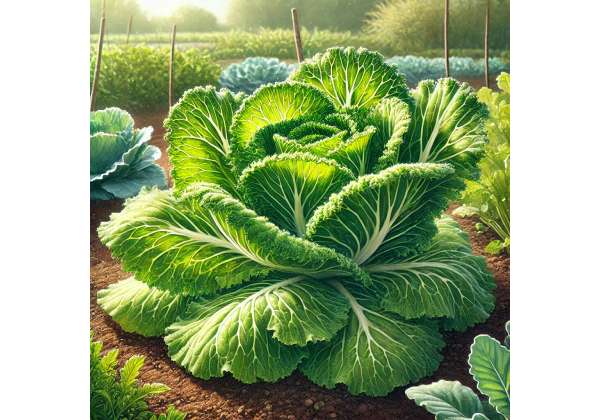
Escarole is a broad-leaved type of endive valued as both a culinary bitter green and a nutrient-dense everyday food. Its leaves are tender enough for salads, sturdy enough for soups and sautés, and distinctive for a gentle bitterness that hints at its plant compounds. As a member of the chicory family, escarole sits between lettuce and stronger bitter greens: softer and milder than many medicinal herbs, yet more robust in flavor and structure than standard salad leaves.
From a health perspective, escarole is most useful as a low-calorie source of fiber, folate, provitamin A carotenoids, vitamin K, potassium, and protective phytochemicals. That combination makes it relevant for digestive regularity, eye health, bone support, and overall diet quality. Traditional food-based uses also connect escarole with appetite stimulation and easier digestion, especially when eaten as part of warm meals. Still, it is best understood as a supportive food rather than a stand-alone remedy. The most practical questions are how to prepare it, how much to eat, and who should be cautious with frequent use.
Quick Overview
- Escarole is a low-calorie bitter green that provides fiber, folate, provitamin A carotenoids, vitamin K, and potassium.
- Regular use may support digestion, eye health, and overall nutrient density more than it delivers a strong medicinal effect.
- A practical daily amount is about 1 to 2 cups raw or 1/2 to 1 cup cooked.
- Keep intake consistent if you take warfarin or similar vitamin K-sensitive anticoagulants.
- Avoid medicinal-style use if you have a known chicory or ragweed-family allergy.
Table of Contents
- What is escarole
- Key ingredients and nutrition
- Main health benefits
- Medicinal properties and evidence
- Best ways to use escarole
- How much escarole per day
- Safety side effects and interactions
What is escarole
Escarole is the broad-leaved form of endive, a leafy plant in the Asteraceae family. In practical terms, it is one of the easier bitter greens to like because it combines a pleasant crunch with a softer, rounder bitterness than many stronger wild greens. The outer leaves are darker, firmer, and more assertive in taste, while the pale inner heart is milder and better suited to raw salads. That difference matters, because the same head can serve two purposes: crisp fresh leaves for raw dishes and sturdier outer leaves for braising, soups, or bean pots.
Many people confuse escarole with Belgian endive or frisée. They are related, but not the same. Belgian endive forms tight torpedo-shaped heads; frisée is curly and more feathery; escarole is flatter, broader, and more lettuce-like. Its texture is one reason it works so well in everyday cooking. It wilts quickly without dissolving, and it keeps enough body to stand up to olive oil, garlic, white beans, lemon, anchovy, parmesan, or broth.
Its light bitterness is not a flaw. It comes from naturally occurring bitter compounds common to chicory family greens. In food traditions across the Mediterranean and elsewhere, bitter leaves have long been used at the table to balance rich meals and encourage appetite. Escarole fits that role well because it feels like food first, not medicine first.
Escarole is also a good example of a plant whose value changes with preparation. Raw escarole tastes fresher, greener, and slightly sharper. Brief cooking softens bitterness and makes the leaves silkier. Longer simmering, especially with broth or beans, turns it into a savory, mellow vegetable that even people who claim not to like bitter greens often enjoy.
So what is escarole, really? It is a versatile broadleaf endive that bridges salad greens and cooking greens. It belongs in the category of supportive, nutrient-rich foods that can be used often, adapted easily, and rotated with other greens for variety. That middle ground is exactly why it deserves attention: not because it is exotic, but because it is practical, affordable, and more useful than its modest appearance suggests.
Key ingredients and nutrition
Escarole’s strength lies in nutrient density rather than calories. Per 100 grams of raw escarole, food composition data show roughly 14 kcal, 3.1 g fiber, 1.3 g protein, 142 mcg folate, about 1,230 mcg beta-carotene, 314 mg potassium, 52 mg calcium, and 6.5 mg vitamin C. That is a strong return for a vegetable that is light, bulky, and easy to add to meals.
Its most important nutritional themes are easy to understand:
- Fiber: Escarole contains meaningful fiber for such a low-calorie food. It will not match legumes or fiber supplements, but it helps increase total daily fiber intake in a gentle, food-based way.
- Folate: This B vitamin matters for DNA synthesis, cell division, and healthy red blood cell production. That makes escarole especially relevant in diets that need more leafy greens, not just more calories.
- Provitamin A carotenoids: Beta-carotene is the standout here. The body can convert it to vitamin A as needed, supporting normal vision, immune function, and epithelial tissues such as the skin and lining of the gut.
- Vitamin K: Like many green leaves, escarole contributes vitamin K, which matters for blood clotting and bone-related proteins.
- Potassium: Although escarole is not as potassium-dense as some starchy vegetables, it still contributes to a balanced mineral pattern that supports normal muscle and nerve function.
- Polyphenols and bitter phytochemicals: Research on escarole and related Cichorium plants identifies phenolics, flavonoids, sesquiterpene-related compounds, and other small molecules with antioxidant and anti-inflammatory potential.
One overlooked point is that escarole offers these nutrients in a package with high water content and very low energy density. That matters for people trying to improve diet quality without making meals heavy. A large bowl of escarole adds volume, texture, and micronutrients without pushing calorie intake very high.
Escarole is also useful nutritionally because it is easier to eat frequently than some darker, tougher greens. If spinach feels too soft, kale too fibrous, or arugula too peppery, escarole may be the middle option that actually stays in your routine. It can also broaden the nutrient profile of meals built around more familiar leaves such as leaf lettuce.
Its bitter compounds deserve a brief mention. Bitterness in edible plants often signals phytochemical richness. In escarole, that does not mean the leaf is a drug-like medicinal herb. It means the plant likely delivers more than vitamins alone. The combination of carotenoids, folate, fiber, and phytochemicals helps explain why escarole has a stronger health reputation than bland salad greens with similar calories.
Main health benefits
Escarole’s benefits are realistic, food-based, and cumulative. It is unlikely to transform health on its own, but it can improve the quality of a daily eating pattern in several meaningful ways.
First, escarole supports digestive health. Its fiber adds bulk to meals and helps make stools softer and more regular when overall fluid intake is adequate. Its bitterness may also make meals feel more balanced and satisfying, especially when paired with rich foods like beans, pasta, eggs, cheese, or olive oil. For many people, cooked escarole is easier on the stomach than very large raw salads, which makes it a practical way to increase leafy greens without bloating from sheer volume.
Second, escarole supports eye and immune health through its carotenoid content. Beta-carotene acts as a precursor to vitamin A, a nutrient needed for normal vision, especially in low light, and for healthy epithelial tissues. The darker outer leaves are usually the most nutrient-dense part of the head, so throwing them away can mean discarding some of the best material.
Third, escarole contributes to bone-supportive nutrition. Green vegetables that provide vitamin K are helpful additions to a dietary pattern built for bone health. Escarole is not a calcium powerhouse on the level of dairy or fortified foods, but its combination of vitamin K, calcium, and magnesium makes it a supportive player.
Fourth, escarole may help with cardiometabolic balance in a quiet, indirect way. Low-calorie vegetables that add fiber, potassium, and chewing volume can make meals more filling without relying on refined starches or heavy sauces. That pattern can support weight management and healthier overall intake. Escarole is especially helpful in soups, warm grain bowls, and bean dishes because it improves volume and nutrient density at the same time.
Fifth, escarole may help people eat more greens consistently. That sounds simple, but consistency is often more useful than intensity. Some greens are highly nutritious but too strong or inconvenient for daily use. Escarole’s balance of texture and bitterness makes it easier to repeat. It is one of the greens that can bridge mild salads and stronger options such as kale without asking much of the cook.
The key is to keep expectations grounded. Escarole does not “detox” the body in a magical way, nor does it treat disease by itself. Its benefits come from repeated use as part of a broader pattern: more vegetables, more fiber, better micronutrient coverage, and less dependence on ultra-processed side dishes. That may sound modest, but in nutrition, modest habits often matter more than dramatic claims.
Medicinal properties and evidence
Escarole has genuine medicinal interest, but the evidence is uneven and should be interpreted carefully. Traditional food culture treats bitter greens as digestive supports, appetite stimulants, and balancing foods after heavy meals. That tradition is plausible, especially for plants in the Cichorium group, but food tradition is not the same as proof of clinical effect.
What do we know more concretely? Laboratory work on escarole leaves has identified multiple bioactive classes, including phenolic compounds, flavonoids, sesquiterpene-related constituents, amino acids, and unsaturated fatty acids. These compounds help explain why escarole extracts show antioxidant and anti-inflammatory activity in cell-based and chemical assays. In simple terms, the leaf contains more than basic vitamins and minerals; it also contains plant molecules that may influence oxidative stress and inflammatory signaling.
Animal and extract-based research also hints at liver-protective potential. That is where escarole often enters “medicinal herb” conversations. However, this is the point where caution is essential. Much of the stronger-sounding evidence comes from extracts, not from ordinary servings of escarole salad or soup. Extract studies can be useful for identifying mechanisms, but they do not automatically tell us what happens when a person eats a bowl of greens. Dose, absorption, food matrix, and real-world eating patterns all change the picture.
This is why escarole is best described as having promising phytochemical and traditional medicinal properties, but limited direct human clinical evidence. The most defensible claims are these:
- Escarole provides phytochemicals with antioxidant potential.
- Its bitterness and fiber make it a plausible digestive-support food.
- Related chicory-family plants have long been used in bitter herbal traditions.
- Preclinical findings are interesting, but they do not justify treating escarole as a therapy for liver disease, inflammation, diabetes, or any serious condition.
That position may sound restrained, but it is the most honest one. In many ways, escarole resembles other traditional bitter plants such as artichoke: food and digestive ally first, stronger medicinal claims second. For the everyday reader, that means escarole is worth eating regularly for its nutrient profile and possible supportive phytochemical effects, but it should not replace medical care or evidence-based treatment.
The research bottom line is simple. Escarole is more than “just lettuce,” yet less proven than a standardized therapeutic ingredient. Its best-supported role is as a nutrient-dense bitter green with interesting bioactives and reasonable traditional digestive use. That is already enough to justify a place on the plate.
Best ways to use escarole
Escarole is one of the easiest medicinal-style greens to use like normal food. That matters because a healthy food is only useful if people actually eat it. Its leaves can be eaten raw, wilted, sautéed, simmered, grilled lightly, or added near the end of soups.
For raw use, focus on the pale inner leaves. They are milder, more tender, and good with dressings that soften bitterness. Olive oil, lemon, orange, apple, mustard, yogurt dressings, or a little honey all work well. Pairing escarole with something creamy, salty, or sweet often makes it more approachable without hiding its character.
For cooked use, the darker outer leaves shine. Heat reduces harshness and brings out a savory, mineral quality. Some of the best ways to use escarole are:
- wilted with garlic and olive oil as a side dish
- simmered in white bean soup or lentil broth
- folded into pasta with beans, chili flakes, and parmesan
- layered into frittatas or savory egg dishes
- braised briefly with onions, stock, and lemon
- chopped into grain bowls with chickpeas and tahini
A few practical techniques improve both taste and tolerance. Wash the leaves well, especially near the base where grit can hide. Separate the heart from the outer leaves if you want different textures in the same meal. Salt and acid help tame bitterness. A small amount of fat helps with the absorption of fat-soluble carotenoids and vitamin K. That can be as simple as olive oil, avocado, nuts, seeds, or a meal that already contains eggs or fish.
Escarole also works well in a “bitter greens rotation.” Instead of forcing yourself to eat the same leafy vegetable daily, alternate escarole with spinach, romaine, mustard greens, or watercress. This broadens flavor, keeps meals interesting, and may diversify phytochemical intake.
What about juicing? It is possible, but usually not the best use of escarole. Juicing can reduce the fiber advantage and often concentrates bitterness without preserving the meal-like quality that makes escarole sustainable. Smoothies are possible too, but escarole’s best forms are usually salads, sautés, soups, and brothy dishes.
If you are new to bitter greens, start with warmth. A quick sauté or soup application is often more successful than a large raw salad. Once your palate adjusts, the bitterness becomes less of a challenge and more of a useful flavor. That is the point where escarole becomes not just healthy, but genuinely enjoyable.
How much escarole per day
There is no standardized medicinal dosage for escarole in the way there is for a concentrated supplement. For most people, the smartest approach is to think in food portions, not extract doses.
A practical range is:
- Raw escarole: 1 to 2 cups per day in salads or mixed meals
- Cooked escarole: 1/2 to 1 cup per day, since cooking reduces volume
- For beginners or sensitive digestion: start with about 1/2 cup raw or 1/3 to 1/2 cup cooked and increase gradually
These are not rigid rules. They are useful daily amounts that fit normal eating patterns and provide meaningful nutrient exposure without forcing the issue. People who already eat a lot of vegetables may tolerate larger portions well. Those who rarely eat fiber-rich greens may do better with smaller amounts at first.
Timing also matters a little. Escarole is often best with meals rather than alone. Eating it with fat, such as olive oil, nuts, seeds, eggs, or fish, can support absorption of fat-soluble carotenoids and vitamin K. Eating it with beans, grains, or potatoes can also make the bitterness feel more balanced and satisfying.
Duration is straightforward: escarole is a food that can be used long term. The benefits come from regular inclusion over weeks and months, not from a short “cleanse.” A few servings per week is already useful. Daily use is also reasonable for many healthy adults, provided the overall diet is varied.
There are two dosage cautions worth stressing. First, people taking warfarin or similar anticoagulants should keep leafy green intake consistent rather than swinging between none and large amounts. Second, concentrated escarole extracts or powders do not have well-established human dosing standards. That means medicinal-style use beyond food should be approached carefully and not guessed at.
Pregnant adults can generally eat escarole as a normal food when it is fresh and well washed. It can contribute folate, but it is not a substitute for a prenatal supplement when one is recommended. Children can also eat escarole, though they often prefer it cooked first.
In short, escarole dosage is best framed as regular culinary use: enough to matter nutritionally, not so much that it becomes a burden or causes avoidable digestive discomfort.
Safety side effects and interactions
Escarole is generally safe as a food, but “safe” does not mean “risk-free for everyone.” Most issues are predictable and manageable.
The most common side effect is digestive discomfort from suddenly increasing raw leafy vegetables. Large portions may cause bloating, gas, or cramping, especially in people with sensitive digestion, IBS tendencies, or very low baseline fiber intake. Cooking the leaves usually improves tolerance. So does increasing portions slowly.
Allergy is less common, but important. Escarole belongs to the Asteraceae family. People with known sensitivity to chicory, ragweed-family plants, or related foods and herbs should be alert to itching, mouth irritation, rash, or gastrointestinal symptoms. Someone who reacts to plants such as dandelion or chicory may need to be more cautious with escarole as well.
Medication interactions center mostly on vitamin K. If you take warfarin or another vitamin K-sensitive anticoagulant, do not avoid escarole automatically and do not suddenly load up on it either. The safer rule is consistency. A stable intake of leafy greens is usually easier to manage than big fluctuations.
Kidney and mineral issues can matter too. Escarole is not among the highest-potassium vegetables, but it still contributes potassium. People with advanced kidney disease or those on potassium-restricted diets should count it as part of the day’s total rather than assuming it is negligible.
Food safety matters because escarole is often eaten raw. Wash leaves thoroughly, especially where soil can collect near the stem. Discard slimy or damaged leaves. Refrigerate promptly. For immunocompromised people, careful handling of raw greens is particularly important.
A few final cautions help keep the article grounded:
- Escarole is safe as a vegetable for most healthy adults.
- It is not a proven treatment for liver disease, inflammatory disease, or diabetes.
- Concentrated extracts, powders, or medicinal preparations are less well studied than the food itself.
- During pregnancy and breastfeeding, normal food use is appropriate, but medicinal-style concentrated use is best avoided unless a clinician specifically recommends it.
Who should avoid it or use extra caution? People with known Asteraceae allergy, those on tightly managed anticoagulant therapy who have not discussed leafy green consistency, and anyone under a clinician-directed potassium restriction. For everyone else, escarole is usually a very reasonable food, especially when introduced in normal meal-sized portions.
References
- Characterization of Health Beneficial Components in Discarded Leaves of Three Escarole (Cichorium endivia L.) Cultivar and Study of Their Antioxidant and Anti-Inflammatory Activities 2023 (Open Access Study)
- Green Leafy Vegetables (GLVs) as Nutritional and Preventive Agents Supporting Metabolism 2025 (Review)
- Vitamin A and Carotenoids – Health Professional Fact Sheet 2025 (Guideline Summary)
- Folate – Health Professional Fact Sheet 2022 (Guideline Summary)
- Vitamin K – Health Professional Fact Sheet 2021 (Guideline Summary)
Disclaimer
This article is for educational purposes only and does not diagnose, treat, or prevent disease. Escarole is a nutritious food, but its medicinal effects are not established to the same standard as prescription therapies or clinical treatment guidelines. If you are pregnant, breastfeeding, taking anticoagulants, managing kidney disease, or using escarole in concentrated supplemental form, seek individualized advice from a qualified healthcare professional.
If you found this article useful, please share it on Facebook, X, or your preferred platform to help more readers discover practical, evidence-aware information on escarole.