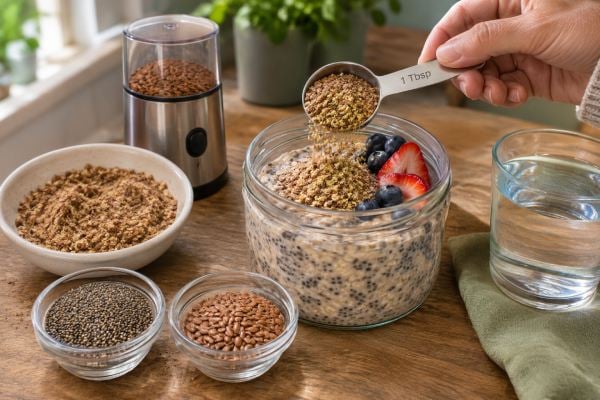
Flaxseed and chia seeds are small foods with a useful mix of heart-friendly nutrients: soluble and insoluble fiber, the plant omega-3 fat alpha-linolenic acid (ALA), minerals, and plant compounds. Flaxseed also provides lignans, while chia is especially good at absorbing liquid and forming a gel. Regular use may modestly improve LDL cholesterol, blood pressure, or other cardiometabolic markers, but neither seed is a substitute for prescribed treatment or for the rest of a healthy diet. The best form matters. Ground flaxseed is generally more useful than whole flax because the intact seed can pass through the digestive tract without releasing all of its nutrients. Chia seeds can be eaten whole, although soaking or mixing them into moist foods can make them easier to use safely. A practical starting amount is about 1 tablespoon daily, working up to 1 to 2 tablespoons as tolerated while drinking enough fluid. Consistency matters more than taking a large dose all at once.
Table of Contents
- Why Flaxseed and Chia Can Help the Heart
- ALA Omega-3 vs EPA and DHA From Fish
- Effects on Cholesterol, Blood Pressure, and Metabolic Health
- Flaxseed vs Chia: Key Differences
- How Much to Eat and the Best Forms to Use
- Safety, Side Effects, and Medication Considerations
- Easy Ways to Use Flaxseed and Chia Every Day
Why Flaxseed and Chia Can Help the Heart
Flaxseed and chia support heart health mainly because they combine several beneficial nutrients in one food. They are not powerful enough to replace cholesterol or blood-pressure medication when treatment is needed, but they can strengthen an overall dietary pattern.
Fiber is one of the most important parts. Both seeds contain soluble fiber, which forms a gel-like material in the gut. Soluble fiber can trap bile acids and help the body use more cholesterol to make replacement bile, contributing to lower LDL cholesterol. The seeds also provide insoluble fiber, which supports bowel regularity and adds bulk to meals.
ALA is an essential omega-3 fat, meaning the body cannot make it and must obtain it from food. Flaxseed and chia are among the richest plant sources. ALA itself may have cardiovascular benefits, and some of it can be converted to the longer-chain omega-3 fats EPA and DHA.
Lignans are another reason flaxseed is distinctive. These plant compounds have antioxidant and weak phytoestrogen activity and are concentrated in the seed coat. Ground whole flaxseed therefore provides lignans along with fiber and ALA, while flaxseed oil mainly provides fat and usually much less fiber and lignan content.
Both seeds also supply minerals such as magnesium. Chia contributes calcium and phosphorus, while flax provides thiamin and other micronutrients. These nutrients matter in the context of a varied diet rather than as isolated “heart boosters.”
The most useful way to think about seeds is as a replacement and addition strategy. Stirring ground flax into oatmeal can add fiber and unsaturated fat; using chia pudding instead of a sugar-heavy dessert can change the overall nutrient profile of the meal. A broader guide to soluble fiber for lowering LDL cholesterol explains why these small daily additions can matter over time.
ALA Omega-3 vs EPA and DHA From Fish
ALA, EPA, and DHA all belong to the omega-3 family, but they are not interchangeable. Flaxseed and chia contain mostly ALA. Fatty fish and marine oils provide EPA and DHA directly.
The body can convert ALA to EPA and then to DHA, but the conversion is limited. Only a modest fraction of ALA becomes EPA, and conversion to DHA is generally much smaller. The exact percentage varies with sex, genetics, diet, and other factors. This means two tablespoons of ground flaxseed should not be treated as nutritionally identical to a serving of salmon.
That does not make ALA unimportant. Higher ALA intake is associated with favorable cardiovascular outcomes in many studies, and randomized trials suggest it can improve some risk markers. Plant omega-3 sources are especially valuable for people who eat little or no seafood.
Still, if a clinician recommends marine omega-3 therapy for a specific reason such as severe triglyceride elevation, flaxseed or chia should not be substituted without discussion. Food-based ALA and prescription EPA products have different doses, metabolism, and clinical evidence.
A practical pattern can include both: seeds several days a week and fatty fish for heart health about twice weekly if you eat seafood. Vegetarians and vegans may want to discuss algae-derived EPA/DHA with a clinician or dietitian if their diet contains no marine sources.
Effects on Cholesterol, Blood Pressure, and Metabolic Health
Research on flaxseed is stronger than research on chia for some cardiovascular outcomes, but both have been studied in randomized trials. The effects are usually modest and vary with the amount, form, duration, and health of the participants.
Cholesterol
Whole or ground flaxseed can reduce total and LDL cholesterol in some studies, especially in people with higher baseline cholesterol. The fiber and lignans appear to contribute, which is one reason ground whole flax often performs differently from flax oil. Flax oil supplies ALA but lacks most of the seed’s fiber.
Chia trials show mixed but potentially useful effects on cholesterol and triglycerides. Some meta-analyses find improvements in selected lipid measures, while others show small or inconsistent changes. The overall pattern supports chia as a healthy food rather than as a reliable stand-alone cholesterol treatment.
For people with elevated LDL, seeds work best alongside other proven dietary strategies: replacing saturated fat with unsaturated fat, eating more legumes and oats, and maintaining a healthy overall eating pattern. They can complement, but not replace, medical treatment for very high LDL or familial hypercholesterolemia.
Blood pressure
Flaxseed has shown a small average blood-pressure-lowering effect in meta-analyses of randomized trials. Some analyses suggest larger reductions in people with hypertension, with longer use, or with higher amounts of whole flaxseed. A reduction of even a few mm Hg can be meaningful at the population level, but individual responses vary.
Chia may also modestly lower blood pressure in some studies. Recent meta-analyses report favorable changes in systolic or diastolic pressure in certain groups, though the evidence is not uniform. If you take blood-pressure medication, monitor readings rather than assuming more seeds are always better.
People specifically interested in using flax for hypertension may benefit from a focused guide to flaxseed dosage for blood pressure.
Blood sugar, fullness, and weight
The gel-forming fiber in flax and chia slows digestion and can increase fullness. Chia in particular absorbs many times its weight in liquid, making it useful in puddings and thickened foods. These effects may help with appetite or post-meal glucose responses, but neither seed produces automatic weight loss.
Meta-analyses of chia trials show mixed effects on body weight, waist size, glucose, and insulin-related measures. Flaxseed also has variable effects. The practical benefit often comes from how the seeds are used: adding them to unsweetened yogurt or oats is different from adding them to a large dessert that remains high in calories and added sugar.
Flaxseed vs Chia: Key Differences
Both seeds can fit the same diet, but their forms and strengths differ.
| Feature | Flaxseed | Chia |
|---|---|---|
| Main omega-3 | ALA | ALA |
| Fiber | High; soluble and insoluble | High; strongly gel-forming |
| Distinctive plant compounds | Rich in lignans | Polyphenols and other antioxidants |
| Best everyday form | Ground whole seed | Whole or ground; often soaked or mixed into moist food |
| Texture | Nutty meal when ground | Forms a gel in liquid |
| Storage | Ground seed keeps best airtight and cool | Whole dry seed is relatively shelf-stable |
Choose ground flaxseed if your priority is maximizing access to the whole seed’s nutrients, including lignans. Whole flaxseed has a tough outer coat, and some seeds may pass through the intestine intact. Grinding breaks the coat and improves nutrient availability.
Choose chia if you want a seed that can be used whole without grinding. Chia’s ability to form a gel makes it easy to add to overnight oats, yogurt, smoothies, or pudding. It also works as an egg substitute in some baking recipes when mixed with water.
Do not treat flaxseed oil as equal to ground flaxseed. The oil is a concentrated source of ALA, but it removes most of the fiber and many of the lignans. If the goal includes bowel regularity, LDL reduction, or the full food matrix, ground whole flax is usually the better choice.
There is no need to choose only one seed. Alternating them can add variety. One tablespoon of ground flax at breakfast and chia on another day is perfectly reasonable.
How Much to Eat and the Best Forms to Use
For most healthy adults, 1 to 2 tablespoons daily is a practical food amount for either ground flaxseed or chia. Research trials sometimes use larger amounts, particularly around 25 to 30 grams per day for flaxseed, but more is not automatically necessary for everyday use.
If you rarely eat high-fiber foods, start with 1 teaspoon to 1 tablespoon daily for several days, then increase gradually. A sudden jump in fiber can cause gas, bloating, cramping, or loose stools.
Ground flaxseed
Buy pre-ground flax meal or grind whole seeds in a coffee or spice grinder. Because the fats are exposed to oxygen after grinding, store ground flax in an airtight container in the refrigerator or freezer, especially if you buy a large amount. Discard it if it develops a noticeably bitter, paint-like, or rancid odor.
Whole flax keeps longer at room temperature but is less useful if swallowed intact. Grinding a small batch every week or two is a good compromise between freshness and convenience.
Chia seeds
Chia can be eaten whole, but it should usually be mixed into food or liquid. For chia pudding, a common starting ratio is about 2 tablespoons of chia to 1/2 cup of milk or another liquid, then refrigerate until thickened. Stir once or twice early on to prevent clumps.
Hydration matters with both seeds. Their fiber absorbs water in the digestive tract. Drink fluids regularly, especially as you increase the amount.
Safety, Side Effects, and Medication Considerations
Most people tolerate flaxseed and chia well in food amounts, but the high fiber content can cause gastrointestinal symptoms if intake rises too quickly. Gas, bloating, constipation, or diarrhea usually improve when the dose is reduced and increased more gradually.
Do not swallow a spoonful of dry chia seeds and then chase it with water. Chia expands rapidly when wet and can form a thick mass. This is especially risky for people with swallowing problems or narrowing of the esophagus. Mix chia into adequate liquid or moist food before eating it.
People with a history of bowel obstruction, severe swallowing difficulty, or significant gastrointestinal disease should ask a clinician before substantially increasing high-fiber seeds.
Fiber can also affect how quickly some oral medicines are absorbed. A simple precaution is to avoid taking a large serving of flax or chia at exactly the same time as critical oral medications unless a pharmacist says the combination is fine. Spacing high-fiber supplements or concentrated seed doses by a couple of hours is often suggested, but the right interval depends on the medicine.
Because flax and chia may modestly lower blood pressure or glucose, people taking medication for hypertension or diabetes should watch for changes if they suddenly increase intake. Food amounts rarely cause dramatic drops, but monitoring is sensible when treatment is already intensive.
People taking anticoagulants or antiplatelet drugs sometimes worry about omega-3-related bleeding. Normal food portions of flax or chia are generally not treated like high-dose fish-oil supplements, but anyone on complex blood-thinning therapy should discuss major diet changes with their clinician.
Allergy is uncommon but possible. Stop eating the seed and seek medical care for hives, swelling, wheezing, or other signs of a serious allergic reaction.
Easy Ways to Use Flaxseed and Chia Every Day
The easiest approach is to attach the seed to a meal you already eat. That is more sustainable than creating a special “heart health” recipe that you make twice and abandon.
Try these options:
- Stir 1 tablespoon of ground flaxseed into oatmeal after cooking.
- Mix ground flax into plain yogurt with berries and nuts.
- Add chia to overnight oats so it thickens while refrigerated.
- Blend 1 tablespoon of either seed into a smoothie.
- Sprinkle ground flax over lentil soup or a grain bowl after cooking.
- Use chia pudding as a make-ahead breakfast with fruit and unsweetened milk.
- Add ground flax to whole-grain muffin, pancake, or bread batter.
- Stir chia into a homemade fruit spread to thicken it with less added sugar.
Seeds are calorie-dense, so adding several tablespoons to an already calorie-heavy diet is not automatically beneficial. If weight management matters, use them to replace something less useful rather than simply layering them on top of every meal.
The larger meal pattern still matters most. A tablespoon of chia does not cancel out a diet high in sodium, refined carbohydrates, processed meat, and saturated fat. Use flax and chia as supporting ingredients in a pattern built around vegetables, fruit, legumes, whole grains, nuts, unsaturated oils, and appropriate protein sources.
For most people, the practical formula is simple: choose ground flax or well-hydrated chia, start with a small daily amount, increase to about 1 to 2 tablespoons if comfortable, and keep using it consistently. The benefits are likely to be modest, but the habit is low-cost, nutrient-dense, and easy to combine with other evidence-based heart-health changes.
When shopping, plain seeds are usually the easiest choice. Flavored chia packets, granolas, and snack bars may contain useful seeds but can also carry substantial added sugar, sodium, or saturated fat. Check the whole label instead of assuming that a product is heart-healthy because flax or chia appears on the front. Ground flax meal should smell mild and nutty; a sharp, stale, or paint-like smell can signal oxidation.
Cooking does not make flax or chia useless. Both can be baked into muffins, breads, pancakes, or crackers, although very high heat and long storage can gradually oxidize unsaturated fats. In ordinary home cooking, the practical benefit of consistently eating the seeds usually matters more than preserving every molecule of ALA. If you bake with them, keep the recipe’s overall quality in view by limiting excess refined flour, butter, and added sugar.
It is also worth separating “fiber effect” from “omega-3 effect.” A person who uses flaxseed oil receives ALA but almost none of the fiber found in the seed. A person who eats whole chia receives both. If the main goal is LDL reduction or bowel regularity, the intact food matrix is especially useful. If the main goal is simply adding an unsaturated fat source, the comparison changes. That distinction explains why studies of flax oil, lignan extracts, ground flax, and whole chia do not always produce the same result.
Finally, evaluate the habit over months rather than expecting a dramatic laboratory change after a few days. If LDL cholesterol or blood pressure is significantly elevated, repeat objective measurements on the schedule recommended by a clinician. Seeds can support the plan, but their success should be measured by the overall diet and the actual risk-factor trend, not by how “healthy” the ingredient sounds.
References
– The impact of chia seeds on diabetes, blood pressure, lipid profile, and obesity indicators: Systematic review and meta-regression analysis of 14 randomized controlled trials 2024 (Systematic Review) – Effects of chia (Salvia hispanica. L) on anthropometric measures and other cardiometabolic risk factors: A systematic review and dose-response meta-analysis. 2024 (Systematic Review) – Efficacy of flaxseed in reducing blood pressure among patients with cardiovascular risk factors: A systematic review and meta-analysis of parallel randomized controlled trials. 2025 (Systematic Review) – Dietary flaxseed: Cardiometabolic benefits and its role in promoting healthy aging 2025 (Review) – Effect of Alpha-Linolenic Acid Supplementation on Cardiovascular Disease Risk Profile in Individuals with Obesity or Overweight: A Systematic Review and Meta-Analysis of Randomized Controlled Trials 2023 (Systematic Review) – Impact of α-Linolenic Acid, the Vegetable ω-3 Fatty Acid, on Cardiovascular Disease and Cognition 2022 (Review)
Disclaimer
This article is for general nutrition education and does not replace individualized medical advice. Ask a clinician or pharmacist before making major changes to high-fiber seed intake if you have swallowing or bowel problems, take medicines with narrow dosing requirements, or use medication for blood pressure, diabetes, or blood clotting.