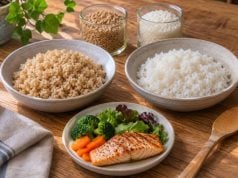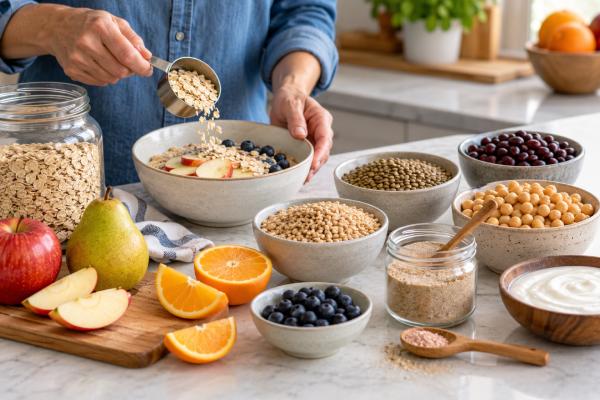
Soluble fiber can lower LDL cholesterol, especially when you get it consistently from foods such as oats, barley, beans, lentils, fruit, and psyllium. The effect is usually modest rather than dramatic, but it is meaningful because fiber also supports fullness, blood sugar control, bowel health, and an overall heart-healthy eating pattern. Research suggests that adding roughly 5 to 10 grams of soluble or viscous fiber per day can lower LDL by several percent, while specific fibers have their own evidence-based doses. About 3 grams per day of oat or barley beta-glucan is a well-studied target, and psyllium is commonly studied around 7 to 10 grams per day. The practical goal is not to chase one magic number. It is to build enough viscous soluble fiber into meals that you can sustain it without bloating, constipation, or crowding out protein and other nutrients. LDL changes can begin within a few weeks, but the best results come from combining fiber with lower saturated fat and other proven cholesterol-lowering habits.
Table of Contents
- How Soluble Fiber Lowers LDL
- How Much Soluble Fiber You Need
- Best Food Sources of Soluble Fiber
- Psyllium, Oats, and Barley: What Works Best
- How Fast LDL Can Change
- How to Increase Fiber Without Bloating
- When Fiber Is Not Enough
How Soluble Fiber Lowers LDL
Soluble fiber lowers LDL mainly by trapping bile acids and changing how cholesterol is handled in the gut. Some soluble fibers absorb water and form a thick gel. This “viscous” fiber can bind bile acids, which are made from cholesterol and normally recycled back into the body. When more bile acids leave in stool, the liver must use additional cholesterol to make replacements. That can increase removal of LDL particles from the blood.
Fermentation also matters. Gut bacteria break down certain fibers into short-chain fatty acids, which may influence cholesterol metabolism and other aspects of cardiometabolic health. The size of that effect varies by fiber type and individual gut microbiome.
Not all soluble fiber works equally well for cholesterol. Viscosity is important. Psyllium and beta-glucan from oats and barley have especially strong evidence because they form a gel in the digestive tract. Some fibers dissolve in water but are less viscous and may have a smaller LDL effect.
This is why the phrase “soluble fiber” can be too broad. A food label may list total dietary fiber without telling you how much is viscous soluble fiber. Whole foods also contain mixtures of soluble and insoluble fiber, which is useful for health even if the exact cholesterol-lowering amount is hard to calculate.
Fiber should be viewed as one tool in a larger cholesterol strategy. Replacing saturated fat with unsaturated fats, eating more plant foods, staying active, managing body weight when appropriate, and taking prescribed medication can all matter. If you are building an eating plan from several approaches, foods that help lower cholesterol can show how fiber fits with fats, protein, and overall meal quality.
How Much Soluble Fiber You Need
There is no single official daily target for soluble fiber that applies to everyone, but adding about 5 to 10 grams per day of viscous soluble fiber is a practical cholesterol-lowering range. Meta-analyses of randomized trials find that larger amounts of soluble fiber are generally associated with greater reductions in LDL, although benefits eventually level off and tolerability becomes important.
For total dietary fiber, common U.S. targets are roughly 25 grams per day for many adult women and 30 to 38 grams for many adult men, with somewhat lower needs at older ages. Those totals include both soluble and insoluble fiber. You do not need every gram to come from a cholesterol-lowering viscous source.
Specific fibers have more precise evidence:
- Oat or barley beta-glucan: around 3 grams per day is a well-established target for lowering LDL.
- Psyllium: many cholesterol trials use about 7 to 10 grams per day, often divided into two doses.
- Legumes: there is no single “therapeutic” fiber dose, but about 1/2 to 1 cup of beans, lentils, chickpeas, or peas per day can contribute meaningful soluble fiber while replacing foods higher in saturated fat.
Do not confuse “grams of psyllium husk” with “grams of soluble fiber.” A 5-gram serving of a psyllium product is not always 5 grams of soluble fiber. Check the Nutrition Facts label and product directions.
It is also easy to overestimate the soluble-fiber content of a generally high-fiber food. Brown rice, whole-wheat bread, and many vegetables are excellent foods, but much of their fiber may be insoluble. They still support heart health, yet they may not provide the same LDL-lowering effect per gram as psyllium or beta-glucan. For a cholesterol-focused plan, include at least one deliberately chosen viscous-fiber source rather than assuming any high-fiber food will do the same job.
You can think in meals instead of grams. Breakfast might provide oats, lunch might include lentils or chickpeas, and an evening psyllium dose can add a concentrated source if needed. This approach spreads fiber through the day, which is often easier on the gut than loading most of it into one meal.
The FDA permits a coronary heart disease health claim for qualifying foods that provide soluble fiber from certain sources, including whole oats, barley, and psyllium, when the overall food meets specific requirements. This supports the evidence base, but it does not mean every product with oats or fiber automatically lowers cholesterol. The amount and form still matter.
If your baseline fiber intake is low, do not jump from 10 grams total fiber to 35 grams overnight. Build gradually so your gut has time to adapt.
Best Food Sources of Soluble Fiber
The easiest strategy is to use several sources across the day rather than forcing one food into every meal.
| Food | Why it helps | Practical serving idea |
|---|---|---|
| Oats | Rich in beta-glucan, a viscous soluble fiber | Oatmeal or overnight oats at breakfast |
| Barley | Provides beta-glucan and whole-grain nutrients | Add to soups, grain bowls, or salads |
| Beans and lentils | Provide soluble fiber, resistant starch, and plant protein | 1/2 to 1 cup in soups, tacos, curries, or salads |
| Chickpeas | Fiber plus plant protein | Hummus or roasted chickpeas |
| Apples and citrus | Contain pectin, a soluble fiber | Whole fruit instead of juice |
| Pears | High total fiber with soluble fiber contribution | Snack with skin on |
| Ground flax and chia | Viscous fiber plus unsaturated fats | Add to yogurt or oatmeal |
| Psyllium husk | Highly viscous and well studied for LDL lowering | Mix with enough water as directed |
Whole fruit is preferable to juice for fiber because most juice contains little intact fiber. Similarly, refined oat products may contain less beta-glucan than oat bran or rolled oats, depending on processing and serving size.
Legumes offer a special advantage: they do more than add fiber. When beans or lentils replace processed meat, high-fat cheese, or refined starches, the meal improves in several ways at once. This “replacement effect” can matter as much as the fiber itself. If you want more specific options, beans and lentils for lowering cholesterol can help with portions and meal ideas.
Psyllium, Oats, and Barley: What Works Best
Psyllium is often the most concentrated and predictable way to add viscous soluble fiber, while oats and barley are easier to integrate as foods. You do not need to choose only one.
Psyllium
Recent meta-analyses show that psyllium can reduce LDL cholesterol and total cholesterol. The effect is generally in the range of several milligrams per deciliter, with larger reductions in some people depending on baseline LDL and dose.
Psyllium works best when taken consistently and with enough fluid. It can cause bloating, gas, or constipation if the dose increases too quickly or fluid intake is inadequate. It can also affect absorption of some medications, so spacing may be necessary. Follow product instructions and ask a pharmacist if you take medicines with narrow timing requirements.
A more detailed psyllium guide for LDL cholesterol can help with dose, timing, and side effects.
Oats
Oats are one of the best-studied cholesterol-lowering foods because of beta-glucan. Meta-analyses of randomized trials show meaningful reductions in LDL when enough beta-glucan is consumed consistently. Around 3 grams of oat beta-glucan per day is the classic target.
The amount of beta-glucan in a bowl of oatmeal varies by product and serving size, so labels can help. Oat bran is especially concentrated. Instant oats can still provide beta-glucan, although flavored packets may add substantial sugar and small serving sizes may provide less fiber.
For practical portions, oats for lowering LDL explains how much is typically needed.
Barley
Barley contains beta-glucan similar to oats. Hulled barley is less processed and retains more of the grain, while pearled barley cooks faster but still provides useful fiber. Barley works well in soups, pilafs, and grain bowls and can be an easy substitute for refined rice in some meals.
The best choice is the one you will eat consistently. Psyllium gives a concentrated dose, while oats and barley bring additional nutrients and can replace refined grains.
There is no need to choose between supplements and food as if one approach invalidates the other. Whole foods improve the overall dietary pattern, while psyllium can make it easier to reach a targeted viscous-fiber dose. Someone who enjoys oats and beans every day may not need a supplement. Someone whose meals are otherwise balanced but consistently low in viscous fiber may find a measured psyllium dose convenient.
Flavor and preparation also matter. Oatmeal loaded with butter, coconut oil, or large amounts of cream can add enough saturated fat to blunt the purpose of the meal. Beans cooked with processed meats or large amounts of cheese can have the same problem. The fiber still counts, but the net cholesterol effect depends on the whole plate. Pair fiber-rich foods with nuts, seeds, olive oil, fish, vegetables, and other foods low in saturated fat when possible.
How Fast LDL Can Change
LDL can respond to dietary changes within a few weeks. Many fiber trials last 4 to 12 weeks, and changes are often detectable by the end of that period. That does not mean LDL reaches its final value after exactly four weeks, but you do not need to wait a year to see whether a strategy is working.
A practical approach is to make a consistent change, keep the rest of the plan reasonably stable, and repeat a lipid panel after about 6 to 12 weeks if your clinician agrees. If several major changes happen at once—new medication, weight loss, less saturated fat, more exercise, and added fiber—the follow-up result will show that the overall plan worked, but it will not reveal which single change was responsible. That is usually acceptable in real life because the goal is lower risk, not a perfect experiment.
If you want to test fiber more specifically, make one clear, measurable addition such as 3 grams of oat beta-glucan or a defined psyllium dose and keep other major variables fairly stable for several weeks. Then compare repeat laboratory values under similar conditions.
That window is long enough to show a meaningful trend while still allowing adjustment.
Do not expect soluble fiber alone to lower LDL by 30% or 50%. Typical reductions are much smaller. If LDL falls 5% to 10% from fiber and food changes, that can still be valuable—especially when combined with plant sterols, lower saturated fat, weight loss when appropriate, and medication if needed.
Baseline LDL matters. Someone starting at 190 mg/dL should not assume that a fiber-focused diet alone can bring LDL into a safe range. Very high LDL may reflect familial hypercholesterolemia or another condition that warrants medication. High LDL cholesterol causes and treatment options can help explain when diet is only one part of care.
The most useful comparison is your own before-and-after laboratory result, not a percentage from a headline. Genetics, thyroid function, menopause, body weight, medications, and the rest of the diet all influence response.
How to Increase Fiber Without Bloating
Bloating is the main reason people abandon a high-fiber plan. It is often preventable.
Increase fiber in steps. Add one serving of oats or legumes for several days before adding a large psyllium dose. Give the gut time to adapt to increased fermentation.
Drink enough fluid, especially with psyllium. Psyllium swells by absorbing water. Taking it with too little liquid can make swallowing difficult and may worsen constipation. People with swallowing problems should not use dry psyllium without medical guidance.
Split doses. If 10 grams of psyllium at once feels uncomfortable, a divided dose may be easier. The same is true for legumes: 1/2 cup twice a day may be better tolerated than two cups at dinner.
Rinse canned beans to reduce sodium and some fermentable carbohydrates. Start with lentils or canned chickpeas if they are easier for you to digest. Gradually increase portion size.
If you have irritable bowel syndrome, inflammatory bowel disease, a history of bowel obstruction, swallowing difficulty, or major gastrointestinal surgery, ask a clinician or dietitian before making a large fiber increase.
Fiber can also change medication absorption. Take prescriptions exactly as directed and ask a pharmacist whether psyllium or very high-fiber meals should be separated from specific drugs.
When Fiber Is Not Enough
Soluble fiber is useful, but it cannot overcome every cause of high LDL. Genetics can strongly influence LDL receptor function and cholesterol metabolism. Hypothyroidism, kidney disease, certain medications, and very high saturated-fat intake can also raise levels.
If LDL is very high, if you have known cardiovascular disease, diabetes, a strong family history of early heart disease, or elevated lipoprotein(a), discuss your overall risk with a clinician. Statins, ezetimibe, bempedoic acid, PCSK9-targeting therapies, and other treatments can lower LDL far more than fiber alone when indicated.
Do not stop cholesterol medication because you started psyllium or oatmeal. Food and medication often work well together. In some people, dietary improvements may support a lower treatment burden, but that decision should be based on follow-up labs and overall cardiovascular risk.
A simple daily pattern is often enough: oats or barley at one meal, legumes at another, whole fruit during the day, vegetables across meals, and psyllium if an extra targeted dose is useful. You do not need to calculate every gram perfectly.
A practical grocery rule is to make at least one soluble-fiber food easy to use without extra preparation. Keep oats, canned beans, lentils, fruit, or psyllium where they are visible and convenient. Consistency matters more than an ambitious plan that lasts only a week and then disappears from your normal routine over the long term consistently.
The best soluble-fiber plan is one you can sustain. Aim for enough viscous fiber to make a measurable difference, increase it gradually, and check the result with a repeat lipid panel. If LDL remains above the level appropriate for your risk, add other proven treatments rather than endlessly escalating fiber.
If you want a simple way to estimate whether your diet is fiber-forward enough, look at the structure of the day rather than doing detailed arithmetic. A strong pattern usually includes a whole grain such as oats or barley, at least one serving of beans or lentils, several servings of vegetables and fruit, and nuts or seeds. Psyllium can then be used as a targeted addition rather than as the only source of fiber.
Remember that fiber labels can be misleading when products use isolated fibers mainly to increase the number on the package. Some added fibers improve bowel regularity but do not have the same viscosity or LDL evidence as beta-glucan or psyllium. A “high fiber” snack bar therefore is not automatically equivalent to oatmeal, barley, beans, or a measured psyllium dose for cholesterol lowering. Look at the actual fiber source when LDL reduction is the goal.
For people who eat very little fiber now, even a partial improvement can be useful. Adding oats several mornings per week and beans a few times per week is a meaningful start. Once that feels routine, increase frequency or add psyllium. A staged approach is easier to tolerate and makes it more likely that the change survives beyond the next cholesterol test.
The same approach works when eating out: choose beans, lentils, oatmeal, fruit, or whole-grain sides when available and return to your normal high-fiber routine at the next meal.
References
- Psyllium supplementation and lipid profiles: systematic review and dose-response meta-analysis of randomized controlled trials 2025 (Systematic Review)
- Plantago consumption significantly reduces total cholesterol and low-density lipoprotein cholesterol in adults: A systematic review and meta-analysis 2024 (Systematic Review)
- Soluble Fiber Supplementation and Serum Lipid Profile: A Systematic Review and Dose-Response Meta-Analysis of Randomized Controlled Trials 2023 (Systematic Review)
- Effects of Oat Beta-Glucan Intake on Lipid Profiles in Hypercholesterolemic Adults: A Systematic Review and Meta-Analysis of Randomized Controlled Trials 2022 (Systematic Review)
- Legume consumption in adults and risk of cardiovascular disease and type 2 diabetes: a systematic review and meta-analysis 2023 (Systematic Review)
- Authorized Health Claims That Meet the Significant Scientific Agreement (SSA) Standard 2024
Disclaimer
This article is for general education and does not replace individualized medical or nutrition advice. Ask a clinician or pharmacist before using psyllium if you have swallowing problems, significant gastrointestinal disease, or medications that may need timing separation. Very high LDL or known cardiovascular disease may require medication even with an excellent high-fiber diet.