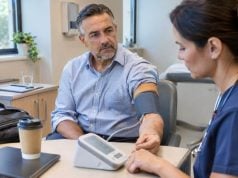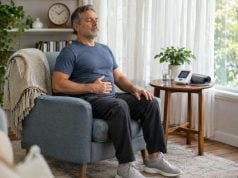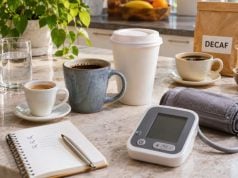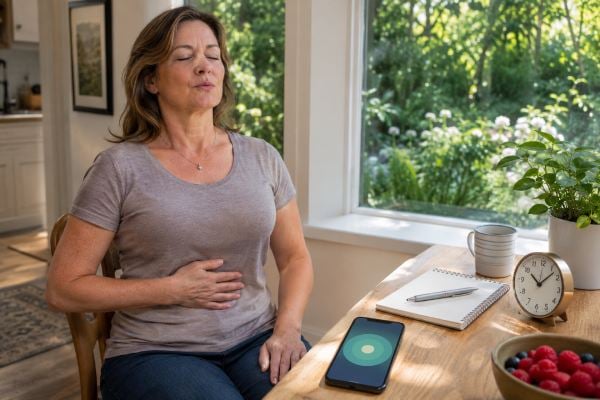
Slow, controlled breathing can lower blood pressure modestly for some people, especially when practiced regularly and combined with proven hypertension care. The goal is not to take enormous breaths or hold your breath until you feel lightheaded. It is to slow the breathing rate, relax unnecessary muscle tension, and lengthen the exhale in a comfortable way. Recent reviews of randomized trials suggest breathing exercises can reduce systolic and diastolic blood pressure, but study methods vary and the average effect should not be treated as a substitute for medication, exercise, sodium reduction, or other recommended care. A practical starting point is five minutes once or twice a day at about 5 to 6 relaxed breaths per minute. You can use diaphragmatic breathing, paced breathing, pursed-lip exhalation, or a simple longer-exhale pattern. The best technique is the one you can perform without strain and repeat consistently.
Table of Contents
- Can Breathing Exercises Lower Blood Pressure?
- How Slow Breathing May Affect Blood Pressure
- Four Simple Breathing Exercises to Try
- A Simple Daily Breathing Routine
- How to Track Whether It Is Helping
- Common Mistakes and Safety Tips
- When Breathing Is Not Enough
Can Breathing Exercises Lower Blood Pressure?
Yes, breathing exercises can lower blood pressure modestly in some people, but they work best as an add-on to established treatment rather than a replacement. A 2024 systematic review and meta-analysis of randomized trials reported average reductions of about 7 mm Hg in systolic pressure and 3 mm Hg in diastolic pressure after breathing interventions. Those pooled numbers are encouraging, but they should be interpreted carefully because the studies used different techniques, durations, participant groups, and blood pressure methods.
Another 2022 systematic review specifically examining device-guided and non-device-guided slow breathing found much less convincing results for device-guided breathing. That inconsistency tells us two useful things: breathing may help, but no particular gadget or breathing pattern should be sold as a guaranteed treatment.
The 2025 American Heart Association and American College of Cardiology high blood pressure guideline emphasizes a broad lifestyle approach that includes healthy weight, a heart-healthy eating pattern, less sodium, adequate dietary potassium when appropriate, physical activity, stress management, and reducing or eliminating alcohol. Breathing practice fits most naturally under stress management.
It is also worth separating statistical averages from personal response. A 5 to 7 mm Hg average reduction in a pooled analysis does not mean everyone will drop by that amount. Some participants improve more, some less, and some not at all. People who begin with higher blood pressure may have more room to improve, while someone whose pressure is already well controlled may notice little numerical change. Study quality, adherence, medication use, and the way blood pressure was measured also affect the reported result.
Think of breathing exercises as a low-cost skill with several possible benefits:
- They can reduce acute tension and help you settle before a blood pressure reading.
- They may lower sympathetic nervous system activity, the “fight-or-flight” response that can raise heart rate and vascular tone.
- Regular practice may improve autonomic balance and make stress responses less intense.
- They can create a reliable cue for relaxation before sleep, meetings, medical appointments, or other stressful situations.
If stress is a major trigger for your readings, learning more about anxiety and stress-related blood pressure can help you separate temporary spikes from a persistent hypertension pattern.
How Slow Breathing May Affect Blood Pressure
Slow breathing appears to influence blood pressure mainly through the autonomic nervous system and the reflexes that regulate circulation. You do not need to understand the physiology to use the technique, but knowing what is happening can make the practice more sensible.
At rest, your nervous system continually adjusts heart rate and blood vessel tone. Stress, pain, caffeine, exercise, and strong emotions can increase sympathetic activity. That can make the heart beat faster or more forcefully and can tighten blood vessels. The parasympathetic nervous system supports the opposite direction: recovery, digestion, and a calmer resting state.
Breathing is unusual because it happens automatically but can also be controlled voluntarily. Slowing the breath, especially without straining, changes the pattern of pressure inside the chest and can influence heart-rate variability and baroreflex activity. The baroreflex is a rapid feedback system that senses pressure in major arteries and adjusts heart rate and vascular tone.
Why the exhale matters
Heart rate normally rises slightly during inhalation and falls slightly during exhalation, a normal pattern called respiratory sinus arrhythmia. A comfortable, slightly longer exhale can make the breathing cycle feel calmer and may help shift the body away from a high-alert state.
This does not mean that longer and slower is always better. If you force yourself to breathe too deeply or too slowly, you may over-breathe, lower carbon dioxide too much, and develop tingling, chest tightness, or lightheadedness. The target is relaxed breathing, not a breath-holding contest.
Acute effect versus long-term effect
A five-minute session may lower a reading taken immediately afterward because you are calmer. That is different from changing your average blood pressure over weeks or months. Long-term benefit requires repeated practice, and even then the effect varies.
This distinction matters when you monitor at home. If you only measure immediately after a relaxation exercise, you may get an artificially favorable picture of your usual day. For diagnosis and treatment decisions, follow a consistent home blood pressure monitoring schedule instead of trying to produce your lowest possible number.
Breathing may also be useful before ordinary stressors even when you are not measuring blood pressure. A brief session before a difficult conversation, commute, medical visit, or bedtime can help interrupt a cycle of rapid breathing and muscle tension. That may improve how you feel even if the blood pressure effect is temporary. In that sense, breathing exercises have value beyond the cuff: they can become a repeatable way to reduce physiological arousal without food, alcohol, nicotine, or another coping behavior that may work against cardiovascular health.
Four Simple Breathing Exercises to Try
You do not need special equipment. These four methods all aim to make breathing slower, quieter, and more controlled. Start with the easiest one and practice for 3 to 5 minutes.
1. Diaphragmatic breathing
Diaphragmatic breathing encourages the abdomen to expand as the diaphragm moves downward, rather than relying mainly on the upper chest and shoulders.
- Sit supported with both feet on the floor, or lie down comfortably.
- Place one hand on the upper chest and one on the abdomen.
- Inhale gently through the nose for about 3 to 4 seconds.
- Let the abdomen rise while keeping the shoulders relaxed.
- Exhale slowly for about 4 to 6 seconds.
- Continue for 3 to 5 minutes without forcing the depth of the breath.
The hand on your abdomen should move more than the hand on your upper chest. If that feels awkward, skip the hand placement and focus simply on releasing your belly during the inhale.
2. Paced breathing at 5 to 6 breaths per minute
A common slow-breathing target is around 5 to 6 breaths per minute. One easy rhythm is a 5-second inhale followed by a 5-second exhale. Another is a 4-second inhale and 6-second exhale.
Use a quiet timer, clock, or breathing app if it helps, but do not become dependent on a device. The evidence does not show that a commercial breathing device is necessary.
Try this rhythm:
- Inhale gently for 4 seconds.
- Exhale gently for 6 seconds.
- Repeat 5 times per minute.
- Continue for 5 minutes.
If you feel air hunger, shorten the cycle to a 3-second inhale and 4-second exhale. Comfort is more important than hitting an exact number.
3. Pursed-lip breathing
Pursed-lip breathing is often used in respiratory care, but it can also be a simple way to slow the exhale.
- Inhale through your nose for about 2 to 3 seconds.
- Relax your jaw and shoulders.
- Purse your lips as though you are gently cooling hot food.
- Exhale slowly through the small opening for about twice as long as the inhale.
Do not blow forcefully. The exhale should be soft and controlled.
4. Box breathing, modified for blood pressure
Traditional box breathing often uses equal inhale, hold, exhale, and hold phases. Long breath holds are unnecessary for blood pressure practice and can be uncomfortable for some people. A gentler version keeps the pauses brief or removes them entirely.
Try 4 seconds in, an optional 1-second pause, 5 to 6 seconds out, and an optional 1-second pause. If pauses create pressure, anxiety, or dizziness, skip them.
For most people, the simplest slow exhale pattern is just as useful and easier to sustain.
A Simple Daily Breathing Routine
Five to ten minutes a day is a reasonable starting routine. Consistency matters more than doing long sessions occasionally.
Here is a practical seven-day starter plan:
| Days | Practice | Duration | Goal |
|---|---|---|---|
| 1–2 | Diaphragmatic breathing | 3 minutes once daily | Learn relaxed abdominal breathing |
| 3–4 | 4-second inhale, 6-second exhale | 5 minutes once daily | Slow the breathing rate comfortably |
| 5–6 | Preferred method | 5 minutes twice daily | Build consistency |
| 7 and beyond | Preferred method | 5–10 minutes daily | Maintain a sustainable habit |
Good times to practice include after waking, after work, before bed, or before a situation that usually makes you tense. Try attaching the practice to something you already do, such as morning coffee, brushing your teeth, or sitting down after lunch.
Morning practice is useful for habit building because fewer events have had time to interrupt the day. Evening practice may be preferable if tension accumulates after work or if you have trouble winding down. There is no evidence that everyone needs to breathe at a particular time of day to get a blood pressure benefit. Pick a time you can repeat. If twice-daily practice feels realistic, use one short session in the morning and one in the evening rather than a single long session that you are likely to skip.
You can also use “micro-sessions” during the day. Three to five slow breaths before opening email, getting into the car, or starting a meal take less than a minute. These brief pauses are not a substitute for a structured session in the research, but they can make calm breathing more automatic. Over time, the goal is to recognize tension earlier and return to a comfortable rhythm before stress escalates.
If you want a more structured sequence, a daily breathing routine for blood pressure can help you turn the technique into a repeatable habit.
Breathing works best alongside higher-impact lifestyle habits. Regular aerobic activity, resistance training, dietary changes, weight management when needed, sleep, and medication adherence often have stronger evidence for sustained blood pressure control. Review evidence-based ways to lower blood pressure naturally if you are building a broader plan.
How to Track Whether It Is Helping
Judge breathing practice by your average blood pressure trend, not by one unusually low reading after a session. Blood pressure naturally changes from minute to minute, so a single comparison can be misleading.
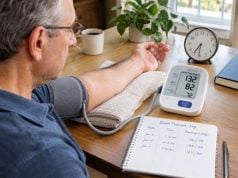
For a useful home experiment, keep the rest of your measurement routine consistent for one to two weeks. Use a validated upper-arm monitor and a correctly sized cuff. Sit quietly for five minutes, keep your back supported and feet flat, place the arm at heart level, and avoid talking during the measurement. Take two readings about one minute apart and record the average if your clinician has advised home monitoring.
Do not change medication based on a few better readings. If your average blood pressure improves over several weeks, share the log with your clinician. A medication dose that was appropriate before a major lifestyle change may eventually need review, but that decision should be based on reliable averages and clinical context rather than one good day.
When you compare weeks, use the same general conditions. Morning readings should be compared with morning readings, and evening readings with evening readings. Avoid comparing a rushed reading taken right after stairs with one taken after ten minutes of quiet breathing. Blood pressure variability is normal, and measurement conditions can create apparent changes larger than the true effect of the breathing practice.
You can also track non-blood-pressure benefits. Some people continue breathing practice because it improves perceived stress, sleep onset, or their sense of control during anxious moments even when the blood pressure effect is small.
A simple log can include:
- Date and time.
- Blood pressure and heart rate.
- Whether you practiced breathing that day.
- Caffeine, exercise, poor sleep, pain, or unusual stress.
- Medication timing if relevant.
Learning how to measure blood pressure at home correctly is essential because poor technique can easily create changes larger than the effect you are trying to detect.
Common Mistakes and Safety Tips
Breathing exercises should feel calm, not difficult. Stop if you feel faint, develop new chest pain, or become markedly short of breath.
If you use a phone app or audio track, keep the cue simple. The tool should support slow breathing, not make you chase a score or exact rhythm. A visual circle that expands and contracts can be enough. If the app encourages long breath holds, extreme breath depths, or progressively slower rates that make you uncomfortable, ignore those features.
Common mistakes include:
- Taking huge breaths. Slow breathing does not require maximal inhalation. Oversized breaths can cause hyperventilation symptoms.
- Forcing a very slow rate. Five or six breaths per minute is not a mandatory target. Use a faster rhythm if you feel air hunger.
- Holding the breath for long periods. Breath holds can increase internal pressure and are unnecessary for this purpose.
- Tensing the shoulders and jaw. Relaxing those muscles is part of the exercise.
- Practicing only when blood pressure is high. A daily routine is more useful than treating breathing as an emergency rescue maneuver.
- Skipping prescribed treatment. Breathing exercises do not replace antihypertensive medication when medication is indicated.
People with significant lung disease, severe heart failure, recurrent fainting, unstable angina, or a recent major cardiovascular event should ask their medical team how to approach breathing training. Pregnancy also changes breathing and circulation, so anyone with pregnancy-related hypertension should follow obstetric guidance rather than relying on relaxation techniques.
If slow breathing repeatedly causes tingling around the mouth or fingers, dizziness, or a feeling that you cannot get enough air, return to normal breathing. Those symptoms often mean you are over-breathing or forcing the technique.
When Breathing Is Not Enough
Breathing exercises are not an emergency treatment for dangerously high blood pressure. If a reading is very high, the correct next step depends on the number, whether it remains high after proper rechecking, and whether symptoms are present.
A blood pressure around or above 180/120 mm Hg deserves prompt attention. Sit quietly, make sure the cuff and technique are correct, and repeat the measurement after a short interval. If the pressure remains in that range, contact a healthcare professional urgently for guidance. If severe hypertension is accompanied by chest pain, shortness of breath, weakness or numbness, trouble speaking, confusion, vision changes, fainting, or another concerning symptom, seek emergency medical care.
Do not spend 20 minutes trying to “breathe the number down” while serious symptoms are developing.
Breathing also should not delay evaluation of persistently elevated readings. Hypertension is often silent, which is why high blood pressure symptoms are unreliable. Many people feel completely normal even when their average pressure is high enough to increase long-term cardiovascular risk.
The most useful role for breathing exercises is ordinary daily practice: a few calm minutes that may modestly improve blood pressure, reduce stress, and make other healthy behaviors easier to maintain. Choose one simple method, keep it comfortable, and judge the result over weeks rather than minutes.
References
- Effect of breathing exercises on blood pressure and heart rate: A systematic review and meta-analysis 2024 (Systematic Review)
- Device and nondevice-guided slow breathing to reduce blood pressure in hypertensive patients: A systematic review and meta-analysis 2022 (Systematic Review)
- The effect of breathing exercise on hemodynamics and heart rate variability parameters in hypertensive patients: A systematic review 2024 (Systematic Review)
- Are home-based exercises effective to reduce blood pressure in hypertensive adults? A systematic review 2022 (Systematic Review)
- Top Things to Know: 2025 High Blood Pressure (BP) Guideline 2025 (Guideline)
Disclaimer
Breathing exercises can support relaxation and blood pressure management, but they do not replace diagnosis, prescribed medication, or emergency care. If you have persistent hypertension, cardiovascular or lung disease, pregnancy-related high blood pressure, or symptoms with breathing practice, discuss an appropriate plan with a qualified healthcare professional.