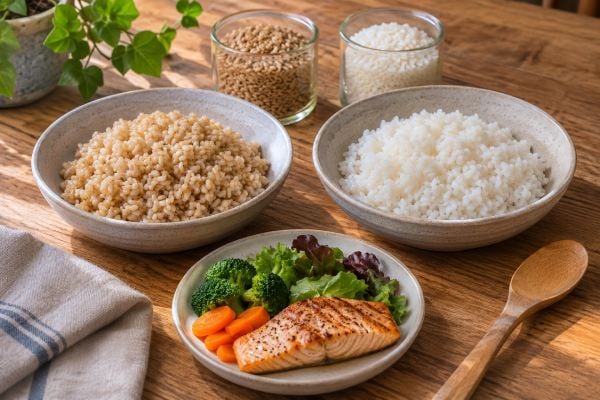
Brown rice usually has the nutritional edge for heart health because it keeps the bran and germ, giving you more fiber, magnesium, and other plant compounds than white rice. That does not make white rice “bad,” however. The bigger question is how often you eat rice, how much you serve, what you eat with it, and what the rest of your diet looks like. Research on whole grains consistently links higher intake with lower cardiovascular risk, while direct trials comparing brown and white rice show smaller, more mixed effects on cholesterol and blood sugar than many people expect. Brown rice can be a useful default, especially if you need more whole grains and fiber. White rice can still fit a heart-healthy pattern when portions are reasonable and meals include vegetables, beans, fish, tofu, or other minimally processed foods. The best choice is the one that improves the overall quality of your meals without creating unnecessary restriction.
Table of Contents
- Brown Rice vs White Rice: The Quick Answer
- Nutrition and Processing Differences
- Effects on Blood Sugar, Cholesterol, and Weight
- What the Heart Disease Evidence Shows
- Arsenic, Digestion, and Other Tradeoffs
- How to Choose and Portion Rice
- Practical Heart-Healthy Rice Meals
Brown Rice vs White Rice: The Quick Answer
For most adults, brown rice is the better everyday choice when the goal is to increase whole grains and fiber, but white rice can absolutely be part of a heart-healthy diet. Brown rice is a whole grain. White rice has the fibrous bran and nutrient-rich germ removed during milling, making it a refined grain.
That difference matters because heart health is influenced by more than calories. Fiber, mineral intake, blood sugar patterns, body weight, blood pressure, and overall dietary quality all contribute. Diets higher in whole grains are associated with lower rates of cardiovascular disease and cardiovascular death. A large 2023 meta-analysis found that each additional 30 g per day of whole grains was associated with lower risk of several cardiovascular outcomes, although these observational findings do not prove that one specific grain prevents heart disease.
Direct brown-rice-versus-white-rice studies are more modest. Meta-analyses of randomized trials suggest brown rice may improve some measures such as body weight or waist circumference in certain groups, but effects on LDL cholesterol, triglycerides, fasting glucose, and A1C are not consistently large. That is an important reality check: switching rice color alone is not a treatment for high cholesterol or hypertension.
A useful hierarchy is:
- Choose brown rice often if you enjoy it and tolerate it well.
- Use white rice when you prefer its texture, need an easier-to-digest starch, or it fits the cuisine better.
- Keep the serving proportional to your energy needs.
- Build the meal around vegetables, legumes or lean protein, and unsaturated fats rather than making rice the entire plate.
If your broader goal is to increase whole-grain intake, whole grains for heart health include oats, barley, quinoa, bulgur, whole-wheat foods, and other options in addition to brown rice.
Nutrition and Processing Differences
The main nutritional difference comes from processing. Brown rice retains the bran, germ, and endosperm, while white rice is mostly the starchy endosperm. Milling changes the amount of fiber, minerals, vitamins, and plant compounds that remain.
A typical cup of cooked rice contains roughly 200 to 250 calories depending on the variety and how it is prepared. Brown and white rice are therefore more similar in calories than many people assume. Brown rice generally provides several times more fiber and substantially more magnesium. White rice in the United States is often enriched, which restores certain B vitamins and iron lost during milling, but enrichment does not restore the original fiber or all of the compounds found in the bran and germ.
| Feature | Brown rice | White rice | Why it may matter |
|---|---|---|---|
| Grain type | Whole grain | Refined grain | Whole grains retain bran and germ |
| Fiber | Higher | Lower | Supports fullness, bowel regularity, and better overall dietary quality |
| Magnesium | Higher | Lower | Important for vascular, muscle, and glucose function |
| Texture | Chewier, nuttier | Softer, milder | Affects preference and meal compatibility |
| Cooking time | Usually longer | Usually shorter | Convenience can influence what people eat consistently |
| Arsenic tendency | Often higher | Often lower | Bran can retain more arsenic, so grain variety matters |
Fiber is one reason brown rice can be more satisfying. A meal that digests more slowly may make it easier to stop at a reasonable portion and may blunt the rise in blood glucose compared with a large serving of refined starch. But rice type is only one variable. Cooking method, rice variety, portion size, and the foods eaten with the rice can change the metabolic response substantially.
For example, a modest serving of white rice paired with lentils, vegetables, and olive oil may produce a very different meal than a large bowl of white rice eaten alone. Likewise, brown rice topped with salty sauces, fatty processed meat, and few vegetables is not automatically heart healthy just because the grain is whole.
Effects on Blood Sugar, Cholesterol, and Weight
Brown rice tends to be a better choice for blood sugar control, but the advantage is not dramatic in every study. A 2022 systematic review examining both prospective studies and randomized trials found that higher white rice intake was associated with greater type 2 diabetes risk, particularly in some Asian populations, while direct brown-versus-white rice trials showed mixed cardiometabolic results.
Another 2022 meta-analysis of randomized trials found that brown rice reduced body weight, body mass index, and waist circumference compared with white rice, but it did not produce clear improvements in the overall lipid profile or glycemic markers. The substantial variation among the included studies means these results should not be interpreted as a guaranteed weight-loss effect.
Blood sugar response
Rice is primarily carbohydrate, so portion size matters regardless of color. White rice is usually digested faster because much of the fiber-containing outer layer has been removed. Brown rice generally produces a slower response, but glycemic index varies by rice type. Some long-grain or parboiled white rice can have a lower glycemic impact than sticky or short-grain varieties.
People with prediabetes or diabetes may benefit from experimenting with several approaches:
- Keep cooked rice to about 1/2 to 1 cup per meal, then adjust to individual glucose targets and energy needs.
- Pair rice with beans, lentils, tofu, fish, chicken, or eggs.
- Fill a substantial part of the plate with non-starchy vegetables.
- Avoid treating sweet sauces, fried toppings, and sugary drinks as separate from the meal’s carbohydrate load.
- Check post-meal glucose when advised by a clinician, because individual responses vary.
Cooling cooked rice and reheating it later can increase resistant starch somewhat, which may modestly reduce the glucose response. It does not turn a large portion into a low-carbohydrate food. If this interests you, resistant starch in cooled rice is best viewed as a small optimization rather than the main strategy.
Cholesterol and triglycerides
There is no strong evidence that simply replacing white rice with brown rice will meaningfully lower LDL cholesterol on its own. The larger benefit comes from replacing a generally refined-grain dietary pattern with one richer in whole grains, soluble fiber, legumes, nuts, seeds, fruits, and vegetables.
If LDL is high, focus on changes with stronger direct evidence, such as increasing soluble fiber and replacing saturated fats with unsaturated fats. The rice choice can support that pattern, but it should not distract from the major drivers of cholesterol.
Triglycerides respond strongly to overall calorie balance, alcohol, added sugars, and the amount of rapidly digested carbohydrate in the diet. Someone eating multiple large bowls of either brown or white rice may still have difficulty lowering triglycerides if total carbohydrate and calorie intake are excessive.
What the Heart Disease Evidence Shows
The strongest cardiovascular case for brown rice comes from the broader evidence on whole grains, not from proof that brown rice itself prevents heart attacks. Prospective studies consistently associate higher whole-grain intake with lower cardiovascular disease and mortality. In a 2023 dose-response meta-analysis, greater whole-grain intake was associated with lower risks of coronary heart disease, overall cardiovascular disease, and all-cause mortality.
A separate 2023 systematic review of major food groups also found that higher whole-grain intake was associated with lower cardiovascular mortality. These studies include many kinds of whole grains, so it would be incorrect to attribute the entire effect to brown rice. People who eat more whole grains may also exercise more, smoke less, or eat more produce, and researchers cannot fully remove every lifestyle difference.
White rice evidence is more nuanced. A 2022 dose-response meta-analysis found that higher white rice intake was associated with a greater risk of type 2 diabetes, but it did not find a clear association with cardiovascular disease or cardiovascular mortality. That means claims such as “white rice causes heart disease” go beyond the evidence.
For practical heart-health decisions, think in terms of replacement. If brown rice replaces a refined starch while the rest of the meal stays similar, you gain whole-grain fiber and micronutrients. If white rice replaces a highly processed food that is high in sodium, added sugar, or saturated fat, white rice may still be the better meal component. Context matters.
The same principle applies to dietary patterns such as the DASH diet for blood pressure: the benefit comes from the combination of fruits, vegetables, whole grains, legumes, low-fat dairy or suitable alternatives, lean proteins, and lower sodium intake rather than one “perfect” grain.
Arsenic, Digestion, and Other Tradeoffs
Brown rice has one important downside: it can contain more inorganic arsenic than white rice because arsenic concentrates in the outer layers that remain on brown rice. Rice plants take up arsenic more readily than many other crops. This is a reason to vary your grains, not a reason for most adults to stop eating rice entirely.
The FDA advises consumers to eat a varied diet and notes that cooking rice in excess water, similar to pasta, can reduce inorganic arsenic by about 40% to 60% depending on the rice. The tradeoff is that draining the water can also remove some nutrients, especially from enriched white rice.
Practical ways to reduce long-term exposure include:
- Rotate rice with oats, barley, quinoa, bulgur, farro, whole-wheat pasta, potatoes, corn, and other grains or starches.
- Cook rice in extra water and drain it when arsenic exposure is a particular concern.
- Avoid making rice the only grain you eat every day.
- Use a range of rice types and brands rather than relying on a single product indefinitely.
- Follow specific pediatric advice for infants and young children, who are more vulnerable to exposure relative to body size.
Digestion and tolerance
White rice may be the more practical choice during periods of gastrointestinal illness, after certain procedures, or for people who have difficulty tolerating higher-fiber foods. Its softer texture and lower fiber content can make it easier to digest.
Brown rice may be more filling, but some people experience bloating or discomfort when they increase fiber too quickly. Increase whole grains gradually and drink enough fluid. If you have inflammatory bowel disease, gastroparesis, a bowel narrowing, or another condition requiring a modified-fiber diet, follow individualized medical advice rather than general whole-grain recommendations.
Neither rice is naturally high in sodium. Sodium usually enters through seasoning packets, restaurant sauces, bouillon, soy sauce, cured meats, or other additions. If blood pressure is a concern, sodium intake and blood pressure often matter more than whether the rice is brown or white.
How to Choose and Portion Rice
Choose brown rice when you want more whole grains; choose white rice when it better fits your digestion, culture, or meal—and control the overall plate either way. There is no medical need for most people to eliminate white rice.
A useful serving for many adults is about 1/2 to 1 cup cooked rice, but the right amount varies with body size, activity, glucose control, appetite, and what else is on the plate. Endurance athletes may need more carbohydrate. Someone with diabetes who is trying to reduce post-meal glucose may do better with less.
Choose brown rice more often if you:
- Eat few other whole grains.
- Struggle to reach fiber goals.
- Prefer its chewy texture and nutty flavor.
- Want a more filling starch for mixed meals.
- Are replacing a large share of refined grains with whole-grain foods.
White rice may make more sense if you:
- Have digestive symptoms with higher-fiber grains.
- Need a lower-fiber diet temporarily.
- Prefer a rice variety central to a traditional dish.
- Are eating it with fiber-rich foods such as beans, vegetables, and lentils.
- Find brown rice so unappealing that you compensate with less healthy convenience foods.
You can also split the difference. Mixing brown and white rice 50:50 changes the texture gradually and raises whole-grain intake without making the meal feel unfamiliar. Another option is to alternate: brown rice for grain bowls and soups, white rice for dishes where texture is central.
When shopping, plain rice is usually the simplest option. Seasoned rice mixes can contain several hundred milligrams of sodium per serving. If you use microwaveable rice, compare labels and choose plain varieties with little or no added sodium.
Practical Heart-Healthy Rice Meals
The healthiest rice meal is one where rice has a supporting role rather than crowding out vegetables, protein, and other nutrient-dense foods. You do not need a complicated formula. A simple plate structure works well: roughly half vegetables, one quarter protein, and one quarter rice or another starch, with adjustments for appetite and energy needs.
Here are practical combinations:
- Brown rice + black beans + vegetables: Add tomatoes, peppers, cabbage, avocado, and lime. Use herbs and spices before reaching for salty sauces.
- White rice + salmon + greens: A modest serving of jasmine or basmati rice can fit well beside baked salmon and a large portion of broccoli or leafy greens.
- Brown rice + lentil curry: Lentils add fiber and plant protein, making the meal more filling than rice alone.
- White rice + tofu stir-fry: Load the pan with mushrooms, bok choy, peppers, and snow peas, then keep the sauce moderate in sodium.
- Half brown, half white rice + chicken and vegetables: This is an easy transition meal for families who prefer the softer texture of white rice.
For blood pressure, pay particular attention to what gets poured over the rice. Restaurant stir-fries, teriyaki sauces, soy sauce, packaged seasoning blends, and gravies can supply far more sodium than the grain itself. Choosing lower-sodium condiments and using citrus, vinegar, ginger, garlic, chilies, and herbs for flavor can make a bigger difference.
For cholesterol, add foods that provide soluble fiber and unsaturated fats. Beans, lentils, edamame, vegetables, nuts, seeds, avocado, and olive oil complement rice well. If you are trying to improve your overall pattern, heart-healthy food choices matter more than optimizing one ingredient.
The bottom line is simple: brown rice has a meaningful nutritional advantage because it is a whole grain, but white rice does not need to be banned. Use brown rice as a frequent default if you like it, keep portions sensible, vary your grains, and judge the meal as a whole. Those habits are more likely to support long-term heart health than treating one type of rice as a cure or a problem.
References
- The effect of brown rice compared to white rice on adiposity indices, lipid profile, and glycemic markers: a systematic review and meta-analysis of randomized controlled trials 2022 (Systematic Review)
- White rice, brown rice and the risk of type 2 diabetes: a systematic review and meta-analysis 2022 (Systematic Review)
- Consumption of whole grains and refined grains and associated risk of cardiovascular disease events and all-cause mortality: a systematic review and dose-response meta-analysis of prospective cohort studies 2023 (Systematic Review)
- Long-Term Consumption of 10 Food Groups and Cardiovascular Mortality: A Systematic Review and Dose Response Meta-Analysis of Prospective Cohort Studies 2023 (Systematic Review)
- What You Can Do to Limit Exposure to Arsenic 2024 (Official Guidance)
Disclaimer
This article provides general nutrition and cardiovascular health information and is not a substitute for individualized medical advice. If you have diabetes, kidney disease, a digestive condition, or another condition that changes your carbohydrate, fiber, potassium, or phosphorus needs, ask your clinician or dietitian which grains and portions fit your treatment plan.