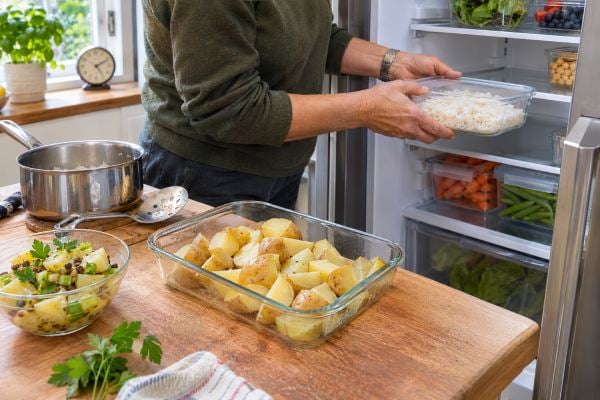
Cooling cooked potatoes or rice can increase resistant starch, a type of starch that is digested less completely in the small intestine and is fermented by gut bacteria. That change can reduce the post-meal glucose response in some situations and may support metabolic health. It does not, however, turn white rice or potatoes into a proven cholesterol-lowering treatment.
The strongest evidence for cholesterol comes from resistant-starch interventions overall, not specifically from eating yesterday’s cooled rice or potato salad. A 2025 meta-analysis found small average reductions in total and LDL cholesterol in adults with metabolic-syndrome-related risks, but studies varied in the type and dose of resistant starch used. “Cook and cool” is therefore best viewed as a practical way to modestly alter starch digestion while keeping attention on the bigger LDL-lowering priorities: soluble fiber, unsaturated fats, minimally processed foods, body-weight management when needed, and prescribed medication. Cooling also creates a food-safety responsibility. Rice and potatoes should be cooled promptly, refrigerated, and reheated safely rather than left at room temperature for hours.
Table of Contents
- What Resistant Starch Is and Why It Matters
- How Cooking and Cooling Changes Starch
- Potatoes: What Cooling Can Change
- Rice: Cooling, Reheating, and Blood Sugar
- Does Resistant Starch Lower Cholesterol?
- How to Use the Cook-and-Cool Trick
- Safety and Who Should Be Cautious
What Resistant Starch Is and Why It Matters
Most starch is broken down into glucose in the small intestine. Resistant starch behaves differently: some of it escapes digestion there and reaches the colon, where gut microbes can ferment it. In that sense, it acts more like fermentable fiber than ordinary digestible starch.
There are several forms of resistant starch. Some is physically trapped inside intact grains or seeds, some occurs naturally in raw foods such as unripe bananas, and some is produced when cooked starch cools. The cooling-related form is often called retrograded starch or resistant starch type 3.
Why does this matter for cardiometabolic health? Resistant starch may influence several pathways:
- It can reduce the amount of rapidly available carbohydrate in a serving.
- Fermentation produces short-chain fatty acids that can affect the colon, liver metabolism, and signaling between the gut and the rest of the body.
- It can shift parts of the gut microbiome, although responses differ substantially from person to person.
- Some trials report improvements in post-meal glucose, insulin sensitivity, or blood lipids.
Those mechanisms are interesting, but they should not be oversold. Resistant starch is not equivalent to a statin, and the amount created in a normal serving of cooled rice or potatoes is much smaller and more variable than the doses used in many supplement trials.
For cholesterol specifically, LDL remains the main target. If your LDL is elevated, the more established nutrition tools include viscous soluble fiber for lowering LDL, replacing saturated fat with unsaturated fat, and emphasizing whole plant foods. Resistant starch can fit alongside those steps rather than replacing them.
How Cooking and Cooling Changes Starch
When you cook rice, potatoes, pasta, or another starchy food in water, heat causes starch granules to swell and become easier for digestive enzymes to access. This process is called gelatinization. Freshly cooked starch is therefore generally more digestible than the same starch in a less-cooked state.
As the cooked food cools, some starch chains realign into tighter structures. This retrogradation makes a portion of the starch harder for digestive enzymes to break apart. The result is more resistant starch.
Several details affect how much resistant starch forms:
- The type of food and its starch composition
- Cooking method and degree of doneness
- Cooling time and temperature
- Whether the food is reheated
- The specific rice or potato variety
- The rest of the meal
That means there is no dependable rule such as “cooling cuts the carbs in half.” It does not. Most of the starch is still digestible, and the calorie difference in a typical serving is not large enough to ignore portion size.
Reheating does not necessarily eliminate all of the resistant starch that formed during cooling. Some retrograded starch remains resistant after reheating, although the exact amount depends on the food and method. This is useful because you do not have to eat every potato or bowl of rice cold to get any effect.
The “trick” is therefore simple chemistry, not a hack that cancels carbohydrates. It may make the glucose response to a starchy meal somewhat gentler, but the overall meal still matters. Protein, vegetables, legumes, fat, portion size, and physical activity after eating can all influence post-meal glucose. For people with insulin resistance, see the broader approach to insulin resistance and heart risk.
Potatoes: What Cooling Can Change
Potatoes are often treated as nutritionally empty, but plain potatoes provide potassium, vitamin C, vitamin B6, and some fiber, especially when the skin is eaten. The cardiovascular effect depends heavily on preparation. A boiled or baked potato is very different from fries or chips cooked with large amounts of fat and salt.
Cooling cooked potatoes increases resistant starch. In a randomized crossover study in women with elevated fasting glucose and insulin, chilled potatoes produced lower early post-meal glucose and insulin responses than freshly boiled potatoes, although the study was small and did not establish long-term cardiovascular benefit.
A practical approach is to cook potatoes until tender, cool them promptly in the refrigerator, and use them later in a meal. They can be eaten cold in a potato salad or reheated. To keep the meal heart-friendly, pair them with vegetables and a lean or plant protein rather than turning the dish into a vehicle for large amounts of butter, cream, bacon, or salt.
For example, a potato salad can use:
- Cooled potatoes with the skin when appropriate
- Plain yogurt or a vinaigrette instead of a large amount of mayonnaise
- Chopped celery, onion, herbs, or leafy greens
- Beans or lentils for additional fiber and protein
- Olive oil in a measured amount
- Lemon, vinegar, mustard, pepper, and herbs for flavor
The potato’s potassium can be useful in a heart-healthy eating pattern, but people with kidney disease or certain medications may need a potassium limit. The guide to potatoes, potassium, and blood pressure covers that issue in more detail.
Do not assume that a cold potato automatically lowers LDL. The better-supported benefit is the change in starch digestibility and possibly the post-meal glucose response. Long-term cholesterol effects from cooled potatoes specifically have not been established in large clinical trials.
Rice: Cooling, Reheating, and Blood Sugar
Rice can also form more resistant starch after cooking and cooling. A 2022 study in adults with type 1 diabetes compared freshly prepared long-grain white rice with rice cooled for 24 hours at 4°C and then reheated. The cooled-and-reheated rice produced a lower post-meal glucose rise, but it also caused more hypoglycemic episodes when participants used their standard insulin dose.
That result illustrates both the potential and the limitation of the cook-and-cool method. The same carbohydrate amount may not behave identically after cooling, especially for someone using rapid-acting insulin. A person without diabetes may simply see a smaller glucose rise. A person dosing insulin to carbohydrate may need more care because an unexpectedly smaller or slower glucose response can increase hypoglycemia risk.
For most people, the easiest method is:
- Cook rice normally.
- Portion it into shallow containers instead of leaving a large hot pot to cool slowly.
- Refrigerate promptly.
- Eat it cold in a salad or reheat only the portion you need.
- Combine it with vegetables, beans, tofu, fish, chicken, or another protein source.
Brown rice already provides more fiber and micronutrients than refined white rice, so cooling should not be used as a reason to avoid higher-fiber grains. Likewise, a very large serving of cooled white rice is still a large carbohydrate load.
The food-safety issue is especially important with rice. Cooked rice can support growth of bacteria if it sits at room temperature too long. USDA guidance for leftovers is to refrigerate perishable cooked food within 2 hours, use shallow containers for faster cooling, keep the refrigerator at 40°F/4°C or below, and use refrigerated leftovers within 3 to 4 days. When reheating, heat food thoroughly.
Do not repeatedly cool, reheat, and cool the same large batch. Portioning before refrigeration makes it easier to reheat only what you will eat.
Does Resistant Starch Lower Cholesterol?
Possibly, but the size of the effect appears modest and the evidence is much stronger for resistant starch as a category than for cooled potatoes or rice specifically.
A 2025 systematic review and meta-analysis of randomized trials in adults with metabolic-syndrome-related risks found that resistant starch reduced total cholesterol by about 0.20 mmol/L and LDL cholesterol by about 0.11 mmol/L on average. That LDL change is roughly 4 mg/dL. The trials varied in resistant-starch source, dose, duration, population, and delivery method, so the result should not be interpreted as a guarantee for a particular food.
A 2023 review of randomized trials also concluded that resistant starch may improve some cardiometabolic outcomes, particularly glucose-related measures, but study results were heterogeneous. Some longer studies in people with type 2 diabetes reported benefits, while others did not show meaningful lipid changes.
There are plausible mechanisms for an LDL effect. Fermentation of resistant starch changes production of short-chain fatty acids and may influence bile acid metabolism, liver cholesterol synthesis, and the composition of gut microbes. A 2023 microbiome meta-analysis found reproducible changes in some bacterial groups after resistant-starch interventions, but microbiome changes are not the same as proof of fewer heart attacks or strokes.
The practical comparison matters. Adding a modest amount of resistant starch to an otherwise high-saturated-fat diet is unlikely to overcome the LDL-raising effect of frequent butter, fatty meat, processed meat, or coconut oil. If cholesterol is the main goal, prioritize the best foods for lowering high cholesterol and use cooled starch as one optional technique.
It is also important to distinguish LDL from triglycerides and glucose. A meal pattern that improves post-meal glucose may be useful for insulin resistance even if LDL barely changes. Cardiovascular risk is influenced by several markers, and one food preparation technique does not need to improve all of them to be worthwhile.
When interpreting cholesterol studies, pay attention to what the resistant starch replaced. If a trial adds a purified resistant-starch supplement to an otherwise stable diet, that is different from replacing beans or whole grains with cooled white rice. The supplement may increase fermentable carbohydrate without displacing another nutritious food, while the food swap changes fiber, protein, vitamins, minerals, and calorie density at the same time. This is one reason results from supplement trials cannot be translated gram-for-gram into a serving of leftovers.
The size of the LDL effect also matters. A reduction of a few milligrams per deciliter may be worthwhile as one part of a larger plan, but it is much smaller than the change many people need when LDL is substantially elevated. Someone with LDL of 190 mg/dL or established atherosclerotic cardiovascular disease should not delay medical treatment while experimenting with starch temperature. In that setting, resistant starch is a dietary detail, not the primary risk-reduction tool.
How to Use the Cook-and-Cool Trick
The cook-and-cool method is easiest when it fits normal meal preparation. You do not need a complicated protocol.
For potatoes: Boil, steam, or bake them until cooked. Cool promptly in the refrigerator. Use them the next day in a salad, add them to a vegetable bowl, or reheat a portion with a meal.
For rice: Cook as usual, portion into shallow containers, refrigerate promptly, and use within the safe leftover window. Reheat only what you need.
For pasta: Although this article focuses on potatoes and rice, cooked-and-cooled pasta also develops resistant starch. Choose whole-grain or legume-based pasta when it suits the meal because the underlying fiber and protein content still matter.
A balanced plate is more important than the starch temperature. Try making half the plate non-starchy vegetables, add a protein source, then include a moderate portion of potatoes, rice, or another grain. Beans and lentils can replace part of the starch portion and add both soluble fiber and resistant starch naturally.
If your goal is glucose control, taking a walk after meals can complement food changes and has a more direct evidence base for reducing post-meal glucose than obsessing over exact cooling times.
For cholesterol, combine the technique with changes that have larger expected effects: oats or barley, beans, nuts, seeds, vegetables, fruit, olive or other unsaturated oils, and less saturated fat. If LDL remains high despite these changes, medical treatment may be appropriate. The causes and treatment options for high LDL cholesterol extend well beyond starch digestion.
A useful weekly routine is to batch-cook a modest amount of potatoes or rice, cool it safely, and use it for one or two future meals. This can improve convenience as well as starch structure. Convenience matters because a prepared side dish makes it easier to build a balanced meal instead of relying on fast food or highly processed snacks.
Safety and Who Should Be Cautious
For most healthy adults, cooked-and-cooled potatoes and rice are ordinary foods. The main cautions involve food safety, gastrointestinal tolerance, diabetes treatment, and special dietary restrictions.
Food safety: Refrigerate cooked food promptly. USDA advises not leaving perishable leftovers at room temperature for more than 2 hours, or more than 1 hour when the ambient temperature is above 90°F/32°C. Use shallow containers so food cools quickly, keep the refrigerator at 40°F/4°C or below, and use refrigerated leftovers within 3 to 4 days.
Diabetes using insulin: The cooled-rice study in type 1 diabetes found a lower glucose response and more post-meal hypoglycemia with a standard insulin dose. Do not deliberately change your insulin dose from an article. If you plan to make cooled starch a regular part of meals, review your continuous glucose monitor or meter data and ask your diabetes clinician how to adjust safely if needed.
Digestive symptoms: Resistant starch is fermented in the colon. A sudden large increase can cause gas, bloating, or changes in stool. Increase gradually if you are sensitive. People with irritable bowel syndrome may tolerate some resistant-starch foods well and others poorly.
Kidney disease: Potatoes can be high in potassium, and some people with chronic kidney disease need limits. Rice may be easier to fit in a lower-potassium diet, but individual advice matters.
Weight management: Resistant starch does not make portion size irrelevant. If cooling encourages you to eat very large amounts of rice or potatoes because they seem “free,” the strategy can backfire.
The bottom line is that cook-and-cool is a modest metabolic tweak, not a cholesterol cure. It can increase resistant starch and may soften the post-meal glucose response. Resistant-starch interventions as a whole show small potential benefits for LDL, but direct evidence that cooled potatoes or rice meaningfully lower cholesterol is limited. Use the technique if you enjoy these foods, follow safe cooling and storage practices, and keep the larger heart-healthy pattern in charge.
References
- Effects of resistant starch consumption on anthropometric and serum parameters in adults with metabolic syndrome-related risks: a systematic review and meta-analysis 2025 (Systematic Review)
- Resistant starch improves cardiometabolic disease outcomes: A narrative review of randomized trials 2023 (Review)
- Influence of resistant starch resulting from the cooling of rice on postprandial glycemia in type 1 diabetes 2022 (Clinical Trial)
- Meta-analysis reveals gut microbiome and functional pathway alterations in response to resistant starch 2023 (Meta-Analysis)
- Chilled Potatoes Decrease Postprandial Glucose, Insulin, and Glucose-dependent Insulinotropic Peptide Compared to Boiled Potatoes in Females with Elevated Fasting Glucose and Insulin 2019 (Randomized Trial)
- How do I handle leftovers safely? 2024 (USDA Food Safety Guidance)
Disclaimer
This article is for general education and does not replace individualized medical or nutrition advice. If you use insulin, have kidney disease, have recurrent hypoglycemia, or follow a medically prescribed carbohydrate or potassium plan, discuss major changes in starch preparation or portions with your clinician or dietitian. Food that has been stored unsafely should be discarded rather than “rescued” by reheating.