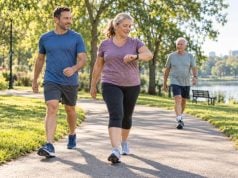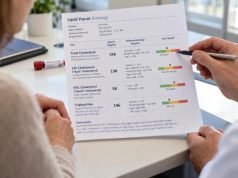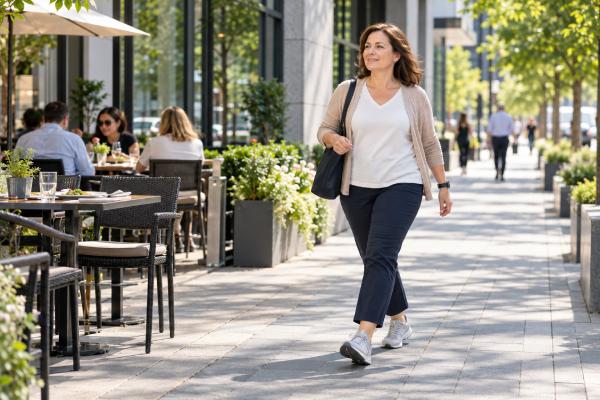
Walking for a few minutes after eating can improve how your body handles the meal, especially its rise in blood sugar. Controlled trials and recent meta-analyses show that activity performed after a meal usually lowers post-meal glucose more than staying seated, and starting relatively soon after eating tends to work better than waiting for the glucose peak to pass. The triglyceride story is more nuanced. Exercise can reduce post-meal lipemia, but the effect depends on the amount and timing of activity, the meal, and your baseline metabolic health; a brief stroll should not be expected to cancel out a high-fat meal or treat high triglycerides by itself. Still, repeated after-meal walks can add meaningful weekly activity, break up long sitting periods, and support blood pressure, insulin sensitivity, weight management, and cardiovascular fitness. For many adults, 10 to 15 minutes after one or more meals is a practical starting point, with pace and duration adjusted for fitness, medications, and medical conditions.
Table of Contents
- What Happens After You Eat
- Blood Sugar Benefits of Post-Meal Walking
- Triglycerides and Post-Meal Lipemia
- How Soon, How Long, and How Fast
- Which Meals Matter Most
- Heart Health Benefits Beyond the Meal
- Safety and a Practical Plan
What Happens After You Eat
A meal creates a temporary metabolic challenge. Carbohydrate is broken down into glucose, which enters the bloodstream and stimulates insulin release. Fat is packaged into triglyceride-rich particles that circulate for hours while tissues take up and store energy. These changes are normal, but the size and duration of the response matter more in people with insulin resistance, diabetes, obesity, high triglycerides, or other cardiovascular risk factors.
Sitting through the entire post-meal period leaves skeletal muscle relatively inactive. Walking changes that quickly. Contracting muscles need energy and can increase glucose uptake through pathways that do not depend entirely on insulin. That is one reason even low-intensity movement can flatten the glucose curve compared with sitting.
The response to fat is slower. Post-meal triglycerides often rise over several hours, and exercise can influence how quickly triglyceride-rich lipoproteins are cleared. However, the triglyceride benefit is more dependent on the total energy expended and may reflect exercise performed before the meal, earlier that day, or even the previous day.
This distinction matters. A ten-minute walk may have a clear and immediate effect on post-meal glucose, while its triglyceride effect may be smaller or harder to detect. Both responses fit into a larger pattern in which regular movement improves metabolic health over time.
Why post-meal metabolism matters for the heart
Cardiovascular risk is not determined only by fasting laboratory values. Most people spend much of the day in a fed state, moving from breakfast to lunch to dinner before the previous meal is fully processed. Repeated exposure to high glucose, insulin, and triglyceride-rich remnant particles can be a marker of poor metabolic health.
That does not mean every glucose or triglyceride rise is dangerous. Healthy metabolism includes normal post-meal increases. The goal is not a perfectly flat glucose line or zero circulating triglycerides. The practical goal is better insulin sensitivity, healthier fasting and post-meal patterns, favorable blood pressure and lipids, and less sedentary time.
If you are working on broader glucose control, see blood sugar control and heart risk for the relationship between diabetes, insulin resistance, and cardiovascular disease.
Blood Sugar Benefits of Post-Meal Walking
The strongest evidence for walking after meals concerns glucose. Meta-analyses of human intervention studies consistently find that exercise performed after eating reduces postprandial glucose compared with no exercise and often performs better than the same activity before the meal.
The reason is partly timing. Blood glucose begins rising as carbohydrate is absorbed. Starting to move during that rise gives active muscle another place for glucose to go. Waiting until well after the peak can still add physical activity, but it may miss part of the opportunity to blunt the excursion.
A 2023 systematic review that compared exercise before and after meals found that post-meal exercise produced the more favorable acute glucose response, with earlier activity generally working better. A 2024 meta-analysis similarly found an advantage for postprandial over preprandial activity for glycemic control.
Short walks can be enough to change the curve
You do not necessarily need a 30- or 60-minute workout after every meal. Controlled studies have shown that short bouts of walking can reduce post-meal glucose exposure. In people with type 2 diabetes, dividing daily walking into brief walks after the main meals has sometimes improved postprandial control more than completing the same total walking time as one session at another point in the day.
The effect is especially useful for people who spend long periods sitting after eating. Replacing just part of that sitting time with light walking can produce measurable metabolic changes.
This also makes the strategy realistic. Someone who cannot schedule a formal workout may still be able to walk around the block for 10 minutes after lunch, walk the halls after a work meal, or do indoor laps after dinner.
More intense is not always better
For glucose control, light-to-moderate activity can be effective. You do not have to turn each meal into a training session. Very hard exercise can temporarily increase stress hormones and, in some people, cause glucose to rise before it falls.
A purposeful but comfortable walk is usually enough. You should be able to talk, your breathing may be somewhat faster, and your legs should feel active without strain.
Meal composition still matters. Walking cannot fully offset a very large serving of refined carbohydrate or a sugary drink. A meal that includes fiber-rich vegetables, legumes or whole grains, protein, and unsaturated fats generally creates a different metabolic response than a large portion of refined starch and sugar.
Triglycerides and Post-Meal Lipemia
Triglycerides deserve separate treatment because they behave differently from glucose. After a fat-containing meal, the intestine packages dietary fat into chylomicrons. The liver also releases triglyceride-rich particles. These particles circulate and are progressively broken down, leaving remnant particles that can penetrate the artery wall.
People with insulin resistance, diabetes, obesity, or high fasting triglycerides may have a larger or more prolonged post-meal triglyceride response. That is one reason clinicians pay attention to triglycerides as part of overall cardiometabolic risk.
Exercise can reduce postprandial lipemia, but research suggests the effect depends heavily on how much activity is performed. Meta-analyses have found that prior exercise can lower the triglyceride response to a later meal, with larger effects often seen when exercise expends more energy.
A short post-meal walk is helpful, but do not oversell it
It is tempting to say that a ten-minute walk “burns off” the fat from a meal. That is not an accurate description. Dietary fat remains in circulation and tissues continue processing it for hours. A short walk may contribute to better substrate use and less sitting, but studies of triglyceride lowering often use longer or more energy-demanding exercise than a casual stroll.
Repeated short activity breaks may also help. Research on interrupting prolonged sitting shows favorable effects on post-meal metabolic markers, and some studies find reductions in triglycerides when sitting is regularly broken up with light walking. Results are less consistent than for glucose, but the direction supports a simple principle: long, uninterrupted sitting after meals is not the best metabolic default.
If your fasting triglycerides are elevated, focus on the larger treatment plan. Weight loss when appropriate, reducing excess alcohol, controlling diabetes, replacing refined carbohydrates with higher-quality foods, choosing unsaturated fats, and accumulating sufficient weekly exercise generally matter more than any single post-meal walk. For more detail, see diet changes that can lower triglycerides.
What post-meal triglycerides do not tell you by themselves
Most routine lipid panels are measured fasting or under standardized conditions. You usually do not need to test triglycerides after each meal. A clinician may use fasting or nonfasting triglycerides, along with LDL-related measures, blood pressure, glucose status, smoking, age, family history, and other factors to estimate cardiovascular risk.
Do not use a good response to walking as a reason to ignore persistently high triglycerides. Very high levels can raise pancreatitis risk and may require prompt medical treatment.
How Soon, How Long, and How Fast
There is no single timing rule that works for every person or every meal, but the evidence supports moving relatively soon after eating rather than waiting several hours.
A practical approach is to begin within about 10 to 30 minutes after finishing the meal, as long as you feel comfortable. Some studies start activity even earlier. If you have reflux, abdominal discomfort, or a very full stomach, waiting a little longer and walking gently may feel better.
For duration, 10 to 15 minutes is a useful starting target. If you enjoy the walk and have time, 20 to 30 minutes adds more weekly activity. If ten minutes is too much, even two to five minutes of light walking is better than remaining seated for a long period, especially when repeated across the day.
Use pace to match the purpose
For glucose control, an easy-to-moderate pace can work. For broader cardiovascular fitness, gradually building toward a brisk pace is useful if your health and conditioning allow it.
A moderate-intensity walk usually feels like this:
- Your breathing is clearly faster than at rest.
- You feel warmer but remain in control.
- You can speak in full sentences, though singing would be difficult.
- The effort feels sustainable rather than exhausting.
Do not chase a particular speed if terrain, age, joint problems, medications, or fitness make that speed inappropriate. A brisk walk for one person may be an easy walk for another.
One longer walk or several short walks?
For total cardiovascular activity, both patterns can count. For post-meal glucose specifically, several short walks have an advantage because they are timed to separate meal-related glucose rises.
A practical compromise is to keep one regular exercise session if you enjoy it, then add five- to ten-minute walks after the meals most likely to be followed by sitting. You do not have to choose one strategy exclusively.
Which Meals Matter Most
If you can walk after every meal and enjoy doing so, that is fine. If not, target the meals where the habit is most useful.
A meal may be a high-priority target when it is:
- Your largest meal of the day.
- Higher in carbohydrate than your other meals.
- Followed by several hours of sitting.
- A meal that repeatedly produces high glucose readings if you monitor glucose for medical reasons.
- Eaten at a time when you otherwise get very little activity.
Dinner is often the obvious choice because many people sit for the rest of the evening. Lunch can be equally valuable for office workers who would otherwise return directly to a desk. Breakfast may matter for someone who eats a large morning meal and then commutes or works seated.
You do not need a continuous glucose monitor to use this habit
Continuous glucose monitors can be helpful for people with diabetes and, in some cases, for clinical decision-making. They are not required to justify a post-meal walk. Glucose varies naturally with sleep, stress, meal composition, menstrual cycle, illness, and device error.
For people without diabetes, reacting to every small glucose rise can create unnecessary anxiety. A better approach is to use walking as a general health behavior and rely on standard screening such as fasting glucose or A1C when medically appropriate.
For people with diabetes, glucose data can be valuable, but interpretation should account for medication and hypoglycemia risk. If after-meal exercise repeatedly causes low glucose, the solution is not simply to stop moving forever; it is to review timing, medication, carbohydrate intake, and exercise planning with the clinician managing your diabetes.
Meal order and food quality can complement walking
Post-meal movement works best alongside a sensible meal pattern. Fiber slows digestion and increases fullness. Protein helps preserve muscle and moderates the meal response. Minimally processed carbohydrate sources generally bring more nutrients and fiber than refined starches and sugars.
The combination does not need to be complicated: vegetables, beans or whole grains, a protein source, and an unsaturated-fat source create a strong base for many meals. A Mediterranean-style eating pattern is one practical model.
Heart Health Benefits Beyond the Meal
The immediate glucose effect is only part of the value. A habit repeated after meals can raise total daily movement substantially.
Two 10-minute walks per day add 140 minutes of activity per week. Three 10-minute walks per day add 210 minutes. Not every minute will necessarily reach moderate intensity, but the total represents a major reduction in sedentary time and can make it easier to meet standard aerobic activity recommendations.
Regular walking can support cardiovascular health by improving cardiorespiratory fitness, lowering blood pressure, improving insulin sensitivity, helping with weight and waist management, and supporting mood and stress control. These changes are more important for long-term heart risk than any single glucose reading after lunch.
Breaking up sitting also matters independently. Long sedentary periods are common even among people who complete a workout. A person can exercise for 30 minutes in the morning and still spend most of the remaining day seated. Brief walks after meals create natural interruptions in that pattern.
Think in layers, not hacks
Post-meal walking works best as one layer of cardiovascular prevention:
- Do enough total aerobic activity across the week.
- Add strength training on at least two days when appropriate.
- Sit less and interrupt long sedentary periods.
- Eat a heart-supportive pattern most of the time.
- Control blood pressure, diabetes, cholesterol, and smoking risk.
- Get adequate sleep and seek care for symptoms or abnormal test results.
A walk after eating is attractive because it is simple, low-cost, and linked to a cue that already happens every day. Its value comes from repeatability, not from being a metabolic shortcut.
If you want to build a broader program, walking for heart health explains weekly duration and pace targets.
Safety and a Practical Plan
Most people can walk safely after meals, but the right plan depends on health status.
If you take insulin or a sulfonylurea, exercise can increase the risk of hypoglycemia. Know your clinician’s guidance for glucose checks, carbohydrate treatment, and medication timing. Carry fast-acting carbohydrate when advised, and be especially cautious when adding a new evening routine because exercise can sometimes affect glucose for hours afterward.
If you have known heart disease, severe lung disease, major mobility limitations, or symptoms with exertion, ask your clinician what level of activity is appropriate. Stop and seek urgent care for chest pressure, fainting, severe shortness of breath, or stroke-like symptoms.
People who become dizzy after meals should start slowly. Blood pressure can fall after eating, particularly in older adults or people taking blood-pressure medication. Stand up gradually, use a safe route, and discuss recurrent near-fainting or falls with a clinician.
A simple seven-day starting plan
For the first week, choose one meal each day and walk for 10 minutes afterward. Start at a relaxed pace for the first two minutes, then walk purposefully for six to seven minutes, and finish easily.
During the second week, choose one of three ways to progress:
- Keep the same 10-minute walk and add a second meal on some days.
- Extend the main post-meal walk to 15 minutes.
- Keep the duration the same but make the middle portion slightly brisker.
Only increase one variable at a time if you are deconditioned. The goal is to finish feeling capable of repeating the walk the next day.
Bad weather does not have to break the routine. Walk through a shopping center, use a treadmill, climb stairs gently, march in place, or take laps inside your home or building. The metabolic benefit comes from moving large muscles, not from being outdoors.
Track consistency rather than calories burned. Wearable calorie estimates can be imprecise, and the point of a post-meal walk is not to “pay for” food. A better scorecard is simple: Did you move after the meal? Did you do it safely? Can you keep doing it most weeks?
When that answer is yes, the habit can become a reliable way to improve post-meal glucose handling, reduce sitting, increase total activity, and support a healthier cardiovascular routine.
References
- After Dinner Rest a While, After Supper Walk a Mile? A Systematic Review with Meta-analysis on the Acute Postprandial Glycemic Response to Exercise Before and After Meal Ingestion in Healthy Subjects and Patients with Impaired Glucose Tolerance 2023 (Systematic Review)
- The effect of preprandial versus postprandial physical activity on glycaemia: Meta-analysis of human intervention studies 2024 (Meta-analysis)
- The effects of exercise training on postprandial glycemia and insulinemia in adults with overweight or obesity and with cardiometabolic disorders: A systematic review and meta-analysis 2023 (Systematic Review)
- Effect of Prior Exercise on Postprandial Lipemia: An Updated Meta-Analysis and Systematic Review 2022 (Systematic Review)
- The Effects of Accumulated Versus Continuous Exercise on Postprandial Glycemia, Insulin, and Triglycerides in Adults with or Without Diabetes: A Systematic Review and Meta-Analysis 2022 (Systematic Review)
- The Acute Effects of Interrupting Prolonged Sitting Time in Adults with Standing and Light-Intensity Walking on Biomarkers of Cardiometabolic Health in Adults: A Systematic Review and Meta-analysis 2022 (Systematic Review)
Disclaimer
This article is for general education and is not a substitute for individualized medical or exercise advice. If you take insulin or medication that can cause hypoglycemia, ask your diabetes clinician how to adjust your post-meal activity safely. Seek urgent medical care for chest pain, fainting, severe breathlessness, or stroke-like symptoms.