
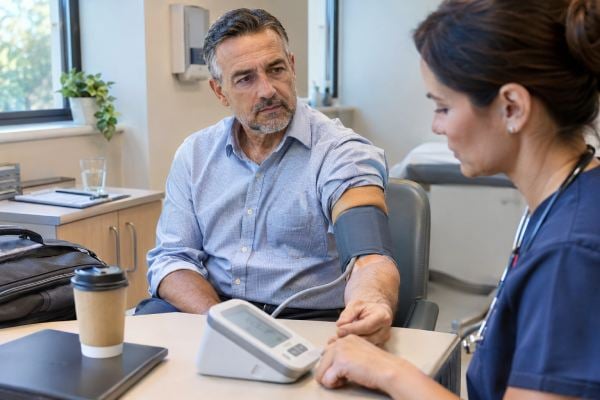
Blood pressure can jump for many temporary reasons, including stress, pain, exercise, caffeine, nicotine, a full bladder, poor measurement technique, or certain medications. A single high reading does not automatically mean you have dangerous hypertension, but repeated or very large spikes deserve attention. The first step is to stop, sit quietly, check that the cuff fits correctly, and repeat the measurement after a short rest. Symptoms matter too. A reading above about 180/120 mm Hg with chest pain, shortness of breath, weakness, numbness, trouble speaking, vision changes, confusion, or another sign of acute illness can signal a hypertensive emergency and requires immediate medical care. Severe numbers without those symptoms still need prompt clinical follow-up. The most useful approach is to separate measurement error and normal short-term variation from a true pattern of uncontrolled or episodic hypertension. That distinction helps you respond to the situation without either dismissing a real problem or panicking over one misleading number.
Table of Contents
- What Counts as a Blood Pressure Spike?
- Common Triggers for Sudden High Readings
- Symptoms You May Notice
- What to Do When Your Blood Pressure Spikes
- When a Spike Is an Emergency
- When Repeated Spikes Need a Medical Workup
- How to Reduce Future Spikes
What Counts as a Blood Pressure Spike?
A blood pressure spike is a sudden reading that is clearly higher than your usual level, but there is no single number that defines every spike. Someone whose typical home pressure is 115/70 mm Hg may notice a meaningful jump at 150/90, while a person with chronic uncontrolled hypertension may see that number frequently.
Blood pressure is not fixed. It changes from beat to beat and throughout the day as the nervous system responds to posture, activity, meals, temperature, emotions, sleep, and medication. That normal variability is why clinicians diagnose and treat hypertension based on averages and patterns rather than one isolated number.
The 2025 U.S. high blood pressure guideline classifies average readings of 130–139 systolic or 80–89 diastolic as stage 1 hypertension and readings of at least 140 systolic or 90 diastolic as stage 2. Severe hypertension is a different situation: readings above 180 systolic and/or 120 diastolic are high enough to require prompt evaluation, especially when they persist on repeat measurement.
A spike can be:
- Situational: triggered by stress, pain, exercise, caffeine, or a medical visit.
- Measurement-related: caused by a cuff that is too small, poor positioning, talking, or taking the reading without resting.
- Medication-related: from missed blood pressure medicine or a drug that raises pressure.
- Paroxysmal: sudden, sometimes dramatic episodes that occur with symptoms such as pounding heartbeat, sweating, or headache.
- Part of uncontrolled hypertension: high readings occurring so often that the “spikes” are really evidence of a high average.
If your concern is that readings vary widely from one measurement to another, blood pressure variability is a useful concept to understand separately from true hypertensive emergencies.
Another useful distinction is between peak pressure and average pressure. Cardiovascular risk over months and years is driven mainly by sustained exposure to elevated pressure, although extreme episodic hypertension can still be dangerous in the right clinical setting. A person who records 170/95 during a panic episode but averages 118/72 at home has a different problem from someone who reaches 170/95 repeatedly because their usual pressure is poorly controlled. The same peak number can therefore lead to different next steps.
Timing matters too. Morning pressure often rises after waking as stress hormones increase and activity begins. Meals, medications, and exercise can create predictable changes later in the day. A single “spike” becomes much easier to interpret when you know what your usual pattern looks like.
Common Triggers for Sudden High Readings
Most short-lived spikes have an identifiable trigger, and many are reversible. Start with ordinary factors before assuming a rare adrenal or neurologic disorder.
Stress, fear, and anxiety
The sympathetic nervous system raises heart rate and tightens blood vessels during a fight-or-flight response. An argument, panic episode, deadline, medical appointment, or even anxiety about the blood pressure cuff can temporarily raise the number. This is the mechanism behind white coat hypertension and many stress-related spikes.
Pain
Acute pain can raise blood pressure substantially. A kidney stone, migraine, dental pain, injury, postoperative pain, or severe arthritis flare can all drive a temporary increase. Treating the cause of the pain is usually more useful than repeatedly checking the cuff every few minutes.
Exercise and physical exertion
Systolic blood pressure normally rises during exercise because the heart pumps more blood to working muscles. Measuring immediately after climbing stairs, carrying groceries, or rushing through the house can produce a high reading that is not representative of resting pressure. Wait at least several minutes and ideally follow the same resting routine each time.
Caffeine, nicotine, and stimulants
Caffeine can temporarily increase blood pressure, particularly in people who are sensitive or do not use it regularly. Nicotine also raises heart rate and vascular tone. Prescription stimulants, illicit stimulants, high-caffeine energy products, and some pre-workout supplements can have stronger effects.
If caffeine seems to be part of your pattern, caffeine and blood pressure can be tested systematically rather than guessed at.
Medications and over-the-counter products
Several common products can raise blood pressure or make antihypertensive drugs work less effectively. Examples include some nonsteroidal anti-inflammatory drugs, oral decongestants, corticosteroids, stimulant medications, certain antidepressants, hormonal therapies, and some immunosuppressive drugs. Licorice-containing products and some supplements can also affect pressure.
Do not stop prescribed medication on your own. Instead, bring a complete list of prescriptions, over-the-counter drugs, supplements, and energy products to your clinician or pharmacist.
Missed or delayed blood pressure medication
Skipping doses can allow pressure to rise, especially with drugs that have shorter durations of action. Abrupt withdrawal from certain medications can cause a rebound increase. If you repeatedly forget doses, a simpler schedule or combination pill may help.
Poor sleep and sleep apnea
Short sleep increases sympathetic activity, while obstructive sleep apnea causes repeated nighttime surges in blood pressure and stress hormones. Loud snoring, witnessed pauses in breathing, morning headache, and daytime sleepiness are reasons to discuss testing.
A full bladder, cold exposure, and measurement conditions
A full bladder can raise a reading. Cold temperatures can constrict blood vessels. Talking, unsupported feet, crossed legs, an unsupported back, or an arm hanging below heart level can all distort the measurement. These “small” details matter when you are deciding whether a spike is real.
Cuff size deserves special attention. A cuff that is too small for the upper arm can overestimate pressure, sometimes enough to make a normal or moderately high reading look alarming. A cuff that is too large can distort the result in the opposite direction. If your arm circumference is near the edge of the manufacturer’s range, verify the fit rather than assuming the included cuff is appropriate.
Repeated checking can become a trigger itself. Someone who sees one high number may check again immediately, become more anxious, tense the arm, hold their breath, and then see an even higher number. A structured pause and two careful readings break that feedback loop better than taking ten measurements in a row.
Symptoms You May Notice
High blood pressure often causes no symptoms, even when the number is very high. You cannot reliably judge blood pressure by how you feel.
When symptoms do occur during a spike, they may come from the trigger rather than the pressure itself. For example, anxiety may cause palpitations, sweating, and dizziness while simultaneously raising blood pressure. Pain can produce nausea and a high reading. A migraine can cause headache and elevated pressure because of the pain response.
Symptoms sometimes reported during sudden severe increases include:
- Headache.
- Pounding or rapid heartbeat.
- Flushing or sweating.
- Trembling or feeling intensely anxious.
- Dizziness or lightheadedness.
- Nausea.
- Chest discomfort.
- Shortness of breath.
The dangerous symptoms are those suggesting acute injury to the brain, heart, aorta, lungs, or kidneys. Chest pain, severe shortness of breath, new weakness or numbness, trouble speaking, confusion, fainting, sudden vision change, or severe neurologic symptoms should never be dismissed as “just blood pressure.”
A 2025 review of paroxysmal hypertension describes episodes with sudden marked pressure increases and hyperadrenergic symptoms such as headache, palpitations, and sweating. Rare causes such as pheochromocytoma exist, but the review emphasizes that most people with these episodes do not have that tumor. Stress-related labile hypertension, panic attacks, pseudopheochromocytoma, and baroreflex disorders are among other possibilities.
If you are waiting for symptoms to tell you whether everyday hypertension is present, remember that hypertension is often silent.
What to Do When Your Blood Pressure Spikes
When you see an unexpectedly high number, confirm the reading before reacting—unless you also have emergency symptoms. Panic itself can push the next reading higher.
- Stop what you are doing and sit in a chair with back support.
- Place both feet flat on the floor and uncross your legs.
- Support your arm so the middle of the cuff is at heart level.
- Make sure the cuff is on bare skin and is the correct size.
- Rest quietly for about five minutes without talking or scrolling on your phone.
- Take two readings about one minute apart and write them down.
If you just exercised, smoked, used nicotine, drank caffeine, or rushed upstairs, wait longer before interpreting the result as your resting pressure.
Do not repeatedly measure every 30 seconds. That often increases anxiety and produces a confusing string of numbers. Two careful readings provide more useful information.
If the first reading is high but the second and third are clearly lower after rest, record all of them rather than deleting the uncomfortable number. The pattern itself can be useful. Conversely, if repeated careful readings remain severely elevated, do not keep testing for an hour in hopes that one will finally look normal. At that point, follow your clinician’s action plan or seek prompt medical advice based on the severity and symptoms.
The American Heart Association recommends an automatic validated upper-arm cuff and emphasizes that home monitoring should supplement, not replace, medical care. If you are uncertain whether your readings are trustworthy, review how to measure blood pressure at home and check your monitor against clinic equipment.
What not to do
Do not take an extra prescription dose unless your clinician has given you a specific plan for that situation. Do not use someone else’s blood pressure medicine. Do not try to force the number down rapidly with large doses of supplements, alcohol, or unprescribed medication. Rapid, uncontrolled blood pressure reduction can be harmful in some settings.
If a high reading comes down substantially after proper rest and repeat measurement, record what was happening beforehand. The trigger can be more informative than the isolated peak.
When a Spike Is an Emergency
A severe reading becomes a hypertensive emergency when high blood pressure is accompanied by acute target-organ injury or symptoms suggesting it. The number matters, but the presence of organ injury is what makes the situation immediately dangerous.
Seek emergency medical care for a blood pressure above about 180/120 mm Hg when it is accompanied by symptoms such as:
- Chest pain or pressure.
- Severe shortness of breath.
- New weakness, numbness, facial droop, or trouble speaking.
- New confusion or loss of consciousness.
- Sudden major vision change.
- Severe back or chest pain suggesting an aortic problem.
- Seizure or severe neurologic deterioration.
Do not wait at home to see whether breathing exercises, hydration, or another dose of coffee avoidance fixes those symptoms.
A 2024 BMJ review emphasizes that hypertensive emergency management depends on evidence of acute organ injury and that aggressive blood pressure lowering is not appropriate for everyone with a severe number. People with severe hypertension but no acute organ injury generally need a more conservative approach and timely outpatient management rather than automatic intravenous treatment.
The 2025 guideline similarly states that severe hypertension above 180/120 mm Hg without evidence of acute target-organ damage should still be evaluated and treated promptly, usually with oral medication adjustment in the outpatient setting. That is why “no symptoms” does not mean “ignore it.”
Pregnancy uses different thresholds. Severe hypertension in pregnancy is generally treated as urgent at lower values, so pregnant people should follow obstetric instructions and not rely on nonpregnant thresholds.
When Repeated Spikes Need a Medical Workup
Repeated unexplained spikes deserve evaluation, especially when they are severe, symptomatic, new, or difficult to control. The goal is to determine whether the pattern reflects ordinary variability, medication issues, white coat effects, sleep apnea, or a secondary cause of hypertension.
The workup is often guided by the pattern. Spikes that occur during obvious emotional stress point in a different direction from episodes that wake you from sleep with pounding headache and sweating. Readings that rise after a new anti-inflammatory drug suggest a different issue from readings that remain high all day despite three antihypertensive medications. Bringing this context saves time and helps prevent unnecessary tests.
Reasons to make an appointment include:
- Recurrent readings well above your usual range despite correct technique.
- Large swings associated with headache, sweating, or palpitations.
- Hypertension that begins suddenly or at an unusually young age.
- Blood pressure that remains high despite taking several medications.
- New kidney problems or abnormal potassium levels.
- Loud snoring and daytime sleepiness suggesting sleep apnea.
- Episodes after starting a new medication, supplement, or stimulant.
A clinician may review your home log, medication timing, caffeine and alcohol use, sleep, pain, anxiety, and kidney function. Depending on the pattern, testing may include blood and urine tests, sleep apnea evaluation, or assessment for hormonal causes such as primary aldosteronism.
Secondary hypertension reviews published in 2022 and 2023 highlight kidney disease, primary aldosteronism, obstructive sleep apnea, renovascular disease, medications, substances, and alcohol among the important causes to consider. Rare endocrine tumors are investigated when the history strongly suggests them rather than as the first explanation for every spike.
For people whose office readings and home readings disagree, 24-hour ambulatory blood pressure monitoring can help show what happens during normal activity and sleep.
How to Reduce Future Spikes
The best prevention is steady blood pressure control plus fewer avoidable triggers. Treat the pattern, not just the highest number.
Start with measurement consistency. Use the same arm, the same validated device, the correct cuff size, and similar times of day. Measure after quiet rest rather than whenever anxiety prompts you to check.
Then look for repeatable triggers. A simple log can include:
- Time and blood pressure.
- Medication timing.
- Caffeine and nicotine.
- Pain level.
- Exercise within the previous hour.
- Sleep quality.
- Stress or panic symptoms.
- Over-the-counter medicines or supplements.
If several high readings occur after the same trigger, you have something actionable to discuss with your clinician.
Long-term control still relies on familiar measures: take prescribed medication consistently, reduce excess sodium, stay physically active, maintain a healthy weight when needed, moderate or avoid alcohol, stop smoking or nicotine use, and address sleep apnea. A consistent home monitoring routine makes it easier to see whether these changes actually improve your average.
Medication timing may also matter for some people. If spikes repeatedly occur before the next dose is due, your clinician may review whether the current drug lasts long enough, whether adherence is inconsistent, or whether another regimen would provide smoother coverage. Do not shift doses on your own, especially with medications that affect heart rate, kidney function, or potassium.
The same logic applies to lifestyle triggers. If morning caffeine repeatedly produces a sharp rise, reducing the dose is reasonable. If evening alcohol is followed by poor sleep and high morning pressure, the most effective change may be cutting the alcohol rather than adding another relaxation technique. Look for repeatable cause-and-effect patterns instead of treating every spike as a separate event.
Stress-management skills can help when anxiety is a clear trigger, but they should not be used to explain away every severe episode. Likewise, one calm reading does not erase a week of high averages.
The practical rule is simple: confirm unexpected readings carefully, act immediately on severe pressure with dangerous symptoms, and get recurrent unexplained spikes evaluated rather than chasing each number on your own.
References
- Top Things to Know: 2025 High Blood Pressure (BP) Guideline 2025 (Guideline)
- Home Blood Pressure Monitoring 2025 (Official Guidance)
- Controversies in Hypertension VI: Paroxysmal Hypertension 2025 (Review)
- Evaluation and management of hypertensive emergency. 2024 (Review)
- Secondary hypertension: evaluation and management 2023 (Review)
Disclaimer
This article provides general information and cannot determine whether a specific blood pressure spike is dangerous. Severe hypertension with chest pain, shortness of breath, neurologic symptoms, vision changes, fainting, or other signs of acute illness requires emergency evaluation. Recurrent severe or unexplained spikes should be discussed with a healthcare professional.





