
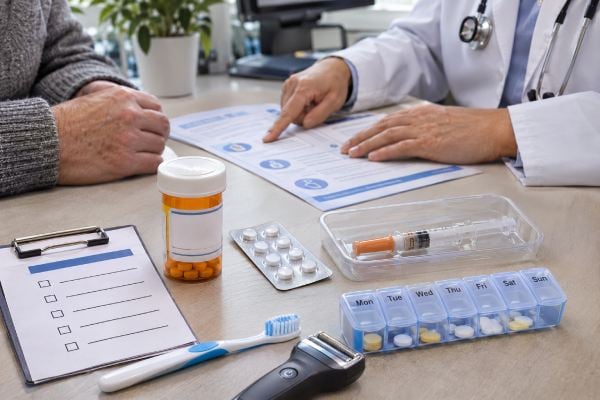
“Blood thinner” is a common name for medicines that reduce the chance of harmful blood clots, but they do not literally make blood watery. Two main groups are anticoagulants, which slow parts of the clotting process, and antiplatelet drugs, which make platelets less likely to stick together. These medicines prevent strokes, deep vein thrombosis, pulmonary embolism, and heart attacks in the right patients, but they also increase bleeding risk. The safest drug and dose depend on why you need treatment, your kidney and liver function, age, other medicines, and sometimes the type of heart valve you have. The most important safety rules are simple: take the medicine exactly as prescribed, do not stop it on your own, tell every healthcare professional that you use it, and get help promptly for signs of serious bleeding or after a significant head injury.
Table of Contents
- What Blood Thinners Are and How They Work
- Common Types of Blood Thinners
- Why Blood Thinners Are Prescribed
- Side Effects and Signs of Serious Bleeding
- Food, Medicine, and Supplement Interactions
- Surgery, Dental Work, and Missed Doses
- Everyday Safety Tips for Blood Thinners
What Blood Thinners Are and How They Work
Blood thinners reduce clot formation, but anticoagulants and antiplatelet drugs work in different ways and are not interchangeable. Normal clotting protects you from excessive bleeding after an injury. Problems arise when a clot forms in the wrong place, such as a deep leg vein, the lungs, the heart, or an artery supplying the brain.
Anticoagulants interfere with proteins in the clotting cascade. They are commonly used for atrial fibrillation, deep vein thrombosis, pulmonary embolism, and certain heart valves. Antiplatelet drugs reduce platelet activation and clumping. They are especially important after some heart attacks, ischemic strokes, and coronary stent procedures.
The goal is balance. Too little antithrombotic effect can allow a dangerous clot to form. Too much can cause serious bleeding. That is why the correct dose depends on the indication and why one person’s medicine should never be borrowed by someone else.
Blood thinners do not dissolve an existing clot instantly. Anticoagulants mainly prevent a clot from growing and reduce the chance of new clots while the body gradually breaks down the existing one. Clot-busting drugs used in selected emergencies are a different class.
If you are taking an anticoagulant because of a clot in a leg or lung, understanding DVT and pulmonary embolism warning signs can help you recognize recurrence without assuming every ache or short breath is another clot.
Common Types of Blood Thinners
The most common blood thinners fall into four practical groups: direct oral anticoagulants, warfarin, heparin-type anticoagulants, and antiplatelet drugs. Each has different advantages, monitoring needs, interactions, and uses.
| Type | Examples | Common uses | Key practical point |
|---|---|---|---|
| Direct oral anticoagulants (DOACs) | Apixaban, rivaroxaban, dabigatran, edoxaban | Atrial fibrillation, DVT, pulmonary embolism | Fixed dosing is common; routine INR testing is not used |
| Vitamin K antagonist | Warfarin | AF, VTE, mechanical heart valves and selected other conditions | Requires INR monitoring and attention to interactions |
| Heparin-type anticoagulants | Unfractionated heparin, enoxaparin and other low-molecular-weight heparins | Hospital treatment, VTE, pregnancy and peri-procedure situations | Usually given by injection or IV |
| Antiplatelet drugs | Aspirin, clopidogrel, prasugrel, ticagrelor | Heart attack, coronary stents, selected ischemic stroke prevention | Act on platelets rather than clotting factors |
Direct oral anticoagulants
DOACs are widely used because they start working quickly, have predictable dosing, and usually do not require the frequent clotting tests used with warfarin. Kidney function matters because these drugs are cleared from the body to different degrees through the kidneys. Dose selection can also depend on age, body weight, interacting medicines, and the exact indication.
“Routine INR testing is not needed” does not mean “no monitoring is needed.” Clinicians may periodically check kidney function, liver tests, a blood count, and adherence. Changes in kidney function can alter how much drug remains in the body, which is especially important in older adults, people with chronic kidney disease, or anyone who becomes dehydrated or acutely ill.
The 2023 U.S. atrial fibrillation guideline generally prefers DOACs over warfarin for eligible patients with AF, except in important situations such as mechanical heart valves or moderate-to-severe rheumatic mitral stenosis. “Newer” does not mean safer for everyone; the right anticoagulant depends on the clinical situation.
Warfarin
Warfarin blocks vitamin K-dependent clotting factors. Its effect is measured with the INR, a standardized blood test. The target INR varies with the condition being treated, so there is no universal “good” number.
Warfarin remains essential for many people with mechanical heart valves and is also used when a DOAC is unsuitable because of cost, kidney function, drug interactions, or another clinical reason. Its main challenge is that food, medicines, illness, and dose changes can alter its effect.
INR monitoring is therefore part of the treatment, not an optional extra. A stable patient may need testing less often, while a medication change, antibiotic course, major diet change, illness, or out-of-range INR may require closer checks. The goal is to keep clotting protection in the prescribed range while avoiding excessive anticoagulation.
Heparin and low-molecular-weight heparin
Unfractionated heparin is often used in hospitals because it can be started and stopped rapidly. Low-molecular-weight heparins such as enoxaparin are given by injection and are used for treatment or prevention of clots in many settings. These drugs are also important when oral medicines are temporarily inappropriate.
Antiplatelet medicines
Aspirin and P2Y12 inhibitors such as clopidogrel reduce platelet clumping. After a coronary stent, two antiplatelet medicines may be used together for a period depending on the procedure and bleeding risk. Aspirin is not a substitute for anticoagulation in most patients with atrial fibrillation who need stroke prevention.
If AF is the reason for your medicine, atrial fibrillation symptoms and warning signs are worth understanding separately from medication side effects.
Why Blood Thinners Are Prescribed
A blood thinner should have a specific clot-prevention purpose; the benefit must be large enough to justify the bleeding risk. The same drug can be used for several conditions, but treatment duration and dose may differ.
Common reasons include:
- Atrial fibrillation: AF can allow blood to pool in the heart and form a clot that may travel to the brain. Anticoagulation decisions are based on estimated stroke risk and bleeding considerations.
- Deep vein thrombosis or pulmonary embolism: Anticoagulants prevent clot extension and recurrence. Some people need treatment for a few months; others need longer therapy because the recurrence risk remains high.
- Mechanical heart valves: Warfarin is generally required because mechanical surfaces create substantial clot risk.
- Recent heart attack or coronary stent: Antiplatelet therapy reduces the risk of a new arterial clot or stent thrombosis.
- Certain ischemic strokes or transient ischemic attacks: Antiplatelet or anticoagulant treatment may be used depending on the cause.
- Temporary clot prevention: Surgery, hospitalization, cancer treatment, prolonged immobility, and pregnancy-related situations may raise clot risk enough to justify prophylaxis.
More medicine is not automatically better. Combining anticoagulants with antiplatelet drugs can greatly increase bleeding risk. Sometimes the combination is necessary, such as in selected patients with both atrial fibrillation and a recent coronary stent, but clinicians try to use the minimum combination and duration that provides adequate protection.
Do not continue aspirin “for the heart” on your own after starting an anticoagulant unless your clinician has told you to. The old idea that everyone at cardiovascular risk should take daily aspirin has changed because the bleeding tradeoff is important. For primary prevention decisions, aspirin for heart prevention requires individualized risk assessment.
Side Effects and Signs of Serious Bleeding
Bleeding is the main side effect of every blood thinner, although minor bruising and life-threatening hemorrhage are very different problems. A small bruise after bumping your arm or slightly longer bleeding from a shaving cut can occur. The concern is bleeding that is heavy, persistent, internal, or associated with weakness or neurologic symptoms.
Contact a healthcare professional promptly for signs such as:
- Recurrent nosebleeds that are difficult to stop.
- Menstrual bleeding that becomes much heavier than usual.
- Blood in urine.
- Red or black, tarry stool.
- Vomiting blood or material that looks like coffee grounds.
- Coughing up blood.
- Large unexplained bruises.
- Persistent bleeding from a cut.
- New severe weakness, dizziness, or fainting.
Head injury is different
A significant fall or blow to the head deserves special caution because intracranial bleeding can occur even when there is no large external wound. Seek urgent medical advice after a substantial head injury, particularly if you develop severe headache, vomiting, confusion, unusual sleepiness, weakness, speech difficulty, or loss of consciousness.
Serious abdominal or back pain
Sudden severe abdominal, flank, or back pain can occasionally signal internal bleeding. Do not assume every pain is medication-related, but new severe pain plus faintness, weakness, or a rapid heartbeat deserves urgent evaluation.
Not every symptom means stop the drug
Stopping an anticoagulant suddenly can expose you to the very clot it was prescribed to prevent. This is especially important with DOACs because their effect wears off relatively quickly after missed doses. Unless you are experiencing a medical emergency and clinicians direct otherwise, contact the prescribing team before stopping therapy.
MedlinePlus and major guidelines consistently emphasize that safe treatment means balancing clot prevention against bleeding rather than trying to eliminate all bruising or minor bleeding.
Bleeding risk also changes over time. Aging, kidney disease, liver disease, anemia, uncontrolled hypertension, frequent falls, heavy alcohol use, and adding another antithrombotic drug can all shift the balance. That is why long-term blood thinner therapy should be reviewed periodically even when the medicine has been tolerated for years. A review may confirm that the current plan is still best rather than automatically leading to a change.
Food, Medicine, and Supplement Interactions
The safest rule is to check every new prescription, over-the-counter medicine, and supplement for interactions before you take it. Interactions differ by drug, so advice for warfarin should not automatically be applied to apixaban or clopidogrel.
NSAIDs and aspirin
Ibuprofen, naproxen, and other nonsteroidal anti-inflammatory drugs can increase gastrointestinal bleeding and may also affect kidney function. Aspirin adds antiplatelet activity and can increase bleeding when combined with an anticoagulant. Sometimes these combinations are medically necessary, but they should not be added casually.
For occasional pain, ask which option is safest for your condition rather than assuming an over-the-counter drug is harmless.
Warfarin and vitamin K
Vitamin K reduces warfarin’s effect, but the goal is usually consistency, not avoidance. Leafy greens such as spinach and kale can remain part of a healthy diet. Problems arise when vitamin K intake changes dramatically from week to week.
If you regularly eat salads or green vegetables, keep doing so in a consistent pattern and let the anticoagulation clinic adjust warfarin around your normal diet rather than removing nutritious foods.
Alcohol
Heavy or binge drinking can increase bleeding risk, worsen falls, and interfere with medication adherence. Alcohol can also affect warfarin control. If you drink, ask your clinician what amount is appropriate given your liver health, fall risk, and other medicines.
Supplements and herbal products
Fish oil at ordinary food-level intake is different from high-dose supplements. Garlic, ginkgo, turmeric or curcumin, nattokinase, high-dose vitamin E, and several herbal products may affect bleeding or interact with medicines. Evidence and product quality vary, so disclose all supplements.
Nattokinase is particularly inappropriate to treat as a “natural replacement” for prescribed anticoagulation. Its potency and safety are not equivalent to regulated anticoagulants; nattokinase and blood thinner safety requires extra caution.
Surgery, Dental Work, and Missed Doses
Never stop a blood thinner for a procedure unless the clinician managing the procedure and the clinician managing your clot risk agree on the plan. The correct interruption depends on the drug, kidney function, bleeding risk of the procedure, and how dangerous it would be for you to be off treatment.
The 2022 CHEST perioperative guideline emphasizes individualized plans for warfarin, DOACs, heparin bridging, and antiplatelet therapy. Many minor dental, dermatologic, eye, and device procedures can be managed without the same interruption used for major surgery. “Stop it for five days” is not a universal rule.
Tell the dentist, surgeon, endoscopist, or other procedural clinician:
- The exact drug and dose.
- Why you take it.
- When you last took it.
- Whether you also take aspirin or another antiplatelet medicine.
- Whether you have kidney or liver disease.
- Whether you have a mechanical heart valve or recent blood clot.
What if you miss a dose?
Missed-dose instructions differ among drugs. Some DOACs are taken once daily and others twice daily; the correct action depends on how late the dose is. Warfarin also has its own instructions. Do not automatically double the next dose.
Use the medication guide or contact a pharmacist if you are unsure. A pill organizer, phone alarm, or linking the dose to a daily routine can reduce mistakes.
What about bleeding before a procedure?
If you develop significant bleeding, do not make a self-directed plan based on an upcoming procedure. Emergency and gastrointestinal bleeding guidelines use specific reversal strategies depending on the drug and severity of bleeding. Hospitals may use vitamin K, prothrombin complex concentrates, or drug-specific reversal agents in selected situations.
For example, idarucizumab can reverse dabigatran in selected emergencies, while andexanet alfa may be used for some factor Xa inhibitors in certain settings. Prothrombin complex concentrates are also used in specific severe bleeds. These treatments belong in medical care because the decision depends on the drug, time of the last dose, kidney function, bleeding site, and the danger of thrombosis after reversal.
Everyday Safety Tips for Blood Thinners
Good daily habits prevent more problems than memorizing every rare complication. Keep a current medication list and make sure your doctors, dentist, pharmacist, and emergency clinicians know you take a blood thinner. Include the exact drug name, dose, and schedule rather than writing only “blood thinner.” Update the list whenever a dose changes or a medicine is stopped, and keep a copy where it is easy to find in an emergency.
A practical safety checklist includes:
- Take each dose at the prescribed time.
- Do not stop treatment because you feel well.
- Use a validated reminder system if you miss doses easily.
- Ask before starting ibuprofen, naproxen, aspirin, supplements, or herbal products.
- Keep warfarin INR appointments if you use warfarin.
- Complete periodic kidney, liver, and blood-count testing when ordered for DOACs or other therapies.
- Use a soft toothbrush and take care with razors and sharp tools.
- Wear appropriate protective gear for activities with fall or impact risk.
- Tell clinicians before procedures or injections.
- Consider medical identification if your clinician recommends it.
Sports and physical activity are usually encouraged for cardiovascular health, but high-impact or collision sports may carry unacceptable bleeding risk for some people. Ask about safer alternatives rather than becoming sedentary.
If unexplained swelling and pain in one leg, sudden shortness of breath, chest pain with breathing, coughing blood, or a new neurologic deficit occurs, seek prompt evaluation even if you are taking the medicine correctly. Anticoagulants greatly reduce clot risk but do not make it zero.
The most important idea is that blood thinners are protective medicines with a narrow safety tradeoff, not drugs to fear or adjust casually. Know the exact name of your drug, why you take it, what bleeding signs matter, and who to call before you change anything. That preparation reduces both clotting risk and preventable bleeding.
References
- 2023 ACC/AHA/ACCP/HRS Guideline for the Diagnosis and Management of Atrial Fibrillation: A Report of the American College of Cardiology/American Heart Association Joint Committee on Clinical Practice Guidelines 2024 (Guideline)
- Perioperative Management of Antithrombotic Therapy: An American College of Chest Physicians Clinical Practice Guideline. 2022 (Guideline)
- American College of Gastroenterology-Canadian Association of Gastroenterology Clinical Practice Guideline: Management of Anticoagulants and Antiplatelets During Acute Gastrointestinal Bleeding and the Periendoscopic Period 2022 (Guideline)
- Blood Thinners 2024 (Official Guidance)
- Management of Patients With Acute Lower Gastrointestinal Bleeding: An Updated ACG Guideline 2023 (Guideline)
Disclaimer
This article provides general education about anticoagulant and antiplatelet medicines and does not replace the instructions for your specific prescription. Do not stop, double, or change a blood thinner without medical guidance. Seek urgent care for serious bleeding, significant head injury, or symptoms of a stroke, pulmonary embolism, or other acute clotting event.





