A short daily slow-breathing routine can be a useful part of blood pressure management, especially when stress or tension regularly pushes your numbers up. The most practical routine is not complicated: sit comfortably, breathe gently through your nose, and slow each cycle so the exhale is a little longer than the inhale. Five to ten minutes a day is enough to start. Research suggests breathing exercises can produce modest reductions in systolic and diastolic pressure, but the size of the effect varies and the evidence does not support replacing medication, exercise, sodium reduction, or other proven treatment. The routine below is designed to be simple enough to repeat every day rather than intense enough to feel like a workout. If you become dizzy, short of breath, or uncomfortable, return to normal breathing. The goal is calm, controlled breathing—not maximal breath holds or extreme slowing.
Table of Contents
- The Simple Daily Breathing Routine
- Why This Routine May Help Blood Pressure
- How Often and How Long to Practice
- How to Tell If It Is Working
- Ways to Make the Routine Easier to Stick With
- Common Mistakes and Safety Concerns
- How Breathing Fits Into a Full Blood Pressure Plan
The Simple Daily Breathing Routine
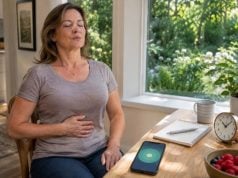
Start with five minutes of relaxed breathing at roughly 5 to 6 breaths per minute. You do not need a device, special posture, or complicated breathing pattern.
Use this sequence:
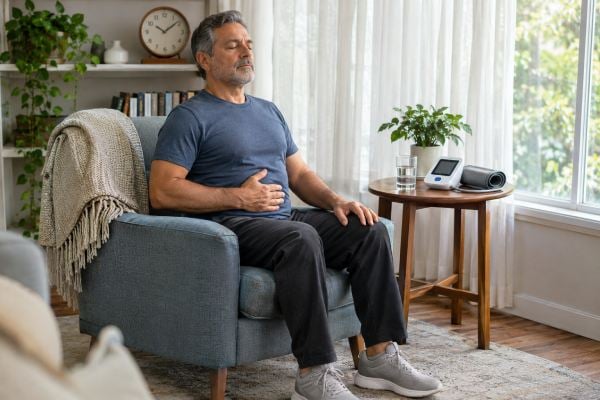
- Sit in a supportive chair with your feet flat on the floor.
- Relax your jaw, shoulders, hands, and abdomen.
- Breathe in gently through your nose for about 4 seconds.
- Breathe out slowly for about 6 seconds.
- Repeat without forcing the breath or trying to fill your lungs completely.
- Continue for 5 minutes.
A 4-second inhale plus a 6-second exhale creates a 10-second breathing cycle, or about six breaths per minute. If that feels too slow, use 3 seconds in and 4 seconds out. If it feels easy and natural, stay with the 4-and-6 pattern. There is no prize for reaching the slowest possible rate.
Keep the breath quiet and comfortable. Your abdomen can expand gently during the inhale, but you do not need to exaggerate the movement. Let the exhale happen with minimal effort rather than blowing the air out.
If counting makes you tense, use a visual cue such as a clock with a second hand or a simple breathing timer. A soft sound cue can help, but the routine should still work without technology.
The 10-minute version
After one to two weeks, you can extend the same pattern to 10 minutes if it remains comfortable. Another option is two 5-minute sessions—one in the morning and one in the evening. For many people, that is easier to maintain than one longer session.
The routine should leave you feeling calmer, not drained. If your head feels light, your fingers tingle, or you feel air hunger, you may be breathing too deeply or too slowly. Return to normal breathing and shorten the next session.
A useful test is whether you could continue the pattern for several more minutes without strain. If the answer is no, speed it up slightly. Many people assume therapeutic breathing must feel dramatically different from normal breathing, but the opposite is usually more sustainable: quieter, smoother breaths with less upper-chest movement and no sense of effort.
If you want to compare this routine with other methods such as diaphragmatic or pursed-lip breathing, breathing exercises for blood pressure offers several alternatives.
Why This Routine May Help Blood Pressure
Slow breathing may lower blood pressure by reducing sympathetic nervous system activity and improving short-term autonomic regulation. In plain language, it may help shift the body away from a “fight-or-flight” state toward a calmer resting state.
During stress, the body releases hormones that raise heart rate and tighten blood vessels. That response is useful during danger, but repeated activation can contribute to frequent blood pressure surges and poor sleep. Slow, controlled breathing gives you a voluntary way to influence part of that stress response.
A 2024 systematic review and meta-analysis of 15 randomized trials found that breathing exercises reduced systolic blood pressure by about 7 mm Hg and diastolic pressure by about 3 mm Hg on average. Those pooled results are encouraging, but they should not be interpreted as a guaranteed result for every person. The trials used different breathing methods, treatment lengths, and patient groups, and some had methodological limitations.
Another 2024 systematic review found low-to-moderate evidence that breathing exercises can reduce systolic and diastolic pressure in people with hypertension, with additional effects on heart rate and heart-rate variability in some studies. A separate 2022 review of device-guided slow breathing found less convincing results for commercial device-guided methods, which supports a practical point: expensive equipment is not necessary for most people who want to try slow breathing.
Why a longer exhale can feel calming
Heart rate naturally speeds slightly during inhalation and slows slightly during exhalation. Extending the exhale by a second or two may make the breathing cycle feel more relaxing without requiring a breath hold.
That does not mean a 10-second exhale is better than a 6-second exhale. Extreme slowing can make you uncomfortable and may trigger over-breathing. The best pattern is one that remains smooth for the whole session.
Breathing may also lower a reading indirectly by reducing behaviors that accompany stress. People often clench their jaw, raise their shoulders, hold their breath, or take rapid shallow breaths when anxious. Releasing those patterns can make the body feel less threatened. Even when the long-term blood pressure change is small, that immediate reduction in tension can make the practice worthwhile.
Stress can raise blood pressure temporarily even when someone does not have chronic hypertension. If that describes your readings, anxiety and blood pressure can help explain why emotional triggers and the cuff itself sometimes raise the number.
How Often and How Long to Practice
Daily practice is more important than long sessions. A realistic starting goal is 5 minutes once a day for the first week, then 5 minutes twice a day or 10 minutes once a day if you want to increase the routine.
A four-week progression can look like this:
| Week | Frequency | Session length | Focus |
|---|---|---|---|
| 1 | Once daily | 5 minutes | Comfort and technique |
| 2 | Once or twice daily | 5 minutes | Consistency |
| 3 | Daily | 5–10 minutes | Make it automatic |
| 4+ | Daily | 5–10 minutes | Maintain the habit |
There is no proven “best” time of day for everyone. Morning practice can be easy to remember, while evening practice can help you unwind. If your pressure is often higher after work or during stressful evenings, an after-work session may be especially useful.
Avoid turning the routine into a performance test. You do not need to reach exactly six breaths per minute every day, and you do not need to watch your smartwatch heart rate while you breathe. Some days your comfortable rhythm will be slightly faster. The therapeutic target is a repeatable relaxed state, not a perfect score.
Try to practice before you become highly stressed rather than using breathing only as a rescue technique. When the skill becomes familiar under calm conditions, it is easier to use during a difficult moment.
What about inspiratory muscle training?
Inspiratory muscle strength training, or IMST, is different from simple slow breathing. It uses resistance while inhaling, usually with a handheld device. Recent studies have found promising blood pressure effects with short daily sessions, but it is more like respiratory strength training than relaxation breathing and should not be confused with the routine in this article.
A 2025 randomized study compared high-resistance IMST with aerobic exercise in people with hypertension and found both approaches could reduce blood pressure. That is interesting evidence, but it does not mean everyone should buy an IMST device. People with lung disease, recent cardiovascular events, or other medical concerns should ask a clinician before doing high-resistance breathing work.
How to Tell If It Is Working
Track your average home blood pressure over weeks, not the reading immediately after one breathing session. A five-minute relaxation exercise can lower a single reading simply because you are calmer. That is useful, but it is not the same as changing your usual blood pressure.
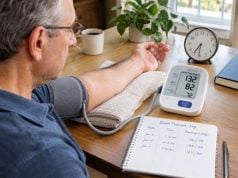
If your clinician has asked you to monitor at home, use a standardized routine. Sit quietly for at least five minutes, use a validated upper-arm monitor, support your arm at heart level, keep your feet flat, and take two readings about one minute apart. Measure at similar times each day.
Do not deliberately use the breathing routine right before every scheduled home reading if your goal is to measure your normal pressure. Otherwise you may be testing the immediate relaxation effect instead of your usual average.
A simple log can include:
- Morning blood pressure and heart rate.
- Evening blood pressure and heart rate.
- Whether you completed the breathing routine.
- Sleep quality.
- Medication timing.
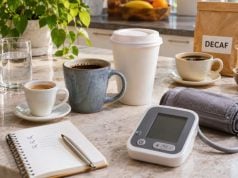
- Caffeine and alcohol intake.
- Unusual pain, exercise, or stress.
After two to four weeks, compare averages rather than single peaks. If the average systolic pressure falls by even a few mm Hg and the routine also improves stress or sleep, that may be a worthwhile benefit.
If the average does not move, look at whether you practiced consistently before concluding that breathing has no value. If adherence was good and the numbers still do not change, there is no need to keep extending sessions in search of a dramatic effect. The intervention may simply have a small blood pressure effect for you, and your effort may be better spent on exercise, sodium reduction, sleep, or medication adherence.
If your readings remain high, that does not mean you “failed” at breathing. Hypertension often requires several approaches at the same time. Use a consistent home blood pressure schedule so you and your clinician can judge the trend accurately.
Ways to Make the Routine Easier to Stick With
The routine works only if it is simple enough to repeat. Habit design matters as much as breathing technique.
Attach the practice to an existing daily cue:
- After brushing your teeth in the morning.
- Before your first coffee or tea.
- After lunch.
- When you get home from work.
- Before turning off the lights at night.
Keep the setup minimal. You should not need a yoga mat, headphones, candles, or a special room unless you enjoy them. A chair and five uninterrupted minutes are enough.
Use a “minimum version” on busy days
If you cannot do five minutes, do one minute rather than skipping completely. Six slow breaths may be enough to preserve the habit. The shorter session may not reproduce the duration used in research, but maintaining the routine can make it easier to return to a full session the next day.
Pair breathing with another healthy habit
A five-minute breathing session after a 20-minute walk can create a useful transition from activity to rest. You can also pair it with stretching, meditation, or a bedtime routine.
Do not turn the practice into another source of pressure. Missing a day is not a medical problem. Resume the next day without trying to “make up” the minutes.
Use the same pattern during stressful moments
Once the 4-in, 6-out rhythm feels familiar, you can use a few cycles before a difficult phone call, a medical appointment, or a stressful commute. This is not the same as the full daily practice, but it can help prevent rapid breathing from escalating tension.
For a broader strategy, stress reduction for blood pressure includes sleep, physical activity, social support, and other habits in addition to breathing control.
Common Mistakes and Safety Concerns
The biggest mistake is forcing the breathing pattern. Slow breathing should feel easier than normal breathing, not harder.
Avoid these common errors:
- Taking the deepest possible breath each time.
- Holding your breath for long periods.
- Trying to get below 5 breaths per minute when it feels uncomfortable.
- Breathing so forcefully that your chest and shoulders tense.
- Using rapid “cleansing breaths” that cause lightheadedness.
- Assuming a breathing routine can replace prescribed antihypertensive treatment.
Stop the session if you develop dizziness, tingling, unusual chest discomfort, faintness, or marked shortness of breath. Return to normal breathing. If symptoms are severe or persistent, seek medical advice.
People with significant chronic lung disease, severe heart failure, recurrent fainting, unstable angina, or a recent heart attack or stroke should ask their care team whether a structured breathing program is appropriate. Pregnancy-related hypertension also requires obstetric guidance because urgent blood pressure thresholds differ from those used in nonpregnant adults.
A routine that causes anxiety is not the right routine. Some people dislike focusing on breathing because it makes them hyperaware of bodily sensations. In that case, walking, guided relaxation, music, or another stress-management technique may be a better choice.
Do not use breathing to delay urgent care
If your blood pressure is above about 180/120 mm Hg, recheck carefully after a short rest. If it remains severely elevated, contact a healthcare professional promptly. If severe blood pressure comes with chest pain, shortness of breath, weakness, numbness, trouble speaking, vision changes, confusion, or fainting, seek emergency medical care.
Breathing is a daily self-management tool, not an emergency treatment for possible stroke, heart attack, or aortic disease.
How Breathing Fits Into a Full Blood Pressure Plan
Breathing control is one small part of an effective hypertension plan. The 2025 high blood pressure guideline emphasizes lifestyle measures such as a heart-healthy eating pattern, lower sodium intake, adequate dietary potassium when appropriate, physical activity, healthy weight, stress management, and reducing or eliminating alcohol. Medication is also recommended for many people based on their average pressure and cardiovascular risk.
That means a five-minute breathing habit is best used alongside higher-impact changes, not instead of them.
For example:
- A person eating a very high-sodium diet will usually get more blood pressure benefit from reducing sodium than from doubling breathing time.
- Someone who is sedentary may benefit more from adding regular walking and strength work while keeping the breathing routine as a stress tool.
- Someone with sleep apnea needs treatment for the apnea rather than relying on slow breathing before bed.
- Someone with consistently high pressure despite lifestyle changes may need medication adjustment.
The advantage of breathing is that it is easy, free, and can be practiced almost anywhere. It may also make other habits easier by reducing stress-driven eating, alcohol use, or emotional reactivity.
Breathing can also be paired with blood pressure measurement preparation. Sitting quietly and breathing normally for five minutes before a home reading is already recommended as part of good technique. That is different from doing an unusually long relaxation session just to lower the result. The goal of measurement is an accurate resting number, while the goal of daily practice is to influence your usual stress response over time. Keeping those purposes separate prevents misleading readings.
If you are building a complete plan, evidence-based ways to lower blood pressure naturally can help prioritize the changes most likely to matter.
The most realistic goal is not to “breathe your blood pressure normal.” It is to create a dependable daily practice that may modestly improve pressure and stress while supporting the rest of your treatment. Five calm minutes done consistently is more useful than an elaborate routine you abandon after three days.
References
- Effect of breathing exercises on blood pressure and heart rate: A systematic review and meta-analysis 2024 (Systematic Review)
- The effect of breathing exercise on hemodynamics and heart rate variability parameters in hypertensive patients: A systematic review 2024 (Systematic Review)
- Device and nondevice-guided slow breathing to reduce blood pressure in hypertensive patients: A systematic review and meta-analysis 2022 (Systematic Review)
- Comparison of inspiratory muscle strength and aerobic exercise training and detraining on blood pressure in hypertensive patients. 2025 (RCT)
- Top Things to Know: 2025 High Blood Pressure (BP) Guideline 2025 (Guideline)
Disclaimer
This article provides general information about breathing and blood pressure and does not replace medical diagnosis or treatment. Continue prescribed blood pressure medication unless your clinician tells you otherwise. Seek urgent medical care for severe blood pressure accompanied by chest pain, shortness of breath, neurologic symptoms, vision changes, fainting, or other signs of acute illness.