You can often lower blood pressure naturally by combining a few proven habits: eat a DASH-style diet, reduce sodium, get enough potassium from food when it is safe for you, exercise regularly, lose excess weight if needed, limit or avoid alcohol, sleep well, and manage chronic stress. These changes can lower systolic blood pressure by several mmHg each, and the effects may add up when you use them together.
Lifestyle treatment matters at every blood pressure level, but it is not always a substitute for medication. The 2025 high blood pressure guideline recommends healthy lifestyle habits for all adults with elevated blood pressure or hypertension and recommends medication for many people based on their average readings and cardiovascular risk.
The best approach is to focus on the highest-impact habits first, measure your blood pressure correctly at home, and review your average after several weeks. That gives you a clear way to see what is working rather than relying on how you feel, because high blood pressure usually causes no symptoms.
Table of Contents
- Start With an Accurate Blood Pressure Average
- Eat in a Way That Lowers Blood Pressure
- Move More and Build Fitness
- Lose Excess Weight if Needed
- Improve Sleep, Stress, and Alcohol Habits
- Build a Realistic 8-Week Plan
- When Lifestyle Changes Are Not Enough
Start With an Accurate Blood Pressure Average
Before trying to lower blood pressure, make sure the number you are reacting to is reliable. A single high reading can be caused by stress, pain, caffeine, recent exercise, talking during the measurement, a full bladder, or an incorrect cuff size.
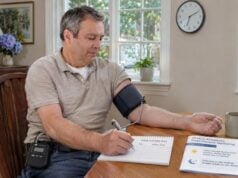
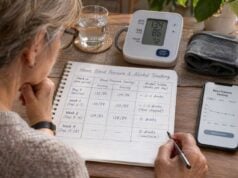
For home monitoring, use a validated upper-arm monitor with a cuff that fits your arm. Sit quietly for about five minutes, keep your back supported, feet flat, and arm supported at heart level. Take two readings about one minute apart. If your clinician has not given you a specific schedule, measuring morning and evening for several days can provide a much more useful average than occasional spot checks.
A detailed home blood pressure measurement guide can help you avoid the common technique errors that make readings look higher or lower than they really are.
Blood pressure categories in the 2025 guideline remain straightforward: normal is below 120/80 mmHg, elevated is 120–129 systolic with diastolic below 80, stage 1 hypertension is 130–139 systolic or 80–89 diastolic, and stage 2 hypertension is at least 140 systolic or 90 diastolic.
The goal of lifestyle change is to lower your average, not to force one unusually low reading. Track the trend over weeks.
Eat in a Way That Lowers Blood Pressure
Diet is one of the most powerful non-drug tools for blood pressure, especially when several changes happen together.
The effects are not perfectly additive, but they can stack. Someone who lowers sodium, follows a DASH-style pattern, becomes more active, and loses excess weight may see a much larger improvement than someone who changes only one small habit. This is why a multi-habit plan can sometimes produce a double-digit systolic reduction, especially when starting blood pressure is high.
Prioritize the changes with the largest daily exposure. If you eat restaurant food five times per week, sodium reduction may be more important than adding one supplement. If you sit most of the day, regular walking may have more value than optimizing a minor dietary detail. If heavy alcohol use or untreated sleep apnea is present, addressing those can be more important than perfecting a “heart-healthy” snack.
Use a DASH-style eating pattern
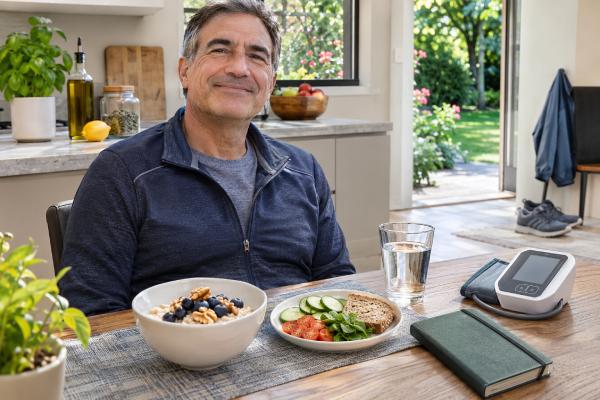
The DASH pattern emphasizes vegetables, fruit, whole grains, legumes, nuts, seeds, low-fat or nonfat dairy, fish, and other minimally processed foods while reducing sodium, highly processed foods, and large amounts of saturated fat. Recent systematic reviews continue to show that DASH-style eating lowers blood pressure.
You do not need a rigid meal plan. A practical version is to build most meals around vegetables and fruit, include beans or whole grains, choose lean or plant-forward protein, and use unsaturated fats such as olive oil, nuts, and seeds.
For a more detailed framework, see the DASH diet for high blood pressure.
Reduce sodium where it actually comes from
The 2025 guideline recommends limiting sodium to less than 2,300 mg per day and moving toward about 1,500 mg per day when practical. The biggest source is usually not the salt shaker. Packaged foods, restaurant meals, deli meats, pizza, bread, sauces, soups, snacks, and prepared meals can provide large amounts.
Start with the foods you eat most often. If lunch includes a sandwich every day, compare bread, meat, cheese, and condiment labels. Swapping one high-sodium component can reduce intake every day without changing your whole diet.
Sodium reduction tends to lower blood pressure more in people with hypertension and in those who are more salt-sensitive. A sodium-restricted DASH pattern can be particularly effective. Learn more about sodium and high blood pressure if you need specific intake targets and label-reading tips.
Get potassium from food when it is safe
Potassium helps counter some of sodium’s effects on blood pressure and supports normal vascular and nerve function. The guideline encourages increased dietary potassium for adults who can safely consume it.
Good food sources include potatoes, beans, lentils, leafy greens, tomatoes, yogurt, bananas, oranges, avocado, and many other fruits and vegetables.
However, more potassium is not always safe. Kidney disease, certain heart conditions, and medications such as ACE inhibitors, ARBs, potassium-sparing diuretics, and some other drugs can raise blood potassium. Do not start potassium supplements or potassium-based salt substitutes without medical advice if you have these risk factors. For food guidance and safety, see potassium for blood pressure.
Limit highly processed foods and excess added sugar
Highly processed foods can combine sodium, refined starches, added sugar, excess calories, and low fiber in one package. Reducing them makes several blood pressure-friendly changes easier at once.
Sugary drinks are especially easy to cut because they provide calories without much fullness. Water, sparkling water without excess sodium, unsweetened tea, or coffee in moderate amounts can be simpler everyday choices.
You do not need to eliminate every packaged food. Frozen vegetables, canned beans with low sodium, whole-grain bread, yogurt, and canned fish can all fit. The goal is to shift the overall pattern toward minimally processed, nutrient-dense foods.
Move More and Build Fitness
Regular physical activity lowers blood pressure even when body weight changes little. Aerobic exercise has the strongest evidence base, but resistance and isometric training can help too.
A 2024 dose-response meta-analysis in adults with hypertension found that each additional 30 minutes per week of aerobic exercise was associated with lower blood pressure, with the largest average benefit around 150 minutes per week. That fits current guideline advice to perform about 75 to 150 minutes per week of aerobic and/or resistance exercise.
A strong practical target is:
- Aerobic activity: about 150 minutes per week at moderate intensity.
- Strength training: 2 or more days per week.
- Daily movement: reduce long periods of sitting and walk more throughout the day.
Brisk walking is enough to count. You do not need to run. Cycling, swimming, dancing, hiking, and similar activities also work.
Exercise can begin lowering blood pressure after individual sessions, while the more stable training effect develops over weeks. If you want realistic numbers and timelines, see how much exercise can lower blood pressure.
Start below your maximum effort
If you are inactive, begin with 10 to 20 minutes of moderate walking and build gradually. Starting too hard often causes soreness and fatigue that make consistency less likely.
During strength training, use controlled repetitions and avoid prolonged breath-holding, which can temporarily increase blood pressure. You do not need maximal lifts for a cardiovascular benefit.
If you have known heart disease, severe or uncontrolled hypertension, fainting, chest pain, or major shortness of breath, ask a healthcare professional what level of exercise is appropriate before increasing intensity.
Lose Excess Weight if Needed
If you have overweight or obesity, losing even a modest amount of weight can reduce blood pressure. The 2025 guideline supports a goal of at least 5% body-weight reduction for adults with excess weight.
For example:
- At 180 lb, 5% is 9 lb.
- At 200 lb, 5% is 10 lb.
- At 250 lb, 5% is 12.5 lb.
A 2023 systematic review found that larger reductions in body mass index were generally associated with larger drops in clinic and ambulatory blood pressure. The response varies, but you do not need to reach a “normal” BMI before gaining benefit.
Weight loss works best when it comes from habits that also lower blood pressure directly. A DASH-style calorie deficit, more activity, less alcohol, and fewer highly processed foods can improve blood pressure before large amounts of weight are lost.
For realistic expectations, see how much weight loss may lower blood pressure.
Do not use dehydration, extreme fasting, stimulant products, or unregulated “fat burners” to force rapid scale loss. Water loss can make the scale move without improving body fat and may create electrolyte or kidney problems.
Improve Sleep, Stress, and Alcohol Habits
Blood pressure is not only a diet-and-exercise problem. Sleep quality, alcohol, and chronic stress can keep readings higher even when food and fitness are improving.
Protect sleep
Most adults need regular, adequate sleep. Repeated short sleep and fragmented sleep can increase sympathetic nervous system activity and worsen blood pressure regulation. The problem is not only sleep duration; untreated sleep apnea is an important cause of hypertension and resistant hypertension.
Consider evaluation for sleep apnea if you snore loudly, stop breathing during sleep, wake gasping, have morning headaches, or remain very sleepy during the day. Weight loss can improve sleep apnea in some people, but significant apnea often needs specific treatment.
For the blood pressure connection, see why poor sleep can raise blood pressure.
Reduce or eliminate alcohol
The 2025 guideline advises ideally avoiding alcohol. For adults who choose to drink, it recommends no more than two drinks per day for men and no more than one drink per day for women.
If you regularly drink more than that, reducing intake can lower blood pressure and also reduce calories, improve sleep, and make weight management easier. People who drink heavily should seek medical advice before abruptly stopping if withdrawal is a concern.
Use stress reduction as a support tool
Stress can temporarily raise blood pressure and can indirectly worsen it through poor sleep, overeating, alcohol, smoking, and inactivity. Useful strategies include exercise, slow breathing, meditation, yoga, time outdoors, therapy, and practical changes that reduce chronic overload.
Do not expect a breathing exercise to replace treatment for sustained hypertension. Stress management works best as one layer in a broader plan. A focused guide to stress reduction for blood pressure can help you choose techniques that fit your routine.
Build a Realistic 8-Week Plan
Trying to change everything in one day can make a good plan collapse. An 8-week structure gives you enough time to build habits and compare home blood pressure averages.
Weeks 1–2: measure and remove the biggest obstacles
- Check home blood pressure consistently.
- Identify your highest-sodium daily foods.
- Walk 15 to 20 minutes on most days if you are inactive.
- Replace sugary drinks with unsweetened options.
- Set a consistent sleep and wake time.
Weeks 3–4: build the food pattern
- Make vegetables or fruit part of every main meal.
- Eat beans, lentils, whole grains, or other high-fiber foods daily.
- Compare sodium on labels and choose lower-sodium versions.
- Use nuts, seeds, olive oil, fish, or other unsaturated-fat foods more often.
- Continue increasing walking time.
Weeks 5–8: reach a repeatable exercise dose
- Build toward 150 minutes of moderate activity per week.
- Add two strength sessions.
- Continue the eating pattern without trying to make it perfect.
- If weight loss is appropriate, aim for slow, sustainable progress.
- Review alcohol intake and sleep quality honestly.
At the end of 8 weeks, compare your blood pressure average with your baseline. If it improved from 138/86 to 130/81 mmHg, that is meaningful.
Keep the comparison fair. Use the same cuff, similar times of day, and the same averaging method. If you started or stopped medication during the 8 weeks, record that because the change cannot be attributed to lifestyle alone. The same applies to a major illness, rapid weight loss, or a new diagnosis such as sleep apnea.
If the average improves, keep the habits that were easiest and most effective before adding more complexity. A sustainable 80% version of the plan usually beats an intense two-week effort followed by a return to old habits. If it barely changed, confirm that your measurement technique is correct and discuss whether medication, sleep apnea, kidney disease, thyroid disease, or another contributor needs attention.
Do not judge success only by whether you avoided medication. The goal is a safer blood pressure. Medication plus strong lifestyle habits is often better than uncontrolled hypertension managed with lifestyle alone.
When Lifestyle Changes Are Not Enough
Natural approaches are important, but high blood pressure can cause heart, brain, kidney, and blood-vessel damage without making you feel sick. Delaying needed medication is not a safer or more “natural” strategy.
The 2025 guideline recommends medication in addition to lifestyle changes for adults with average blood pressure at or above 140/90 mmHg and for selected adults at or above 130/80 mmHg who have cardiovascular disease, previous stroke, diabetes, chronic kidney disease, or elevated predicted cardiovascular risk.
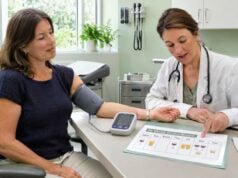
Contact a healthcare professional if your home readings remain high despite consistent changes, if medication side effects are preventing adherence, or if your pressure changes substantially after weight loss or increased exercise.
A reading above 180/120 mmHg is severe hypertension. If a repeat reading remains that high, follow urgent medical guidance. If severe blood pressure is accompanied by chest pain, shortness of breath, weakness, numbness, vision changes, confusion, or other symptoms of acute organ injury, seek emergency care.
Be skeptical of supplements marketed as replacements for proven treatment. “Natural” does not mean safe, and supplements can interact with blood pressure drugs, anticoagulants, kidney medications, and other treatments.
Also be cautious with decongestants, stimulant-heavy pre-workout products, excessive caffeine, and frequent NSAID use, because some over-the-counter products can raise blood pressure or interfere with treatment. If your readings rise unexpectedly, review new medicines and supplements with a pharmacist or clinician.
Lifestyle change is most effective when it becomes the background of treatment rather than a short “challenge.” Keep measuring periodically even after readings improve. Blood pressure can drift upward again when activity falls, sodium intake rises, weight returns, sleep worsens, or medication adherence changes.
The habits with the strongest track record are not exotic: eat a high-quality lower-sodium diet, move regularly, manage weight, sleep well, reduce alcohol, manage stress, and measure blood pressure correctly. Use those habits consistently, then make treatment decisions from your actual average rather than from hope or symptoms. If your average is moving in the right direction, keep going; if it is not, treat that as useful information and adjust the plan with your clinician rather than simply waiting longer. The goal is steady control over months and years, not a brief improvement before one appointment or home check.
References
- 2025 High Blood Pressure (BP) Guideline – Professional Heart Daily | American Heart Association 2025 (Guideline)
- Blood pressure impact of dietary practices using the DASH method: a systematic review and meta-analysis. 2025 (Systematic Review)
- The blood pressure control effect of the sodium-restricted dietary approaches to stop hypertension diet: a systematic review 2024 (Systematic Review)
- Effects of aerobic exercise on blood pressure in patients with hypertension: a systematic review and dose-response meta-analysis of randomized trials 2024 (Systematic Review)
- Effect of weight loss on blood pressure changes in overweight patients: A systematic review and meta-analysis 2023 (Systematic Review)
Disclaimer
This article is for general education and does not replace diagnosis or treatment from a healthcare professional. Blood pressure treatment should be individualized, especially for people with cardiovascular disease, kidney disease, diabetes, pregnancy, or very high readings. Do not stop prescribed medication or use potassium supplements or salt substitutes without appropriate medical guidance.