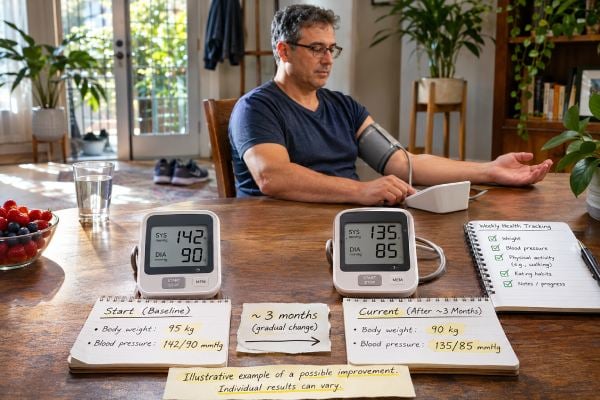
Losing excess weight can lower blood pressure, and the effect often becomes noticeable before you reach a large or “ideal” weight-loss goal. A useful starting target is about 5% of body weight for adults with overweight or obesity. For someone who weighs 200 pounds, that is 10 pounds. Research commonly finds that a modest weight loss can reduce systolic blood pressure by several mmHg, with larger losses tending to produce larger improvements.
An older but influential analysis estimated roughly 1 mmHg of systolic blood pressure reduction per kilogram of weight lost, but that is best treated as a population average rather than a personal formula. More recent reviews still show a clear relationship between weight reduction and lower clinic and ambulatory blood pressure, while also showing wide variation from person to person.
The biggest practical lesson is that you do not need to wait for dramatic weight loss to check progress. Track your home blood pressure, waist size, habits, and medication needs as your weight changes.
Table of Contents
- How Much Blood Pressure May Fall With Weight Loss
- Why 5% Weight Loss Is a Useful First Target
- Why the Blood Pressure Response Varies
- How Fast Blood Pressure May Improve
- Which Weight-Loss Approaches Help Blood Pressure Most
- How to Track Progress Without Guessing
- Medication Changes and Safety
How Much Blood Pressure May Fall With Weight Loss
There is a clear overall pattern: when people with excess weight lose weight, blood pressure usually falls. The exact amount is variable, but several practical ranges are useful.
A 2023 systematic review and meta-analysis of 35 studies involving more than 3,000 people with overweight or obesity found that weight reduction was associated with meaningful decreases in both clinic and ambulatory blood pressure. Larger reductions in body mass index generally produced larger blood pressure improvements. In groups with greater weight loss, clinic systolic pressure fell by roughly 8.5 mmHg on average, compared with about 3.8 mmHg in groups with smaller BMI reductions.
An older randomized-trial meta-analysis estimated that every kilogram, or 2.2 pounds, of weight loss was associated with about a 1.05 mmHg decrease in systolic pressure and a 0.92 mmHg decrease in diastolic pressure. That simple rule is memorable, but it should not be used like a calculator for an individual person. A 10-pound loss does not guarantee a 4- to 5-point systolic reduction, and some people will improve more or less.
A more realistic way to think about the numbers is:
| Weight-loss milestone | What you might expect | Important note |
|---|---|---|
| 2%–3% of body weight | Possible early BP improvement | May be modest but still useful |
| Around 5% | Often enough for a measurable improvement | Recommended as a practical first target |
| 5%–10% | Often produces larger BP and metabolic benefits | Response depends on starting pressure and health |
| More than 10% | May provide further benefit | Medication needs may change as BP falls |
The drop tends to be larger when starting blood pressure is higher. Someone averaging 150/95 mmHg has more room to improve than someone averaging 126/78 mmHg. If you are not sure where your reading falls, review blood pressure ranges and what they mean before using weight loss as your main benchmark.
Why 5% Weight Loss Is a Useful First Target
The 2025 high blood pressure guideline emphasizes healthy-weight management and specifically supports a goal of at least 5% weight loss in adults with overweight or obesity. Five percent is large enough to matter clinically but small enough to be a realistic first milestone.
Here is what 5% looks like at common starting weights:
| Starting weight | 5% weight loss | Weight after loss |
|---|---|---|
| 160 lb | 8 lb | 152 lb |
| 180 lb | 9 lb | 171 lb |
| 200 lb | 10 lb | 190 lb |
| 240 lb | 12 lb | 228 lb |
| 300 lb | 15 lb | 285 lb |
At that point, you may see improvements in blood pressure, blood sugar regulation, triglycerides, sleep apnea severity, mobility, and exercise tolerance. Not every marker changes at the same speed, but 5% is enough to make a useful first reassessment.
A 5% goal also avoids an all-or-nothing mindset. If you start at 220 pounds and ultimately want to lose 40 pounds, the first 11 pounds still count. You do not need to postpone cardiovascular benefits until the full goal is reached.
It is useful to separate a goal from an expected blood pressure result. Five percent weight loss is a target you can control more directly; the exact mmHg response is not. For example, one person may lose 5% and see systolic pressure fall 8 mmHg, while another may lose the same percentage and see only a 2- to 3-point change because sodium intake, sleep apnea, kidney disease, medications, or genetics are playing a larger role.
A second milestone of 7% to 10% can be reasonable if additional weight loss is appropriate and sustainable. At that stage, reassess not only blood pressure but also waist circumference, blood sugar, triglycerides, exercise tolerance, and medication burden. These combined changes provide a more complete picture than the scale alone.
If you want a broader picture of what tends to change first, weight loss and heart health improvements can help separate early changes from benefits that take longer.
Why the Blood Pressure Response Varies
Weight loss does not lower blood pressure through one single mechanism. It can reduce sympathetic nervous system activity, improve insulin sensitivity, lower pressure on the kidneys, reduce sodium retention, and improve vascular function. It may also reduce the severity of obstructive sleep apnea, which is a common contributor to hypertension.
Because several pathways are involved, two people who lose the same number of pounds can have very different results.
Factors that influence the response include:
- Starting blood pressure. Higher baseline pressure usually allows a larger reduction.
- Where the weight is lost. Reducing visceral abdominal fat may improve metabolic health more than the scale alone suggests.
- Sodium intake. A person who loses weight while still eating a very high-sodium diet may see less BP improvement.
- Exercise. Physical activity lowers blood pressure independently of weight loss.
- Alcohol intake. Cutting heavy alcohol use can lower pressure even before large weight changes occur.
- Sleep apnea. Untreated sleep apnea can keep pressure high despite weight loss.
- Medications. Antihypertensive drugs, weight-loss medications, diabetes drugs, steroids, NSAIDs, and other medicines can affect the result.
- Genetics and kidney function. These strongly influence blood pressure regulation.
This means a plateau in blood pressure does not automatically mean your weight-loss effort has failed. If your waist circumference is shrinking, fitness is improving, and metabolic markers are better, you may still be gaining cardiovascular benefit.
Likewise, a dramatic pressure drop does not mean you should stop prescribed medication on your own. A successful weight-loss program may make your current medication dose stronger than before, which is a reason to monitor carefully and involve your clinician.
How Fast Blood Pressure May Improve
Blood pressure can start improving within weeks, especially when weight loss is accompanied by lower sodium intake, more exercise, and less alcohol. The full effect of a meaningful weight change usually unfolds over months.
A person losing about 1 pound per week might reach 5% weight loss in 8 to 15 weeks depending on starting weight. That is a reasonable interval for comparing home blood pressure averages, provided medication has remained stable.
Some changes happen before the scale moves much. For example, the first two weeks of a lower-sodium, higher-fiber eating pattern may reduce fluid retention and improve blood pressure even if body fat loss is still small. Later, sustained fat loss can add further benefit.
This is why it helps to distinguish weight-related blood pressure improvement from the effects of the behaviors used to lose weight. A DASH-style eating pattern, exercise, reduced sodium, and reduced alcohol can all lower pressure on their own. When they occur together, the total improvement may be larger than expected from weight loss alone.
If you are using exercise as part of the plan, exercise-related blood pressure timelines can help you understand which changes may be coming from training rather than the scale.
Which Weight-Loss Approaches Help Blood Pressure Most
The best weight-loss approach for blood pressure is one that produces sustainable weight reduction without worsening the rest of your cardiovascular risk profile.
A DASH-style calorie deficit
For many people with hypertension, a calorie deficit built around DASH principles is a strong choice. It emphasizes vegetables, fruit, legumes, whole grains, nuts, seeds, low-fat dairy, fish, and other minimally processed foods while limiting sodium and highly processed foods.
That matters because the eating pattern lowers blood pressure independently of weight loss. A person may therefore get two benefits at once: less body weight and a diet composition that directly supports lower pressure. See the DASH diet for blood pressure for a practical framework.
Higher-protein or lower-carbohydrate approaches
These can work if they help you maintain a calorie deficit, but food quality matters. A lower-carbohydrate plan built around vegetables, beans, nuts, fish, olive oil, and minimally processed proteins is very different from one dominated by processed meats, butter, and salty packaged foods.
The blood pressure benefit comes mainly from sustained energy balance, weight loss, sodium control, and an overall nutritious pattern rather than from a single macronutrient ratio.
Whatever eating pattern you choose, the calorie deficit should be moderate enough that you can still meet protein, fiber, vitamin, mineral, and hydration needs. Very aggressive dieting may produce rapid scale loss but can also increase fatigue, reduce training quality, and make weight regain more likely. A slower plan that preserves muscle and can be followed for months is often better for long-term blood pressure control.
Protein at each meal, high-fiber foods, minimally processed carbohydrates, and unsaturated fats can improve fullness while making it easier to keep sodium and saturated fat in check. Cooking more meals at home can also reduce hidden sodium, which may improve blood pressure before substantial fat loss occurs.
Meal replacements
Structured meal-replacement programs can help some people reduce calories consistently. A 2024 systematic review found modest additional reductions in weight and systolic blood pressure in people with prediabetes and features of metabolic syndrome. These plans are most useful when they lead into a sustainable long-term eating pattern instead of a temporary phase followed by weight regain.
Anti-obesity medication
Modern anti-obesity medications can produce substantial weight loss in appropriate patients, and several trials show accompanying blood pressure reductions. A 2025 systematic review of anti-obesity medications found that the agents producing the largest weight loss also tended to improve blood pressure and other cardiometabolic markers.
Medication is not simply “lifestyle in a pill.” Eligibility, side effects, cost, contraindications, and long-term use all matter. Discuss these therapies with a qualified clinician rather than using blood pressure alone to decide.
Bariatric or metabolic surgery
For people with severe obesity who meet surgical criteria, bariatric surgery can produce large and durable weight loss and often reduces antihypertensive medication needs. A 2025 meta-analysis found greater systolic and diastolic blood pressure reductions with bariatric surgery than with nonsurgical interventions in hypertensive patients with obesity.
Surgery has its own risks, nutritional requirements, and follow-up needs, so it is not a simple extension of dieting. It is a medical treatment for selected patients.
How to Track Progress Without Guessing
A scale alone cannot tell you whether your cardiovascular risk is improving. Track blood pressure alongside weight using a consistent method.
A practical routine is:
- Weigh under similar conditions, such as in the morning after using the bathroom.
- Use a validated upper-arm blood pressure monitor with the correct cuff size.
- Sit quietly for about five minutes before measuring.
- Take two readings one minute apart and record both.
- Compare multi-day averages rather than single readings.
- Recalculate your percentage weight loss every few weeks.
For example, if you start at 240 pounds and reach 228 pounds, you have lost 12 pounds, or 5%. If your home average falls from 142/88 to 134/83 mmHg over the same period, that is a meaningful improvement. If it stays at 142/88, review your measurement technique, sodium intake, exercise, alcohol, sleep, and medication plan rather than assuming the solution is simply “lose more.”
A structured home blood pressure monitoring routine can make those comparisons much more reliable.
Also measure waist circumference every few weeks if it is useful to you. Weight can fluctuate from water, glycogen, bowel contents, and hormonal changes, while a falling waist measurement can show that body composition is moving in the right direction.
For scale weight, use a weekly average rather than reacting to a single morning. A salty restaurant meal can temporarily add several pounds of water without adding meaningful body fat. The same sodium load can also raise blood pressure for a short time in salt-sensitive people. Looking at weekly averages for both weight and blood pressure helps prevent normal fluctuations from being mistaken for failure.
If you regain a few pounds after an illness, holiday, or stressful period, restart the routine rather than waiting for motivation to become perfect. Blood pressure responds to the habits you repeat over time, not to whether every week is linear.
Medication Changes and Safety
As weight falls, blood pressure medication may become more potent relative to your needs. Watch for dizziness, lightheadedness when standing, unusual fatigue, fainting, or consistently low readings. These can have several causes, but they are a reason to contact the clinician managing your medication.
Do not skip doses based on one low reading. Clinicians usually look at patterns, symptoms, kidney function, and other factors before reducing treatment.
The opposite is also important: do not delay medication simply because you plan to lose weight. The 2025 guideline recommends medication in addition to lifestyle changes for adults with sufficiently high average blood pressure and for many people at increased cardiovascular risk. Weight loss takes time, while uncontrolled hypertension can cause damage now.
Finally, avoid extreme dehydration, crash diets, stimulant-based weight-loss products, and unregulated supplements marketed as fast blood pressure fixes. Rapid scale loss from water is not the same as fat loss and can create electrolyte or kidney problems.
The most useful target is usually not “lose as much as possible.” It is to reach the first clinically meaningful milestone—often about 5%—while building habits you can maintain. Then reassess your home blood pressure, medications, waist size, and metabolic health. If you continue losing weight safely, repeat the process rather than waiting for one final goal to decide whether your health is improving. Once you reach a stable weight, keep monitoring because blood pressure can rise again with weight regain, reduced activity, higher sodium intake, medication changes, or worsening sleep. Long-term maintenance is therefore part of blood pressure treatment, not a separate phase after the “real” work is finished. Even a stable 5% loss that you maintain for years may be more valuable than a larger loss followed by repeated regain.
References
- 2025 High Blood Pressure (BP) Guideline – Professional Heart Daily | American Heart Association 2025 (Guideline)
- Effect of weight loss on blood pressure changes in overweight patients: A systematic review and meta-analysis 2023 (Systematic Review)
- Weight management using meal replacements and cardiometabolic risk reduction in individuals with pre-diabetes and features of metabolic syndrome: A systematic review and meta-analysis of randomized controlled trials 2024 (Systematic Review)
- Safety and effects of anti-obesity medications on weight loss, cardiometabolic, and psychological outcomes in people living with overweight or obesity: a systematic review and meta-analysis 2025 (Systematic Review)
- The role of bariatric surgery in hypertension control: a systematic review and meta-analysis with extended benefits on metabolic factors 2025 (Systematic Review)
- Influence of weight reduction on blood pressure: a meta-analysis of randomized controlled trials 2003 (Meta-Analysis)
Disclaimer
This article is for general education and is not a personal weight-loss or blood pressure treatment plan. Weight-loss targets, medications, and blood pressure goals should be individualized, especially for people with cardiovascular disease, kidney disease, diabetes, pregnancy, or a history of eating disorders. Do not change prescribed blood pressure or weight-management medication without professional guidance.