For most adults, a normal blood pressure is below 120/80 mm Hg. The top number is systolic pressure, which reflects pressure in the arteries when the heart contracts. The bottom number is diastolic pressure, which reflects pressure while the heart relaxes between beats. A reading of 120–129 with a diastolic pressure below 80 is considered elevated under current U.S. guidance, while readings starting at 130/80 enter the hypertension range.
Age changes cardiovascular risk, but it does not mean that steadily higher blood pressure becomes “normal” as adults get older. A healthy 70-year-old does not automatically get a higher normal range than a healthy 40-year-old. Treatment goals may be individualized for frailty, side effects, pregnancy, kidney disease, or other medical issues, but the basic adult blood-pressure categories remain useful across age groups. Children are different: pediatric blood pressure depends on age, sex, and height until the teen years. Accurate measurement and repeated readings matter as much as the number itself.
Table of Contents
- Normal Blood Pressure Numbers for Adults
- Blood Pressure by Age: What Actually Changes?
- What Systolic and Diastolic Pressure Mean
- How to Measure Blood Pressure Correctly
- What to Do When One Reading Is High
- When Blood Pressure May Be Too Low
- When Blood Pressure Needs Medical Attention
Normal Blood Pressure Numbers for Adults
For adults, normal blood pressure is under 120 mm Hg systolic and under 80 mm Hg diastolic. The 2025 U.S. hypertension guideline continues the familiar categories below.
| Category | Systolic pressure | Diastolic pressure |
|---|---|---|
| Normal | Below 120 mm Hg | and below 80 mm Hg |
| Elevated | 120–129 mm Hg | and below 80 mm Hg |
| Stage 1 hypertension | 130–139 mm Hg | or 80–89 mm Hg |
| Stage 2 hypertension | 140 mm Hg or higher | or 90 mm Hg or higher |
The word or matters. A blood pressure of 118/84 is not normal simply because the systolic number is below 120; the diastolic value falls in the stage 1 range. Likewise, 142/76 is stage 2 because the systolic value is 140 or higher.
These categories help describe risk, but they do not mean every person with a reading of 132/82 needs medication immediately. Treatment depends on the average blood pressure, cardiovascular risk, health conditions, and response to lifestyle changes. Under current U.S. guidance, medication is generally recommended for everyone with average blood pressure at or above 140/90 mm Hg and for selected people with stage 1 hypertension based on cardiovascular disease, diabetes, chronic kidney disease, prior stroke, or elevated predicted risk.
European guidance uses somewhat different terminology and thresholds, which is one reason people may see conflicting definitions online. The important point is not to mix systems halfway through interpretation. Use one guideline framework with your clinician and focus on repeated, accurately measured readings.
Blood Pressure by Age: What Actually Changes?
In adults, the definition of normal blood pressure does not rise decade by decade. What changes with age is the likelihood of developing hypertension, the pattern of the readings, and how aggressively treatment can be tolerated.
A practical age-based view is:
| Age group | How to interpret “normal” | Important nuance |
|---|---|---|
| Children under 13 | Uses pediatric percentiles based on age, sex, and height | Adult cutoffs should not be applied casually |
| Teens 13–17 | Common U.S. pediatric guidance uses adult-style thresholds beginning at age 13 | Diagnosis should still be handled in pediatric context |
| Adults 18–64 | Below 120/80 mm Hg is normal | Risk and treatment decisions depend on the average and overall health |
| Adults 65 and older | Below 120/80 mm Hg remains a normal reading | Treatment targets may be individualized for frailty, dizziness, falls, or limited life expectancy |
Blood vessels tend to stiffen with age. As a result, systolic pressure often rises while diastolic pressure stays the same or even falls. This can create isolated systolic hypertension, such as 158/72. It is common in older adults and is not a harmless feature of aging. Higher systolic pressure still increases the risk of stroke, heart failure, kidney disease, and other complications.
Research in older adults supports treating elevated systolic pressure rather than accepting it simply because of age. A 2024 Cochrane review found that lower blood-pressure targets reduced stroke and likely reduced serious cardiovascular events compared with higher targets in older adults with hypertension, although treatment still needs individualization.
Frailty changes the conversation. An independent 82-year-old who walks daily may tolerate a lower target well, while another 82-year-old with recurrent falls, orthostatic symptoms, multiple medications, or advanced illness may need a different approach. “Normal by age” is therefore less useful than normal measurement plus individualized treatment.
For people who notice the highest readings on waking, high morning blood pressure can have specific causes and may need home or ambulatory monitoring.
A common source of confusion is that population averages rise with age. If many people in their 60s and 70s have systolic pressure in the 130s or 140s, those numbers can seem “normal for age.” They are common, but common is not the same as optimal. Cardiovascular risk generally rises as systolic pressure rises, even in older adults. The question for treatment is how much lowering is likely to help and whether the person can tolerate it safely.
For example, compare two 72-year-olds with an average blood pressure of 148/78 mm Hg. One is active, has no dizziness, and takes few medications. The other is frail, has repeated falls, becomes lightheaded on standing, and has several chronic illnesses. Both readings are hypertensive, but the pace and intensity of treatment may differ. The blood-pressure category does not change; the treatment plan does.
It is also useful to separate a normal reading from a treatment goal. A normal untreated reading may be below 120/80 mm Hg, while a clinician may set a practical treatment goal such as below 130/80 mm Hg for many adults with hypertension. A goal is the level treatment is trying to achieve while balancing benefit and side effects. It should not be interpreted as the point where cardiovascular risk suddenly starts or stops.
What Systolic and Diastolic Pressure Mean
Systolic pressure is the peak pressure during a heartbeat; diastolic pressure is the pressure between beats. Both provide useful information.
Systolic pressure generally becomes the stronger predictor of cardiovascular risk as people get older. It rises with arterial stiffness, increased blood volume, high sympathetic activity, kidney disease, and many other conditions.
Diastolic pressure reflects resistance in the smaller arteries while the heart is relaxing. High diastolic pressure is especially common in younger and middle-aged adults with hypertension. A persistently high diastolic number still matters even when the systolic number looks normal.
Pulse pressure is the difference between systolic and diastolic pressure. For example, 140/70 has a pulse pressure of 70 mm Hg. A wider pulse pressure becomes more common with arterial stiffness in older adults, but it should not be interpreted in isolation from the actual systolic and diastolic values.
Blood pressure also changes from minute to minute. It can rise with exercise, pain, caffeine, stress, a full bladder, nicotine, talking, or cold temperatures. It normally falls during sleep. One snapshot cannot capture that variability.
This is why clinicians diagnose hypertension from average blood pressure, not the highest number someone has ever seen. Home measurements and, when needed, 24-hour ambulatory blood pressure monitoring help separate sustained hypertension from temporary clinic or situational effects.
How to Measure Blood Pressure Correctly
A technically poor measurement can move the reading enough to change its category. Before worrying about a number, make sure the method is sound.
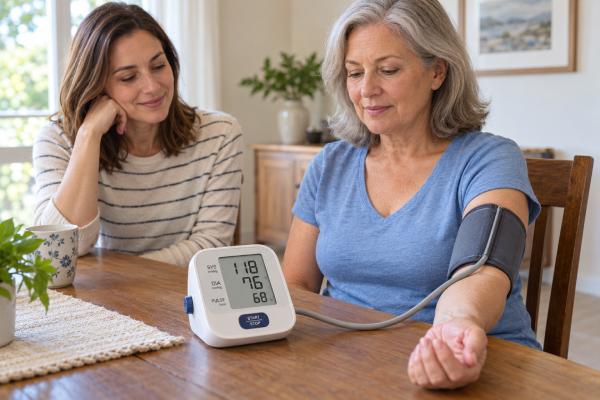
For a reliable home reading:
- Avoid exercise, smoking, nicotine, and caffeine for about 30 minutes beforehand when possible.
- Empty your bladder.
- Sit quietly for about five minutes.
- Keep your back supported and both feet flat on the floor.
- Rest the bare arm on a surface so the cuff is near heart level.
- Use a validated upper-arm monitor with the correct cuff size.
- Do not talk, text, or move during the reading.
- Take two readings about one minute apart and record both.
Cuff size is especially important. A cuff that is too small can falsely raise the reading; one that is too large can distort it in the other direction. Wrist devices may be useful in selected circumstances but are more position-sensitive. Cuffless smartwatch estimates are not yet recommended as a substitute for validated cuff measurements in current U.S. hypertension guidance.
For diagnosis or treatment decisions, a series is better than a single day. Clinicians often ask for morning and evening readings over several days. The exact schedule varies, but consistency improves the usefulness of the average.
If home numbers are repeatedly lower than clinic values, white coat hypertension may be part of the explanation. The reverse pattern also occurs: a person can have acceptable clinic readings but high blood pressure at home, called masked hypertension.
Home readings versus clinic readings
Blood pressure measured at home may not match blood pressure measured in a medical office. Anxiety, rushing, conversation, pain, and the unfamiliar setting can push office values up. On the other hand, some people have deceptively normal office readings but higher pressures during ordinary life. This is why out-of-office data can change a diagnosis.
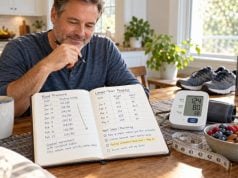
A good home log is based on averages. If your clinician asks for a seven-day log, a common approach is two readings in the morning and two in the evening, separated by about one minute, under similar conditions each day. Some protocols discard the first day’s measurements and average the rest. Follow the plan you were given rather than inventing a cutoff from a single result.
Do not compare a rushed standing reading taken after climbing stairs with a carefully rested clinic reading and assume the device is wrong. Blood pressure is supposed to change with activity. The goal of home monitoring is to create a standardized resting measurement that can be compared over time.
If your readings vary widely, bring the monitor to a clinic visit. Staff can check cuff fit, technique, and whether the device’s readings are reasonably close to the office equipment. Replacing an inaccurate or poorly sized cuff can be more useful than taking dozens of extra measurements.
What to Do When One Reading Is High
One high reading usually calls for a repeat, not panic. Sit quietly, correct your position, and measure again after a few minutes. Ask what was happening around the reading: Were you rushing? In pain? Anxious? Talking? Had you just exercised or used caffeine or nicotine?
A single reading such as 148/92 does not by itself establish chronic hypertension. But repeated readings in that range deserve follow-up.
Keep a short log that includes:
- Date and time.
- Two readings taken about one minute apart.
- Heart rate if the monitor provides it.
- Whether medication was taken.
- Relevant symptoms.
- Unusual factors such as illness, pain, poor sleep, heavy alcohol use, or missed medication.
Do not repeatedly measure every few minutes for hours. That can increase anxiety and produce a confusing stream of numbers. A standardized schedule gives more useful information.
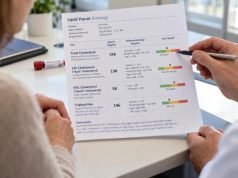
If your average home blood pressure is persistently elevated, arrange medical review. The clinician may check kidney function, electrolytes, glucose, cholesterol, medication effects, sleep apnea risk, and other possible contributors. Lifestyle treatment can include reducing sodium, improving dietary quality, increasing activity, moderating alcohol, improving sleep, and losing excess weight when appropriate. The DASH diet for blood pressure is one well-studied eating pattern.
Blood pressure medication should not be changed based on a single home result unless you have a specific plan from your prescriber.
Why the average matters more than the occasional spike
Blood pressure is biologically variable. Even people with well-controlled hypertension can see an occasional high value after poor sleep, a stressful meeting, acute pain, a salty restaurant meal, or a missed dose. Clinicians are usually more interested in the pattern across several days than in the single highest number, unless that number is in a severe range or comes with dangerous symptoms.
That does not mean spikes should always be ignored. Repeated large swings can point to inconsistent medication use, sleep apnea, heavy alcohol intake, autonomic problems, measurement error, or a drug or supplement that raises pressure. Decongestants containing sympathomimetic ingredients, stimulants, some anti-inflammatory drugs, and certain prescription medicines can contribute in susceptible people.
When home averages remain above the recommended range, lifestyle changes are often started immediately. Depending on the level and overall cardiovascular risk, medication may be started at the same time or after a defined trial of lifestyle treatment. The 2025 U.S. guideline uses both the blood-pressure level and cardiovascular risk to guide that choice, rather than treating every stage 1 reading identically.
When Blood Pressure May Be Too Low
There is no single low blood-pressure cutoff that is dangerous for everyone. Some healthy adults naturally run around 90/60 mm Hg and feel completely well. Low blood pressure becomes more concerning when it causes symptoms or reflects an underlying problem.
Symptoms can include:
- Dizziness or lightheadedness.
- Fainting or near-fainting.
- Blurred vision.
- Weakness.
- Confusion.
- Nausea.
- Unusual fatigue.
A sudden drop matters more than a stable lifelong low reading. Dehydration, bleeding, infection, heart rhythm problems, heart failure, endocrine disorders, and medications can all lower pressure.
Older adults may experience orthostatic hypotension, a significant fall in pressure after standing. It can increase fall risk and may require medication review, hydration assessment, or further evaluation. If dizziness occurs mainly on standing, tell the clinician rather than assuming the treatment target should simply be abandoned.
People who are actively losing weight, exercising more, or reducing sodium may also find that an existing blood-pressure medication lowers pressure more than before. Repeated low readings with symptoms should prompt a medication review, not self-directed stopping.
When Blood Pressure Needs Medical Attention
Very high blood pressure matters most when it comes with signs of acute organ injury. Current U.S. guidance describes severe hypertension in nonpregnant adults as blood pressure above 180/120 mm Hg. If a reading is that high, rest and repeat it using proper technique.
Emergency symptoms can include:
- Chest pain or pressure.
- Severe shortness of breath.
- New weakness, numbness, facial droop, or trouble speaking.
- Severe sudden headache with neurologic symptoms.
- Confusion or loss of consciousness.
- New severe vision changes.
- Symptoms suggesting aortic dissection, such as abrupt severe chest or back pain.
A very high reading plus symptoms such as these requires emergency evaluation. Do not wait for the pressure to come down at home.
A reading above 180/120 without acute symptoms still deserves timely medical contact and assessment. Current guidance generally treats severe asymptomatic hypertension with oral medication adjustment and close outpatient follow-up rather than automatically as an emergency, but the right setting depends on the individual situation.
Pregnancy is different. New high blood pressure during pregnancy or after delivery can signal preeclampsia, especially with severe headache, vision changes, upper abdominal pain, swelling, or shortness of breath. Those symptoms need prompt obstetric assessment.
For everyday interpretation, remember the central rule: adults do not get a progressively higher “normal” blood pressure allowance just because they age. Below 120/80 mm Hg remains normal in the U.S. framework, while repeated higher values should be interpreted using accurate measurement, averages, overall cardiovascular risk, and personal tolerance of treatment.
References
- 2025 AHA/ACC/AANP/AAPA/ABC/ACCP/ACPM/AGS/AMA/ASPC/NMA/PCNA/SGIM Guideline for the Prevention, Detection, Evaluation, and Management of High Blood Pressure in Adults 2025 (Guideline)
- 2024 ESC Guidelines for the management of elevated blood pressure and hypertension 2024 (Guideline)
- Higher blood pressure targets for hypertension in older adults 2024 (Systematic Review)
- Optimal Blood Pressure Targets with Age 2024 (Review)
- Home Blood Pressure Monitoring 2025 (Review)
- Home Blood Pressure Monitoring for Hypertension Diagnosis by Current Recommendations: A Long Way to Go 2022 (Review)
Disclaimer
Blood pressure diagnosis and treatment should be based on repeated, properly measured readings and your individual medical risk. Seek emergency care for very high blood pressure with chest pain, severe shortness of breath, neurologic symptoms, fainting, or other signs of acute illness. Pregnancy-related high blood pressure requires separate, prompt medical guidance.