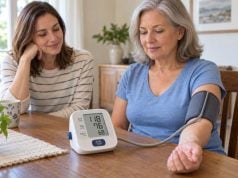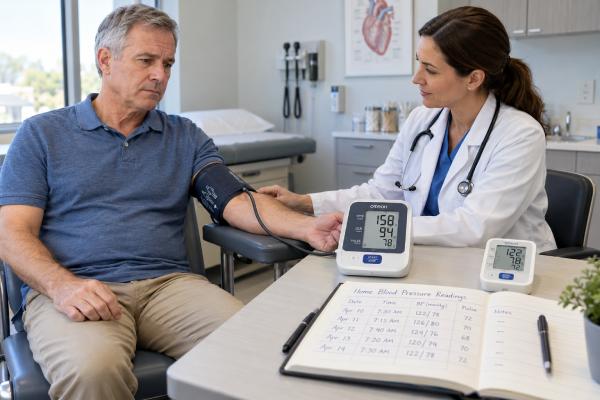
White coat hypertension means blood pressure is high in a medical office but normal when measured properly outside the office in a person who is not taking blood pressure medication. It is more than a single nervous reading. The diagnosis requires a consistent mismatch between office and out-of-office measurements, usually confirmed with 24-hour ambulatory blood pressure monitoring or a structured series of home readings. This matters because treating every high clinic value as sustained hypertension can lead to unnecessary medication, while dismissing repeated office elevations as “just anxiety” can miss people whose pressure is genuinely high. White coat hypertension is generally lower risk than sustained hypertension, but it is not always completely harmless and can progress to sustained high blood pressure over time. Current U.S. guidance recommends out-of-office assessment when untreated office blood pressure is at least 130/80 mm Hg but below 160/100 mm Hg before labeling many adults as hypertensive. The exact diagnostic thresholds vary by guideline and measurement method, so averages and context matter.
Table of Contents
- What White Coat Hypertension Means
- How to Confirm White Coat Hypertension
- ABPM vs Home Monitoring
- How to Get Accurate Blood Pressure Readings
- How Risky White Coat Hypertension Is
- Treatment and Follow-Up
- White Coat Effect and Other Look-Alikes
What White Coat Hypertension Means
White coat hypertension is a blood-pressure pattern, not simply a personality trait or a feeling of nervousness. In an untreated person, blood pressure is repeatedly elevated in the clinic while properly obtained readings outside the clinic remain below the corresponding hypertension threshold.
The name comes from the idea that seeing a clinician in a “white coat” can trigger a temporary alert response. Stress, conversation, rushing to an appointment, pain, a full bladder, caffeine, or worry about the result can all raise blood pressure for a short time. However, you do not have to feel anxious for a white coat pattern to occur.
The size of the office-home gap can vary from visit to visit. A person may have a large rise at the first appointment and a smaller rise after sitting quietly or becoming familiar with the setting. That is one reason clinicians use repeated measurements instead of labeling hypertension from the first number. It also explains why “I was nervous today” is not enough to confirm the diagnosis: true white coat hypertension requires normal pressure outside the office, not simply a plausible reason for an elevated clinic value.
There is no single personality type that develops the pattern. It occurs in younger and older adults, although it becomes more common in some older populations and among people with milder office hypertension. The response can also appear during dental visits, procedures, preoperative assessments, or other medical encounters. What matters clinically is whether blood pressure is persistently elevated during ordinary life, because out-of-office pressure adds important information about long-term cardiovascular exposure.
The 2025 U.S. blood pressure guideline classifies untreated adults this way:
| Pattern | Office blood pressure | Out-of-office blood pressure |
|---|---|---|
| Sustained normotension | Not high | Not high |
| White coat hypertension | High | Not high |
| Masked hypertension | Not high | High |
| Sustained hypertension | High | High |
Under that U.S. framework, an office threshold of 130/80 mm Hg corresponds approximately to an awake home or ambulatory average of 130/80 mm Hg and a 24-hour ambulatory average of 125/75 mm Hg. At the traditional office level of 140/90 mm Hg, the corresponding home or daytime ambulatory value is about 135/85 mm Hg and the 24-hour ambulatory value about 130/80 mm Hg. European guidance uses different office definitions, so the numerical cutoff should always be interpreted within the guideline and method being used.
If the numbers themselves are confusing, the guide to normal blood pressure readings and current categories explains systolic and diastolic values. The key point for white coat hypertension is not one specific office number—it is the repeated difference between the clinic and everyday environment.
How to Confirm White Coat Hypertension
White coat hypertension should be confirmed with out-of-office blood pressure monitoring, not diagnosed from one normal reading at home. Current U.S. guidance considers it reasonable to exclude white coat hypertension before diagnosing hypertension in untreated adults whose office systolic pressure is at least 130 mm Hg or diastolic pressure at least 80 mm Hg, provided office pressure is not above 160/100 mm Hg.
A typical confirmation process includes:
- Repeat the office measurement correctly after quiet rest, using the right cuff size and proper positioning.
- Review whether caffeine, nicotine, exercise, pain, decongestants, stimulants, or rushing could have affected the reading.
- Obtain out-of-office measurements with either ambulatory blood pressure monitoring or a structured home-monitoring protocol.
- Average multiple readings rather than comparing the single highest clinic value with the single lowest home value.
- Reassess over time because a white coat pattern can later become sustained hypertension.
Very high office readings require a different level of caution. In the 2025 U.S. guideline, white coat hypertension is uncommon when office pressure reaches 160/100 mm Hg or higher, and clinicians should not delay appropriate treatment simply to assume the elevation is situational. Severe values accompanied by chest pain, shortness of breath, neurologic symptoms, confusion, or other signs of acute organ injury require urgent assessment.
A diagnosis can also be misleading if the clinic measurements themselves are poor quality. A cuff that is too small, talking during the measurement, unsupported feet, a dangling arm, or measuring immediately after walking in from the parking lot can push office values upward. Before labeling a pattern “white coat,” both sides of the comparison need reliable technique.
It is also useful to bring your home monitor to an appointment. A clinician can compare its reading with a validated office device and check whether you are positioning the cuff correctly. This helps separate a true office-home difference from a device or technique problem.
ABPM vs Home Monitoring
Twenty-four-hour ambulatory blood pressure monitoring, or ABPM, is the reference method for confirming white coat hypertension in many situations. A small recorder is connected to an upper-arm cuff and takes readings automatically during normal daytime activity and sleep. This produces daytime, nighttime, and full 24-hour averages rather than a few selected moments.
ABPM is especially useful because it can reveal patterns home monitoring may miss, including nighttime hypertension and abnormal overnight dipping. It also reduces the chance that someone will selectively measure only when relaxed or repeat readings until a preferred number appears. A detailed explanation of 24-hour ambulatory blood pressure monitoring and its results can help you understand the report.
ABPM does have disadvantages. The cuff inflates repeatedly, which can interrupt sleep, and access or insurance coverage may be limited. One unusual day can also be less representative than several ordinary days at home.
Home blood pressure monitoring, or HBPM, is a practical alternative and is particularly useful for ongoing follow-up. A structured home record collects several readings over multiple days with the same validated device. A common protocol is two readings in the morning and two in the evening, about one minute apart, for at least three days and preferably around seven days. Some protocols discard the first day and average the rest; follow the method your clinician gives you.
ABPM and HBPM are complementary rather than perfectly interchangeable. A person can occasionally have normal home readings but elevated nighttime ambulatory pressure. Conversely, a stressful or unusually active ABPM day may not reflect every week. When the two methods disagree, clinicians look at measurement quality, the pattern of readings, overall cardiovascular risk, and sometimes repeat monitoring.
For long-term tracking, a consistent home blood pressure monitoring schedule is often easier than repeated 24-hour studies.
How to Get Accurate Blood Pressure Readings
The diagnosis depends on differences of only a few millimeters of mercury, so measurement technique can change the conclusion. Use a validated automatic upper-arm monitor with a cuff that matches your arm circumference. Wrist devices can be accurate in selected situations, but they are more sensitive to position and are usually not the first choice when a standard upper-arm cuff fits.
Before each home session:
- Avoid exercise, smoking or nicotine, and caffeine for about 30 minutes.
- Empty your bladder.
- Sit quietly for at least five minutes.
- Use a chair with your back supported and keep both feet flat on the floor.
- Keep your legs uncrossed.
- Place the cuff on bare skin, not over clothing.
- Support the arm so the middle of the cuff is near heart level.
- Do not talk, text, watch an upsetting video, or answer questions during the measurement.
Take at least two readings about one minute apart and record both. Do not keep repeating the measurement until the number drops. Selective recording can make home pressure look artificially low and create a false impression of white coat hypertension.
The device itself matters. A monitor may be sold legally without having strong independent validation for accuracy. Choose a validated device and the correct cuff size; upper-arm versus wrist home blood pressure monitors have different practical strengths and limitations.
Office technique should be just as careful. Ideally, measurements are taken after quiet seated rest with correct body position and cuff size, and elevated values are confirmed with repeated readings. Automated office measurement performed while the patient rests alone can sometimes reduce the white coat response, but it does not replace out-of-office monitoring when the diagnosis remains uncertain.
Keep a simple log that includes date, time, blood pressure, pulse, and whether the reading was taken before or after medication. Notes about unusual pain, illness, poor sleep, or heavy caffeine use can help explain outliers without turning the log into a diary of every minor event.
How Risky White Coat Hypertension Is
White coat hypertension is generally less risky than sustained hypertension, but it should not automatically be treated as identical to having completely normal blood pressure everywhere. Contemporary reviews describe a small or uncertain increase in cardiovascular risk compared with sustained normotension, with risk influenced by age, baseline cardiovascular risk, metabolic factors, and how strictly the condition is defined.
A 2024 review concluded that white coat hypertension carries a small but definite cardiovascular risk and is prone to convert to sustained hypertension. A separate 2024 systematic review and meta-analysis found no statistically significant increase in cardiovascular mortality for white coat hypertension compared with normotension, while masked and sustained hypertension showed clearer excess risk. These findings are not contradictory: studies use different definitions, populations, follow-up periods, and outcomes, so the size of any excess risk remains less certain than the risk from sustained hypertension.
The most consistent concern is progression. People with white coat hypertension are more likely than consistently normotensive people to develop sustained high blood pressure later. That is why a normal ABPM today should not become a lifetime exemption from blood-pressure checks.
Risk deserves more attention when white coat hypertension appears alongside other problems such as:
- Diabetes or chronic kidney disease.
- Smoking.
- High LDL cholesterol or other lipid abnormalities.
- Obesity or central weight gain.
- Evidence of heart, kidney, or blood-vessel damage.
- Older age or high calculated cardiovascular risk.
- Strong family history of premature cardiovascular disease.
The out-of-office pressure itself also matters. Someone whose home average sits just below the hypertension threshold may be more likely to cross into sustained hypertension than someone whose home average is comfortably low.
It is useful to compare white coat hypertension with masked hypertension, where office pressure looks normal but home pressure is high. Masked hypertension is particularly important because it can be missed if only clinic readings are used and is associated with cardiovascular risk closer to sustained hypertension.
Treatment and Follow-Up
Confirmed white coat hypertension does not automatically mean medication is required. For many untreated adults with normal out-of-office pressure, clinicians emphasize lifestyle measures and periodic monitoring rather than immediately prescribing an antihypertensive drug. The decision depends on the person’s overall cardiovascular risk, office and out-of-office levels, other diseases, and any evidence of target-organ damage.
Useful lifestyle measures are the same ones that help prevent sustained hypertension:
- Maintain or work toward a healthy body weight.
- Limit excess sodium and favor a diet rich in vegetables, fruit, legumes, whole grains, and minimally processed foods.
- Exercise regularly within your medical limitations.
- Avoid smoking and nicotine exposure.
- Keep alcohol within recommended limits or avoid it.
- Address sleep apnea when present.
- Review medicines that can raise blood pressure, including some decongestants, stimulants, and anti-inflammatory drugs.
Follow-up matters because the blood-pressure phenotype can change. The 2025 U.S. guideline considers periodic out-of-office monitoring reasonable in people with white coat hypertension to detect transition to sustained hypertension, although the ideal interval is not firmly established. A clinician may repeat home monitoring several times a year or arrange another ABPM based on the initial values and risk profile.
Do not respond to a high clinic reading by taking an extra dose of someone else’s medication or starting leftover tablets. Conversely, do not stop prescribed medication because home values are lower without discussing it first. If you are already being treated, the terminology and management differ, and overtreatment can cause dizziness, falls, or kidney problems in some people.
A useful follow-up visit reviews the average home or ambulatory pressure, not just the best and worst readings. Bring the actual log or device memory. That gives the clinician a clearer basis for deciding whether no drug treatment, lifestyle treatment, medication, or more testing makes sense.
White Coat Effect and Other Look-Alikes
The terms white coat hypertension and white coat effect are related but not identical. White coat hypertension usually refers to an untreated person with high office blood pressure and normal out-of-office pressure. In a person already taking antihypertensive medication, a similar pattern—high in the clinic but controlled outside it—is generally called a white coat effect or white coat uncontrolled hypertension.
This distinction matters. If a treated person’s medication is intensified solely because of office readings, out-of-office pressure may become too low. Current U.S. guidance therefore recommends checking for a white coat effect in many treated adults with elevated office readings, especially before labeling blood pressure resistant to treatment.
Other situations can mimic or complicate a white coat pattern:
- Masked hypertension: office pressure is normal but home or ambulatory pressure is high.
- Measurement error: the cuff is the wrong size, the arm is unsupported, or readings are taken without rest.
- Temporary physiologic elevation: acute pain, fever, nicotine, caffeine, stimulant medication, or sleep deprivation raises pressure.
- Highly variable blood pressure: some people have substantial day-to-day fluctuations that require more data to classify.
- Nocturnal hypertension: daytime home values may look reassuring while pressure remains high during sleep, which ABPM can detect.
- Anxiety-related elevation: anxiety can contribute, but the diagnosis still depends on measured office-versus-out-of-office differences rather than on whether the person feels anxious.
White coat hypertension is therefore best viewed as a measurable phenotype that needs confirmation and follow-up. The goal is to avoid both errors: treating normal everyday blood pressure too aggressively and overlooking sustained hypertension because a person assumes every high clinic reading is caused by nerves.
If office values repeatedly run high, ask for a structured plan to confirm the pattern. Accurate office technique, validated home readings, and—when appropriate—ABPM can usually clarify whether the elevation is confined to the clinic or represents hypertension that needs ongoing treatment.
References
- 2025 AHA/ACC/AANP/AAPA/ABC/ACCP/ACPM/AGS/AMA/ASPC/NMA/PCNA/SGIM Guideline for the Prevention, Detection, Evaluation and Management of High Blood Pressure in Adults: A Report of the American College of Cardiology/American Heart Association Joint Committee on Clinical Practice Guidelines 2025 (Guideline)
- 2024 ESC Guidelines for the management of elevated blood pressure and hypertension 2024 (Guideline)
- White Coat Hypertension & Cardiovascular Outcomes 2024 (Review)
- Different phenotypes of hypertension and associated cardiovascular and all-cause mortality: a systematic review and meta-analysis 2024 (Systematic Review)
- Home Blood Pressure Monitoring 2025 (Review)
- When and how to use ambulatory blood pressure monitoring and home blood pressure monitoring for managing hypertension 2024 (Review)
Disclaimer
This article is for general education and does not diagnose white coat hypertension or replace individualized medical care. Blood pressure thresholds and treatment decisions depend on the measurement method, medical history, medications, and overall cardiovascular risk. Seek urgent care for severely elevated blood pressure accompanied by chest pain, shortness of breath, neurologic symptoms, fainting, or other signs of acute illness.