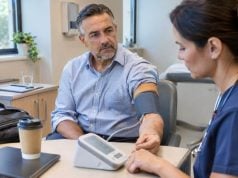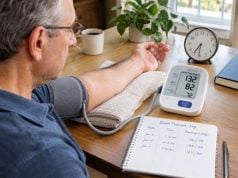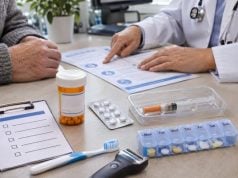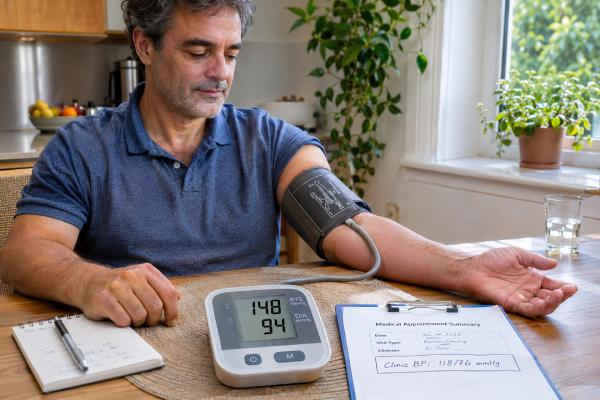
Masked hypertension means your blood pressure looks normal in a clinic but is repeatedly high outside the clinic. It is easy to miss because a reassuring office reading can hide what happens during work, sleep, exercise recovery, or an ordinary evening at home. The pattern matters: research links masked hypertension with higher risks of heart disease, stroke, kidney damage, and death compared with consistently normal blood pressure. The only reliable way to find it is to measure blood pressure away from the doctor’s office, usually with a validated home monitor or 24-hour ambulatory monitoring. A few isolated high readings do not prove masked hypertension, and thresholds differ slightly among guidelines, so averages matter more than one number. If your home readings run higher than your office readings, the goal is not to panic. It is to confirm the pattern, check measurement technique, look for causes that raise blood pressure outside the clinic, and treat your overall cardiovascular risk appropriately.
Table of Contents
- What masked hypertension means
- Why blood pressure may be higher outside the clinic
- How to check at home correctly
- When ambulatory monitoring helps
- Health risks and who is more likely to have it
- What to do if you have masked hypertension
- When high readings need urgent care
What masked hypertension means
The short definition is simple: office blood pressure is below the hypertension threshold, while out-of-office blood pressure is in the hypertensive range. The exact cutoffs depend on the guideline and the measurement method.
A commonly used European definition is an office blood pressure below 140/90 mm Hg with an average home or daytime ambulatory blood pressure of at least 135/85 mm Hg. A 24-hour ambulatory average of about 130/80 mm Hg or higher can also meet an out-of-office hypertension threshold. Some U.S. frameworks use lower office and home thresholds, so your clinician may interpret the same numbers differently based on the guideline being followed.
That is why the pattern matters more than memorizing a single cutoff. If your clinic blood pressure is 126/78 but your properly measured home average is 139/87, the difference deserves attention. If your home average is 126/77 and one evening reading was 144/88 after a stressful commute, that is a different situation.
Masked hypertension is the opposite of white-coat hypertension, in which blood pressure is high in the clinic but normal outside it. Both patterns show why a single office number cannot always describe a person’s usual blood pressure.
There is also a related pattern called masked uncontrolled hypertension. This occurs when someone already takes blood-pressure medication and office readings look controlled, but home or ambulatory readings remain high. That can happen if a medication wears off before the next dose, nighttime blood pressure remains elevated, or daytime triggers are not captured during a clinic visit.
Why normal office readings can be misleading
A clinic measurement is only a snapshot. It may occur after you have been sitting quietly, at a time of day when your pressure is naturally lower, and before the situations that raise it later. Office technique can also vary. A single reading taken after five quiet minutes is useful, but it cannot show what happens across 16 waking hours and an entire night.
Blood pressure also changes from minute to minute. Sleep, stress, temperature, meals, movement, pain, caffeine, nicotine, alcohol, medication timing, and a full bladder can all shift the number. The purpose of out-of-office monitoring is not to eliminate this variation. It is to capture enough readings to estimate your usual pressure.
Why blood pressure may be higher outside the clinic
Masked hypertension does not have one cause. It usually reflects a combination of underlying hypertension and everyday factors that are not present during the office visit.
Work and mental stress are common examples. A person may have a calm reading at 9 a.m. in a clinic but spend the afternoon in a high-pressure job with repeated sympathetic nervous system activation. That can raise heart rate and tighten blood vessels.
Smoking or nicotine exposure can create repeated blood-pressure spikes. Caffeine can also raise blood pressure for several hours in sensitive people, especially if they are not regular users. If you routinely drink coffee after a morning appointment, the office reading may miss that effect.
Alcohol may contribute as well. Regular heavy intake can raise average blood pressure, while a quiet daytime appointment may occur long before evening drinking.
Poor sleep and sleep apnea are especially important because office readings reveal almost nothing about nighttime pressure. People with sleep apnea and high blood pressure may have repeated oxygen drops and surges in sympathetic activity during sleep. Their blood pressure may fail to fall normally at night or may rise while asleep.
Other contributors include chronic pain, high sodium intake, excess body weight, low physical activity, certain decongestants and stimulants, some anti-inflammatory medicines, and inconsistent medication timing. Kidney disease and diabetes can also increase the likelihood that blood pressure behaves abnormally outside the office.
Time of day matters
Blood pressure normally follows a daily rhythm. It usually falls during sleep, often by roughly 10% to 20% compared with daytime values. Some people have a smaller decline, called “nondipping,” and some have nighttime hypertension even when daytime values look acceptable.
A home monitor can detect morning and evening hypertension, but it usually cannot measure you while asleep. If nighttime blood pressure is the concern, ambulatory monitoring is more informative.
How to check at home correctly
The best way to investigate a possible masked pattern is to collect a clean set of home measurements. Poor technique can create false high readings and turn a useful test into noise.
Use a validated automatic upper-arm device. Wrist monitors are more sensitive to position and are usually not the first choice unless an upper-arm cuff cannot be used. Make sure the cuff fits your arm; an undersized cuff can overestimate pressure. If you are unsure, review how cuff size affects blood-pressure accuracy.
For each measurement session:
- Avoid exercise, smoking, and caffeine for about 30 minutes beforehand when practical.
- Empty your bladder.
- Sit quietly for five minutes with your back supported and both feet flat on the floor.
- Keep your legs uncrossed.
- Rest the cuffed arm on a table so the middle of the cuff is near heart level.
- Do not talk or use your phone during the reading.
- Take two readings about one minute apart and record both.
A common home-monitoring schedule is two readings in the morning and two in the evening for at least three and preferably seven days. Clinicians often average the readings, sometimes excluding the first day depending on the protocol. Your clinician may recommend a different schedule.
Do not chase a “good” number by repeating the measurement six or seven times. That can bias the average downward and increase anxiety. Two carefully performed readings are usually more useful than a long string of repeated checks.
A validated home blood-pressure monitor should also be compared with the clinic device periodically. Bring it to an appointment so staff can check the cuff fit and see whether the readings are reasonably close.
Keep a short context log
For one week, note medication timing, caffeine, alcohol, exercise, unusual stress, poor sleep, and symptoms. You do not need a detailed diary. A few words can reveal a pattern such as “high after night shift,” “highest before evening dose,” or “high after poor sleep.”
That information can help your clinician decide whether the issue is true persistent hypertension, a timing problem, or a trigger that needs attention.
When ambulatory monitoring helps
Twenty-four-hour ambulatory blood pressure monitoring, or ABPM, is often the clearest test for masked hypertension. You wear a cuff connected to a small recorder for a full day and night. The device inflates automatically, often every 15 to 30 minutes while awake and every 30 to 60 minutes during sleep.
ABPM can provide separate daytime, nighttime, and 24-hour averages. It can also show whether blood pressure falls normally during sleep. That makes it especially useful when:
- office readings are normal but home readings are repeatedly high;
- home readings are inconsistent or technique is uncertain;
- nighttime hypertension or sleep apnea is suspected;
- kidney disease, diabetes, or cardiovascular risk makes accurate classification especially important;
- medication appears to work in the office but may wear off at other times;
- treatment decisions depend on distinguishing true hypertension from measurement effects.
A 24-hour ambulatory blood-pressure test can feel annoying because the cuff inflates during work and sleep, but the inconvenience is temporary and the information is often valuable.
Home monitoring and ABPM are not interchangeable
Home monitoring is inexpensive, repeatable, and excellent for following treatment over weeks or months. ABPM captures sleep and many more points across one day, making it better for identifying nighttime hypertension and unusual daily patterns.
The two methods can disagree. If home readings look normal but ABPM is high, or vice versa, your clinician may repeat measurements, check technique, and interpret the results in the context of your risk factors. A label should not be based on one unusual day.
Health risks and who is more likely to have it
Masked hypertension is not simply a measurement curiosity. A 2024 meta-analysis estimated that it affects about 18% of studied populations and found higher risks of cardiovascular events, cardiovascular death, all-cause death, and kidney outcomes compared with sustained normal blood pressure. The exact risk for one person depends on age, how high the out-of-office pressure is, how long it has been present, and what other risk factors are present.
Over time, high pressure can damage the lining of arteries and increase the workload on the heart. It can contribute to thickening of the heart’s main pumping chamber, artery disease, stroke, and kidney damage. Nighttime hypertension may be especially important because sleep should normally give the cardiovascular system a period of lower pressure.
Masked hypertension appears more often in people with borderline-high office readings, male sex, smoking, obesity, diabetes, chronic kidney disease, high alcohol intake, sleep apnea, or significant work stress. It can also occur in people who look otherwise healthy.
That means a “normal” office reading should not automatically end the discussion when there are clues that blood pressure is higher elsewhere. For example, a person whose clinic values repeatedly sit near the top of the normal range, who has left ventricular thickening on an echocardiogram, or who has unexplained kidney changes may deserve out-of-office testing.
Symptoms are not a reliable guide
Most people with masked hypertension feel normal. Headache, flushing, dizziness, or a pounding heartbeat can occur when blood pressure rises, but these symptoms are nonspecific. Many people have high blood pressure with no symptoms at all.
Do not decide whether your pressure is “fine” based on how you feel. The diagnosis depends on measurements.
What to do if you have masked hypertension
The first step is confirmation. If a good set of home readings or ABPM shows consistently elevated pressure, your clinician will usually look at your overall cardiovascular risk, not just the blood-pressure number. Age, cholesterol, smoking, diabetes, kidney function, family history, and existing heart or vascular disease all affect how aggressively treatment should proceed.
Lifestyle treatment is important for almost everyone. The highest-value changes usually include:
- reducing excess sodium, especially from restaurant food, processed meats, sauces, packaged snacks, and convenience meals;
- eating more fruits, vegetables, legumes, whole grains, nuts, and other minimally processed foods;
- reaching or maintaining a healthy body weight when appropriate;
- getting regular aerobic activity plus strength training;
- limiting alcohol;
- stopping smoking and nicotine use;
- treating sleep apnea when present;
- improving sleep regularity and duration.
A lower-sodium eating pattern can make a meaningful difference, particularly in salt-sensitive people. The DASH eating pattern and regular exercise also have strong evidence for lowering blood pressure.
Medication may be appropriate if your out-of-office pressure is clearly high, your cardiovascular risk is elevated, or lifestyle changes are not enough. There is no special drug used only for masked hypertension. Clinicians use the same major blood-pressure medication classes used for sustained hypertension, chosen according to your health conditions, kidney function, side-effect risk, and other medicines.
If you already take medication and have masked uncontrolled hypertension, the solution may involve dose adjustment, a longer-acting drug, a different dosing schedule, or adding another medicine. Do not move doses around on your own. Nighttime dosing is not automatically better for everyone, and the best schedule depends on the medication and your pressure pattern.
Follow averages after treatment starts
Once treatment changes, home monitoring becomes useful again. Follow a consistent schedule for a week or two, then share the average with your clinician. If readings stabilize, you usually do not need to check many times every day forever. Frequent checking can increase anxiety without improving care.
Understanding what blood-pressure numbers mean can help, but your personal treatment target should come from your clinician because age, frailty, pregnancy, kidney disease, and other conditions can change the goal.
How to interpret a week of home readings
Once you have several days of measurements, calculate or review the average rather than focusing on the highest value. If your morning readings are consistently higher than evening readings, note that pattern. If readings rise mainly on workdays but not weekends, that is also useful information. Bring the full log to your clinician rather than reporting only the worst number.
It is also worth checking whether the first reading in each pair is routinely higher than the second. A small drop after you settle is common. Large differences can suggest that you are measuring too soon after sitting down, talking during the first reading, or feeling tense about the process. Standardizing the setup can reduce this noise.
Do not compare your home average directly with a clinic threshold without considering the guideline being used. Out-of-office thresholds are often lower because home and ambulatory readings avoid some clinic effects and capture different parts of the day. Your clinician may therefore diagnose hypertension even when the numbers look only mildly elevated compared with the familiar 140/90 office cutoff.
If your monitor stores readings automatically, take the device or app record to the appointment. A complete time-stamped history can be more reliable than handwritten selective entries and can reveal whether medication timing, morning surges, or nighttime patterns need closer evaluation.
When high readings need urgent care
Most masked hypertension is discovered through repeated moderate elevations, not an emergency. Still, very high readings require a different response.
If you get a reading around 180/120 mm Hg or higher, sit quietly and repeat it after several minutes using correct technique. If it remains that high, contact a healthcare professional promptly for guidance, especially if this is unusual for you.
Call emergency services for very high blood pressure accompanied by symptoms such as chest pain, severe shortness of breath, fainting, new weakness or numbness, trouble speaking, sudden vision loss, confusion, or another sign of possible heart attack or stroke. Do not try to lower a possible hypertensive emergency with extra medication unless a clinician has specifically instructed you to do so.
For less dramatic but persistent home elevations, schedule a routine evaluation rather than waiting for the next annual physical. Bring your monitor, your written or digital readings, and a list of medicines and supplements. The key question is not whether one reading was high. It is whether your usual out-of-office blood pressure is high enough, often enough, to increase long-term risk.
Masked hypertension is treatable once it is recognized. Accurate home technique, ambulatory monitoring when needed, and a plan that addresses both blood pressure and total cardiovascular risk can turn a hidden pattern into something measurable and manageable.
References
- 2024 ESC Guidelines for the management of elevated blood pressure and hypertension. 2024 (Guideline)
- 2024 European Society of Hypertension clinical practice guidelines for the management of arterial hypertension 2024 (Guideline)
- Prevalence and Cardio-Renal Comorbidities of Masked Hypertension: A Meta-Analysis. 2024 (Systematic Review)
- Masked phenomenon: renal and cardiovascular complications; review and updates 2024 (Review)
- Masked Nocturnal Hypertension and Hidden Organ Risk: A Systematic Review. 2026 (Systematic Review)
- Ambulatory Versus Home Blood Pressure Monitoring in Chinese Outpatients. 2026
Disclaimer
This article is for general education and does not replace medical diagnosis or treatment. Blood-pressure thresholds and targets vary by guideline and by individual health conditions, so discuss repeated high home readings with a qualified clinician. Seek urgent care for very high blood pressure with symptoms that could indicate a heart attack, stroke, or other emergency.